SportsCampFinder

Browse All Camps

Find the perfect camp for your athlete

camps

Basketball Camps
Soccer Camps
Baseball Camps
Football Camps
Volleyball Camps
Lacrosse Camps
Multi-Sport Camps
Elite Training
Overnight Camps
Day Camps
Popular Destinations
BaliSedonaLos AngelesCosta RicaNew YorkSan FranciscoAustinMiamiJoshua TreeTulum
View All CategoriesView All Destinations

Explore All Features

Powerful tools to grow your events

Platform Features

Smart Dynamic Pricing
Ticket Categories
Assigned Seating
Abandoned Cart Recovery
Visitor Recovery
Donations & Sliding Scale
Affiliate Engine
Ticket Scanner
Coupon Codes
Custom Questions
Ticket Sharing
Upsells & Add-ons
Analytics & Reporting
Email Sequences
Waitlist / Notify / Remind
People & Places
Camp OrganizersCamp FacilitiesKnowledge BaseInspiration
View All FeaturesAbout Us
PricingBlog
Language
Saved events
Browse All Events

camps

Basketball CampsSoccer CampsBaseball CampsFootball CampsVolleyball CampsLacrosse CampsMulti-Sport CampsElite Training

Popular Destinations

BaliSedonaLos AngelesCosta RicaNew YorkSan Francisco

People & Places

Camp OrganizersCamp FacilitiesKnowledge BaseInspiration

Platform Features

Smart Dynamic PricingTicket CategoriesAssigned SeatingAbandoned Cart RecoveryVisitor RecoveryDonations & Sliding ScaleAffiliate EngineTicket ScannerCoupon CodesCustom QuestionsTicket SharingUpsells & Add-onsAnalytics & ReportingEmail SequencesWaitlist / Notify / Remind
View All FeaturesAbout Us
PricingBlog
Log inParents & athletesCamp directors
  • Browse all camps
  • Basketball Camps
  • Soccer Camps
  • Baseball Camps
  • Football Camps
  • Volleyball Camps
  • Lacrosse Camps
  • Multi-Sport Camps
  • Elite Training
  • All sports →
  • Orlando
  • Los Angeles
  • New York Metro
  • Dallas / Fort Worth
  • Chicago
  • Phoenix / Scottsdale
  • Atlanta
  • Denver
  • Seattle
  • Boston
  • Houston
  • Philadelphia
  • San Diego
  • Minneapolis / St. Paul
  • All Cities →
  • List your camp
  • Camp director dashboard
  • Pricing
  • Coaches & academies
  • Online registration & payments
  • Waivers & medical forms
  • Check-in app
  • Family messaging
  • Waitlist & notify
  • Camp marketing
  • Reports
  • All features →
  • About SportsCampFinder
  • Camp guides
  • Help Center
  • Contact
  • Careers
  • Press
  • Terms of Service
  • Privacy Policy

Camps

  • Browse all camps
  • Basketball Camps
  • Soccer Camps
  • Baseball Camps
  • Football Camps
  • Volleyball Camps
  • Lacrosse Camps
  • Multi-Sport Camps
  • Elite Training
  • All sports →

Destinations

  • Orlando
  • Los Angeles
  • New York Metro
  • Dallas / Fort Worth
  • Chicago
  • Phoenix / Scottsdale
  • Atlanta
  • Denver
  • Seattle
  • Boston
  • Houston
  • Philadelphia
  • San Diego
  • Minneapolis / St. Paul
  • All Cities →

For Camp directors

  • List your camp
  • Camp director dashboard
  • Pricing
  • Coaches & academies

Features

  • Online registration & payments
  • Waivers & medical forms
  • Check-in app
  • Family messaging
  • Waitlist & notify
  • Camp marketing
  • Reports
  • All features →

Company

  • About SportsCampFinder
  • Camp guides
  • Help Center
  • Contact
  • Careers
  • Press
  • Terms of Service
  • Privacy Policy
SportsCampFinder
© 2026 SportsCampFinder. All rights reserved.
Inspiration

Sikh Musicology: Raag, Spiritual Singing & Indian Classical Foundations

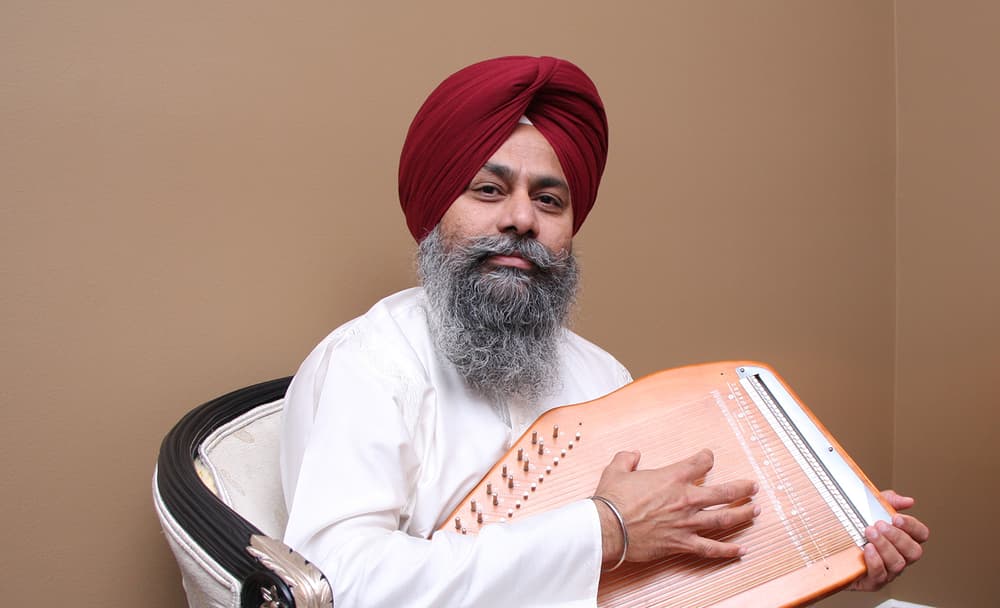
Professor Paramjeet Singh
May 10, 2012
8 min read

Professor Paramjeet Singh, a classical music scholar and educator trained in Indian classical vocal music and Sikh philosophy, explains that Sikh gurbani (hymns of the Guru Granth Sahib) are intentionally composed within specific raags—melodic frameworks rooted in a 2,300-year-old tradition—because music was historically understood as a tool for spiritual salvation, not entertainment. The Guru Granth Sahib contains 31 primary raags and 30–31 mixed raags, organized by time of day, and all raag structures rest on a 22-microtone scale that mirrors universal rhythms. This integration reveals a deliberate musical technology embedded in Sikh spirituality: singing gurbani in raag is a disciplined practice to attain mukti (liberation) and union with the divine.

Read · 7 sections

Why is singing central to Sikh spirituality?

In Sikhism, singing is not a cultural embellishment but a spiritual methodology. While many Eastern religions historically discouraged singing, Sikh philosophy embraced it deliberately. The reason lies in music's original purpose: salvation. According to Professor Singh, Indian classical music emerged over 2,300 years ago with a single target—moksha or spiritual liberation—rather than entertainment or aesthetic pleasure. The Sikh Gurus, particularly Guru Arjan Dev Ji in the early 17th century, recognized that music possessed a universal language capable of touching both mind and spirit. By composing gurbani in raag, the Gurus created a path where devotional words were inseparable from their musical vehicles. As Singh explains, "music is a wonderful tool to get in touch, to concentrate and talk with the nature."

This philosophy rests on a fundamental premise: the human being is not isolated from cosmic order. The universe operates on rhythm—planets orbit, hearts beat, even speech and eating contain rhythm. Music, then, is not an external decoration applied to spiritual text; it is recognition of an inherent natural law. By singing gurbani in prescribed raags, the devotee aligns their voice and consciousness with the underlying rhythmic patterns of existence itself.

What is raag and how does it structure spiritual singing?

Raag (also spelled rag) is difficult to translate into English because it is both a technical system and a spiritual principle. At its foundation, raag is a grouping of particular notes that can provide spiritual realization. In the Indian classical system, each raag has a prescribed character, emotional tone (rasa), and optimal time for performance. Singh emphasizes that this is not arbitrary: there is a strong temporal discipline embedded in raag theory.

The 24-hour day is divided into eight segments of three hours each—morning, afternoon, late afternoon, early evening, late evening, midnight, early morning, and another segment. Each segment has particular raags prescribed to it. This means that when you sing a specific raag at a specific time, you are harmonizing not just your voice, but your spiritual intention with the natural energies of that moment. Singh notes that the Guru Granth Sahib contains 31 primary (mukhraks) raags, and an additional 30–31 mixed raags—combinations of the primary raags that serve specialized purposes.

When Guru Arjan Dev Ji compiled the Guru Granth Sahib in 1604, "Gurusayab gave all the discipline of ragas" to the scriptural hymns. This was not a musical fashion choice; it was a deliberate spiritual technology. Each hymn was matched to a raag whose inherent properties would support the devotee's meditative journey toward unity with God.

Why did the Gurus compose gurbani in raag?

The answer is elegant and direct: raag and spiritual philosophy share the same target—salvation and liberation (mukti). The Gurus understood that gurbani already contained the philosophy and worldview necessary for spiritual transformation. But philosophy alone can remain abstract, intellectual, stuck in the mind. Music, especially raag-based singing, transforms philosophy into embodied experience. It moves the teaching from idea to felt reality.

Singh articulates this: "the music when origin of music was they said the cause is only for salvation…and then guru ji compiled over the with the ragas. Due to that the rag was having his same target i see for the human beings so gurbani there's a philosophy the same thing but music is a wonderful tool."

The Sikh path to union with the divine (the goal referenced by the Punjabi word mukti, liberation) required all of a person—heart, mind, body, and spirit. Kirtan (devotional singing) accomplishes this by engaging the voice, ear, rhythm, and emotional resonance simultaneously. A person cannot sing gurbani in proper raag while remaining detached or mechanical. The very discipline of maintaining the raag—the correct notes, the proper timing, the alignment with cosmic rhythms—becomes the meditation itself.

What is the science behind the 22-microtone scale?

Indian classical music is grounded in a precise acoustic science that predates Western music theory by centuries. The foundational scale is based on 22 microtones—divisions of the octave far more refined than the 12-semitone system in Western music. These 22 microtones include seven original notes (swaras), four "soft" or flat variations, one sharp variation, and additional intermediate tones that allow for subtle pitch variations called meend (sliding) and gamak (ornamentation).

According to Singh, every sound in the universe—whether it is speech, wind, or birdsong—can be analyzed and understood through this 22-microtone system. This is not metaphorical; it is a scientific observation rooted in acoustic physics. The universe itself, in its infinite variety of sound, operates within this microtonal framework. When a singer learns raag using the 22-microtone scale, they are learning to perceive and produce the same acoustic relationships that structure all natural sound.

The tanpura (or tampura), a stringed drone instrument, is considered the "true instrument" of Indian classical music for this reason. It provides a reference note that allows singers to analyze their voice and pitch with perfect accuracy. Unlike instruments such as the harmonium or accordion—which can prop up imprecise singing with their own sound—the tanpura demands genuine technical skill. A singer working with the tanpura cannot hide; they must learn to sing the correct microtones with intention and awareness. This is why Singh emphasizes that "if you are having help from the other instruments like accordion or harmonium right you can get support from them but you are not doing originally proper singing."

How does Sikh musicology integrate history and philosophy?

Professor Singh's own background illustrates this integration. Born into a musical family in Patella (likely Patiala, a city famous for its musical tradition), Singh's father was a traditional classical gurbani singer. His education spanned both formal music study from sixth grade through post-graduation in Indian classical music vocal from Patiala University, and advanced philosophical study—a master's degree in Indian classical vocal philosophy from Delhi University. This combination of technical and philosophical training is deliberate in the Sikh educational tradition.

Singh later taught post-graduation classes at Gurmukh College (Patiala) from 1990 to 1996, then spent nearly 15 years traveling globally as a volunteer teacher, sharing this knowledge with "excellent people from everywhere." His pedagogy reflects a conviction that Sikh musicology cannot be reduced to either pure technique or pure philosophy; it requires understanding the entire ecosystem—history, theology, acoustics, and practice.

The historical evidence for raag runs deep. Written records of Indian classical raag appear as early as the third century in texts like the "Shakhtar" (or similar Sanskrit grantha) attributed to Bharat Muni. This means raag was already systematized and documented over 1,700 years before the Sikh Gurus. The Gurus did not invent raag; they recognized it as a proven system and harnessed it for their own spiritual mission.

What is the relationship between individual notes and universal sound?

Singh underscores a principle that bridges science, philosophy, and spirituality: all sounds in existence arise from natural production, not human invention. When he says "all the sounds they just the production of the nature," he is drawing a distinction between the raw acoustic phenomena that nature generates and the human choice to organize those phenomena into musical systems.

The 22-microtone scale is discovered, not invented. Every sound produced by wind, strings, voice, or any vibrating medium naturally falls somewhere within this microtonal spectrum. By learning to sing raag, a devotee becomes literate in the language of nature itself. The teaching implicit in this is profound: when you sing gurbani in raag, you are not imposing human artifice onto sacred words. You are speaking the universal language that nature itself uses.

This has direct spiritual implication. If the universe operates in rhythm, and if all sounds conform to the 22-microtone scale, then to sing in raag is to place oneself in conscious alignment with cosmic order. The practice is not escapism or fantasy; it is attunement to reality as it actually is.

Where to go from here

This introduction to Sikh musicology is intentionally foundational. As Singh notes at the conclusion of this segment, "we're still water skiing right now because we haven't gone deep into the surface below the surface about the musicology." Deeper inquiry would require investigation into specific raags within the Guru Granth Sahib—their properties, their prescribed times, and the spiritual states they are said to cultivate. It would also require hands-on exposure to the tanpura and vocal training in proper microtone production.

For readers drawn to this material, the next steps are practical: listen to recordings of gurbani sung in traditional raag format; seek out instruction in Sikh kirtan or Indian classical vocal technique; explore the Guru Granth Sahib's musical annotations to see how the Gurus organized the hymns. The integration of music and spirituality in Sikhism is not a belief system to be intellectually assented to—it is a living practice to be embodied through singing, listening, and alignment with natural rhythm.

Comments

Loading the conversation…

Transcript

[0:03] welcome back to amrit barney now this

[0:06] portion as stated earlier will be your

[0:08] discussion portion and today on our

[0:10] segment on amitbani is a special guest

[0:13] by the name of professor baramjit singh

[0:15] who has spent a great portion of his

[0:17] life studying classical music professor

[0:20] brahmjeet welcome to amitbani

[0:24] thank you professor you've spent a lot

[0:26] of time studying classical indian

[0:29] classical music

[0:30] please give us a brief history

[0:32] of what exactly it is that uh interested

[0:36] you in in studying this

[0:38] actually

[0:40] i'm born in a musical family first of

[0:42] all okay in patella and my father gany

[0:45] kirpal singh ji

[0:47] he was a wonderful traditional classical

[0:49] gurbani singer and my brother who teach

[0:52] me my group

[0:53] singh okay

[0:54] and then we have education from patella

[0:57] guarana from like bodyglamouli counsel

[1:01] and then

[1:02] i start my study music education from

[1:05] sixth grade then i have completed my

[1:06] graduation then i have done

[1:08] post-graduation from patella university

[1:09] in indian classical music vocal then i

[1:12] have done a master philosophy

[1:14] an indian classical worker from delhi

[1:16] university

[1:17] and

[1:19] i was

[1:20] very young when i got a lecturership in

[1:22] gurmuth college patera entrepreneur

[1:24] university to teach the post-graduation

[1:26] classes wow it was 90. so i

[1:29] got a job from 90 to 96 in

[1:33] guru called patella okay

[1:35] i started traveling throughout world

[1:37] almost one and a half decade 15 good

[1:40] years i spend

[1:42] volunteer involuntary teaching okay with

[1:44] all

[1:45] human beings

[1:47] excellent people from everywhere that

[1:49] have worked with you yes excellent so

[1:51] now

[1:52] i i guess having a family who's really

[1:55] deeply into music really assisted you in

[1:57] getting involved and uh and it opened

[1:59] your eyes to music but so today

[2:02] especially with the viewers that i want

[2:03] to discuss that it's very important that

[2:05] we have a caitlyn segment on our program

[2:07] yes and which is singing of the hymns of

[2:09] the glorious lord yes but

[2:11] the importance of singing in sikhism in

[2:14] sikhi most of the eastern religions

[2:16] there's a lot of eastern religions that

[2:18] don't like the singing aspect of things

[2:20] yes so why do six sing

[2:23] hymns

[2:24] actually singing is basically you know

[2:27] we have to talk a little bit about the

[2:29] origin of singing okay

[2:32] there are the history is almost more

[2:35] than 22 2300 years back studying so this

[2:39] is of of actual music music indian music

[2:41] yeah indian classical music right

[2:43] and on that time the music was only for

[2:46] salvation okay it was not for entertain

[2:50] and the sikh philosophy starts from 15th

[2:53] century okay 16 14 79 right 69 69 69

[3:00] and

[3:01] before that

[3:02] it was already established all the ragas

[3:05] even you can get the written evidences

[3:07] of indian classical raga in the third

[3:08] century

[3:09] in a in a grant

[3:12] named is not a shakhtar written by perth

[3:14] muni

[3:15] so now uh just to step back a bit

[3:18] because a lot of our audience are very

[3:19] new to uh you know just uh kirtan in

[3:22] itself

[3:23] singing in raga as you speak of what is

[3:27] raag

[3:28] raag is if you are asking the definition

[3:30] of raag

[3:31] a group of

[3:32] particular nodes

[3:35] they can provide you a spiritual player

[3:37] it's called ragas named ragas i say all

[3:39] right and uh

[3:42] guru jin dev ji right in the 17th early

[3:45] 17th century when they compiled guru

[3:47] granth sahib right so 1506 i believe six

[3:50] no 1604 1604 1604 right

[3:57] then gurusayab gave all the discipline

[3:58] of ragas okay there are you know in the

[4:01] indian classical there is a strong time

[4:03] theory okay

[4:05] the there are four segment of the day

[4:07] and four segment of the night okay start

[4:10] from six to six three hours one segment

[4:13] so we have all 24 hour discipline that

[4:15] particular raj on that time morning

[4:17] afternoon late afternoon early evening

[4:20] late evening midnight early morning so

[4:23] pretty much uh the day is broken down

[4:25] into into various segments

[4:27] and uh so according to those segments or

[4:29] the times of the day there's particular

[4:31] types of rocks that are yes

[4:34] yes but then in guru run you can see the

[4:36] 31

[4:38] mukhraks original one and also around 30

[4:41] 31 the mixed ragas are there so how many

[4:44] are how many rocks there's 31 rags

[4:45] within the guru granth sahib 31 is the

[4:48] individual ones major one okay and

[4:51] almost 30 31 they are

[4:53] mixed ragas ah combinations

[5:00] so why

[5:01] was gurbani composed in rugs what's the

[5:04] because

[5:06] the music when origin of music was they

[5:09] said the cause is only for salvation

[5:11] actually and then guru ji compiled over

[5:14] the

[5:15] with the ragas yeah due to that the rag

[5:18] was having his same

[5:20] target i see for the human beings so

[5:22] gurbani there's a philosophy

[5:24] the same thing but music is a wonderful

[5:27] tool

[5:28] to get in touch to concentrate and talk

[5:31] with the nature because music has its

[5:32] own universal language so music was

[5:35] created for the salvation on that time

[5:37] that's why guru the sikh philosophy the

[5:39] same idea is there right for salvation

[5:43] to meet him the ultimate god so that's

[5:46] why he com

[5:47] guruji compiled all the gurbani into the

[5:49] particular raj that is very interesting

[5:52] because i think um you know we talk

[5:53] about the punjabi word in itself is

[5:55] mukti yeah and uh to obtain salvation is

[5:59] is kind of the primary uh goal yes and

[6:01] that's of of any spiritual individual

[6:04] who wants to become spiritual is to find

[6:06] that union between man and god

[6:09] and surag is kind of like that channel

[6:12] that we can

[6:13] pretty much penetrate yeah this all

[6:15] nature is there all the scale is created

[6:17] by the nature the sounds are not made by

[6:20] the human beings right all that all the

[6:23] sounds they just

[6:25] the production of the nature so what

[6:28] you're saying is that

[6:30] practically everything and anything in

[6:31] existence

[6:32] works some there's some form of rhythm

[6:35] some form of of a song or or

[6:39] something that uh whole universe is in

[6:40] the rhythm you know i see you you can

[6:43] see

[6:43] whole the universe have a rhythm if

[6:45] there is no rhythm

[6:48] whether it's the earth revolving around

[6:50] the sun or heart beating every day every

[6:52] day even we are talking when we are

[6:54] eating there is rhythm in the body music

[6:56] is inbuilt in every human beings well

[6:59] this is a there's a huge science behind

[7:01] this which of course music has a

[7:03] wonderful science and

[7:05] also

[7:06] the raga's history and uh scales one

[7:09] thing interesting for you the whole

[7:11] scale is based on 22 micro tones right

[7:14] all right and

[7:16] seven original notes are there four soft

[7:18] and one sharp okay all right total 12

[7:20] notes are there but based on 22 micro

[7:23] tones

[7:24] well let me tell you one thing this

[7:26] scale when you are getting the tone from

[7:28] tan pura right

[7:30] which is a stringent structure strings

[7:31] instrument okay it's a super instrument

[7:33] of the indian classical music okay the

[7:34] true instrument

[7:36] you can

[7:38] analysis your voice with the tanpura way

[7:40] you are okay because if you are having

[7:42] help from the other instruments like

[7:44] accordion or harmonium right you can get

[7:46] support from them but you are not doing

[7:48] originally proper

[7:49] singing

[7:50] okay

[7:51] but i just want to tell you the science

[7:53] of this

[7:54] this whole octave okay everything is

[7:56] happening in this world doesn't matter

[7:58] it's a plane sound we are talking it's a

[8:00] driving every sound you can get from

[8:03] that this scale okay that's twenty two

[8:06] twenty two microtones yes okay no this

[8:08] is excellent now i think um um pretty

[8:10] much that's the time that we have for

[8:12] today's segment but this is a great

[8:14] we're still water skiing right now

[8:16] because we haven't gone deep into the

[8:17] surface uh below the surface about uh

[8:20] the musicology yes but we will continue

[8:22] this tomorrow so professors it's time

[8:24] for a short break but i would like to

[8:27] have everyone join us tomorrow again as

[8:30] we continue our discussion with

[8:32] professor bahram jeet singh about sikh

[8:33] musicology waikujika khalsajiki

[8:44] you

Professor Paramjeet Singh
ArtistProfessor Paramjeet Singh

Professor Paramjeet Singh is an Indian classical vocalist and Sikh kirtan artist who has mastered over 125 ragas and devoted his career to preserving the devotional music of saints…

View profileWebsite
Explore Topics
RaagGurbaniSikh-musicologyKirtanSpiritual-singing

Got Questions?

Frequently Asked Questions

Raag is a grouping of specific musical notes designed to provide spiritual realization. Each raag has prescribed optimal times of day and emotional tones. The Guru Granth Sahib contains 31 primary raags and approximately 30-31 mixed raags that were deliberately matched to gurbani hymns for spiritual practice.
The Gurus recognized that music originated as a tool for salvation, with the same spiritual target as their philosophy. By composing gurbani in raag, they created a practice where devotional words are inseparable from their musical vehicles, allowing practitioners to engage heart, mind, body and spirit together toward liberation (mukti).
The Indian classical scale is based on 22 microtones, which are far more refined divisions of the octave than the 12 semitones in Western music. These 22 microtones include seven original notes, variations, and intermediate tones that allow singers to produce the subtle pitch variations found throughout nature.
The tanpura is a stringed drone instrument considered the 'true instrument' of Indian classical music. Unlike harmoniums or accordions that can mask imprecise singing, the tanpura demands genuine technical skill by providing an accurate reference note that allows singers to analyze their voice and maintain correct microtonal pitch.
Professor Singh teaches that the universe operates in rhythm at all levels—planetary motion, heartbeat, speech, eating. All natural sounds conform to the 22-microtone scale. By singing gurbani in raag, practitioners align their voice and consciousness with the underlying rhythmic patterns and acoustic order of existence.
Sikh philosophy deliberately integrated singing because music was understood historically as a technology for spiritual salvation, not entertainment. Unlike religions that viewed singing skeptically, Sikhism recognized music's universal language as capable of touching both mind and spirit in pursuit of union with the divine.
The 24-hour day is divided into eight three-hour segments, each with prescribed raags suited to that time. This temporal discipline means that singing a specific gurbani in its designated raag at the proper time harmonizes not just the voice but the devotee's spiritual intention with natural energies of that moment.

Continue Reading

More from Professor

View All
Raag-Based Gurbani Kirtan: The Beauty of Mere Laalan Ki Sobha
Inspire

Raag-Based Gurbani Kirtan: The Beauty of Mere Laalan Ki Sobha

Learn how raag-based Gurbani kirtan preserves authentic Sikh devotional music through the shabad "Mere Laalan Ki Sobha," performed in classi…

1 min read
Raag-Based Gurbani Kirtan: Tukhari, Bhairavi, and Classical Tradition
Inspire

Raag-Based Gurbani Kirtan: Tukhari, Bhairavi, and Classical Tradition

Experience the spiritual depth of Patiala Gharana kirtan through rare raags and Gurbani compositions. A live performance honoring classical …

1 min read
Minimal Vocalization as Spiritual Practice: Power in Simplicity
Inspire

Minimal Vocalization as Spiritual Practice: Power in Simplicity

A brief live vocal interlude demonstrates how devotional sound—stripped to its essence—can invoke presence and transformation through pure r…

1 min read
Govinda Jaya: How Sacred Sound Awakens the Heart
Inspire

Govinda Jaya: How Sacred Sound Awakens the Heart

Radhika Das channels the liberating power of mantra through a luminous kirtan performance at Medicine Festival, invoking divine names to pur…

1 min read

Keep exploring

Continue your journey

More wisdom and gatherings from across the BrightStar directory.

More Articles

Browse the full library of teachings, interviews, and guides.

Back to all articles →

Teachers & Artists

Explore the lineages, musicians, and guides of the conscious world.

Explore artists →

Find an Event

Kirtan, retreats, sound baths, breathwork, festivals — happening soon.

Browse events →