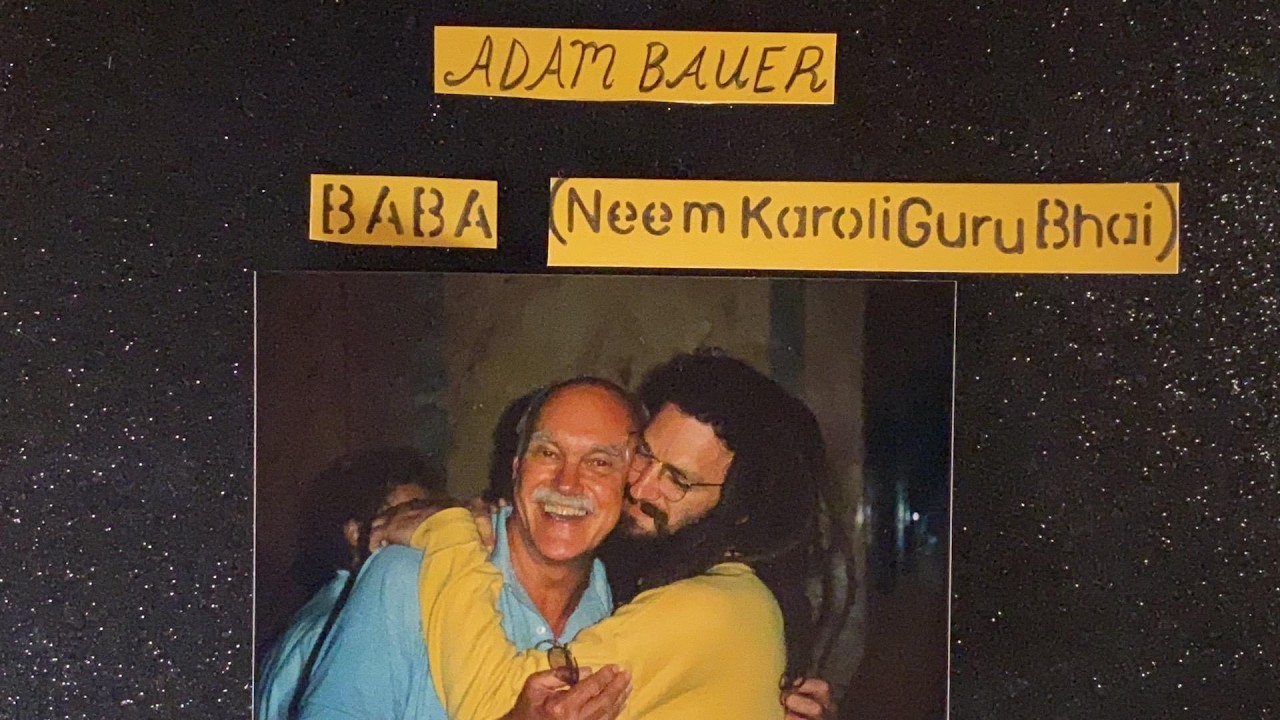
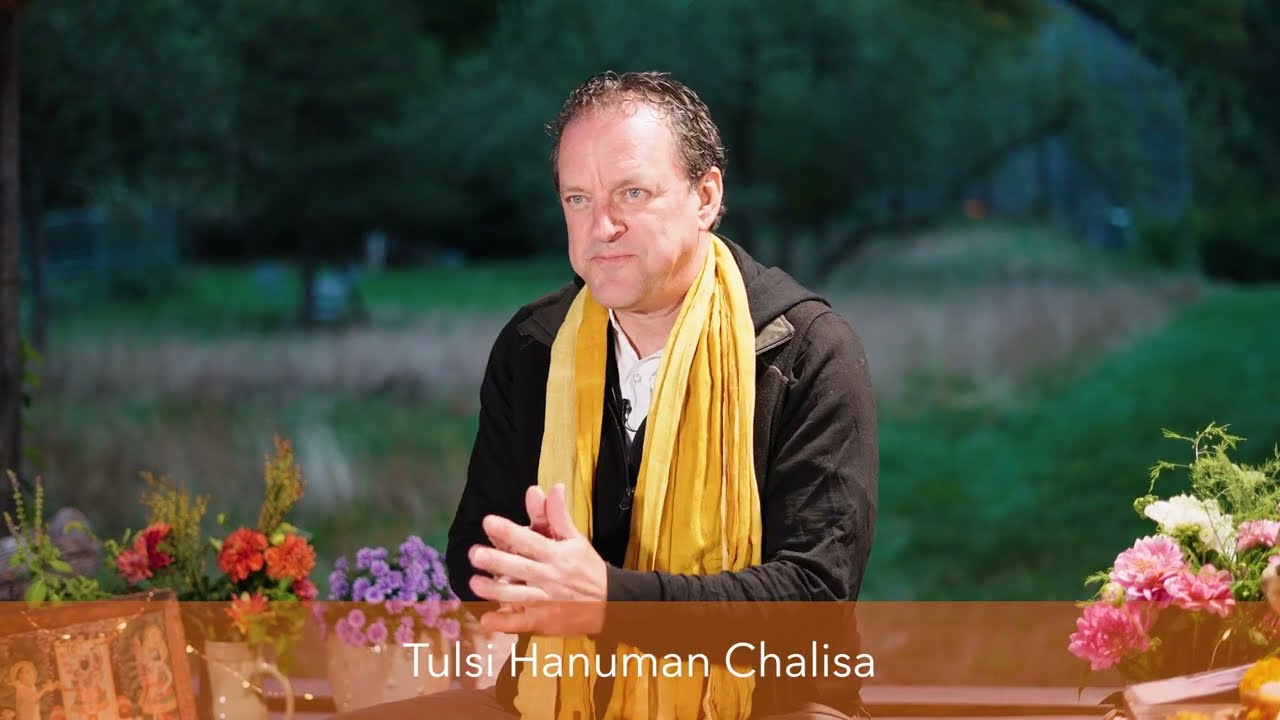
The sounds of kirtan—devotional chant—carry within them an ancient knowing: that repetition of sacred names holds the power to transform consciousness. When a song titled "Vaidyagrama Hare Rama" arrives, it carries a double inheritance. Vaidyagrama—a healing center rooted in the science of Ayurveda—meets the Hare Rama mantra, one of kirtan's most essential invocations. On the 2020 album Return to the Sacred, Adam Bauer's work brings these two lineages into a single nine-minute meditation, suggesting something many spiritual seekers have long understood: that healing and devotional practice are not separate paths, but expressions of a single return to wholeness.
Vaidyagrama—literally "healer's village" in Sanskrit—refers to a center of Ayurvedic medicine and wellness. Vaidya means physician or healer; grama means village or community. In the traditional sense, a vaidyagrama was a place where the accumulated wisdom of Ayurveda was practiced and transmitted. Ayurveda, often called the "sister science" to yoga, is an ancient Indian system of medicine and holistic living that understands health not as the mere absence of disease, but as a dynamic balance between body, mind, and spirit.
The Ayurvedic tradition does not separate healing from spirituality. A vaidya—a physician—was traditionally understood as someone who could help restore not just physical balance but spiritual alignment. Illness, in this worldview, is understood partly as a disconnection from one's true nature, and healing involves a return to that essential wholeness. When a healing center is named Vaidyagrama, it announces this integrated approach: this is not a clinic where symptoms are treated in isolation, but a place where the entire human being—body, subtle energies, and spirit—is the focus of care.
The Hare Rama mantra is a central practice in kirtan, the devotional call-and-response singing found throughout Hindu and yogic traditions. The chant is composed of three sacred names: Hare (an invocation of divine energy), Rama (associated with wholeness, integrity, and the divine principle of order and joy), and Krishna (divine consciousness in its fullness). Though these mantras arise from Hindu cosmology, they are understood in the kirtan tradition not as prayers to external entities, but as invocations of eternal principles present in all beings and all existence.
Kirtan itself is not understood as mere musical performance or entertainment. It is, in the traditional understanding, a spiritual technology—a precise method for aligning individual consciousness with sacred consciousness. The repetition of mantras is not incantation for its own sake; it is a practice designed to quiet the discursive mind and open awareness to deeper layers of being. In this sense, kirtan functions similarly to other concentration practices across spiritual traditions: through focused repetition, the practitioner moves from thought toward stillness, from fragmentation toward unity.
The Hare Rama mantra specifically invokes balance and wholeness. Rama is associated in Hindu tradition with dharma—righteous order and harmony. To chant Hare Rama is to call upon that principle, both within oneself and within the world. When sung in a setting like Vaidyagrama—a place dedicated to restoring balance through Ayurvedic medicine—the chant takes on additional resonance: it becomes an invocation of healing in its most comprehensive sense. The mantra and the place are not incidental to each other; they are expressions of the same principle.
The album title Return to the Sacred carries a philosophical weight worth examining. It does not say "Discovery of the Sacred" or "Introduction to the Sacred," but rather "Return." This choice of language reflects a spiritual understanding present in many contemplative traditions: that the sacred is not something foreign that must be acquired or learned, but something that has always been present, from which we have simply become separated.
In Buddhist and yogic philosophy, ignorance (avidya) is understood not as a lack of information but as a forgetfulness of one's true nature. The Sanskrit root of avidya literally means "not seeing." To live in ignorance is not to lack facts, but to fail to recognize what has always been true. The path of practice is thus understood as a remembering, a return to what has always been the case. The practices—whether Ayurvedic medicine or kirtan chanting—are not adding something new, but removing the obstacles to recognizing what is already true.
This is profound teaching embedded in the very title of the album. To say "return to the sacred" is to affirm that healing, wholeness, and connection to the divine are not destinations to be reached through effort alone, but homes to be remembered. This reframes spiritual practice: it is not about becoming something other than what you are, but about removing the veils of forgetting that have obscured your true nature. It is remembering before knowing, return before arrival.
In traditional understandings of kirtan, the repetition of sacred names is understood to have direct effects on consciousness and physiology. Modern research into chanting practices has begun to validate some of these understandings—showing effects on heart rate variability, stress hormone reduction, and activation of parasympathetic nervous system response. But the traditional understanding goes deeper still.
Kirtan is based on the principle that sound itself carries information and energy. The Sanskrit language, in traditional philosophy, is understood not as arbitrary symbols but as mantras—words whose sounds directly correspond to cosmic principles. To utter a mantra is not merely to use language; it is to embody and invoke a principle. Chanting Hare Rama is thus understood not as asking an external deity for help, but as aligning one's own consciousness with the eternal principles those names represent. The practice is participatory: the singer becomes, through sound, a channel for those principles.
In the context of a work titled "Vaidyagrama Hare Rama," we see this understanding of kirtan as medicine made explicit. The chant is not separate from healing work; it is healing work. A nine-minute engagement with the Hare Rama mantra is thus positioned as a form of therapy—not in the modern medical sense alone, but in the classical sense of "therapeia," a restoration of wholeness. The sound carries the medicine. The repetition carries the healing. The practice of listening and singing becomes indistinguishable from the work of healing itself.
What is significant about a work that brings Ayurvedic healing and kirtan chanting into a single title is that it acknowledges what these traditions have always known: that healing is not piecemeal. The Ayurvedic physician and the kirtan singer are, in a sense, doing related work—they are engaged in the same fundamental endeavor of restoring human beings to their integral wholeness.
Ayurveda approaches healing through the physical and subtle bodies—through diet, herbal medicine, therapeutic oils, and practices like yoga and pranayama. It addresses the doshas (the elemental principles of Vata, Pitta, and Kapha), works with the concept of agni (digestive fire and transformation), and recognizes that healing requires attention to seasonal rhythms and individual constitution. Kirtan approaches healing through direct engagement with consciousness through sound and devotional focus. It addresses the mind not through logic but through mantra, not through analysis but through repetition and presence.
Yet both assume that true healing involves a return to dharma—to one's true nature and one's right relationship with the whole. Both understand that fragmentation is a sign of disease, and that wholeness is the mark of health. The Ayurvedic concept of swastha (one's own abode, or one's true home) and the kirtan concept of return to the sacred describe essentially the same destination: a state of being in which the individual recognizes their belonging to the sacred whole.
The artist's choice to name this work "Vaidyagrama Hare Rama" is thus a statement about integration. It suggests that the healer and the chanter, the Ayurvedic clinic and the kirtan stage, are part of a single continuum of practices aimed at a single goal: the return of the individual to wholeness and to conscious connection with the sacred. Neither practice is complete without the other; both are required for true healing.
In 2020, when this album was released, the world was in the grips of a pandemic that was simultaneously medical, psychological, and spiritual. The disruption revealed, for many people, a deep hunger for practices that address not just the body but the complete human being. Recordings of kirtan, meditation, and contemplative music saw increased engagement during this period, as people sought resources for grounding and healing in the midst of uncertainty and isolation.
A work titled "Vaidyagrama Hare Rama" arrived in this context as both mirror and invitation: a reminder that healing traditions have long understood what modern fragmented approaches are only beginning to relearn—that the body, mind, and spirit are not separate domains requiring separate interventions, but an integrated whole that requires integrated care. That the physician and the spiritual teacher, the clinic and the meditation hall, the herbal remedy and the sacred chant are not alternatives to one another but partners in a single endeavor. And that sacred practice—whether through Ayurvedic medicine or devotional chanting—is not a luxury for the spiritually inclined, but medicine for the human condition itself, now more urgently than ever.
If this work resonates with you, explore both Ayurvedic healing traditions and the practice of kirtan in your own life. Ayurvedic principles can be engaged through diet informed by your constitution, herbal support tailored to your needs, and the practice of yoga and pranayama. Kirtan can be explored through both traditional recordings and live kirtan performances, which emphasize the call-and-response nature of the practice and the power of collective singing.
Consider investigating what "return to the sacred" means in your own spiritual context. For some, this is a return to childhood faith traditions. For others, it is a return to nature, to the body, to silence, or to community. The title invites personal exploration of what sacredness means to you and what practices—whether herbal, embodied, sonic, or contemplative—support that remembering. The convergence of Ayurveda and kirtan suggests that healing is not a destination you reach through one perfect modality, but a return you undertake through whatever traditions and practices authentically call to you.