SportsCampFinder

Browse All Camps

Find the perfect camp for your athlete

camps

Basketball Camps
Soccer Camps
Baseball Camps
Football Camps
Volleyball Camps
Lacrosse Camps
Multi-Sport Camps
Elite Training
Overnight Camps
Day Camps
Popular Destinations
BaliSedonaLos AngelesCosta RicaNew YorkSan FranciscoAustinMiamiJoshua TreeTulum
View All CategoriesView All Destinations

Explore All Features

Powerful tools to grow your events

Platform Features

Smart Dynamic Pricing
Ticket Categories
Assigned Seating
Abandoned Cart Recovery
Visitor Recovery
Donations & Sliding Scale
Affiliate Engine
Ticket Scanner
Coupon Codes
Custom Questions
Ticket Sharing
Upsells & Add-ons
Analytics & Reporting
Email Sequences
Waitlist / Notify / Remind
People & Places
Camp OrganizersCamp FacilitiesKnowledge BaseInspiration
View All FeaturesAbout Us
PricingBlog
Language
Saved events
Browse All Events

camps

Basketball CampsSoccer CampsBaseball CampsFootball CampsVolleyball CampsLacrosse CampsMulti-Sport CampsElite Training

Popular Destinations

BaliSedonaLos AngelesCosta RicaNew YorkSan Francisco

People & Places

Camp OrganizersCamp FacilitiesKnowledge BaseInspiration

Platform Features

Smart Dynamic PricingTicket CategoriesAssigned SeatingAbandoned Cart RecoveryVisitor RecoveryDonations & Sliding ScaleAffiliate EngineTicket ScannerCoupon CodesCustom QuestionsTicket SharingUpsells & Add-onsAnalytics & ReportingEmail SequencesWaitlist / Notify / Remind
View All FeaturesAbout Us
PricingBlog
Log inParents & athletesCamp directors
  • Browse all camps
  • Basketball Camps
  • Soccer Camps
  • Baseball Camps
  • Football Camps
  • Volleyball Camps
  • Lacrosse Camps
  • Multi-Sport Camps
  • Elite Training
  • All sports →
  • Orlando
  • Los Angeles
  • New York Metro
  • Dallas / Fort Worth
  • Chicago
  • Phoenix / Scottsdale
  • Atlanta
  • Denver
  • Seattle
  • Boston
  • Houston
  • Philadelphia
  • San Diego
  • Minneapolis / St. Paul
  • All Cities →
  • List your camp
  • Camp director dashboard
  • Pricing
  • Coaches & academies
  • Online registration & payments
  • Waivers & medical forms
  • Check-in app
  • Family messaging
  • Waitlist & notify
  • Camp marketing
  • Reports
  • All features →
  • About SportsCampFinder
  • Camp guides
  • Help Center
  • Contact
  • Careers
  • Press
  • Terms of Service
  • Privacy Policy

Camps

  • Browse all camps
  • Basketball Camps
  • Soccer Camps
  • Baseball Camps
  • Football Camps
  • Volleyball Camps
  • Lacrosse Camps
  • Multi-Sport Camps
  • Elite Training
  • All sports →

Destinations

  • Orlando
  • Los Angeles
  • New York Metro
  • Dallas / Fort Worth
  • Chicago
  • Phoenix / Scottsdale
  • Atlanta
  • Denver
  • Seattle
  • Boston
  • Houston
  • Philadelphia
  • San Diego
  • Minneapolis / St. Paul
  • All Cities →

For Camp directors

  • List your camp
  • Camp director dashboard
  • Pricing
  • Coaches & academies

Features

  • Online registration & payments
  • Waivers & medical forms
  • Check-in app
  • Family messaging
  • Waitlist & notify
  • Camp marketing
  • Reports
  • All features →

Company

  • About SportsCampFinder
  • Camp guides
  • Help Center
  • Contact
  • Careers
  • Press
  • Terms of Service
  • Privacy Policy
SportsCampFinder
© 2026 SportsCampFinder. All rights reserved.
Inspiration

Root Cause Healing: WhySymptoms Hide Deeper Beliefs

Peter Crone
Peter Crone
Jul 17, 2025
8 min read
Watch · 8

Most people chase symptom relief without investigating the subconscious narrative that created the condition in the first place. Peter Crone teaches that genuine healing occurs when you identify and dismantle the core belief driving the disease—whether physical or emotional. Using the case of a stunt woman whose childhood trauma (being called "ugly" by a gymnastics coach at age seven) led to both self-abandonment and later thyroid dysfunction, Crone demonstrates how unexamined beliefs about worthlessness become the operating system generating symptoms, and how accessing and rewriting that narrative allows the body to naturally resolve what medicine can only manage.

Read · 8 sections

Why Do We Treat Symptoms Instead of Asking Why?

The modern medical model trains us to isolate symptoms and apply solutions: take a pill, do the therapy protocol, manage the condition. But Crone points to a much deeper logic. When someone develops a thyroid disorder, most resign themselves to medication and lifelong management. The assumption is that the body simply broke—as though the breakdown happened independently of thought, emotion, or belief.

Crone's framework inverts this. The body doesn't malfunction in a vacuum. A physical symptom is the endpoint of a chain of unconscious beliefs and emotional patterns that the person has been living out for years, often since childhood. The disease wasn't randomly assigned; it was generated by the narrative system running in the background. To truly heal, you must go upstream to that narrative.

In the example from the transcript, the stunt woman was not simply "a person with a thyroid condition." She was a person who had learned, at age seven, that she was "ugly," and who had then spent decades prioritizing her parents' happiness and her own approval over listening to her own needs. That belief—"I don't matter"—wasn't lodged in her thyroid gland. It lived in her mind, constructed from words and stories she had accepted as truth. Yet it manifested as a physical disease.

How Does Childhood Trauma Become a Physical Condition?

Crone identifies a critical survival strategy that children employ without conscious awareness. When a child experiences harm, rejection, or neglect, they don't conclude that the adult is flawed. Instead, they unconsciously decide: I will become who you want me to be, as long as you keep me safe. This is not a rational choice. It's a primal survival reflex.

In the case presented, the client was physically and verbally abused by her gymnastics coach—hit, dragged, and called ugly. A seven-year-old experiencing this doesn't call the coach a bad person or consider leaving. Instead, she adopts a new identity: I need to be perfect at gymnastics because that's what earns my parents' love and attention. She suppresses her pain. She doesn't tell her parents about the abuse because she fears being removed from the gym—and losing access to their approval.

When you systematically ignore your own hurt, your own body's signals, your own voice, you are teaching yourself a fundamental belief: My needs don't matter. This belief doesn't stay abstract. It becomes a physiological pattern. The nervous system learns to dismiss internal signals. The body learns that it's unsafe to listen to itself. Over time, this disconnection from self becomes so normalized that disease can take root without resistance.

What Is the "Original Wound" in Belief Formation?

Crone uses the term "original wound" to describe the moment a child decides, for survival, that their own worth is contingent on someone else's approval. The wound isn't the abuse itself—it's the conclusion the child draws from the abuse: I am not worth protecting. My needs are not worth listening to. In order to be safe, I must disappear into who you want me to be.

This belief becomes the foundational operating system. Every subsequent decision, every sensation in the body, every opportunity for self-advocacy gets filtered through it. The person becomes expert at reading other people's needs while remaining blind to their own. They learn to deflect or minimize their own pain—laughing off childhood humiliation, staying in harmful situations to please others, ignoring their body's messages.

What Crone emphasizes is that this wound, while rooted in a real event, is ultimately made of language and thought. It has no physical existence. If you were to literally examine the person's body, you would find no label saying, "Her needs don't matter." The belief is purely cognitive. And because it is constructed from words and stories, it can be deconstructed from words and stories.

How Do Ego, Hurt, and Fear Keep Healing Stuck?

Crone identifies two primary emotions tied to the ego's relationship with time: hurt belongs to the past, fear belongs to the future. When a belief like "I don't matter" is encoded in childhood, it creates a holding pattern: the person grips the original hurt (refusing to fully feel and process it) while simultaneously avoiding any situation that might repeat it.

This double bind keeps the wound alive. The person is not actually healing the seven-year-old who was called ugly—they're actively ignoring her, just as they ignored her in the gym all those years. The belief that she doesn't matter is being reinforced by present-day choices to minimize, dismiss, or bypass her experience. And because the original hurt is unprocessed, the nervous system remains hypervigilant against any repetition of rejection or abandonment.

The stunt woman in the transcript realized she had become a professional at self-injury—both through her work as a stunt double and through her chronic self-abandonment. She kept seeking approval through extreme physical risk. She internalized rejection for her body type as confirmation of her underlying belief. She was, quite literally, proving the seven-year-old's wound to herself every day.

What Happens When You Identify the Belief Beneath the Symptom?

The turning point in the conversation arrives when the client articulates the core belief: I don't matter. My needs don't matter. Crone then moves her toward questioning the truth of that belief by asking: Is this fact written into your physical body? Could it be that this is just a story—words in your head—rather than an absolute truth?

The reframing is simple but profound. The belief that "my needs don't matter" is not inherent to the person. It's not who she is. It's a conclusion she adopted in childhood to survive a harmful environment. And crucially, she adopted it—which means she can examine it, question it, and ultimately release it.

Once she began to genuinely listen to herself—not as a duty, but as an acknowledgment that her needs and voice actually matter—her physiology shifted. The thyroid condition began to resolve. She lost weight. She felt lighter, less burdened. The body, no longer required to hold and defend the false belief, could begin to rebalance.

What Is the Difference Between Management and Healing?

Crone is explicit: healing is not managing. Most people with chronic conditions resign themselves to medication, lifestyle adjustments, and the assumption that this is as good as it gets. That's management. It keeps the person functional but doesn't address the root.

Healing, by contrast, is the process of accessing the subconscious narrative—the place where the disease was actually generated—and altering it. Until you reach that deep, often oblivious, recessed layer of belief, you cannot access true healing. You can only manage symptoms.

This is why Crone says: "What you're looking for, what healing is, is on the other side of the you that created the disease in the first place." You are not broken. Your body is not failing you. Rather, you—your subconscious belief system—created a condition as a logical response to a narrative you accepted. To heal, you must become conscious of that narrative and consciously choose a different one.

How Do Words and Beliefs Construct Reality?

A recurring theme in Crone's work is the power of language to shape lived experience. The belief "I don't matter" is made of words. It has no material existence. Yet it acts like a law, governing behavior, physiology, and health.

Conversely, when the client identifies the opposite belief—"My needs matter. I matter."—this new narrative also begins to reshape her life. Not through positive thinking or affirmation alone, but through a genuine shift in how she relates to herself and her body. She begins to listen. She honors her own signals. And in that listening, the body begins to heal.

This suggests that the primary work of healing is not pharmaceutical or even behavioral in the conventional sense. It is narrative. It is the work of examining the stories you live by, questioning their truth, and rewriting them to align with your actual worth and the actual facts of your existence.

Where to Go From Here

If you are managing a chronic physical or emotional condition, ask yourself: What belief about myself or my worthiness might be driving this? When did I first learn that belief? Was it taught to me explicitly, or did I infer it from how I was treated? Most importantly: Is that belief actually true, or is it a survival strategy I adopted when I was too young to question it?

The healing Crone points toward is not complicated, but it is deep work. It requires you to become willing to see and feel the original hurt—not to wallow in it, but to finally, truly witness it and release it. It asks you to stop ignoring the parts of yourself that were wounded and start listening to them. And it invites you to examine, word by word, the narrative you've been living, and to ask: Who would I be if I believed I actually matter?
Comments

Loading the conversation…

Transcript

[0:00] I fall under the the belief that I'm not

[0:03] good enough. People are better than me.

[0:05] Okay.

[0:05] That I'm a bad person.

[0:07] So, where did you learn that?

[0:08] From gymnastics.

[0:09] Oh my gosh. No pressure there, right?

[0:11] Yeah. And then I was actually abused by

[0:13] my first coach physically and uh

[0:15] mentally. She actually called me thugly

[0:17] at age seven.

[0:18] Okay.

[0:18] Yeah. Sorry.

[0:19] No, it's okay. It's kind of funny to

[0:21] look back. Like there's no part of me

[0:23] that thinks that that's true. It's like,

[0:25] oh yeah, I was 7 years old. She had no

[0:26] right to say that. Like I was just

[0:28] enjoying life. I really acknowledge your

[0:31] intelligence to understand that, but I'm

[0:32] not going to let that seven-year-old not

[0:34] be seen for a minute.

[0:36] You can understand it's kind of funny

[0:38] now, but it wasn't then.

[0:40] And what we do is we tend to circumn

[0:43] something that's really quite pivotal in

[0:44] our lives and we're okay with it, which

[0:46] is a way that you deflect.

[0:48] Yeah.

[0:49] Right. But really, there's a child there

[0:51] that's being ignored.

[0:53] Yeah, definitely.

[0:54] So then where do you get ignored in

[0:56] life?

[0:58] Um, well, I'm a stunt woman now.

[1:00] Okay, great. Yeah. More ways to beat the

[1:01] out of yourself, right?

[1:03] Yes. Often times I get turned down for

[1:05] jobs because I don't have the right body

[1:07] type or they just go with someone else.

[1:09] So then I feel, I guess, ignored. And I

[1:12] also ignore myself a lot.

[1:13] So what are you doing to the

[1:14] seven-year-old who was called ugly?

[1:16] Ignoring her.

[1:17] Could we imagine that the seven-year-old

[1:19] who's told that she was ugly maybe feel

[1:21] hurt?

[1:22] Definitely she does.

[1:23] Yeah. There's two primary emotions that

[1:26] really belong to the ego. Past is

[1:27] associated with hurt. Future is

[1:29] associated with fear. Past hurt informs

[1:32] future fear. So we've got holding and

[1:34] avoiding. So you're holding on to her

[1:36] and then wondering why you keep hurting

[1:38] because you're trying to avoid the

[1:39] repetition of that, not realizing that

[1:41] it's with you right now. Where were you

[1:43] when this happened? When this beautiful

[1:45] gym instructor told you that you were

[1:47] ugly.

[1:47] It was at the gymnastics gym. I was

[1:49] training there quite a lot. It was also

[1:51] my way of making my parents happy

[1:53] because up until then I was a bad kid.

[1:56] And when I got really good at

[1:57] gymnastics, my parents suddenly started

[1:59] like paying attention to me a little bit

[2:00] more.

[2:01] Amazing. Yeah.

[2:02] So, I didn't tell my parents about the

[2:04] fact that she said that. And then I

[2:06] didn't tell them about Wow, I'm really

[2:08] realizing a lot right now. Um,

[2:11] that's what happened

[2:11] about ignoring myself. Yeah,

[2:13] it's okay. This is why we're here.

[2:15] There's no hurry.

[2:17] What just hit you?

[2:19] I didn't want them to like pull me out

[2:21] of it. So, I let it go for years. And uh

[2:24] she would hit me and she would pull me

[2:27] by my leg and drag me on the ground and

[2:29] all that. And uh yeah, I just wouldn't

[2:30] tell my parents because I just didn't

[2:32] want them to take me out of it.

[2:33] You didn't want them to take you out of

[2:35] it? Why?

[2:36] Well, because I loved it one, but I also

[2:38] loved making them happy.

[2:40] Yeah. Let's stick with that last one.

[2:42] Yeah.

[2:42] It's the original wound.

[2:45] children, myself included, we decide at

[2:48] a certain point, unbeknownst to

[2:49] ourselves, purely as a survival

[2:51] strategy, that I will become who I think

[2:53] you want me to be, usually mom and dad,

[2:55] but all as long as you keep me safe. So,

[2:58] somebody who was willing to put all of

[3:00] their own feelings, hurts aside and

[3:02] pretend that they're okay. What must

[3:04] they fundamentally think about

[3:05] themselves?

[3:06] That they're not worth listening to or

[3:07] they're not

[3:08] something like that, right?

[3:09] Something like that.

[3:10] Can I offer a perspective?

[3:11] Yes, please.

[3:12] That you don't matter. Yeah. Wow. Yeah.

[3:16] What's it like to walk around on a

[3:18] planet where you don't matter?

[3:20] Pretty.

[3:22] So, where were you born?

[3:23] Tacoma, Washington.

[3:25] So, if I cut you open, am I going to

[3:26] find a physical manufacturing label

[3:28] inside of you that says she's born in

[3:30] Washington? Her needs don't matter.

[3:32] No.

[3:32] No. So, where does it exist?

[3:34] In my mind.

[3:35] Okay. And what's it made up of?

[3:37] Words.

[3:38] Yeah. So if it's just words in your

[3:39] head, is it a truth that who you are is

[3:43] that her needs don't matter?

[3:44] No,

[3:45] not at all. Right.

[3:46] Yeah.

[3:47] What would be the opposite of my needs

[3:48] don't matter?

[3:49] That they do matter.

[3:51] Not they what

[3:52] I matter

[3:53] and

[3:53] my needs matter.

[3:56] Once we uncovered that belief that I

[3:58] don't matter and my needs don't matter,

[4:00] I was able to actually just start

[4:01] listening to myself for the first time.

[4:03] And at the time I had a thyroid issue as

[4:05] well. After we had that healing, all of

[4:07] a sudden, I was feeling a lot lighter.

[4:09] Literally physically lost weight and the

[4:11] thyroid disorder went away completely,

[4:12] which was mind-blowing to me.

[4:14] So, wait, wait, wait. Do you hear what

[4:15] she said?

[4:18] So, her thyroid condition went away.

[4:21] I really want you to understand the

[4:22] energy of healing, right? Like, it's

[4:24] such a buzz word and people like, "Oh,

[4:25] you're such a healer." No, I'm not. I'm

[4:27] saying For her, like most people

[4:29] probably resign to the fact, well,

[4:30] that's just what I have and I keep

[4:31] taking my meds or I keep doing what I

[4:33] have to do and you just manage it. But I

[4:34] want you to understand you that you are

[4:36] today who's created whatever the

[4:38] condition is through no fault of your

[4:39] own. So it's not guilt or shame can't

[4:41] heal. You can't heal. What you're

[4:44] looking for is healing is on the other

[4:45] side of the you that created the disease

[4:47] in the first place. So until such time

[4:49] that you get to these deeper

[4:50] subconscious recesses where you got a

[4:52] narrative that often you're oblivious

[4:53] to. You can't access healing. But that's

[4:57] the work. End of story. Sydney. Thank

[4:59] you.

[5:01] If you want to be healed, you got to get

[5:03] to the root cause of your disease.

[5:06] People are looking to solutions without

[5:08] looking at why do I have the problem in

[5:10] the first place?

[5:12] [Music]

Peter Crone
ArtistPeter Crone

The Mind Architect who helps individuals unlock their potential by addressing subconscious beliefs through innovative coaching, workshops, and transformative teaching.

View profileWebsite
Explore Topics
Subconscious-beliefsRoot-cause-healingChildhood-traumaPhysical-symptomsSelf-abandonment

Got Questions?

Frequently Asked Questions

Medicine manages symptoms, but healing requires identifying and altering the subconscious belief that generated the condition in the first place. If the underlying belief—such as 'I don't matter'—remains unchanged, the body continues to operate from that belief system, and the condition either persists or returns. True healing accesses the deeper narrative layer where the disease was created.
When a child experiences harm or rejection, they unconsciously adopt a survival belief (like 'I need to be perfect' or 'My needs don't matter'). This belief becomes their operating system, shaping nervous system responses, body signals, and immune function over decades. The body faithfully expresses the belief through symptoms—not as punishment, but as a logical manifestation of the story the person is living.
Yes. While the belief was adopted unconsciously in childhood as a survival strategy, it exists now only as language and thought in your mind—words you can examine and question. Once you become conscious of the belief, you can test whether it's actually true, see how it's driving your behavior and health, and consciously choose a different narrative aligned with your actual worth.
Managing a condition means accepting it as permanent and taking steps to reduce symptoms—medication, therapy, lifestyle changes. Healing means going to the root belief that created the condition, becoming conscious of it, and altering that narrative. Once the belief changes, the body can naturally resolve what it created.
Children develop a survival strategy: 'I will become who you want me to be, as long as you keep me safe.' This teaches them that their own feelings, pain, and needs are worth sacrificing for parental approval and safety. Over time, this belief becomes automatic—they don't consciously know they're doing it; they simply prefer others' needs to their own.
Words and beliefs shape your nervous system, immune function, and body physiology. When you believe 'I don't matter,' your body learns to ignore its own signals and disconnect from self-care. This chronic internal dismissal eventually manifests as physical disease—the body expressing what the mind believes about its own worthiness of attention.
It means starting to notice when your body sends signals—fatigue, pain, discomfort, resistance—and treating those signals as information worth honoring, rather than obstacles to overcome or hide. It also means checking your own needs and feelings before automatically serving others' expectations. This simple act of self-witnessing can begin to shift the belief that you don't matter.

Continue Reading

More from Peter

View All
The Fear of Not Being Chosen: Why Self-Love Begins With Acceptance
Inspire

The Fear of Not Being Chosen: Why Self-Love Begins With Acceptance

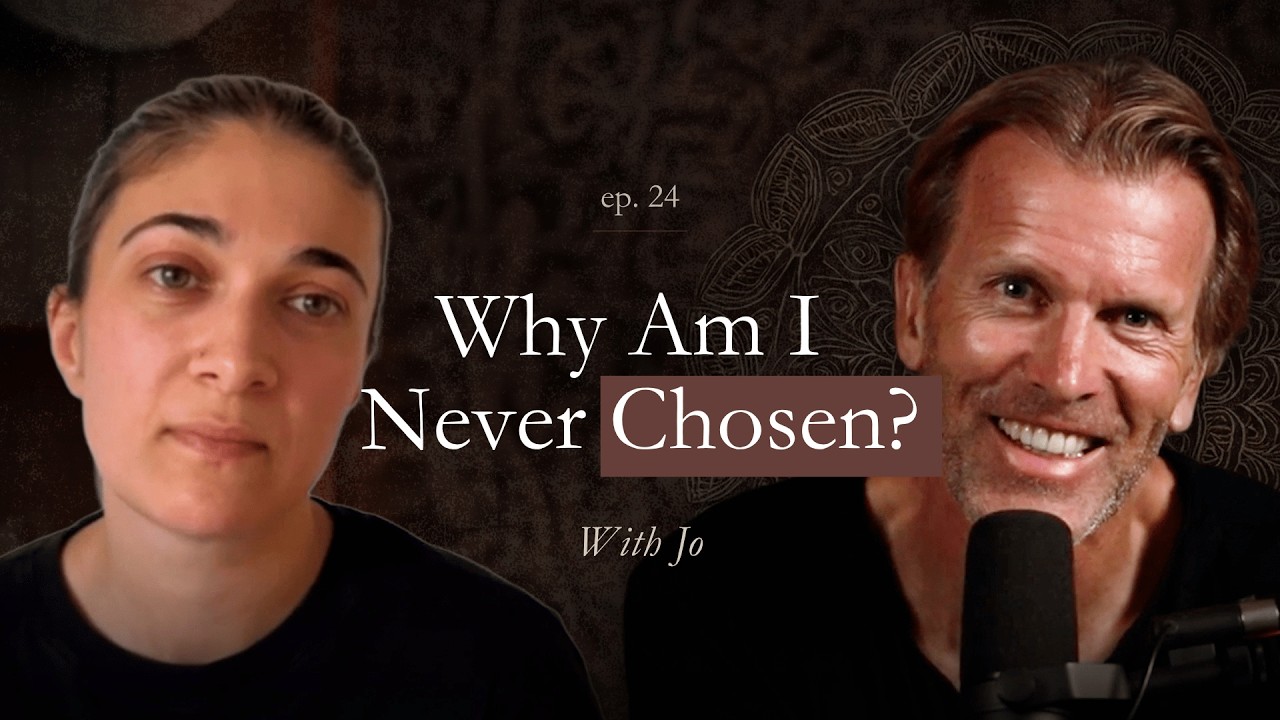
A conversation with Peter Crone and Jo explores how rejection and shame shape our relationships, and why freedom comes from within.…

1 min read
Identity Wounds & Self-Imposed Healing: Why Fixing Yourself Deepens Suffering
Inspire

Identity Wounds & Self-Imposed Healing: Why Fixing Yourself Deepens Suffering

Explore why every addiction masks an identity wound, and how the pursuit of healing perpetuates the belief that something is broken in you.…

1 min read
Life Story vs. Reality: How Narrative Creates Suffering
Inspire

Life Story vs. Reality: How Narrative Creates Suffering

Most unhappiness stems not from what's happening, but from the story you tell about it. Learning to distinguish between life narrative and p…

1 min read
Why Your Parents Acted From Their Level of Consciousness
Inspire

Why Your Parents Acted From Their Level of Consciousness

Resentment asks "how could they do this to me?" Awareness reveals the truth: they could not act beyond their consciousness level. Understand…

1 min read

Keep exploring

Continue your journey

More wisdom and gatherings from across the BrightStar directory.

More Articles

Browse the full library of teachings, interviews, and guides.

Back to all articles →

Teachers & Artists

Explore the lineages, musicians, and guides of the conscious world.

Explore artists →

Find an Event

Kirtan, retreats, sound baths, breathwork, festivals — happening soon.

Browse events →