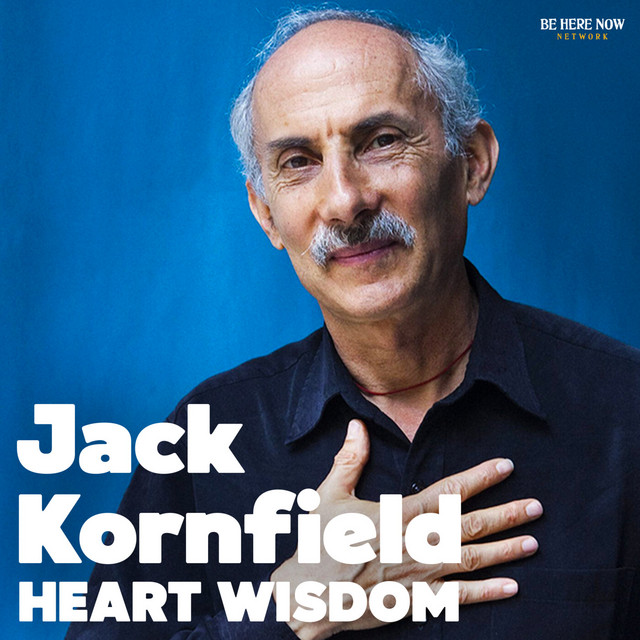
In this holiday special, Jack Kornfield invites listeners to reconnect with the secret beauty within themselves—the wellbeing and love they were born with—and to cultivate the presence, compassion, and clarity needed to share their unique gifts with the world. Rather than treating spiritual practice as grim duty, Kornfield frames meditation and mindfulness as a rediscovery of inner love, a way to move past fear and small-self thinking into service, connection, and authentic expression. The talk weaves together Buddhist wisdom, personal teacher stories, and reflections on family dynamics, seasonal cycles, and what it means to live with integrity and generosity in an age of polarization.
At the heart of Kornfield's teaching lies a deceptively simple claim: the secret beauty he speaks of is not something you need to acquire or earn. It is the wellbeing, the love, and the inherent dignity that you already carry—the essence you were born with. When confusion, busyness, fears, and the small sense of self accumulate over time, that beauty becomes obscured, not lost. Meditation and spiritual practice, in Kornfield's view, is primarily an act of remembrance: quieting the noise enough to touch back into this reality that exists beyond the everyday clutter.
Kornfield contrasts this with a common misunderstanding of spiritual life—the idea that practice must be grim, obligatory, a burden of self-improvement. Instead, he reframes meditation as an invitation to rediscover what is already there: the love and secret beauty within you. This is not mystical language for something untouchable. Rather, it refers to the clarity, dignity, presence, and inherent worth that emerge when the mind settles and you stop identifying exclusively with the narrative of fear and limitation. The secret beauty is what remains when the body of fear—the defensive armor of the small self—begins to relax.
A central theme in Kornfield's teaching is the need to move past what he calls "the body of fear" and the small sense of self. This is not about denying fear or pretending it doesn't exist; rather, it is about recognizing that fear-based identity is not the whole story of who you are. The body of fear is the contracted, defensive posture we adopt when we believe the world is primarily threatening and that we must protect ourselves at all costs.
Moving past this requires both practice and perspective. On the practice side, Kornfield emphasizes bringing the mind and body together in the present moment—a core Buddhist technique. When you are anchored in the now, in direct sensory experience, the mind's habit of projecting worst-case scenarios and defending against imagined threats loosens. On the perspective side, Kornfield invites a shift from fear-based politics and polarization toward becoming a force of connection and love. This is not naive optimism; it is a deliberate cultivation of equanimity and compassion, especially in relationship with those who trigger us.
The paradox Kornfield holds up is profound: you are already perfect, and there is also room for improvement. This both/and thinking helps dissolve the anxious striving that keeps the body of fear in place. You are not broken and needing to be fixed; you are whole, and you are also growing.
Kornfield uses the seasonal turning of winter—specifically the solstice—as a doorway into deeper reflection. The solstice, the darkest day of the year, naturally invites a turning inward, a recognition of darkness and mystery. Rather than rushing past the dark with endless distraction, the holidays and the seasonal cycle offer an opportunity to reconnect with what Kornfield calls "the great mystery of the world and with each other."
There is a beautiful flexibility in Kornfield's approach. He tells the story of his teacher, Ajahn Chah, a Thai Buddhist master, and what happened when a Christmas tree was put up in the monastery where Kornfield was training. Rather than rejecting the tree as un-Buddhist or inappropriate, Ajahn Chah embraced it as an expression of the joy and beauty that people naturally bring to seasonal gatherings. This story illustrates that spiritual practice is not about rigid adherence to one cultural form, but about recognizing the universal human longing for meaning, connection, and beauty that shows up across traditions.
The holiday season, in Kornfield's framing, becomes a conscious space to slow down, remember what matters, and reconnect with the heart. It is an invitation to honor both the darkness (the mystery, the unknown, the letting go) and the light (hope, gathering, the warmth of shared presence).
One of the most practical dimensions of Kornfield's teaching concerns how to see others. He speaks of cultivating the capacity to see "the secret beauty behind the eyes of everyone you meet." This is not sentiment; it is a deliberate retraining of perception and relationship.
When you habitually react to family members, colleagues, or strangers from a place of judgment, defensiveness, or indifference, you are filtering them through the lens of the small self—their threat to you, their failure to meet your expectations, their role in your personal narrative. To see their secret beauty requires a shift: it requires recognizing that beneath the defensive behaviors, the difficult words, the mistakes, there is a human being longing for the same things you long for—safety, belonging, love, meaning.
This becomes especially relevant in the context Kornfield raises: how to deal with family during the holidays with compassion, equanimity, and peace. Family can trigger us precisely because we have history with family members; they know our vulnerabilities, and old patterns activate easily. Rather than either numbing out (the body of fear protecting itself) or lashing out (fear defending), Kornfield's invitation is to bring presence and genuine interest: "What is the beauty and struggle in this person I'm sitting with? What are they longing for?"
This kind of seeing is an act of spiritual practice. It is seeing beyond the surface story, beyond the defensive postures, to the humanity and inherent worth underneath.
Kornfield brings in a Hawaiian story to illustrate what it means to bring your special gift. While the specific details of the story are not expanded upon in the description, the principle is clear: each person has something unique to offer, something that arises from the particular intersection of their talents, experiences, values, and heart. To bring that gift is not to force it, perform it, or make it grandiose; it is to align yourself with what wants to flow through you and to allow yourself to be a vehicle for that expression.
This connects to figures like Ram Dass and Mother Teresa—teachers who devoted their lives to service, to being channels through which love and understanding could manifest into the world. But Kornfield does not set up an impossible standard. He also speaks to the importance of allowing yourself to be taken care of, to receive. Service and gift-giving are not about burnout or self-erasure; they are about finding the rhythm of giving and receiving, of being both a vessel and someone worthy of care.
The paradox here, again, is important: you offer your gift not because you have achieved perfection or mastered yourself, but because the gift is what wants to move through you when you get out of your own way—when you quiet the small self enough to let something larger express itself.
Kornfield names several qualities that naturally emerge or can be deliberately cultivated as you reconnect with your secret beauty and align with this deeper truth: dignity, presence, generosity, clarity, integrity, meaning, compassion, and trust.
These are not abstract virtues. Dignity is the recognition of your own worth and the worth of others—standing upright in your humanity. Presence is the concrete anchor in the body and senses, right now. Generosity flows naturally when you are not operating from scarcity and fear. Clarity emerges when the mental confusion settles. Integrity means aligning your actions with what you actually value, not what you think you should value. Meaning comes from feeling connected to something larger than your personal wants and fears. Compassion is the capacity to meet suffering—your own and others'—with kindness rather than blame. And trust, perhaps most fundamentally, is the gradual willingness to believe that the ground of existence is fundamentally okay, even as difficulties arise.
These qualities are not separate from spiritual practice; they are the fruit of it. They emerge as you quiet yourself and touch back into the reality of your own heart.
Kornfield speaks of "loving awareness" and "entering the wisdom stream." These phrases point to a state of consciousness in which awareness itself is suffused with warmth, acceptance, and understanding, rather than being cold, analytical, or judgmental. When you can observe your own mind and heart with kindness rather than criticism, you are in loving awareness. When you can observe others and the world with genuine interest and care, you are in loving awareness.
Entering the wisdom stream means aligning yourself with what is true, what is real, what has always been true—the interconnectedness of all things, the impermanence that frees us, the love that underlies existence. This is not intellectual knowledge; it is direct experience cultivated through meditation, through presence, through the radical act of showing up to life as it is rather than as your fear insists it must be.
If Kornfield's invitation resonates with you, the first step is simple: find a way to quiet yourself and come back to the present moment. This might be meditation, a walk in nature, sitting with someone you love, or any practice that helps you release the grip of busyness and fear long enough to remember that you are alive, that you have a heart, and that beauty and worth are already present.
Second, consider practicing the art of seeing. When you are with family, colleagues, or strangers this season, pause and ask yourself: "What is the beauty and longing in this person?" This single shift in perception can transform your relationships and your capacity to offer genuine presence instead of reactive defensiveness.
Third, reflect on what your special gift might be. It is not necessarily something grand or impressive by conventional standards. It might be the ability to listen, to laugh, to make something with your hands, to notice what others miss, to show up with consistency, to ask good questions. Where do you feel most alive? Where do others seem to receive something valuable from you? That is pointing toward your gift.
Finally, consider how you might align your daily life—your words, choices, and presence—with the qualities Kornfield names: integrity, clarity, compassion, generosity. Not as a grim to-do list, but as a gradual rediscovery of who you actually are when you are not contracted in fear.