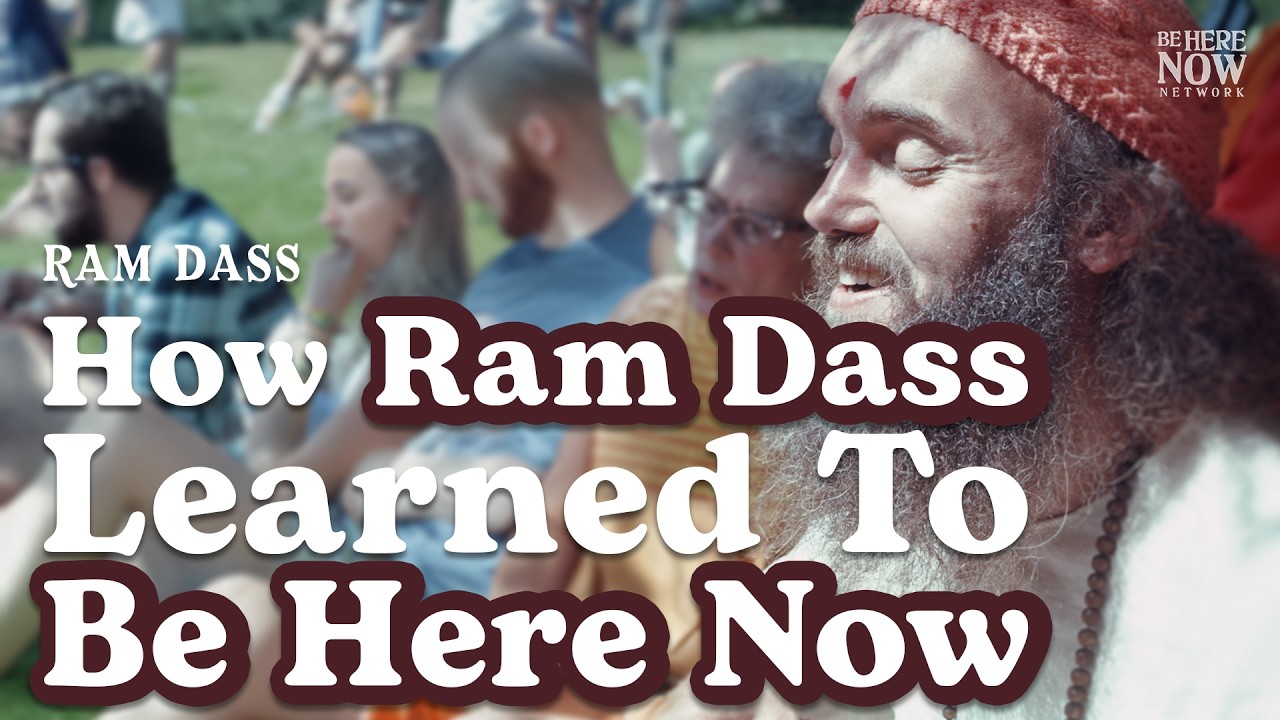
Jack Kornfield discusses rapture—a state of profound joy and bliss that naturally arises during deep meditation practice. Rather than being the goal of practice itself, rapture serves as a signpost pointing toward genuine awakening, which Kornfield defines as the resumption of our true nature. The experience teaches meditators about the capacity for joy inherent in consciousness, and how sustained practice gradually integrates these states into a more stable, authentic way of being.
What Is Rapture in Meditation?
Rapture, in Buddhist contemplative traditions, refers to a state of profound joy, bliss, and delight that can arise spontaneously during meditation. It is not something forced or manufactured, but rather an experience that emerges when the mind settles into stillness and the nervous system begins to relax deeply. Kornfield's teaching emphasizes that rapture is a natural expression of what happens when the ordinary conditioning of stress, fear, and contraction is temporarily released.
In formal practice, rapture often appears after the mind has quieted sufficiently and the meditator has developed some continuity of attention. The experience can range from subtle waves of contentment to overwhelming states of joy that permeate the entire body and consciousness. These states are well-documented in classical meditation literature and remain consistent across different contemplative traditions.
How Does Rapture Differ From the Goal of Meditation?
A crucial distinction in Kornfield's teaching is the difference between experiences during meditation—including rapture—and the actual fruit of practice, which is awakening. Many practitioners mistakenly identify profound blissful states as the attainment itself, then become attached to chasing those experiences. Kornfield clarifies that rapture is more akin to a confirmation: evidence that the mind is capable of freedom, ease, and delight beyond ordinary stress and struggle.
True awakening, as Kornfield frames it, is "to resume our true nature." This is not a state to be grasped or maintained indefinitely, but rather a fundamental shift in how one relates to experience itself. Rapture might be a gate that opens during practice, but the gate is not the destination. The destination is a stable, integrated clarity and authenticity that persists whether or not blissful states are present.
Why Does Rapture Arise in Practice?
From a neurobiology perspective, rapture emerges because meditation directly addresses the default wiring of the nervous system. Most of daily life is spent in a low-grade state of alert vigilance—the nervous system scanning for threat, the mind rehearsing past regrets or future anxieties. When meditation deepens, this vigilance relaxes. The metabolic cost of that constant monitoring releases, and the brain and body experience a profound relief.
This relief is not numbness or dissociation; it is clarity with ease. When the scaffolding of defensive tension lifts, what remains is a natural joy that is not dependent on external circumstances. This joy is not happiness in the colloquial sense (which requires favorable conditions), but something more fundamental—a basic delight in being alive and conscious.
How Should Practitioners Relate to Rapture?
Kornfield's guidance is to meet rapture with awareness rather than grasping. When a state of bliss or profound ease arises, the instruction is not to cling to it or try to sustain it artificially, but to observe it with the same open, non-judgmental attention that practitioners are trained to bring to difficulty, restlessness, or pain. This approach serves multiple purposes:
- It prevents attachment and the suffering that follows when blissful states inevitably pass.
- It trains the capacity to meet all experience—pleasant, unpleasant, and neutral—with equanimity.
- It deepens the understanding that even profound peace is not a permanent possession but an expression of how consciousness behaves when conditioning loosens.
The practice of noting rapture without clinging is itself part of the deepening. Rather than building a spiritual identity around the achievement of blissful meditation states, the meditator learns that the quality of awareness itself—the ability to be present with what arises—is what matters most.
What Does Rapture Teach About True Nature?
Kornfield's statement that awakening is "to resume our true nature" points to a central insight: the joy, freedom, and clarity experienced in meditation are not foreign imports or acquired skills, but rather a recognition of what we already are beneath the accumulated conditioning of fear, shame, and self-protection. Rapture serves as empirical proof that this nature exists.
When a practitioner encounters states of profound ease and delight, they are directly experiencing the mind's capacity for freedom. This is not a supernatural achievement; it is simply consciousness relaxing into its natural state. Over time, as practice deepens and stabilizes, the distinction between "rapture in meditation" and "the way I experience life off the cushion" becomes less absolute. The authentic nature that emerges during practice gradually becomes the baseline of how one moves through the world.
How Does Rapture Integrate Into Stable Awakening?
In the arc of long-term practice, rapture often plays a specific role. In the early and middle stages, blissful states can be quite vivid and memorable, serving as strong encouragement to continue practice. They are signposts that something real is shifting. However, as practice matures, the intensity of rapture may settle into something less dramatic but more stable: a quiet joy, a fundamental okayness, an ease that does not fluctuate wildly with circumstances.
This maturation is not a loss. In fact, it represents a deepening. The flashy rapture of breakthrough experiences gradually becomes woven into the fabric of ordinary consciousness. One becomes less dependent on the contrast between meditative bliss and daily difficulty, and more capable of finding authenticity—that true nature—in all contexts.
Kornfield's teaching on this point emphasizes patience and trust in the process. The practitioner's role is simply to show up consistently, to observe what arises without judgment, and to allow the deeper transformation to unfold in its own time. Rapture is welcome when it comes, but it is not pursued; clarity and integrity are pursued instead.
Where to go from here
To deepen your understanding of meditation practice and awakening, explore Jack Kornfield's broader teachings on mindfulness and the heart. The Heart Wisdom podcast offers ongoing conversations on these themes. Practice sitting meditation regularly, and when joy or rapture arises, experiment with observing it without grasping—noting how the quality of presence itself becomes clearer than the content of the experience. Consider studying classical Buddhist meditation texts, such as the Visuddhimagga, which contain detailed maps of the stages of practice and the various states that typically arise. Most importantly, find an experienced teacher or community to support your practice and offer guidance when needed.