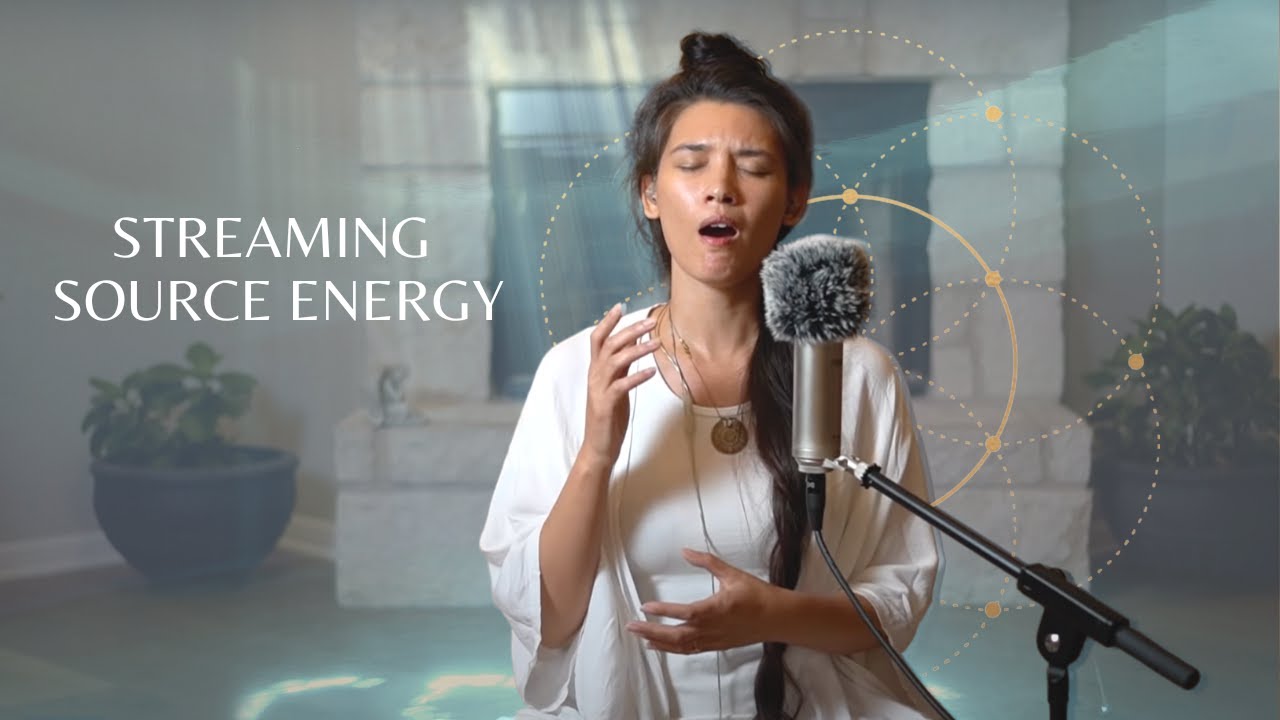
"Raise Your Frequency" is a sound transmission practice centered on using sacred tones and ancient sonic patterns to shift your vibrational state away from lower frequencies associated with stress, fear, and disconnection toward higher frequencies aligned with love, peace, and Source connection. The practice rests on the principle that sound itself is a vehicle for healing—both personal and collective—and that by intentionally raising your own vibration through attunement, you contribute to the healing of humanity and the Earth.
The concept of frequency in spiritual practice refers to the vibrational state or energetic resonance of a person's consciousness and body. Different emotional and mental states are associated with different frequencies: fear, anger, and shame vibrate at lower frequencies, while love, gratitude, and peace vibrate at higher frequencies. "Raising your frequency" means deliberately shifting your internal state to align with these higher-vibration emotions and states of being.
This is not metaphorical alone. Sound itself has measurable frequency—vibrations that move through air and matter. When you intentionally expose yourself to sacred sounds or ancient tones, you are engaging in a direct practice of vibrational alignment. Your body, which is largely water, resonates with these frequencies. Over time, repeated exposure to higher-frequency sounds is believed to gradually attune your nervous system, emotional body, and consciousness to match that higher vibration.
Sacred sounds and ancient tones have been used across cultures for thousands of years in spiritual and healing contexts. These include practices like mantra chanting in Hindu and Buddhist traditions, sacred geometry tones, Solfeggio frequencies, and other vibrational medicine approaches. Each tradition recognizes that certain sound patterns—whether vocal, instrumental, or purely tonal—carry healing properties.
The mechanism operates on several levels:
- Physical resonance: Sound waves physically vibrate your body's tissues and organs, potentially activating relaxation responses and shifting your nervous system from sympathetic (fight-or-flight) to parasympathetic (rest-and-digest) states.
- Emotional attunement: Certain sounds naturally evoke specific emotional states. Deeper, slower frequencies tend to calm; higher, crystalline tones may uplift or expand awareness.
- Energetic transmission: Many spiritual traditions teach that sound carries intention and consciousness. When a transmission is offered with conscious intention (as described in the practice), the sound becomes a vehicle for that intention.
Lower vibrations in spiritual terminology refer to the emotional, mental, and energetic states that contract consciousness rather than expand it. These include fear, shame, guilt, anger, resentment, and disconnection from your authentic self or Source. These states are called "lower" not because they are bad or shameful, but because they literally vibrate at lower frequencies and tend to create contraction, stagnation, and suffering.
Lower vibrations often accumulate as stored tension in the body and as habitual thought patterns. You release them by creating conditions for your system to naturally let go. Sound-based practices do this by:
- Creating a coherent frequency field that your nervous system naturally wants to entrain with (synchronize to)
- Providing a focal point for attention that interrupts anxious or lower-vibrational thought loops
- Inducing deep relaxation states where held tension can dissolve
- Offering a direct experience of peace, love, or connection that reminds your body what it feels like to vibrate at that frequency
A key element of the practice is that the sacred sounds are offered as a transmission—meaning they carry conscious intention. The difference between listening to random music and receiving a sound transmission is the presence of conscious intention behind the offering. When a teacher or healer creates or offers sounds with the explicit intention of transmitting love, peace, or Source connection, that intention becomes embedded in the acoustic and energetic field.
This principle comes from the understanding that consciousness and vibration are intertwined. Intention shapes the quality of the frequency being transmitted. A sound played with the intention to heal carries a different frequency signature than the same sound played mechanically. This is why receiving a transmission "from my heart to yours," as the practice describes, is considered more potent than passive consumption of music.
One of the central teachings here is that your personal frequency shift is not isolated—it has a ripple effect. When you raise your vibration, you change your electromagnetic field and your subtle energetic presence. This affects those around you, the spaces you inhabit, and the collective consciousness field of humanity.
The practice acknowledges that "when you raise your vibration and re-connect to your soul, you will experience deep healing—it also helps heal humanity and Mother Earth." This reflects the understanding that consciousness is not confined to individual bodies but is shared and interconnected. Your internal shift toward love, peace, and connection literally makes more of those frequencies available in the collective field. This is both a scientific intuition (based on concepts like morphic resonance and quantum entanglement) and a spiritual principle found in many traditions: individual transformation serves collective transformation.
Attunement means bringing yourself into alignment or resonance with a particular frequency or state of being. In this context, you are invited to "attune yourself to love, peace, and calm" through the medium of sacred sounds. This is an active receptive practice: you are not trying to force or achieve anything, but rather you are opening and allowing your system to naturally synchronize with the frequency being offered.
The instruction to "relax and open to receive" is important. Attunement works best when you release effort and resistance. This is a parasympathetic activity—you make space internally for the transmission to work on you. Over time, repeated attunement to higher frequencies helps recalibrate your baseline. What once felt unfamiliar (peace, deep calm, connection) begins to feel normal and natural.
Throughout the practice, there is reference to "Source love" and receiving transmission from Source. In this spiritual context, Source refers to the ultimate ground of being, the divine, consciousness itself, or whatever term resonates with your own spirituality. The practice frames the sound transmission as a vehicle for this Source energy to reach you.
The idea is that you are not just listening to pleasant sounds—you are opening a channel through which divine love and healing can flow. The sounds become a bridge between your individual consciousness and the infinite consciousness of Source. This transforms the practice from a wellness technique into a spiritual sacrament or offering.
There is no fixed timeline. Some people report immediate shifts in a single session—a release of tension, an opening of the heart, a sense of peace. Others experience gradual shifts over weeks or months of consistent practice. Factors that influence the pace include your readiness to receive, the consistency of your practice, your openness and trust, and the degree to which you are actively releasing lower-vibrational thought patterns and behaviors in your daily life.
Sound transmission is most effective when combined with other practices: conscious breathing, meditation, mindfulness of your emotions, and deliberate cultivation of gratitude, compassion, and love. The sounds accelerate and support these shifts, but they work best as part of a larger commitment to raising your consciousness.
If you are drawn to this practice, begin with receptivity: create a quiet, comfortable space where you can listen without distraction. Sit or lie down, relax your body, and set an intention to receive the transmission. Let go of expectations about what "should" happen. Simply allow the sounds to move through you. Notice what shifts internally—in your body, emotions, or sense of peace.
Track your own experience over time. Do you feel calmer after a session? More connected to yourself? More present with others? Do you notice changes in your baseline mood or sense of wellbeing with consistent practice? Your own direct experience is the best measure of whether this practice is serving you.
Consider exploring the broader contexts that support this work: study how sound and frequency operate in healing traditions across cultures, learn about your own nervous system and how it responds to different inputs, and deepen your understanding of what "vibration" and "frequency" mean in both scientific and spiritual frameworks. The more you understand the principles behind the practice, the more consciously and effectively you can engage with it.
Remember that raising your frequency is not about toxic positivity or spiritual bypassing—it is not about pretending lower emotions do not exist or rejecting difficult experiences. Rather, it is about not getting stuck in contraction, and consciously returning your awareness to the frequencies of love, peace, and connection as your true baseline. The practice offers a direct, sensory way to remember and embody that truth.