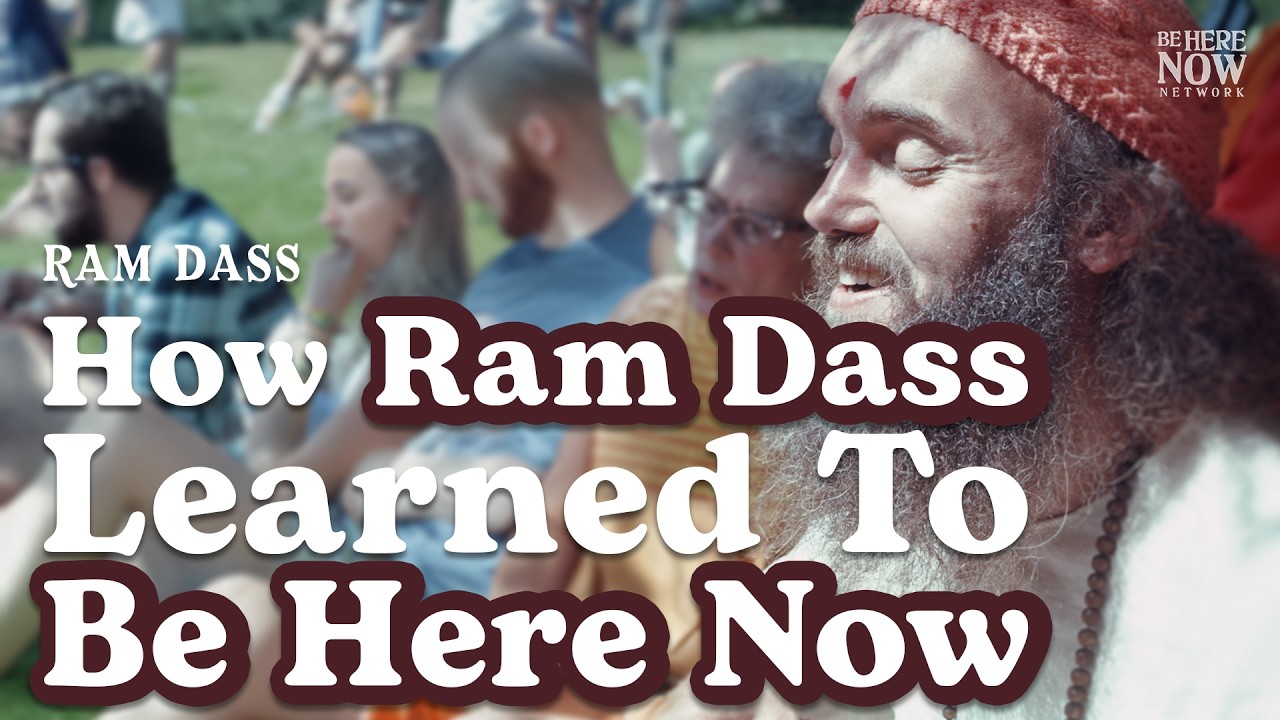
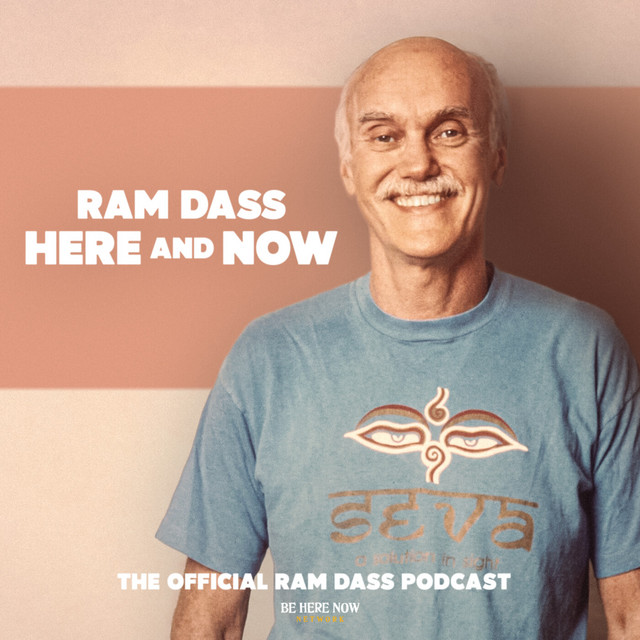
In this 1980s Sydney talk, Ram Dass uses miracle stories from his teacher Maharaj-ji and stories from his book Miracle of Love to illustrate how our attachment to rational thinking prevents us from seeing larger truths. He examines the paradox of truth-based relationships—how genuine honesty in intimacy walks a razor's edge between psychological chaos and cosmic order—and argues that dualistic practices like devotional yoga and authentic relating can paradoxically lead us toward non-dual awareness and help us straddle the boundary between chaos and cosmos.
Why Do Miracle Stories Matter If They Seem Unrealistic?
Ram Dass opens by establishing that miracles are not primarily tools for convincing the intellect. Instead, they serve a different function: breaking our attachment to the thinking mind's dominance over perception. When we encounter a genuinely inexplicable story—like those in Miracle of Love about his guru Maharaj-ji—we hit a wall in rational thought. That wall, according to Ram Dass, is valuable precisely because it stops us from believing we can think our way to understanding reality.
The stories feature Dr. Larry Brilliant's experiences with Maharaj-ji, and Ram Dass emphasizes that the "mind-boggling" quality of these narratives is the point. They don't work by providing evidence; they work by shattering the confidence we place in logical inference as our sole mode of knowing. This is not a rejection of reason but a recognition that consciousness operates on multiple frequencies. The miracle story creates a kind of crack in the edifice of materialist thinking—a space where other ways of knowing become possible.
What Does It Mean That Money and Truth Have Nothing to Do With Each Other?
Ram Dass recounts a specific story where Maharaj-ji demanded changes to the book Be Here Now, and within this narrative, a key principle emerges: "Money and truth have nothing to do with one another." This is not an ethical platitude about corruption. Rather, it points to a fundamental category error. Money operates within the domain of utility, exchange, and the material world. Truth operates in a different register entirely—it belongs to the direct knowing of what is, independent of profit or loss.
When we confuse these domains, we assume that truth must be profitable, marketable, or socially agreeable. We begin to negotiate truth in the way we negotiate contracts. This is precisely the trap that prevents genuine teaching from emerging. Maharaj-ji's demand was for Ram Dass to resist the gravitational pull of the publishing world—to let the work be true rather than successful, or to refuse the implicit contract that success validates authenticity.
Why Is Truth So Difficult in Relationships?
This is where the talk becomes acutely practical. Ram Dass identifies the core challenge: "The truth is scary. Truth keeps shattering your models of how you think it ought to be." In a relationship, we construct narratives about our partner. We build a stable internal image that helps us feel safe. Then truth arrives and demolishes it. You might look at your beloved and suddenly see mortality, aging, or a quality of their nature that contradicts your projection. Your partner might say something genuinely honest—"You look absolutely ghastly this morning"—and the encounter breaks the protective illusion.
The problem runs deeper than tactlessness. Ram Dass acknowledges that humans are layered beings: "We are all these kinds of animal/human/unconscious – we all have all this kind of stuff going back and forth." We are not integrated, coherent beings. We contain contradictions, instincts we don't want to admit, and unconscious impulses. To be truthful in relationship means exposing that ragbag of competing drives and desires to another person. It means resisting the endless self-editing and persona maintenance that social life demands.
Most relationships never attempt this level of honesty. They settle into a negotiated reality where both partners maintain a useful fiction about each other. This has its place and reduces suffering. But it also keeps relationships at the level of ego management rather than consciousness development.
How Can a Relationship Actually Be Based on Truth?
Ram Dass describes this as walking "the very fine line between chaos and cosmos." A relationship based on radical truth sits on an edge. On one side lies chaos—the dissolution of boundaries, the triggering of deep wounds, the unleashing of unconditioned reactivity. On the other side lies cosmos—a kind of ordered, unified awareness where both people meet in their essence rather than their armor.
The chaos side is real and dangerous. Unfiltered honesty without compassion, without wisdom about timing and necessity, can traumatize. It can blow apart the relational container. Yet the alternative—a relationship based on strategic silence, managed impressions, and emotional restraint—never transcends the ego. It remains locked in duality: me versus you, my needs versus yours, truth negotiated as if it were a commodity.
A truth-based relationship requires extraordinary skill and grace. It requires saying the hard thing while also holding the other person's wholeness. It requires naming what you see without pretending your seeing is complete or final. It means being willing to have your models of how things "ought to be" shattered repeatedly and meeting your partner fresh each time, rather than from the fortress of your previous conclusions.
What Role Do Dualistic Methods Play in Non-Dual Realization?
This is a sophisticated point: Ram Dass suggests that dualistic practices—like relationship itself, like devotional yoga directed toward a guru or deity—can paradoxically lead us toward non-duality. They are bridges, not destinations. Relationship is inherently dualistic: there is "I" and "thou." Yet when you meet another person authentically, without the protective layers of ego, you begin to touch the space where that distinction softens. Devotion to a guru means loving what appears to be "other," yet through that devotion, the lover and beloved merge into a single awareness.
Dualistic methods work because they harness the full power of our relational and emotional nature. They don't try to bypass the heart; they purify it. By bringing truth into relationship, by practicing presence with another conscious being, we are not avoiding non-duality—we are walking toward it through the only door available to us: the door of our actual, embodied, relational life.
Where to Go From Here
The practical implication of this talk is to examine your own relationships and notice where truth has been substituted with comfort, or where managed impressions have replaced genuine presence. It is not a call to reckless honesty—Ram Dass's point is subtle—but rather an invitation to increase the proportion of authenticity in your intimate connections, to allow relationships to become laboratories for consciousness rather than merely containers for companionship. Consider too the role of miracle stories or teachings that rupture your rational confidence: they are not meant to convince you intellectually but to create space for other ways of knowing to emerge. Finally, recognize dualistic practices—devotion, relationship, honest speech—not as obstacles to non-dual realization but as the very scaffolding through which it becomes accessible to embodied beings like us.