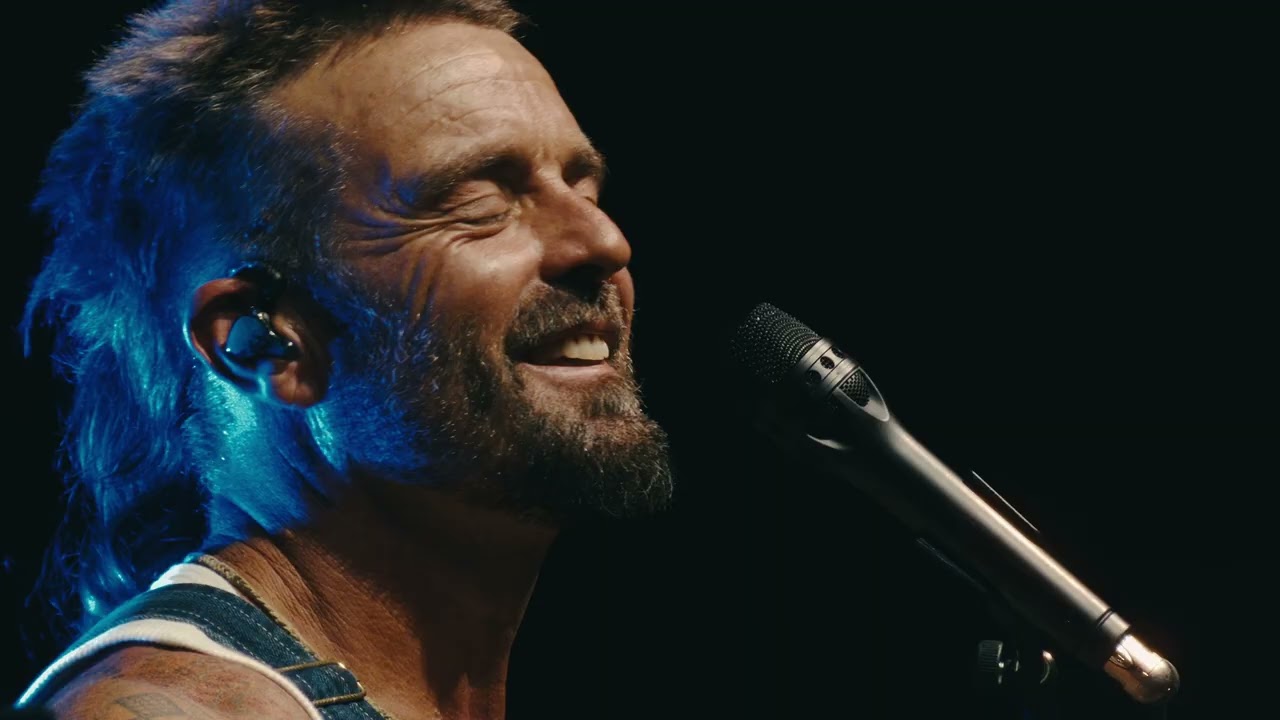
In this behind-the-scenes look at the making of the album NANNA, Xavier Rudd traces his musical lineage through his parents—a PNG and English mother, and an Andamanese father—while reflecting on how his father's support for Australian musicians shaped his own artistic path. Rudd recounts picking up guitar at 12, finding his voice as a singer by 16–17, and describes the experience of creating his first major collaborative project with The United Nations as a privilege, particularly in interpreting the powerful, socially conscious lyrics written by Z about breaking molds and reconnecting with ancestral wisdom.
Xavier Rudd's entry into music was not accidental; it was inherited. His father, an original Andamanese musician, actively supported major figures in the Australian rock and Aboriginal music scene—bands like Midnight Oil and The Whalers. Rather than push music onto his son, Rudd's father modeled a life of musical engagement and cultural support. Rudd himself has said that watching his father perform was what sparked his own love of music. This transmission of musical values, rather than formal instruction alone, became the foundation for Rudd's eventual career. His mother's PNG and English heritage added another layer of multicultural influence to his upbringing, situating him within a family that valued artistic expression and cross-cultural understanding.
The path from observation to practice was gradual. Rudd picked up the guitar at age 12—a common entry point for aspiring musicians—but singing came later, and more importantly, with greater intentionality. He began singing at 14, but he was clear that this initial period "wasn't really serious." It took another two to three years, until he was 16 or 17, for him to approach singing as a genuine artistic commitment rather than casual exploration. This distinction is important: Rudd didn't view himself as a natural prodigy pushed early into the spotlight, but rather as someone who slowly discovered where his voice fit within the larger musical landscape.
By Rudd's own account, the album NANNA—created with his collective, Xavier Rudd & The United Nations—was his first large-scale collaborative project that brought together multiple dimensions of creative practice simultaneously: "the music, the sound, the band, the people." This was not a solo endeavor, nor was it a simple assembly of session musicians. The project united a band, a vision, and a community of artists, making it what Rudd describes as "such an awesome experience and definitely a privilege to be involved with."
The collective name itself—The United Nations—carries intentional weight. It signals an approach to music-making that is inclusive, multi-vocal, and rooted in the idea of nations (cultures, communities) coming together. The album's conceptual framework, evidenced by lyrics that reference "the rainbow serpent calling us," draws on Aboriginal Australian spiritual and mythological traditions, suggesting that the project was designed to honor and articulate indigenous wisdom alongside contemporary musicianship.
Z, one of the primary lyricists on NANNA, crafts what Rudd characterizes as "strong and powerful" lyrics. The songwriting goes beyond surface-level appeal; it carries thematic weight. When Rudd listened back to the recordings, he found himself struck by the depth of what Z had written. The lyrics reference "breaking the mold" and returning to ancestral lines—the phrase "the rainbow serpent calling us then to return to its line and break the mold" encapsulates the album's dual movement: honoring indigenous traditions while simultaneously challenging conventional patterns.
This lyrical approach resonates with Rudd's own heritage and his father's history of supporting artists engaged with cultural resistance and renewal. Midnight Oil, one of the bands his father championed, built their career on socially conscious and politically charged music. Z's lyrics on NANNA operate in a similar register—they demand that listeners pay attention not just to melody or groove, but to meaning. Rudd's experience as a performer was to receive these lyrics and find in them validation of the project's ambitions: "this is such an awesome track" and by extension, "this is going to be a great album."
Rudd's realization that NANNA would be a significant work came not during initial songwriting sessions, but during the playback and review phase. When he listened to the recordings after the fact, "that's when it kind of hit me like this is going to be a great album." This suggests that the quality and coherence of the project wasn't immediately obvious in the moment-to-moment work of creation. Instead, it emerged through reflection—stepping back, listening, and recognizing that the individual pieces (the lyrics, the arrangements, the collaborative energy) were accumulating into something larger than any single contribution.
This creative arc is common in collaborative albums where multiple voices are woven together. The producer, musicians, and artist must often trust the process before the final vision becomes clear. For Rudd, this moment of clarity—this recognition of the album's potential—validated the privilege and honor he felt in being part of the project. It transformed the experience from "a big project" into a statement of artistic purpose.
Listeners interested in understanding Xavier Rudd & The United Nations' vision should approach NANNA not as a collection of songs, but as a unified artistic statement that bridges personal heritage, collaborative musicianship, and indigenous-centered spirituality. The album, which became available for pre-order in early 2015 with tracks like "Come People" and "Sacred" available as instant downloads, represents Rudd's maturation as a bandleader and interpreter of meaningful lyrics. For those exploring Australian music, indigenous representation in contemporary genres, or collaborative approaches to songwriting, NANNA offers entry points into all three. Further exploration of The United Nations collective, the artists who contributed to the project, and Z's lyrical vision will deepen engagement with the album's themes and sonic landscape.