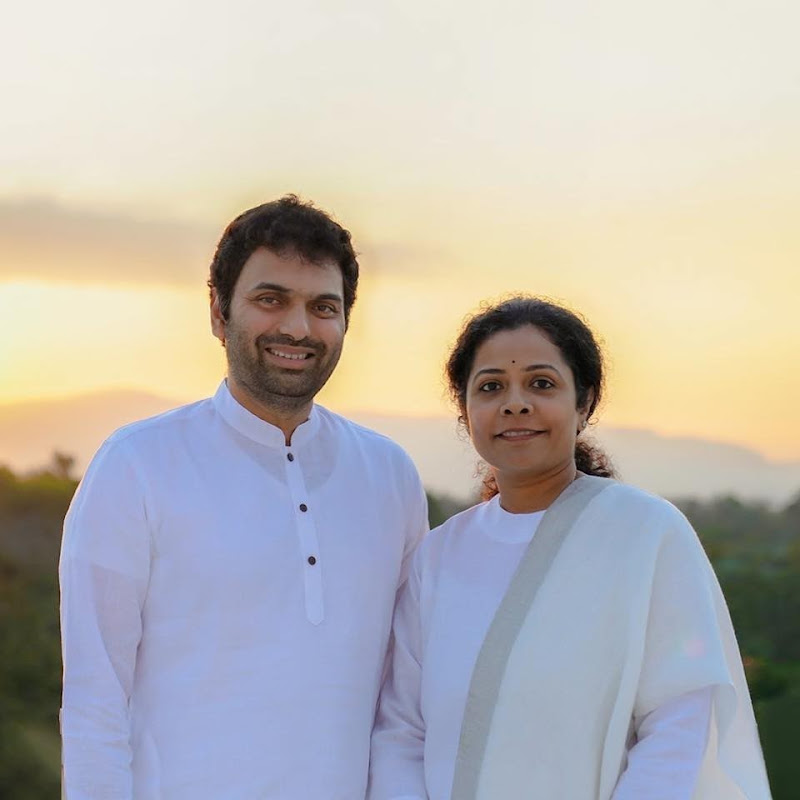
Whether a marriage begins through love or arranged circumstances, its durability depends not on its origin but on two foundational pillars: mutual respect and spiritual unity. Sri Krishnaji addresses a question about the nature of his own marriage to explore a deeper principle: marriages rooted in genuine respect and a shared inner alignment can navigate conflict, grow through adversity, and transcend the initial conditions that brought two people together.
The question posed to Sri Krishnaji—whether his marriage was a love marriage or an arranged marriage—touches on a culturally significant distinction in many societies, particularly in South Asia. But his response shifts the frame entirely. Rather than treating the origin as destiny, he suggests that what matters far more is what the marriage is built upon after it begins.
This is a crucial distinction for anyone navigating partnership. The circumstances under which two people meet—whether through family arrangement, chance encounter, or deliberate choice—do not predict the quality or resilience of what they will build together. Instead, the architecture of the relationship itself becomes the determining factor.
Sri Krishnaji emphasizes respect as a cornerstone of enduring marriage. Respect, in this context, is not merely politeness or formal courtesy. It is a deep acknowledgment of the other person's inherent worth, autonomy, and inner being—independent of whether they meet your expectations, fulfill your needs, or reflect your values perfectly.
In many marriages, respect erodes over time. Familiarity breeds a kind of casual dismissal. Partners stop truly seeing each other and instead see projections—versions of who they expected the other person to be. When this happens, small conflicts become opportunities not for understanding but for judgment. Disrespect compounds, and the marriage becomes transactional rather than relational.
Sri Krishnaji's teaching suggests that sustained respect requires conscious practice. It means approaching your partner with genuine curiosity about their inner world, their struggles, their growth—not just their utility in your life. A marriage rooted in respect can weather disagreement because disagreement is seen as an encounter between two valid beings, not as evidence of failure.
Spiritual unity, as Sri Krishnaji presents it, does not necessarily mean shared religious belief or identical philosophical practice. Rather, it refers to alignment at a deeper level: a shared orientation toward consciousness, inner growth, and the transcendent dimension of existence.
When two people share this orientation—when they both see marriage as a path of awakening rather than merely a contract for comfort or social legitimacy—the relationship gains a vertical dimension. Challenges become invitations to deepen rather than threats to security. Conflict becomes material for mutual growth rather than proof of incompatibility.
This spiritual unity also creates what might be called a shared sense of purpose beyond the marriage itself. Partners who are both dedicated to their own inner development often find that their marriage becomes a container for that development, a mirror in which each sees their own patterns and possibilities reflected. The other person becomes not just a companion but a guide, a teacher, an instrument of one's own evolution.
Conversely, a marriage that begins with strong romantic love but lacks respect and spiritual alignment faces predictable erosion. The initial chemistry fades—as it naturally does—and couples are left with the structures they've built. If those structures are hollow, the relationship becomes vulnerable to resentment, disconnection, and eventual dissolution.
Many relationships that begin as passionate love marriages fail because they were never designed to last. They were designed to feel good, to satisfy desire, to meet emotional needs. But when real life arrives—when illness, financial stress, parenting challenges, or simple incompatibility emerge—partners discover they have no foundation beneath the emotional intensity.
Sri Krishnaji's teaching offers a reframe: the question is not "Did we choose each other or were we chosen for each other?" but rather "Have we chosen to build something real together, grounded in respect and shared inner purpose?"
Respect is not static. It must be continuously renewed and deepened through deliberate practice. This might include:
- Genuine listening: Creating space to hear your partner's inner world without immediately trying to fix, dismiss, or defend.
- Maintaining individuality: Supporting your partner's autonomy, interests, and spiritual practice rather than demanding they merge entirely into the marriage.
- Accountability: Taking responsibility for your own patterns, triggers, and wounding rather than blaming your partner for your pain.
- Curiosity over judgment: When conflict arises, approaching it with genuine desire to understand your partner's perspective rather than proving yourself right.
Spiritual unity is not abstract. It manifests in concrete ways: in how couples speak to each other during stress, in their willingness to work through conflict rather than abandon it, in their capacity to forgive, in their shared commitment to their own growth and healing.
Partners with spiritual alignment often prioritize their inner work—meditation, therapy, contemplative practice, honest self-examination. When both partners are engaged in this way, the marriage becomes a living laboratory for transformation. Each person's growth supports the other's. Triggers become teachings. Conflict becomes opportunity.
This also means having shared values around what matters most: honesty, growth, compassion, service. These need not be identical for every couple, but the alignment must be genuine. A couple cannot sustain spiritual unity if one partner is devoted to truth and the other to comfort, or if one is committed to growth while the other is committed to control.
The answer implicit in Sri Krishnaji's response is yes—both can thrive, and both can fail. The origin is nearly irrelevant. What matters is what happens after the marriage begins. A couple that marries for passionate love but then builds a foundation of respect and spiritual unity can flourish. A couple that begins with an arranged marriage and consciously develops these same qualities can thrive equally well.
What ensures failure is not the origin but the absence of these two elements. A love marriage without respect becomes possessive and resentful. An arranged marriage without spiritual alignment becomes a duty or a convenience. But when either type of union is grounded in genuine respect and shared inner purpose, it becomes resilient, meaningful, and generative.
If you are in a marriage—whether it began as a love match or an arranged union—Sri Krishnaji's teaching invites you to examine the foundation beneath it. Ask yourself: Is there genuine respect flowing in both directions? Are we both committed to our own growth and to supporting each other's awakening? Are we approaching this relationship as a path of consciousness, or merely as a transaction for meeting needs?
If the answer to these questions is not yet yes, they are not indictments. They are invitations. Respect and spiritual unity are not qualities you either have or don't have at the start—they are practices you deepen over time through commitment, honesty, and sustained effort. The origin of your marriage is less important than the intentionality you bring to its evolution.