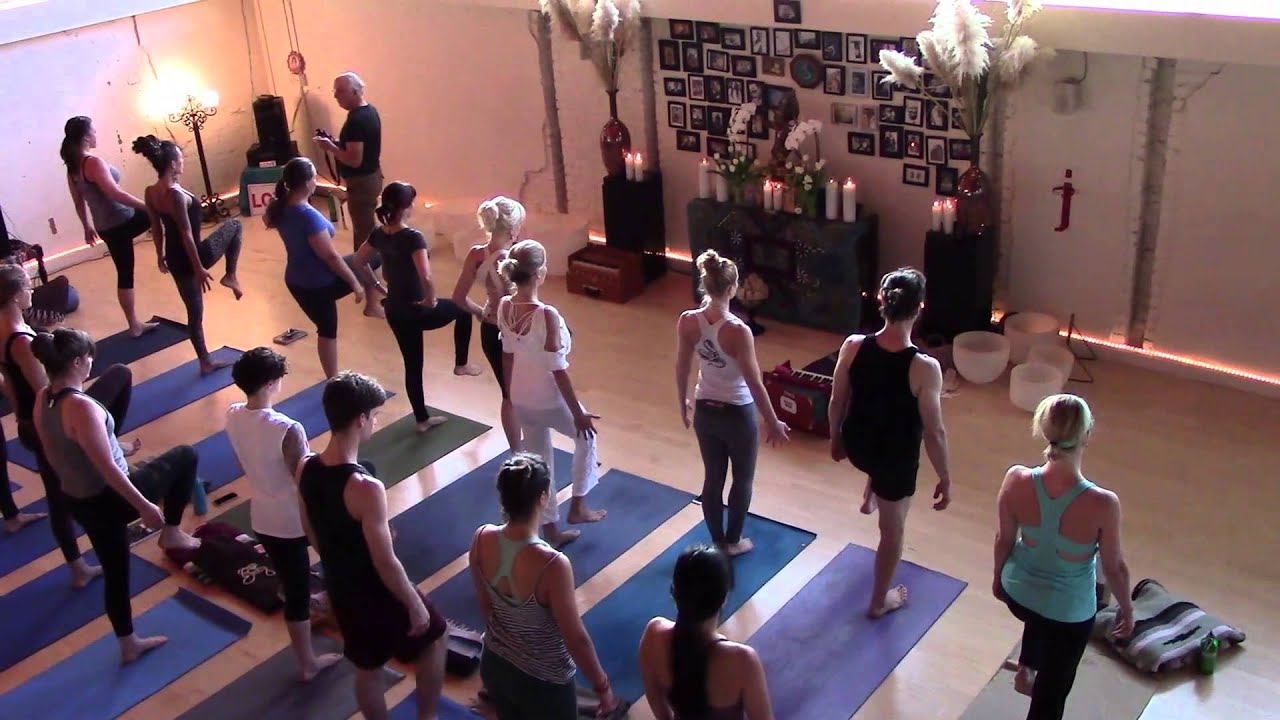
Lokah Samastah Sukhino Bhavantu is a Sanskrit mantra that translates to "May all beings everywhere be happy and free, and may the thoughts, words, and actions of my own life contribute in some way to that happiness and to that freedom for all." The mantra articulates a core principle of yoga philosophy: that individual spiritual practice is inseparable from a commitment to the welfare of all sentient beings. Rather than viewing yoga as a personal self-improvement tool, this teaching positions it as a practice rooted in universal compassion, where one's own liberation is fundamentally connected to the liberation of others. Sharon Gannon explores how this mantra functions not merely as words to recite, but as a lived ethical framework that transforms how practitioners engage with their thoughts, speech, and actions in the world.
What Does Lokah Samastah Sukhino Bhavantu Mean?
Lokah Samastah Sukhino Bhavantu is a Sanskrit mantra that breaks down into four key concepts. "Lokah" refers to the world or all places; "samastah" means all; "sukhino" translates to happy or at ease; and "bhavantu" means "let there be" or "may it be so." Taken together, the mantra expresses a wish: "May all beings everywhere be happy and free." This is not a passive sentiment or mere wishful thinking. Rather, it represents an active intention and commitment to the collective well-being of all sentient beings, regardless of species, location, or relationship to the speaker.
The mantra's power lies in its completeness. It does not limit compassion to one's family, community, nation, or even humanity. Instead, it extends the circle of care to "all beings everywhere"—a phrase that encompasses vast imaginative and ethical territory. In yoga philosophy, this reflects the principle of ahimsa (non-harm) and brahmacharya (right relationship to all of life). The mantra serves as both a statement of philosophy and a daily practice, a way of reorienting one's consciousness toward the interconnectedness of all existence.
How Does Personal Responsibility Connect to Universal Happiness?
The second half of the mantra shifts focus: "may the thoughts, words, and actions of my own life contribute in some way to that happiness and to that freedom for all." This pivot is crucial to understanding the teaching. Rather than absolving the individual of responsibility or placing all burden on collective forces, the mantra articulates a direct link between personal conduct and universal outcomes. What you think, what you say, and what you do matter—not because they will single-handedly solve all suffering, but because they ripple outward and influence the field of consciousness in which all beings live.
This framework invites practitioners to examine their inner and outer lives with precision. A thought of judgment, anger, or cruelty creates a subtle energy or vibration that affects the collective consciousness. Words spoken carelessly or with malice carry that same weight. Actions rooted in selfishness, exploitation, or ignorance propagate patterns of suffering. Conversely, thoughts grounded in compassion, words spoken with honesty and kindness, and actions aligned with the welfare of others contribute to a field of well-being. This is not about perfectionism or self-blame—the mantra acknowledges contribution "in some way," suggesting that imperfect efforts toward kindness still matter.
What Is the Role of Yoga Practice in Realizing This Teaching?
In yoga philosophy, the practice of asana (physical postures), pranayama (breath work), and meditation are not ends in themselves but means of purifying consciousness and aligning the practitioner with universal principles. Lokah Samastah Sukhino Bhavantu functions as both a guiding intention and a measure of authentic practice. A yoga practitioner might ask: Am I using this practice to become more self-centered or more compassionate? Am I cultivating awareness that serves only my own comfort, or am I developing sensitivity to the suffering of all beings?
The mantra challenges a common misconception in modern yoga studios: that yoga is primarily about achieving physical fitness, stress relief, or personal wellness. While these benefits may arise, they are byproducts rather than the true aim. The true aim, according to yoga's philosophical roots, is the liberation of consciousness from ignorance and the recognition of one's fundamental unity with all of life. When a practitioner recites or embodies Lokah Samastah Sukhino Bhavantu, they are declaring that their yoga practice belongs to a larger purpose—the awakening and liberation of all beings.
How Can This Mantra Transform Daily Consciousness?
Integrating Lokah Samastah Sukhino Bhavantu into daily life requires translation into specific choices and orientations. When faced with a decision—what to eat, how to respond to criticism, whether to speak up in a moment of injustice—the mantra becomes a compass. Does this thought, word, or action move toward or away from the happiness and freedom of all beings? This is not a rigid formula but an invitation to increased mindfulness and ethical sensitivity.
For example, the practice might influence how someone engages with food. If eating meat contributes to animal suffering, how does that align with the wish for all beings to be happy and free? It might influence how someone speaks to a difficult colleague or family member. Would words of judgment and resentment contribute to that person's freedom, or would words of compassionate truth serve better? It might influence how someone votes, works, spends money, and builds relationships. Each of these becomes an opportunity to ask whether one's choices are contributing to collective liberation or reinforcing systems of suffering.
What Does Universal Freedom Mean Beyond Physical Liberty?
The mantra's reference to both happiness and freedom deserves careful attention. Freedom, in yoga philosophy, is not merely the absence of external constraint. It is moksha or kaivalya—liberation from the cycle of suffering caused by ignorance, attachment, and aversion. True freedom is the freedom from mental patterns of greed, fear, delusion, and compulsion. Happiness, or sukha, similarly refers not to pleasure or the satisfaction of desires, but to a state of ease, contentment, and alignment with one's true nature.
When the mantra wishes for "all beings everywhere" to experience this freedom and happiness, it is not asking for a world where everyone gets what they want. Rather, it is invoking a state of consciousness where beings are no longer enslaved by ignorance, where suffering is understood and transcended, and where actions flow naturally from wisdom rather than reactivity. This is a profound and sometimes radical wish. It means wishing for those who cause harm to be freed from the delusion and suffering that motivates their cruelty. It means wishing for one's enemies to awaken. It means wishing for all beings—human and non-human—to recognize their essential nature and act accordingly.
How Does This Mantra Relate to Environmental and Social Ethics?
The explicit inclusion of "all beings everywhere" has direct implications for how practitioners understand their ethical responsibilities. In a world where many animals suffer in industrial agriculture, where ecosystems are damaged by human consumption and waste, and where many humans live in poverty and oppression, the mantra cannot be recited superficially. It becomes a call to examine systems of exploitation and to ask how one's own participation in these systems can be reduced or transformed.
This does not mean that reciting the mantra obligates a practitioner to solve all global problems single-handedly. Rather, it invites genuine reflection on the often-invisible ways that personal comfort is built on the suffering of others. It asks practitioners to become more conscious of their complicity and more intentional about where their choices lead. For some, this might manifest as dietary changes, activism, or career choices aligned with reducing harm. For others, it might manifest as greater compassion for the suffering of others and a commitment to not adding to it through judgment or indifference.
Where to Go From Here
To deepen your engagement with Lokah Samastah Sukhino Bhavantu, consider beginning with the mantra itself. You might recite it daily, especially at the beginning or end of a yoga or meditation practice, allowing the words to settle into your consciousness. Notice how the mantra feels in your body and mind. What resistance, inspiration, or questions does it evoke?
Next, translate the mantra into observation. For one week, notice your thoughts, words, and actions. Which of these feel aligned with the wish for all beings to be happy and free? Which feel misaligned? This is not about judgment but honest seeing. Consider starting one small practice: perhaps speaking with greater kindness, making a dietary choice that reduces harm, or pausing before reacting with anger to ask whether your response will contribute to anyone's freedom.
Explore the philosophical roots of this teaching in yoga texts such as the Yoga Sutras and the Bhagavad Gita. Study the concept of ahimsa (non-harm) and how it applies to your own life. If you have access to a yoga teacher or spiritual guide, ask them how they interpret and practice this mantra. Ultimately, the teaching comes alive not through intellectual understanding alone but through lived practice—through the patient, imperfect work of aligning your consciousness and actions with the welfare of all beings.