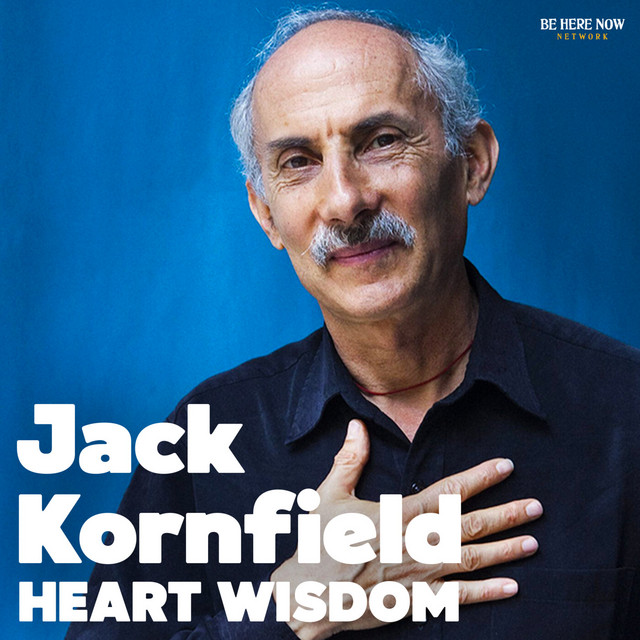
In this talk recorded during a desert retreat in the 1990s, Jack Kornfield unpacks the paradox of freedom through the lens of letting go—arguing that nirvana is not a distant goal but an invitation to release grasping and return to this very place, this very moment. Drawing on classical Buddhist teachings, anecdotes, and lived wisdom from decades of monastic training, Kornfield shows how the art of letting go operates not as renunciation or escape, but as a return to wholeness, beginner's mind, and the coolness of release from the endless cycle of wanting.
What does "the end of exile" mean in spiritual practice?
Kornfield frames freedom as a return home—not a journey to a distant destination, but a turning around of the mind toward what is already present. The sense of exile, of being displaced or at war with reality, is the default condition of a mind caught in grasping, resistance, and the illusion of separation. When we stop fighting the present moment and stop seeking something other than what is, exile ends. This is not passivity; it is clarity. The moment we recognize that wholeness is here—not in some future state of enlightenment, not in a monastery across the ocean, not in the next experience—we step out of the long journey of self-imposed exile. This shift in perception is itself the return. The present moment becomes, as Kornfield suggests, the only place of genuine freedom.
How does pure awareness relate to life's cycles?
Pure awareness, in Buddhist psychology, is the capacity to witness the cycles of life—birth and death, gain and loss, pleasure and pain—without being swept away by them. Rather than pure awareness being a separate, transcendent state, Kornfield invites us to understand it as the natural clarity that emerges when reactivity quiets. When we stop grasping at pleasure or pushing away pain, we can see the cycles themselves with equanimity. This witnessing is not cold detachment; it is a warm, conscious presence to the nature of existence. The cycles continue—this is the dharma, the law of nature—but we are no longer imprisoned by the story we tell about them. We can feel grief deeply and still be free. We can celebrate beauty and not be destroyed when it passes.
Where is true freedom actually found?
Kornfield's central insight is that freedom is not found in any external circumstance or future achievement. It is not found in renouncing the world, acquiring special powers, or reaching a rarefied meditation state. Freedom is found in the present moment, in the simple willingness to be here, aware, and at peace with what is. The description in the talk mentions "nirvana as a public health measure"—a playful but profound suggestion that freedom from grasping is not an obscure monastic achievement but a fundamental release available to anyone, anywhere. The cool relief of letting go can arrive while washing dishes, walking through a city, or sitting in traffic. Nirvana, Kornfield suggests, is inviting because it is not demanding perfection or requiring us to escape ordinary life. It is simply the cessation of unnecessary suffering through the cessation of clinging.
What is the difference between letting go and letting be?
This distinction is subtle but crucial. Letting go often implies effort—we are actively releasing something, pushing it away, or striving to detach. Letting be, by contrast, is a softer gesture: we stop interfering with what is already here. The mind becomes spacious enough to allow thoughts, sensations, and emotions to move through without needing to control, suppress, or embellish them. Both practices point toward freedom, but letting be requires less volition and less sense of the self as the doer. In Zen, there is the paradox of "controlled folly"—Kornfield mentions Don Juan's concept—where the practitioner acts fully in the world while remaining inwardly unattached to outcomes. This is closer to letting be: we participate, we engage, but we do not grasp at results or demand that reality conform to our preferences.
Why does Kornfield speak of "the dignity of just being an earthworm"?
This is a humorous but deeply humanizing point. We live in a culture obsessed with achievement, transcendence, and becoming something other than what we are. Even in spiritual practice, practitioners often believe they must become enlightened, refined, or superior. Kornfield's earthworm reference cuts through this: there is a profound dignity and wholeness in simply being alive, in doing the work of existence without need for extraordinary status or special knowledge. An earthworm turns soil, allows decomposition and growth, and asks for nothing more. In this view, the practice is not to become something glamorous or rare, but to find peace and wholeness in the ordinary, humble fact of being human. This reframes spiritual practice from striving to resting, from becoming to being, from exile to homecoming.
How does "periodic nirvana" keep us alive?
Kornfield suggests that brief moments of release from grasping—what he calls periodic nirvana—are not abstract achievements but vital experiences that sustain psychological and spiritual health. Every time we let go of a grudge, find peace in acceptance, or rest in a moment of simple presence, we taste the coolness of nirvana. These are not dramatic or rare; they are available daily. Without them, the mind becomes exhausted by constant striving, and the body becomes tense with unresolved grasping. The momentary releases, the small surrenders, the tiny tastes of freedom—these keep the nervous system regulated and the heart open. Rather than waiting for a final, permanent nirvana, Kornfield invites us to recognize that freedom is a rhythm, like breathing: we grasp, we release, we grasp again, we release again. Periodic nirvana is the exhalation that makes the next inhale possible.
What role do surrender and choosing your spirit play?
Kornfield's references to teachers like Ram Dass and Stephen Levine point to the wisdom of conscious surrender—not as defeat or giving up, but as alignment with something larger than the isolated self. To surrender, in this sense, is to stop fighting against reality and instead choose which spirit, which quality of consciousness, will guide our choices. We cannot control what happens, but we can choose our response. We cannot prevent loss, but we can choose whether to meet loss with bitterness or with compassion. Stephen Levine's work on conscious dying, and Ram Dass's later teachings on grace and devotion, illustrate that surrender becomes liberating precisely when it is chosen—when the practitioner consciously aligns with what is true rather than what the ego demands. This is not passive; it is an active, continuous choosing to be in right relationship with reality.
What is bodhicitta and how does it relate to emptiness?
Bodhicitta is often translated as "awakening heart" or "enlightening mind"—the intention and capacity to work for the liberation of all beings. In Kornfield's teaching, bodhicitta is described as "the heart of emptiness and compassion," suggesting that true emptiness (the absence of a solid, separate self) and true compassion are not separate experiences but two facets of the same awakening. When we see through the illusion of separation and touch the empty nature of self, compassion naturally arises because there is no longer a clear boundary between self and other. The heart opens not because we are trained to be nice, but because the perception of separation, which gave rise to fear and self-protection, has dissolved. Bodhicitta is the movement of this open heart back into the world—the commitment to see and serve the wholeness in all beings.
How does Zen paradox relate to freedom?
Kornfield mentions the Zen tradition, particularly through references to paradox and Don Juan's "controlled folly," to highlight that freedom cannot be explained; it must be lived. Zen koans (paradoxical teaching stories) train the mind to stop looking for logical answers and instead jump into direct experience. If freedom could be fully described, it would already be captured and made into another concept to grasp. The paradox of controlled folly—acting fully while remaining detached, engaging without grasping, moving through the world while touching nirvana—can only be known through the body and the moment. This is why Kornfield's emphasis throughout is not on understanding but on presence, not on believing but on tasting the actual coolness of release.
How can grief, struggle, and beauty all be part of wholeness?
A common misunderstanding of enlightenment is that it means transcending difficult emotions or being constantly blissful. Kornfield corrects this: wholeness includes grief, struggle, and the full catastrophe of human existence. When we are fully present to grief, we feel its depth; when we are fully present to struggle, we meet it with courage; when we are fully present to beauty, we do not defend against it. Freedom is not the absence of these experiences but the capacity to be fully alive in the presence of them, without the additional layer of denial, resistance, or self-pity. The paradox is that this full, honest engagement with life's texture—including its sorrows—is more liberating than any attempt to cling only to pleasant states. The wholeness that Kornfield points toward includes the entire spectrum of human experience.
Why is each moment a chance for struggle or freedom?
In every moment, there is a fork in the road. We can meet the present with grasping, resistance, and the stories of self—this is the path of continued struggle. Or we can meet the present with awareness, acceptance, and the willingness to let go of unnecessary control—this is the path of freedom. This choice is not made once; it is made continuously. Even practitioners who have tasted deep liberation must remake this choice in each moment, with each breath. What makes this teaching hopeful is that the choice is always available. No matter how lost we have been, the next moment offers a fresh opportunity to return. This is not a promise of permanent escape from difficulty, but a promise that freedom is never further away than the present moment and the willingness to let go.
What is the goal of practice—enlightenment or beginner's mind?
Kornfield suggests something paradoxical: the goal of practice is not to achieve enlightenment and then rest, but to keep the beginner's mind alive. Beginner's mind is the freshness, openness, and wonder with which a child approaches the world before conditioning has calcified perception. Many practitioners spend years trying to reach a final, permanent state of enlightenment, only to discover that the moment they grasp at permanence, they have lost it. Kornfield invites a different relationship: each day is a new beginning. Each meditation sits fresh. Each encounter with another being is new. The practitioner who has practiced for forty years can return to the simple joy of sitting with the breath, like a child discovering it for the first time. This is not failure; this is the actual fruition. The liberation sought is not a destination that, once reached, ends the journey—it is the journey itself, lived with the full engagement and wonder of beginner's mind.
Where to go from here
Kornfield's teaching invites immediate application. Rather than treating this as philosophy to understand, explore what it means to stop, in this very moment, the grasping and resistance in your mind. Notice when you are in exile—caught in worry, regret, or the sense that life should be other than it is. Then notice when you relax: a moment of acceptance, a breath of relief, a second where you are simply here. That moment is nirvana. That moment is freedom. The practice is not to make these moments last forever but to recognize them, to taste them, and to trust that this freedom is indeed inviting and close. Consider too what it means to be whole—to include grief, joy, struggle, and ease in your understanding of wholeness. Finally, return again and again to the beginner's mind: not striving to be better or more enlightened, but showing up to each moment with the freshness and openness of someone seeing it for the first time.