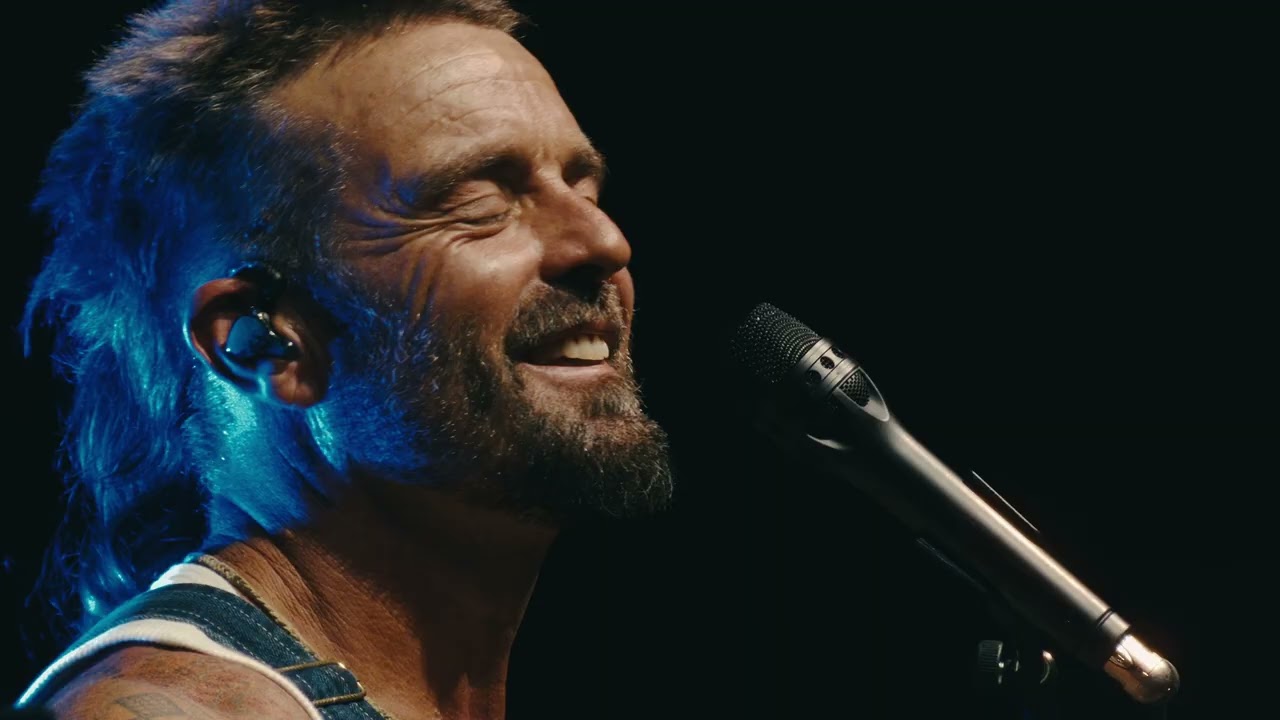
"Honeymoon Bay" is a multi-layered song about spiritual guidance, the weight of personal choice, and the necessity of being "recklessly brave" in the face of life's uncertainty. The track, set in Fiji and filmed on location across magnificent islands, weaves together imagery of angels, serpents, natural cycles, and dream narratives to explore how we are "decided by choices" and guided by forces both seen and unseen. The song positions the listener at a threshold—between safety and risk, between inherited wisdom and self-determination—asking what it means to move forward when you feel called to do so.
What Does It Mean to Be "Recklessly Brave"?
At the heart of this song lies a paradox: the need to act with courage despite uncertainty, to step into the unknown without a guaranteed outcome. The lyric "one of those days gonna know his choices / to be recklessly brave" (33s) suggests that certain moments demand a kind of fearlessness that isn't the absence of fear but rather the willingness to move forward anyway. This concept sits at the intersection of agency and surrender—the recognition that we make choices, yet those choices carry consequence and mystery.
The phrase "recklessly brave" refuses the comfort of calculated safety. It acknowledges that growth, change, and authenticity sometimes require stepping outside the bounds of what feels secure. In the context of the broader song, this bravery is not presented as reckless abandon but as a necessary stance toward life, especially when one feels "guided by angels" and "decided by choices."
How Do Spiritual Guides and Personal Agency Intersect?
Throughout "Honeymoon Bay," there is a recurring tension between external guidance and internal choice. The opening invokes "angels flying" and mentions being "guided by angels" (11s, 33s), which establishes a sense of spiritual accompaniment. Yet this spiritual presence does not negate responsibility—instead, the song insists that we are "decided by choices" (36s), emphasizing that guidance and autonomy are not opposites but complementary forces.
This mirrors wisdom traditions across cultures: the idea that we are held by something larger than ourselves while simultaneously being the authors of our own lives. The angels are present, but they do not make our decisions for us. Rather, they seem to witness and support the unfolding of our choices, much as one might move through a threshold with both confidence and reverence.
What Role Do Serpents and Natural Cycles Play?
The imagery shifts early in the song with the mention of "serpents" (15s). In many spiritual and mythological traditions, the serpent represents transformation, shedding of the old self, and the mysteries of the earth. The serpent is not presented here as threat but as part of the natural order—a creature of cycles and renewal. Paired with "angels flying," the song creates a cosmology where both the transcendent (wings, sky, spirit) and the chthonic (earth, serpent, instinct) are necessary forces in the human journey.
This duality becomes more explicit later when the song references "Sweetwater turtle minglee rules our beginning" (90s), anchoring the listener in natural wisdom and territorial belonging. The turtle, moving between water and land, suggests a being at home in transitions. The invocation of "our beginning" ties this natural imagery to origin stories and foundational truths—the sense that certain places and creatures hold keys to understanding who we are.
What Are "Dream Stories Patched in the Stone"?
Toward the middle of the track, the song shifts into a more visionary register: "dream stories patched in the stone / dream and create our God" (96s, 102s). This phrase suggests that human narratives—our myths, our visions, our spiritual understandings—are not separate from the material world but woven into it, literally "patched" into the physical substrate of existence. The image is one of co-creation: we do not simply discover a pre-formed divine reality, but through dreaming and creating, we participate in giving shape to the sacred.
This is a decidedly participatory spirituality. To "dream and create our God" is to take responsibility for the spiritual meaning-making that occurs through human imagination and action. It suggests that sacredness is not handed down fully formed but arises through the interplay of vision and reality, individual and community, spirit and stone.
How Does Location Shape the Song's Message?
Filmed on location in Fiji, the music video grounds these abstract themes in a specific geography. Islands, by their nature, evoke both isolation and sanctuary—a place set apart where one can encounter oneself and nature more directly. The "Honeymoon Bay" of the title is typically associated with romantic escape and renewal, but in this song it becomes something deeper: a place where one encounters truth, where angels and serpents coexist, and where the courage to be "recklessly brave" is not a desperate leap into void but a step taken in a landscape that holds and witnesses the choice.
The natural beauty of Fiji provides visual ballast to the song's spiritual and emotional themes. Water, island rock, vegetation, and sky become not mere backdrop but partners in the storytelling, reinforcing the song's insistence that the sacred and the natural are inseparable.
What Is the Significance of "Taking Your Chairs"?
The repeated phrase "take your chairs" (60s, 131s) appears both early and late in the song, functioning almost as a ritual call. In traditional and ceremonial contexts, "taking your seat" or "taking your chair" can mean claiming your place, owning your space, settling into your authority or belonging. It is an invitation to ground oneself, to stop wandering, to declare presence. In the context of a song about choice and bravery, it becomes an affirmation: sit down, show up, be here fully, and from that grounded place, make your choices.
This phrase also carries communal resonance—"take your chairs" addresses a collective, suggesting shared witnessing and mutual belonging. It is not a solitary practice but a gathering.
How Do the Themes Connect to the Album Context?
"Honeymoon Bay" appears on the album Storm Boy (released May 25, 2018), an album title that itself evokes both turbulence and youth, movement and vulnerability. Within that broader collection, this song emerges as one that does not shy away from the storms of life—the challenges of choice, the weight of agency, the call to bravery—but frames them within a landscape of spiritual support and natural belonging. The song is not about escaping difficulty but about how to move through it with grace, guidance, and grounded presence.
Where to Go From Here
Listeners drawn to "Honeymoon Bay" might explore how the tension between spiritual guidance and personal agency shows up in their own lives. What does it feel like to be "guided by angels" (your own wisdom, intuition, or sense of meaning) while also being "decided by choices" (your own agency and responsibility)? How do you cultivate the kind of courage the song calls "recklessly brave"—not fearlessness, but willingness to act in the face of uncertainty?
The song also invites reflection on place and belonging. What landscapes or communities anchor your sense of identity and possibility? How do you "take your chair" in a world that often asks you to remain uncertain about where you belong? And finally, what does it mean in your own spiritual or creative practice to "dream and create"—to participate in the making of meaning, sacredness, and beauty, rather than simply consuming inherited narratives?