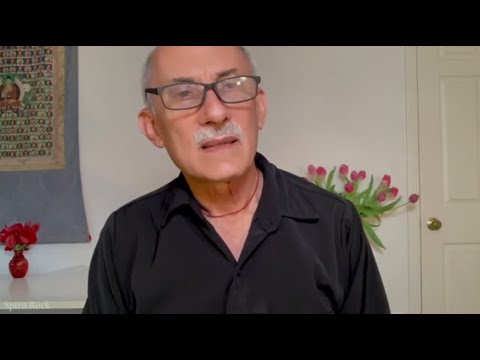
Healing trauma requires understanding that personal wounds are inseparable from collective, historical, and systemic patterns. This conversation between Jack Kornfield and Thomas Hübl explores how individual healing practices—meditation, somatic awareness, compassion—must be woven together with acknowledgment of collective trauma, cultural patterns, and relational dimensions. The key insight is that true healing is not isolated psychological work but an interweaving of the personal inner work with recognition of how we are embedded in larger systems and stories that shape our pain and recovery.
What Is the Connection Between Individual and Collective Trauma?
Trauma operates on multiple levels simultaneously. At the individual level, trauma lives in the nervous system, stored in the body as patterns of protection, constriction, and fragmentation. Yet this personal experience does not exist in isolation. The conversation emphasizes that collective trauma—inherited patterns passed down through families, cultures, and historical events—shapes how an individual experiences and processes their own wounds.
When we heal trauma, we are not just addressing what happened to one person. We are working with layers: the personal incident or ongoing situation, the family patterns that taught us how to respond to danger or loss, the cultural narratives we absorbed about what is safe or shameful, and the historical reverberations that live in our body even if we did not directly experience the original event. This interconnection means that individual healing practices become more powerful when they are held within an awareness of these larger contexts.
Why Does Trauma Healing Require Both Inner Work and Systemic Awareness?
The traditional therapeutic model often focuses on the individual—helping a person process their experience, regulate their nervous system, and develop new capacities for presence and resilience. This work is essential and real. However, without acknowledgment of collective and systemic dimensions, individual healing can become incomplete or even incomplete in a way that perpetuates isolation.
Kornfield and Hübl discuss how trauma healing deepens when practitioners understand that systems—family systems, cultural systems, historical systems—actively shape what is possible for healing. A person who experiences racial trauma, for instance, cannot heal fully by only addressing their individual nervous system response; the systemic reality that produced that trauma remains active in their environment. Similarly, intergenerational trauma passed from parents to children operates at a level that no amount of individual meditation alone can resolve, though meditation is part of the solution.
This is not to say that inner work is insufficient. Rather, the most effective healing weaves together personal practices with a clear-eyed recognition of the larger patterns. This might look like: meditation and somatic awareness practices (individual level) combined with honest acknowledgment of family patterns (relational level) and engagement with community or cultural healing processes (collective level).
How Does Compassion Function in Healing Trauma Across Levels?
Compassion—understood as a clear, steady presence with suffering without trying to fix or escape it—is a core healing resource. However, the discussion suggests that compassion must operate at multiple scales. Personal compassion toward one's own pain is foundational. We must be able to hold our own wounds with kindness rather than shame or denial.
But compassion also extends outward and backward: toward ancestors whose unresolved pain we carry, toward the broader community that has experienced collective traumas, toward the systems themselves that are often caught in patterns they perpetuate without conscious choice. This is not about blame; it is about recognizing the web of causation and responding with understanding rather than reactivity.
When healing is framed this way, it becomes less about achieving a "fixed" individual and more about gradually expanding one's capacity to hold complexity—to say "yes, this happened to me, and yes, it happened to my ancestors, and yes, the system is shaped that way, and yes, I can still move toward healing." This integrated compassion creates space for genuine transformation rather than suppression or spiritual bypass.
What Role Do Relational and Somatic Practices Play in Healing?
The body holds trauma in specific ways: as frozen responses, as patterns of bracing, as numbness or overwhelming sensation. Somatic practices—awareness of the body, gentle movement, breath work—help release these patterns and restore the nervous system's capacity to move fluidly between activation and rest. This is individual work, but it is work with the body as a relational field.
When we work somatically, we are not just optimizing an isolated nervous system; we are restoring the capacity for genuine contact—with ourselves, with others, with the world. Trauma often severs this connection. A person who has been harmed may lose the ability to feel safe in their body or to trust presence in relationship. Somatic healing gradually restores these capacities.
The relational dimension is crucial here. Healing does not happen in a vacuum. It happens through the presence of others—a therapist, a meditation teacher, a community, a circle of people engaged in similar work. The nervous system learns safety through co-regulation, through being with others who are grounded and present. This is why isolated inner work, while valuable, is often incomplete. The healing of trauma is fundamentally relational.
How Can Individual Healing Practices Contribute to Collective Healing?
This is perhaps the most important turn in the conversation. If individual and collective trauma are intertwined, then healing at one level ripples through the other. When you work with your own trauma—when you sit in meditation, when you feel what you have been avoiding, when you acknowledge patterns you inherited—you are not just healing yourself. You are interrupting a chain of transmission.
Your ancestors may have passed down certain patterns because they had no choice, no awareness, no capacity to do otherwise. When you heal those patterns in yourself, you create the possibility that your descendants will not inherit the same wounds. This is not about blame or guilt; it is about the simple recognition that healing is also service, that personal work is collective work.
Additionally, when individuals heal their trauma in community—when they bring their work into circles, communities, or collective spaces—they model what is possible. They demonstrate that it is safe to feel, to acknowledge pain, to move toward healing rather than away from it. This changes the collective field. It becomes easier for others to do the same work when they see someone else doing it.
What Obstacles Arise When Healing Remains Only Individual?
If healing stays at the level of individual psychology without engaging the collective dimensions, several limitations emerge. First, the person may heal their response to trauma while the environment that produced it remains unchanged. They may achieve inner peace while still being embedded in a system that harms them or others.
Second, individual-only healing can become a form of spiritual bypass—a way of spiritually transcending real systemic problems rather than engaging with them. A person might meditate and genuinely achieve calm, but without addressing the systemic issues, they may unconsciously contribute to the continuation of harm.
Third, the isolation of individual healing work can itself perpetuate a sense of fragmentation. If trauma is partly collective and relational, healing while remaining isolated reinforces the very fragmentation that trauma creates. True healing restores a sense of belonging, of being part of a larger whole that is also engaged in healing.
Where to Go From Here
If you recognize yourself in this framework—if you are doing inner work but sensing that something is still incomplete, or if you are aware of collective patterns but unsure how to engage them personally—consider widening your approach. This might mean:
- Continuing or deepening personal practices like meditation and somatic awareness, but holding them within an awareness of larger patterns.
- Explicitly working with family or cultural history, perhaps through conscious conversation, ancestral practices, or therapy that engages these dimensions.
- Seeking community spaces where healing work is shared and witnessed, rather than kept private.
- Learning about the systems and histories that have shaped your experience, not as blame but as context for understanding.
- Considering how your own healing might ripple outward and how you might contribute to collective healing in your communities.
The integration Kornfield and Hübl point toward is not a final destination but an ongoing weaving—the continuous movement toward holding both personal and collective dimensions with awareness, compassion, and willingness to engage the full complexity of what it means to heal in a world where we are all connected.