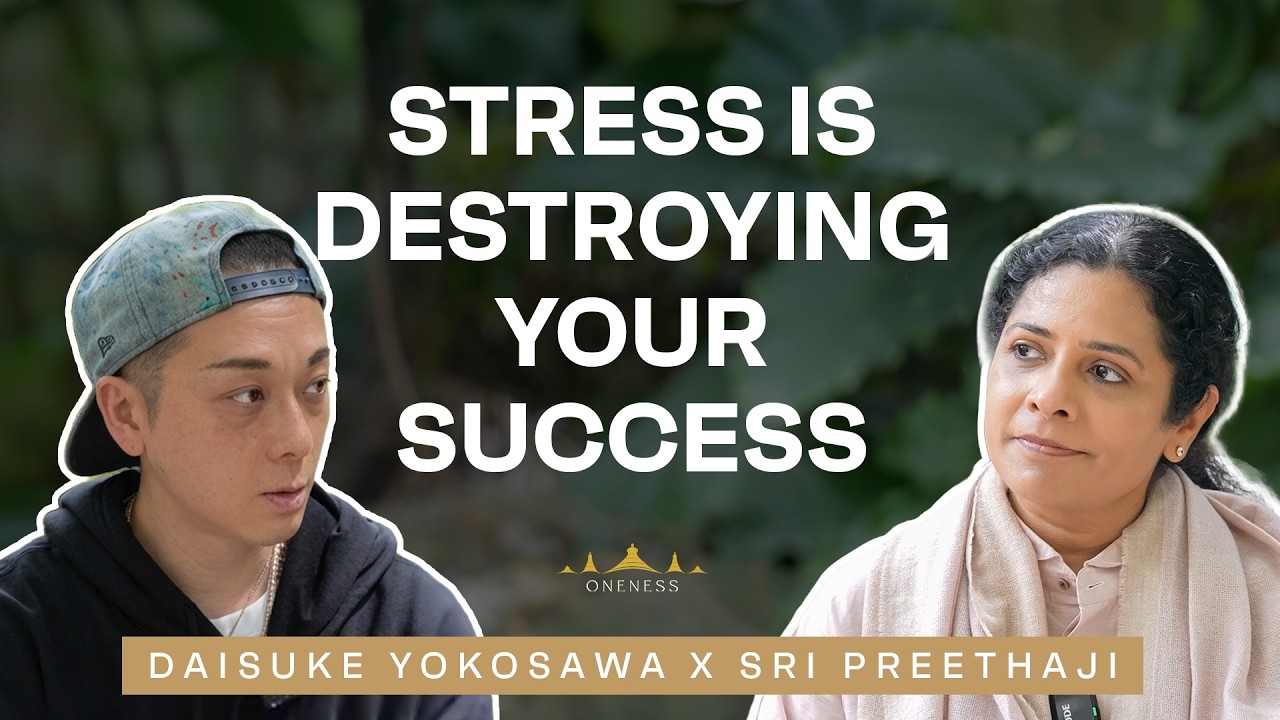
A woman shares how years of childhood trauma left her as an introvert unable to tolerate physical touch due to severe pain, yet discovered a pathway to healing that operates at the level of consciousness itself rather than through traditional trauma processing. Her transformation illustrates how shifts in inner being—rather than rehashing the past—can dissolve pain patterns that seemed intractable, allowing genuine connection and presence to emerge naturally.
Childhood trauma doesn't simply exist as memory. It embeds itself in the nervous system, shaping how the body responds to the world. The woman described in this teaching withdrew into introversion as a protective mechanism—a reasonable adaptation to an unsafe environment. But protection comes at a cost: the ability to receive affection, physical comfort, or simple human touch became impossible.
This kind of somatic response is not weakness or failure. It's the body doing exactly what it was trained to do. When a child's environment was unpredictable or painful, the nervous system learned to contract, to guard, to treat even gentle contact as a potential threat. Years pass, and the trigger mechanisms remain active—the body still perceives danger where none exists. The mind may intellectually understand safety has arrived, yet the body continues its protective lockdown. This gap between intellectual knowledge and embodied reality is where many people become stuck in their healing journey.
The teaching implies that years of conventional healing work didn't produce lasting results. Many trauma survivors spend decades processing their stories—examining what happened, why it happened, how it shaped them—only to find the underlying pain pattern remains. This is because trauma isn't ultimately a cognitive problem to be solved through understanding. It's a fundamental shift in how consciousness relates to the body and experience.
When healing focuses exclusively on the mind—on narrative, meaning, and psychological insight—it can leave the deeper level untouched. The body continues to hold its learned patterns. The nervous system remains primed for danger. And the person feels the frustration of knowing their trauma intellectually while still being imprisoned by it somatically.
The transformation described here points to a shift that operates at a more fundamental level than thought or emotion: a shift in consciousness itself, in the way of being. Rather than processing trauma by examining it more thoroughly, healing occurred through a completely different approach—changing the ground from which experience arises.
This suggests that consciousness can relate to experience differently without needing to resolve the story. Instead of "I was hurt, and now I understand why I protect myself," the shift might be toward: "I am present now. This moment is not that moment. My body is held in awareness that is safe, vast, and untouched by past injury."
When consciousness itself shifts—when the person stops identifying with the trauma narrative and instead inhabits a state of presence and inner spaciousness—the body naturally begins to relax. It no longer has to generate its protective contractions because the person is no longer living as though the threat is present. This isn't denial or bypassing. It's a genuine reorganization of consciousness that naturally permits the body to release what it no longer needs to carry.
The physical symptom described—inability to bear loving touch without severe pain—is significant. This wasn't mere emotional sensitivity but actual bodily pain triggered by contact. Such pain patterns often persist because they're so deeply wired into the nervous system that no amount of reasoning can touch them.
Yet when consciousness reorganizes toward presence and safety, something remarkable happens: the body has permission to relax. When the person is no longer unconsciously braced against imagined threats, muscle tension can release. The nervous system can downshift from hypervigilance to parasympathetic calm. And remarkably, the pain that once accompanied touch can dissolve—not because it was never real, but because the condition that sustained it (the nervous system's defensive posture) is no longer necessary.
This healing is not about forcing the body to accept touch or white-knuckling one's way through pain. It's about arriving at a state of inner being in which the body naturally unfolds and softens, because the deep part of consciousness has finally registered: it is safe to be open now.
Introversion became the woman's protective shell—turning inward is a valid survival strategy when the outer world is unsafe. But over time, protective strategies can calcify into identity. She wasn't just an introvert by temperament; she had become an introvert through necessity, and that distinction matters for healing.
True recovery doesn't require becoming extroverted or forcing oneself into social situations. Rather, it means returning to a state of consciousness where presence—whether alone or with others—is accessible. Introversion can remain a natural preference, but it's no longer driven by fear or the need to hide. The person can choose solitude because it serves them, not because the alternative feels unbearable. And when connection does occur, it can be received without the armor of protective pain.
The teaching suggests that the woman did not need to process her childhood in exhaustive detail to heal. This challenges the mainstream trauma narrative, which often emphasizes the necessity of "processing" experience through narrative and emotional expression. Yet the evidence here suggests otherwise: consciousness shifted, and with it, the pain pattern dissolved.
This doesn't mean trauma isn't real or that understanding one's history is unimportant. Rather, it indicates that there's a level of healing that bypasses the narrative layer altogether. When consciousness arrives at a place of genuine safety and presence, it can simply let go of what it no longer needs. The body stops generating the pain signal because the nervous system no longer interprets the present moment as dangerous.
The teaching references a life of abundance—not in a material sense alone, but across dimensions of experience. When childhood trauma no longer controls the nervous system, genuine abundance becomes possible. The person can receive love, because touch is no longer painful. They can experience joy, because consciousness is no longer weighted down by protective hypervigilance. They can know peace, because the body is finally at rest. And wealth of presence, of inner richness, becomes available when consciousness is no longer fragmented by trauma and defense.
This abundance isn't something to acquire or earn. It's what naturally emerges when the obstacles to presence dissolve. It's what you already are, beneath the layers of learned protection and trauma patterning.
If you recognize yourself in this teaching—if you carry childhood trauma in your body and have felt stuck despite years of therapeutic work—the implication is that a different approach exists. Rather than focusing exclusively on understanding and processing your story, you might explore practices and teachings that cultivate a shift in consciousness itself: meditation, presence-based practices, and guidance from teachers who work with the fundamental nature of awareness rather than solely with the contents of the mind.
Healing is not about staying stuck in the past to understand it perfectly. It's about arriving at a state of consciousness in which the past no longer has the power to contract and control the present body. When you inhabit true presence, safety, and inner spaciousness, the body naturally releases what it no longer needs to carry. That is where real freedom begins.