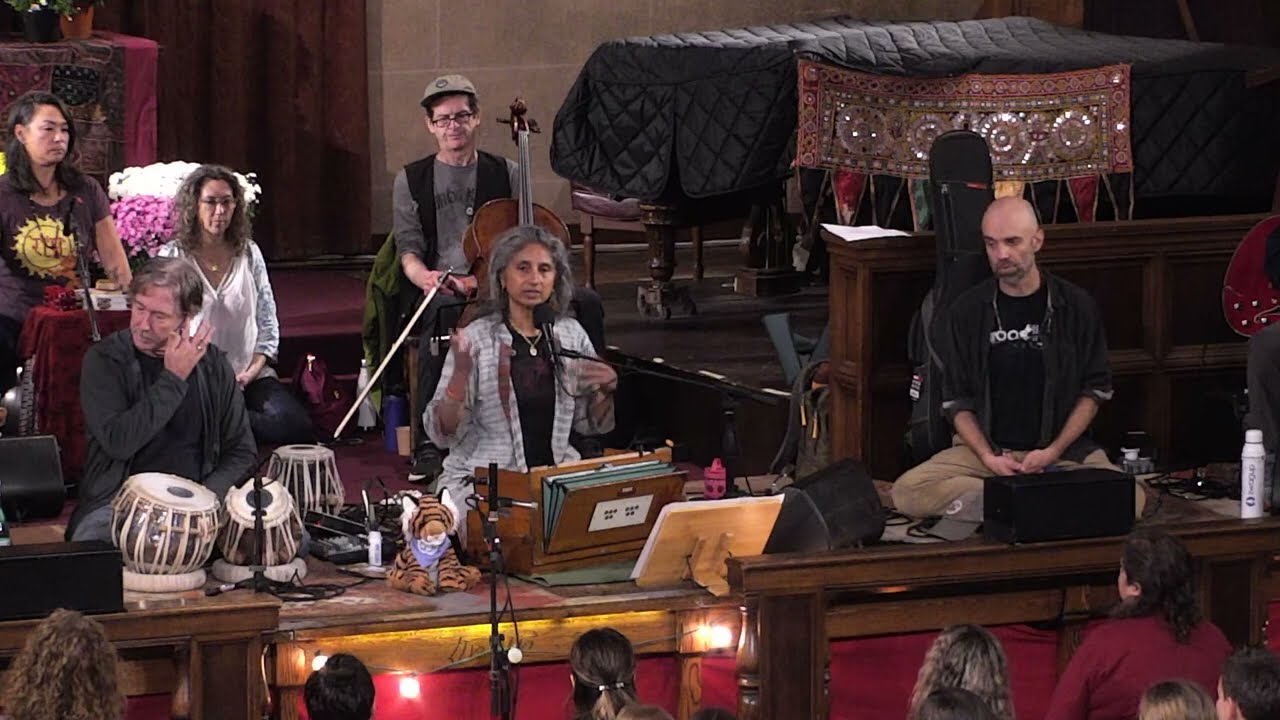
Thomas Hübl presents healing not as individual symptom removal but as the integration of fragmented parts—shadow, trauma, contraction—into wholeness. Drawing on mystical traditions spanning millennia, he describes healing as an evolutionary tension between light and shadow, where the deepest work happens at the edge where potential meets the past. He introduces transparent communication as a tool for practitioners to transcend symptoms and access the essence driving them, and reframes healing from individual practice into a collective, cultural capacity for transformation.
What Drives the Search for Authentic Living?
Hübl begins by naming a fundamental human impulse: the desire for life to become more authentic, whole, healthy, and aligned with original creativity. People are drawn toward living their potential. Yet this aspiration does not exist in a vacuum. It collides with something else—shadow, trauma, contraction, and the parts of life that resist wholeness. This collision creates what Hübl calls an "evolutionary tension," both internal (felt as suffering and inner conflict) and external (the impulse to understand healing itself through osteopathy, medicine, psychotherapy, and trauma work). This tension is not a problem to eliminate but a generative force, a beauty that propels both personal and collective development.
How Does Mystical Knowledge Inform Healing Practice?
Hübl situates his work within what he calls "mystical knowledge"—wisdom passed through traditions for thousands of years. These traditions, he observes, converge on a common core: understanding the wholeness of a human being, a culture, and life itself. Rather than treating this as esoteric or separate from modern healing professions, he presents it as complementary and enriching. Many practitioners—he notes—are already drawn to healing work as a calling to service, to become a healing force in the world. The mystical perspective offers these practitioners both a philosophical foundation and practical capacities developed and refined across centuries.
What Happens When Light Meets Shadow in Healing Work?
Hübl articulates the core of healing work as working "on the edge" where light meets shadow, aliveness meets contraction, and potential meets the past. This is not metaphorical. In trauma and shadow work, the practitioner (whether therapist, healer, or guide) is entering the exact boundary where a person's conscious aspirations collide with their unconscious material—past wounds, unintegrated experiences, frozen energies. Working here is, Hübl says, "exciting and a constant revelation." It is not a formula applied mechanically but a living, evolving inquiry.
What Is Transparent Communication and Why Does It Matter?
One of the tools Hübl has developed is "transparent communication"—a method that enhances practitioners' perceptual abilities, increases precision, and deepens attunement. The practical benefit is clear: practitioners who cultivate transparent communication become less entangled in daily complexity and the presenting symptoms of clients or patients. Instead, they "dive deeply into the essence that causes those symptoms." This shifts the locus of healing work from treating surface manifestations to addressing the energetic and structural roots. Hübl frames this not as a new discovery but as a systematization and modernization of capacities found in wisdom traditions, now made accessible to contemporary practitioners.
How Can Healing Practitioners Avoid Burnout and Depletion?
Hübl addresses a pressing challenge: many healing professionals experience burnout, depletion, and exhaustion after years of work, especially those engaged with crisis, psychological suffering, or medical complexity. He reframes the question from "How do I protect myself?" to "How can I actually be charged by my work, even after 20 years?" This is not a wellness bandage but a fundamental reorientation. To stay healthy, grow, and participate in one's own evolution while working with others' suffering, practitioners need to access something larger than their personal identity. They must develop the capacity to work from a grounded, transpersonal perspective—rooted in something bigger than the individual self.
What Are the Deepest Questions About Healing and Trauma?
Hübl identifies the core inquiries that sustain genuine healing practice: What is the essence of healing and trauma work? What is its energetic nature? What capacities can be developed through strong inner and outer practice to become effective, precise, and grounded in something larger than the ego, while remaining open to not-knowing and willing to enter new territory? These questions resist easy answers; they require ongoing inquiry, study, and practice. Yet they are essential, because answers to them determine whether a healer remains vital or becomes depleted, whether their work creates real transformation or merely manages symptoms.
How Can Healing Become a Collective and Cultural Practice?
Hübl proposes a profound shift: healing need not remain an individual transaction between practitioner and patient. It can become a "cultural activity," a shared capacity that communities develop together. This requires, he suggests, what he calls a "new we"—a transpersonal perspective cultivated through inner practice that allows groups and cultures to create what he names "containers": spaces conscious enough, alive enough, and strong enough to hold collective transformation. These containers must be competent; they must not collapse under the weight of historical trauma, past atrocities, or collective shadow.
How Does a "We Practice" Address Collective Trauma?
A "we culture" and "we practice"—Hübl's vision of collective healing—aims at something ambitious: becoming large enough, both internally and externally, to "include and outgrow" the shadows of the past—wars, atrocities, collective trauma. This is not denial or spiritual bypass. Rather, it is learning to embrace these shadows consciously and precisely, transforming them into more stable ground for culture and humanity. This requires new tools, new capacities, and new forms of organization that honor both the scale of collective trauma and the possibility of genuine transformation.
What Is the Mystical Principle That Guides Alignment and Flow?
Hübl concludes with a practical insight: once we understand the mystical principles underlying healing, we gain clarity about why our lives are—or are not—in alignment, flowing, and growing. We can see the misalignments and, critically, learn to readjust them. This is not about positive thinking or magical belief. It is about perceiving the actual structure of our being and circumstances and making choices that restore coherence. The ultimate question he leaves is: "What happens if we become the manifestation of the human being that actually deeply inside our soul we feel we are?" In other words, what becomes possible when the gap between our essence and our expression closes?
Where to Go From Here
This talk offers both a philosophical reorientation and practical direction. For healing practitioners, it suggests that burnout and depletion are not inevitable; they signal a disconnection from something larger than the individual psyche. For anyone interested in trauma, shadow work, or collective transformation, it reframes these not as niche therapeutic modalities but as essential capacities for cultural evolution. The work begins with understanding oneself—developing transparency, attunement, and access to essence. It extends into how we work with others and, finally, how we create together as communities. The mystical principles Hübl references are not separate from modern healing; they are the deep structure underneath it, waiting to be recognized and integrated.