SportsCampFinder

Browse All Camps

Find the perfect camp for your athlete

camps

Basketball Camps
Soccer Camps
Baseball Camps
Football Camps
Volleyball Camps
Lacrosse Camps
Multi-Sport Camps
Elite Training
Overnight Camps
Day Camps
Popular Destinations
BaliSedonaLos AngelesCosta RicaNew YorkSan FranciscoAustinMiamiJoshua TreeTulum
View All CategoriesView All Destinations

Explore All Features

Powerful tools to grow your events

Platform Features

Smart Dynamic Pricing
Ticket Categories
Assigned Seating
Abandoned Cart Recovery
Visitor Recovery
Donations & Sliding Scale
Affiliate Engine
Ticket Scanner
Coupon Codes
Custom Questions
Ticket Sharing
Upsells & Add-ons
Analytics & Reporting
Email Sequences
Waitlist / Notify / Remind
People & Places
Camp OrganizersCamp FacilitiesKnowledge BaseInspiration
View All FeaturesAbout Us
PricingBlog
Language
Saved events
Browse All Events

camps

Basketball CampsSoccer CampsBaseball CampsFootball CampsVolleyball CampsLacrosse CampsMulti-Sport CampsElite Training

Popular Destinations

BaliSedonaLos AngelesCosta RicaNew YorkSan Francisco

People & Places

Camp OrganizersCamp FacilitiesKnowledge BaseInspiration

Platform Features

Smart Dynamic PricingTicket CategoriesAssigned SeatingAbandoned Cart RecoveryVisitor RecoveryDonations & Sliding ScaleAffiliate EngineTicket ScannerCoupon CodesCustom QuestionsTicket SharingUpsells & Add-onsAnalytics & ReportingEmail SequencesWaitlist / Notify / Remind
View All FeaturesAbout Us
PricingBlog
Log inParents & athletesCamp directors
  • Browse all camps
  • Basketball Camps
  • Soccer Camps
  • Baseball Camps
  • Football Camps
  • Volleyball Camps
  • Lacrosse Camps
  • Multi-Sport Camps
  • Elite Training
  • All sports →
  • Orlando
  • Los Angeles
  • New York Metro
  • Dallas / Fort Worth
  • Chicago
  • Phoenix / Scottsdale
  • Atlanta
  • Denver
  • Seattle
  • Boston
  • Houston
  • Philadelphia
  • San Diego
  • Minneapolis / St. Paul
  • All Cities →
  • List your camp
  • Camp director dashboard
  • Pricing
  • Coaches & academies
  • Online registration & payments
  • Waivers & medical forms
  • Check-in app
  • Family messaging
  • Waitlist & notify
  • Camp marketing
  • Reports
  • All features →
  • About SportsCampFinder
  • Camp guides
  • Help Center
  • Contact
  • Careers
  • Press
  • Terms of Service
  • Privacy Policy

Camps

  • Browse all camps
  • Basketball Camps
  • Soccer Camps
  • Baseball Camps
  • Football Camps
  • Volleyball Camps
  • Lacrosse Camps
  • Multi-Sport Camps
  • Elite Training
  • All sports →

Destinations

  • Orlando
  • Los Angeles
  • New York Metro
  • Dallas / Fort Worth
  • Chicago
  • Phoenix / Scottsdale
  • Atlanta
  • Denver
  • Seattle
  • Boston
  • Houston
  • Philadelphia
  • San Diego
  • Minneapolis / St. Paul
  • All Cities →

For Camp directors

  • List your camp
  • Camp director dashboard
  • Pricing
  • Coaches & academies

Features

  • Online registration & payments
  • Waivers & medical forms
  • Check-in app
  • Family messaging
  • Waitlist & notify
  • Camp marketing
  • Reports
  • All features →

Company

  • About SportsCampFinder
  • Camp guides
  • Help Center
  • Contact
  • Careers
  • Press
  • Terms of Service
  • Privacy Policy
SportsCampFinder
© 2026 SportsCampFinder. All rights reserved.
Inspiration

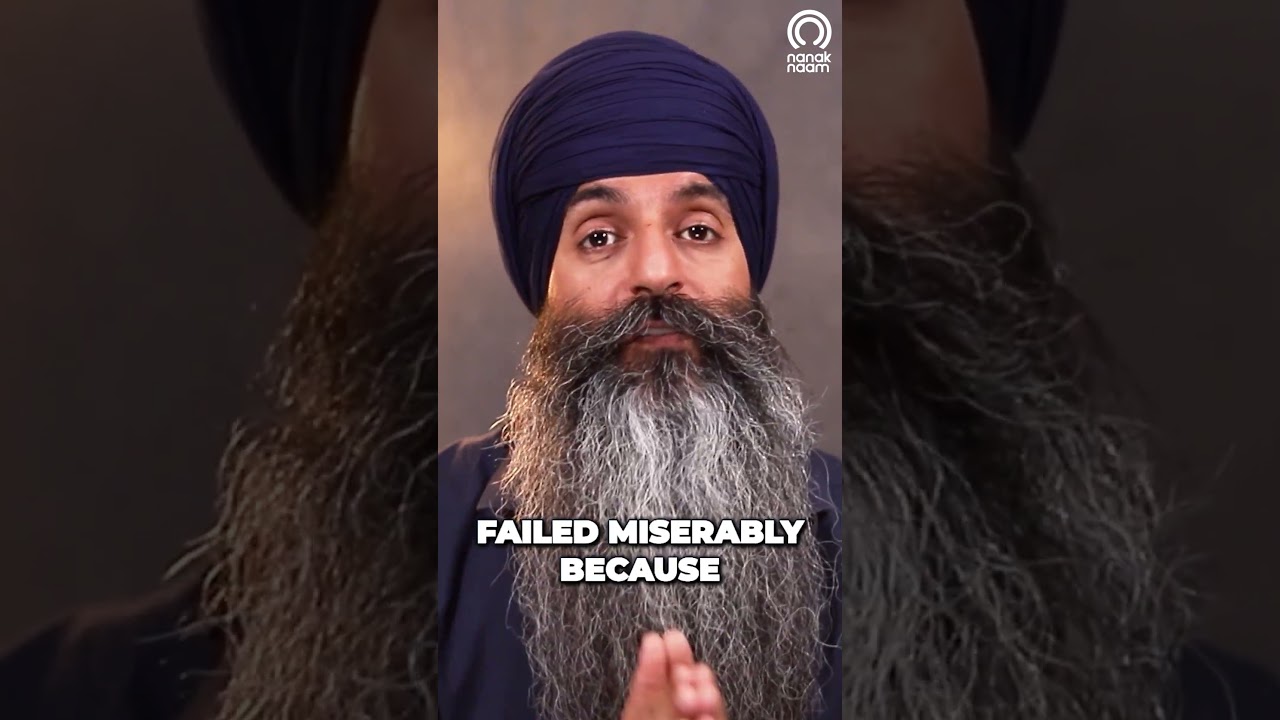
Guru Nanak's Message of Oneness:Knowing God Beyond Belief

Nanak Naam
Nanak Naam
Nov 22, 2018
8 min read
Watch · 6

Over 550 years ago, Guru Nanak Dev ji—known as "the Enlightened Enlightener"—articulated a teaching on divine oneness that runs counter to conventional religious belief. Rather than positioning God as a distant authority figure to praise or petition, Guru Nanak pointed to a direct, experiential knowing: that all of creation is one substance appearing in infinite forms, and that the separation between self and God is an illusion sustained by ego. This message, still urgently needed today, suggests that the path to spiritual truth requires the dissolution of individual identity rather than the accumulation of spiritual practices or beliefs. Understanding this teaching challenges how we perceive others, resolve conflict, and conceive of what enlightenment means.

Read · 7 sections

The Difference Between Believing in God and Knowing God

Guru Nanak Dev ji did not believe in God—he knew God. This distinction, though subtle, is foundational to his teaching and marks a radical departure from conventional religious thinking. When we operate from belief, God remains abstract and far away; we construct an image (perhaps a white beard in the clouds) and then dedicate ourselves to praising or petitioning it. Belief keeps God at arm's length, a concept to be discussed rather than a reality to be lived.

Knowing, by contrast, is direct realization. It is the recognition of what is already present. Guru Nanak's teaching hinges on the insight that we do not need to find God because there is nowhere God is not. This is not metaphorical poetry—it is a description of the actual structure of reality as Guru Nanak perceived and taught it. The problem is not that God is absent; the problem is that we have constructed a false sense of separation that prevents us from recognizing God's presence everywhere.

What Does Guru Nanak Mean by "Everything Is God"?

Guru Nanak's core teaching is sometimes summarized in the principle: Sabich Orb In Heri / Sabich Orb In Heri—everything is God; there is nothing except God. This is not pantheism in the loose sense of "nature is divine"; rather, it is the teaching that the entire cosmos is composed of one substance that manifests as the multiplicity of forms we perceive.

Consider an analogy Guru Nanak himself used: the wave does not understand that it is the ocean. The wave sees itself as separate—a distinct, temporary phenomenon rising and falling. Yet it is, in every meaningful sense, the ocean taking a particular form. Human consciousness operates similarly. We identify with the individual ego, the "I" that seems separate from others and from God. But this separation is conceptual, not actual. The fundamental reality, according to Guru Nanak, is undivided; the appearance of division is like the wave mistaking itself for something other than the ocean.

When we look at a mountain, a river, a bird, or a person, we typically direct our praise or gratitude outward, addressing God as an external creator: "Thank you for making this beautiful nature." But Guru Nanak invites a different recognition: "I can see you in the river. I can see you in the birds. I can see you in everyone. I can see you in me." This is not sentiment; it is a description of direct perception available through spiritual practice and the removal of the conceptual filters that normally obscure this sight.

How Does This Teaching Change How We Relate to Others?

The practical implications of Guru Nanak's teaching become clear when we examine how it transforms relationships, particularly with those we dislike or oppose. If everyone is God—if the divine consciousness pervades all beings equally—then how can we maintain enemies? How can we justify hatred toward another when we recognize them as the same fundamental reality as ourselves?

Most people resist this application immediately. "How can they be God?" we ask, especially of those who have harmed us or acted destructively. "There's a reason I don't like them—they did something horrible." This reasoning is not wrong in its factual basis, but it perpetuates a way of thinking that allows us to divide reality into us-and-them, good-and-bad, worthy-and-unworthy. This dualistic thinking is the root of conflict, both internal and external.

Guru Nanak's alternative does not require us to pretend harmful actions are acceptable. Rather, it asks us to see the person committing the action as an expression of the same divine consciousness that animates us. This shift in perception dissolves the emotional separation that fuels enmity. We can address harmful behavior without the ego-driven belief that we are separate from and superior to the person acting harmfully. "You have to see everyone as the same thing," Guru Nanak teaches—and this, the Nanak Naam teaching clarifies, "hurts our ego" because it threatens the very identity-structure by which we maintain a sense of importance and control.

The Ego as the Barrier to Knowing God

If everything is already God, and if divine presence is omnipresent, why do we not perceive it? Guru Nanak's answer is both simple and demanding: the sense of individual "I"—the ego—stands in the way. The separate self is the veil between perceiver and reality.

This is why Guru Nanak does not offer a path of accumulation. He does not say: come to the guru with your shopping list and take away something (a practice, a mantra, a new belief). Instead, he says you must "give something up." What must be relinquished is not ignorance or unwholesome traits, though these may fall away as a side effect—what must be surrendered is the illusion of the separate self.

In the Punjabi, Guru Nanak uses the phrase referring to the dissolution of the individual "I"—the ahankar, or ego-assertion. When this disappears, when the sense of separate identity dissolves, "all that is left is God." Not God as an entity you encounter, but God as the only reality that remains when the illusion of separation dissolves.

This teaching presents a paradox for the spiritual seeker. Most of us come to spiritual practice because we want something for ourselves—peace, enlightenment, healing, liberation. We want these things to happen to us, to the person we believe ourselves to be. But Guru Nanak's path requires the obliteration of that very self. The "I" that seeks must cease to exist. This is why he says: "Will you drop your old understanding today?"

Why This Wisdom Matters in "An Age of Darkness"

Guru Nanak taught this message over five centuries ago, yet Nanak Naam identifies it as wisdom "really in this age of darkness"—suggesting its relevance has not diminished. In a world fractured by religious dogmatism, political division, and tribal identity, Guru Nanak's teaching of universal oneness offers an antidote.

If the teaching were actually lived—if people truly recognized the divine presence in all beings and surrendered the illusion of separation—the consequences would be clear: "There would be no wars. There would be no enemies." Not because we would achieve some utopian state, but because the root cause of conflict—the ego's insistence on separation and supremacy—would be dissolved. You cannot war with God. You cannot hate something you recognize as yourself.

The teaching does not promise comfort or ease; it demands the most radical reorientation possible—the dissolution of the self you take yourself to be. But it offers in exchange an end to the internal and external suffering that stems from the illusion of separation.

The Urgency of the Path: No Guarantee of Tomorrow

Guru Nanak emphasizes an often-overlooked practical consideration: "Will you drop your old understanding today because you don't know if you have a tomorrow?" This is not a morbid fixation on death, but a clear-eyed recognition that the conditions necessary for this transformation—a human life, the capacity to hear the teaching, the presence of a guide—are not guaranteed. The teaching calls for immediate action, not deferral.

For this reason, Guru Nanak stresses that "you have to be willing to change your thoughts" and to recognize that "you are not separate from God." The Guru's role is not to provide comfort or to affirm our existing worldview but to destabilize the framework of separation itself.

Where to Go From Here

Engaging with Guru Nanak's teaching requires more than intellectual understanding. The insight that "everything is God" and that the separate self is an illusion cannot be merely believed—it must be realized through direct experience. Sikh practice traditionally emphasizes mantra (the repetition of sacred sound) and simran (remembrance of the divine presence) as methods to quiet the mind's identification with ego and permit the direct knowing Guru Nanak points to.

The practical next step is to examine where in your own life you maintain the illusion of separation—where you see others as fundamentally different from yourself or as obstacles to your well-being. Begin to question this perception. Can you glimpse, even briefly, the possibility that the person you are judging is, at the deepest level, the same consciousness animating you? This inquiry is not an intellectual exercise but a preparation for the direct knowing that Guru Nanak's teaching promises.

Comments

Loading the conversation…

Transcript

[0:00] guru nanak dev ji did not believe in God

[0:02] guru nanak dev ji knew god and there's a

[0:07] very big difference and when we still

[0:10] just believe in God God always remains

[0:14] far away we talk about dedicate your

[0:18] life to God praise God well what is God

[0:22] maybe with a white beard sitting in the

[0:25] clouds is this the God that Guru Nanak

[0:29] Dev ji is talking about the truth of the

[0:32] matter is the whole of government wisdom

[0:36] has been summarized most beautifully and

[0:41] so intelligently into one single digit

[0:45] it means that everything in the whole

[0:50] entire creation is one thing that looks

[0:55] like many different things you go out

[0:58] into nature and you look at a mountain

[1:00] and you look at lakes but the thought

[1:03] that comes in our mind is Wow why grew

[1:05] this nature that you've made is

[1:08] beautiful because for us why cruise far

[1:11] away and we say why I grew thank you for

[1:14] making this when do we ever say I can

[1:18] see you in the river I can see you in

[1:20] the birds I can see you in the sky I can

[1:22] see you in everyone I can see you in me

[1:26] the wave doesn't understand that it is

[1:28] the ocean the human doesn't understand

[1:31] that it is called Sabich orb in the hair

[1:35] Sabich orb in the hair go up in the bin

[1:38] nahin GUI everything is God everything

[1:42] is God there is nothing except God the

[1:46] God that we're praying to is right here

[1:49] what do we do with this wisdom how does

[1:53] it change our life can you accept that

[1:56] all the people that you don't like our

[1:58] God you say how can they be God there's

[2:03] a reason why I don't like them is

[2:05] because they did something horrible that

[2:07] way of thinking allows us to have

[2:10] enemies this way of thinking doesn't

[2:13] allow us to have enemies you have to see

[2:16] everyone as the same thing and that

[2:18] hurts our ego so how do we take a

[2:23] concept like God and make it real at

[2:26] what point can we see God why aren't we

[2:30] saying I myself am also God and you are

[2:32] also God because Guru Nanak Dev ji says

[2:36] if you want to walk on this path you

[2:38] have to give something up don't come to

[2:41] the guru with your shopping list and ask

[2:42] to take something away Johto priam

[2:45] killing gotcha see illegally

[2:48] Melia I am has to disappear and when you

[2:52] get rid of I am all that is left is God

[2:55] will you drop your old understanding

[3:00] today because you don't know if you have

[3:04] a tomorrow you have to be willing to

[3:08] change your thoughts and the Guru is

[3:10] saying that you are not separate from

[3:13] God understand the wisdom of the Guru so

[3:17] that we can help the whole world and

[3:19] show the whole world this really is the

[3:21] wisdom that helps everyone if this was

[3:24] happening there would be no wars there

[3:26] would be no enemies because God Barney

[3:29] really is the wisdom in this age of

[3:32] darkness

[3:32] [Music]

Nanak Naam
ArtistNanak Naam

Nanak Naam is a UK charity, founded by SathPaal Singh in 2013, sharing Guru Nanak's teachings of Oneness through meditation, mindfulness, free courses, videos and music.

View profileWebsite
Explore Topics
Guru-nanakOnenessGod-realizationEgo-dissolutionNon-duality

Got Questions?

Frequently Asked Questions

Belief keeps God abstract and distant—something to praise or petition from afar. Knowing is direct realization of God's actual presence. Guru Nanak taught that God is not absent; separation from God is an illusion created by ego. Knowing dissolves this false separation.
Guru Nanak taught that all creation is one substance appearing in infinite forms, like waves arising from the ocean. The wave doesn't understand it is the ocean; similarly, humans don't recognize that individual consciousness is inseparable from divine consciousness. Everything is composed of the same reality.
Seeing God in all beings requires recognizing that the person's actions arise from the same divine consciousness present everywhere—not that harmful behavior is acceptable. This shift dissolves the ego-driven separation that fuels hatred and conflict. It is difficult because it threatens the ego's sense of superiority.
The sense of separate individual identity (ego or 'I') is the barrier preventing direct knowing of God. When the illusion of separation dissolves, only God—undivided reality—remains. This is not a loss but the recognition of what was always true.
Wars arise from the belief that separate beings have conflicting interests and that some are fundamentally other or wrong. If all beings are recognized as expressions of the same divine consciousness, the illusion of otherness dissolves, and conflict becomes impossible.
Rather than accumulating practices to gain something, Guru Nanak teaches that you must give something up—the illusion of separate self. Most seekers come to spirituality wanting enlightenment for themselves, but the path requires the dissolution of the 'I' that seeks.

Continue Reading

More from Nanak

View All
Sehaj: The Inner Peace Beyond Numbness
Inspire

Sehaj: The Inner Peace Beyond Numbness

Discover why emotional numbness persists even after trauma healing, and how Gurbani's concept of Sehaj reveals true spiritual peace through …

1 min read
Taking Life Too Seriously: Why External Fixes Fail
Inspire

Taking Life Too Seriously: Why External Fixes Fail

When you treat every problem as something to fix externally, you enter an unwinnable game. Gurmat teaches that inner mental state must come …

1 min read
Govinda Jaya: How Sacred Sound Awakens the Heart
Inspire

Govinda Jaya: How Sacred Sound Awakens the Heart

Radhika Das channels the liberating power of mantra through a luminous kirtan performance at Medicine Festival, invoking divine names to pur…

1 min read
Om Namah Shivaya Chant: Ecstatic Trance Meditation
Inspire

Om Namah Shivaya Chant: Ecstatic Trance Meditation

Jai Uttal guides listeners into an ecstatic chant trance with Om Namah Shivaya, the Sanskrit invocation of Shiva consciousness. A 91-second …

1 min read

Keep exploring

Continue your journey

More wisdom and gatherings from across the BrightStar directory.

More Articles

Browse the full library of teachings, interviews, and guides.

Back to all articles →

Teachers & Artists

Explore the lineages, musicians, and guides of the conscious world.

Explore artists →

Find an Event

Kirtan, retreats, sound baths, breathwork, festivals — happening soon.

Browse events →