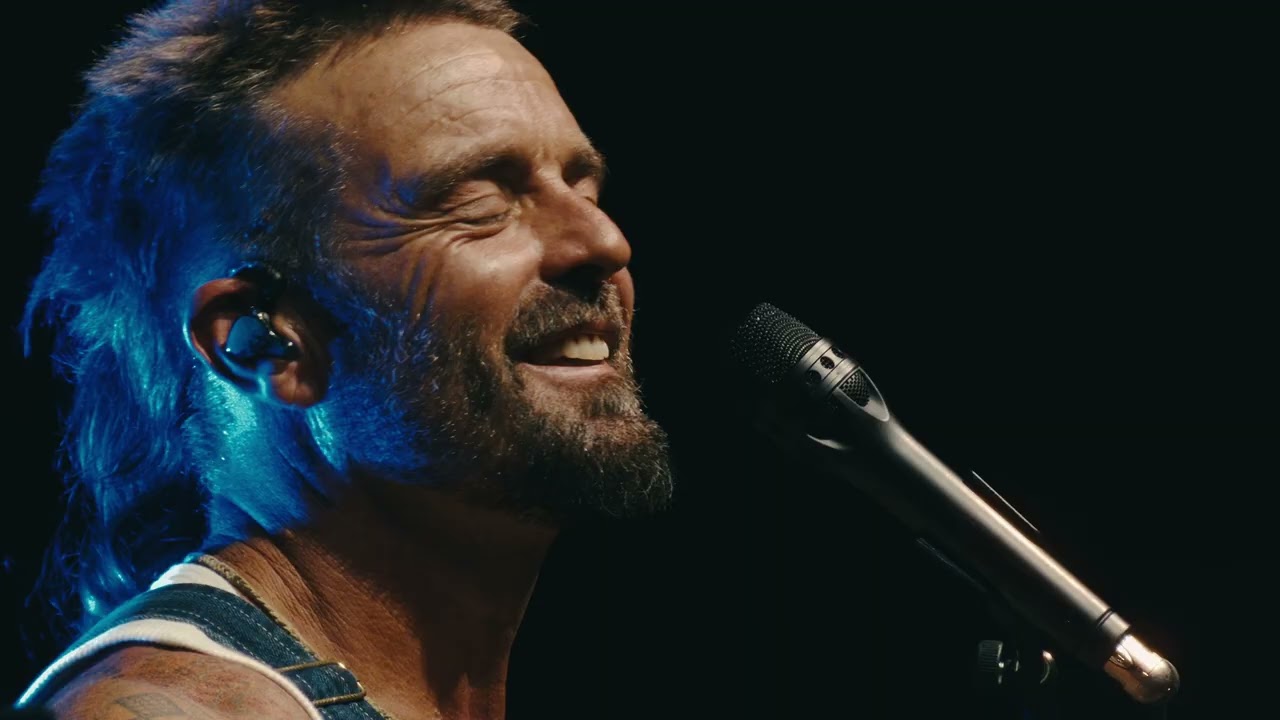
Xavier Rudd's song "Where to Now" is a direct response to the fracturing of modern life—the collapse of community, the epidemic of mental health struggle, the weaponization of social media, and the erosion of elders and tribes who once held us steady. Written from a place of personal reckoning (Rudd speaks of cancer, of dark daily thoughts), the song names the specific harms: digital defamation, youth suicide rising, corporate extraction, war, and the disorientation of too much information with no grounding. The refrain—"So many feet so far from the ground"—becomes both diagnosis and invitation: find something real to hold onto, a deeper love, or there will be nothing of more value to be found.
The opening verses of "Where to Now" establish a genealogy of disconnection. Rudd begins not with individual pathology but with structural collapse. "So many messed up people getting round," he sings, but immediately contextualizes: stories spinning in heads, manipulations and fabrications learned, no solid foundation to be found. This is not a song about personal failure; it is a song about what happens when the architecture that once held people together vanishes.
Rudd names what is gone: "Our kinships and our totems are long gone. Communities were broken long ago. No tribes to give us guidance, elders to rely on." This is not nostalgia—it is specification. The mechanisms of belonging—kinship networks, totem systems, tribal wisdom, elders who could transmit knowledge—have been systematically dismantled. In their absence, Rudd observes, we are "just going it alone," isolated individuals trying to solve modern complexity without guidance or collective wisdom. The result is not autonomy but a kind of freefall, where the young mind grows confused by an avalanche of information and conflicting confirmations.
One of the song's central diagnoses concerns the role of digital information in deepening disorientation. "So much information and confirmations confusing the young mind as it grows," Rudd sings, naming something that mental health frameworks often miss: it is not merely the quantity of information but the absence of a grounding context that makes it toxic. A young person today encounters competing truths, algorithmic feed cycles, and manufactured consensus simultaneously. Without a elder, without a community narrative, without a tribe's collective memory to anchor meaning, the mind has nowhere to stand.
This is clarified further in the second verse, where Rudd shifts from structural loss to its contemporary symptoms. Social media is named explicitly as a tool of psychological warfare: "Social media is messing with young minds." This is paired with corporate extraction ("the big fat corporations are sitting back making gravy") and the rise of youth suicide. These are not separate problems—they are the same ecosystem. The platforms profit by capturing attention and manufacturing engagement; young people, without grounding and without elders to contextualize the content they consume, internalize the comparison, shame, and digital defamation as real and absolute.
A striking moment in the song comes when Rudd turns inward: "And I sit here with cancer in my blood and it feels like it's time to unplug. The world has gone crazy. It's true. We ain't just saying." The mention of cancer is not metaphorical. Rudd is not performing concern from a distance; he is naming his own mortality and his own need to step back from the systems he is critiquing. Later, he returns to his own mental state: "I try to speak but nothing comes out. My mind is going crazy. These dark thoughts with me daily and I just don't see another way out."
This personal vulnerability is essential to the song's authority. Rudd is not preaching from a platform of wellness; he is speaking from the place of someone who understands the weight of dark thoughts and the paralysis of feeling unheard. This makes the refrain—the insistence on finding something to ground you—not a platitude but a practice born from necessity.
Rudd extends his diagnosis beyond the digital into the geopolitical. "And there was a time when we thought there'd be no more wars. when a path of peace was the only way forward. Where we're dropping bombs on babies, projecting fear daily, and it feels like the whole thing's going to burst." The song does not separate mental health crisis from the crisis of a civilization at war. The daily bombardment of images of violence, the normalization of fear as a tool of governance, the failure of peace movements—these are not separate from youth suicide rates. They are the same sickness.
Rudd's phrase "projecting fear daily" is key. In a world where media, corporations, and governments all benefit from fear, where bad news is algorithmic currency, where peace feels impossible, the individual mind absorbs a message: the world is breaking, and there is nothing you can do about it. For a young person without elders, without a community, this message can feel like a closing door.
The refrain shifts the song's register from diagnosis to existential question and invitation. "So many feet so far from the ground. If you find something to ground you or a deeper love to cling to, there'll be nothing of more value to be found." This is both a statement of fact and a teaching. The "ground" here is not literal soil, though the song's context (recorded in a shed, with imagery of light and place) suggests the natural world is part of it. The ground is meaning, belonging, a felt connection to something real—as opposed to the digital, the mediated, the abstracted.
The phrase "deeper love to cling to" offers specificity. It is not love in general, but a love grounded in depth—perhaps in another person, in community, in the natural world, in a practice or belief system that has survived the digital age intact. The song's logic is clear: in a world of disorientation, if you can find one thing that is real and worth clinging to, it becomes your anchor against the collapse.
Unlike songs of despair, "Where to Now" contains an implied practice. By naming the specific ways disconnection manifests—through the loss of elders, the weaponization of social media, corporate extraction, and constant war—Rudd creates a map of what needs to be recovered or rebuilt. The song asks: Where to now? The answer it offers is not a policy or a political program, but a reorientation toward the real.
For listeners, this might mean: stepping away from social media, seeking elders or mentors, finding or creating community, reconnecting with the natural world, or building practices that root you in something deeper than the digital spin. The song does not prescribe, but it does insist that without grounding, without love, without connection, the mind cannot hold steady in a falling world.
Rudd's "Where to Now" is useful not as a comfort but as a diagnostic tool. If you find yourself relating to the song's naming of confusion, isolation, dark thoughts, or disorientation, the first step is acknowledgment: these are not personal failures but responses to real structural collapses. From there, the work becomes concrete. Find a ground—a person, a place, a practice, a community that can hold you. Ask: What am I clinging to? Is it real? Is it life-giving? Does it ask me to grow? The song suggests that in a world in free fall, this is the most valuable work available: to find or build something worth staying rooted to, and to help others do the same.