SportsCampFinder

Browse All Camps

Find the perfect camp for your athlete

camps

Basketball Camps
Soccer Camps
Baseball Camps
Football Camps
Volleyball Camps
Lacrosse Camps
Multi-Sport Camps
Elite Training
Overnight Camps
Day Camps
Popular Destinations
BaliSedonaLos AngelesCosta RicaNew YorkSan FranciscoAustinMiamiJoshua TreeTulum
View All CategoriesView All Destinations

Explore All Features

Powerful tools to grow your events

Platform Features

Smart Dynamic Pricing
Ticket Categories
Assigned Seating
Abandoned Cart Recovery
Visitor Recovery
Donations & Sliding Scale
Affiliate Engine
Ticket Scanner
Coupon Codes
Custom Questions
Ticket Sharing
Upsells & Add-ons
Analytics & Reporting
Email Sequences
Waitlist / Notify / Remind
People & Places
Camp OrganizersCamp FacilitiesKnowledge BaseInspiration
View All FeaturesAbout Us
PricingBlog
Language
Saved events
Browse All Events

camps

Basketball CampsSoccer CampsBaseball CampsFootball CampsVolleyball CampsLacrosse CampsMulti-Sport CampsElite Training

Popular Destinations

BaliSedonaLos AngelesCosta RicaNew YorkSan Francisco

People & Places

Camp OrganizersCamp FacilitiesKnowledge BaseInspiration

Platform Features

Smart Dynamic PricingTicket CategoriesAssigned SeatingAbandoned Cart RecoveryVisitor RecoveryDonations & Sliding ScaleAffiliate EngineTicket ScannerCoupon CodesCustom QuestionsTicket SharingUpsells & Add-onsAnalytics & ReportingEmail SequencesWaitlist / Notify / Remind
View All FeaturesAbout Us
PricingBlog
Log inParents & athletesCamp directors
  • Browse all camps
  • Basketball Camps
  • Soccer Camps
  • Baseball Camps
  • Football Camps
  • Volleyball Camps
  • Lacrosse Camps
  • Multi-Sport Camps
  • Elite Training
  • All sports →
  • Orlando
  • Los Angeles
  • New York Metro
  • Dallas / Fort Worth
  • Chicago
  • Phoenix / Scottsdale
  • Atlanta
  • Denver
  • Seattle
  • Boston
  • Houston
  • Philadelphia
  • San Diego
  • Minneapolis / St. Paul
  • All Cities →
  • List your camp
  • Camp director dashboard
  • Pricing
  • Coaches & academies
  • Online registration & payments
  • Waivers & medical forms
  • Check-in app
  • Family messaging
  • Waitlist & notify
  • Camp marketing
  • Reports
  • All features →
  • About SportsCampFinder
  • Camp guides
  • Help Center
  • Contact
  • Careers
  • Press
  • Terms of Service
  • Privacy Policy

Camps

  • Browse all camps
  • Basketball Camps
  • Soccer Camps
  • Baseball Camps
  • Football Camps
  • Volleyball Camps
  • Lacrosse Camps
  • Multi-Sport Camps
  • Elite Training
  • All sports →

Destinations

  • Orlando
  • Los Angeles
  • New York Metro
  • Dallas / Fort Worth
  • Chicago
  • Phoenix / Scottsdale
  • Atlanta
  • Denver
  • Seattle
  • Boston
  • Houston
  • Philadelphia
  • San Diego
  • Minneapolis / St. Paul
  • All Cities →

For Camp directors

  • List your camp
  • Camp director dashboard
  • Pricing
  • Coaches & academies

Features

  • Online registration & payments
  • Waivers & medical forms
  • Check-in app
  • Family messaging
  • Waitlist & notify
  • Camp marketing
  • Reports
  • All features →

Company

  • About SportsCampFinder
  • Camp guides
  • Help Center
  • Contact
  • Careers
  • Press
  • Terms of Service
  • Privacy Policy
SportsCampFinder
© 2026 SportsCampFinder. All rights reserved.
Inspiration

Grief as Water: Finding ReleaseThrough Loss in "Niagara"

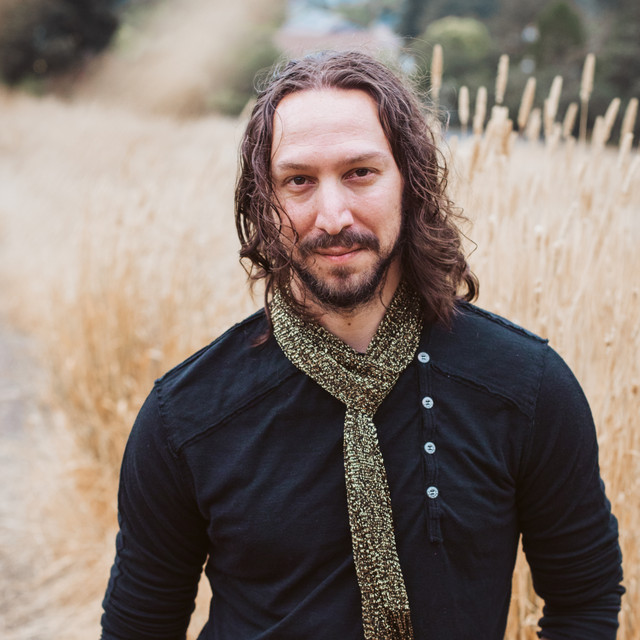
Ram Dass Khalsa
Ram Dass Khalsa
Jul 8, 2022
6 min read
Watch · 5

"Niagara" is a deeply intimate folk ballad in which Ram Dass Khalsa mourns the death of his newborn son, using the image of the waterfall and ocean as a container for overwhelming grief. The song does not resolve the tragedy but instead offers a practice: letting sorrow flow toward the sea, releasing it to a force larger than oneself. Through repeating phrases like "my life is overflowing to the sea" and "won't you take all my troubles to the sea," the song enacts a kind of surrender—not acceptance that the loss is okay, but a willingness to let the body and heart become a channel through which grief can move.

Read · 6 sections

What does it mean to let grief flow like water?

The central image of "Niagara" is not the tragedy itself but the process of living after tragedy. Niagara Falls—a place of tremendous force, beauty, and danger—becomes a mirror for the singer's emotional state. When Ram Dass sings "You took my baby from me / And now he's flying home free" (0:18–0:27), he acknowledges loss while hinting at a spiritual belief: that death is not an ending but a homecoming. Yet the rest of the song does not dwell in that metaphysical comfort. Instead, it circles back repeatedly to the overwhelm of continuing to live.

Water in grief work often symbolizes the need for flow rather than stasis. The human tendency is to dam up pain, to hold it rigid and controlled. But "Niagara" suggests that the only way through devastation is to allow it to move, to become a current that carries the singer toward something larger—"the sea." This is not a happy resolution. The song's refrain "Won't you take all my troubles to the sea" (0:63–0:67) is plaintive, almost begging. It names the reality that grief does not vanish; it only moves.

How does the song express anger toward the spiritual?

One of the most striking lines appears in the second verse: "You got me arguing with God / And I can't remember the last we talked" (0:86–0:92). This is not a song of unshaken faith. Instead, it captures a state many experience after devastating loss—the sense that prayer has broken down, that conversation with the divine has stopped. The "arguing with God" names the implicit rage: Why would you allow this? Why did you take my child?

The singer is "trying to live here, honestly" (0:100) but finds himself "slipping out to sea" (0:106). There is a subtle distinction: he is not choosing to let go. He is slipping. The passive voice matters. Loss has pulled him toward a space where he cannot maintain solid ground. The spiritual language—flying home, the sea as a place of release—exists in tension with the raw anger and bewilderment. Faith and doubt coexist in the same breath.

What is the role of the bridge's central couplet?

The bridge of "Niagara" offers the song's most declarative moment: "There's nothing to do but walk through the pain / Bending over backwards / Praying in the rain" (0:135–0:142). This is not metaphorical comfort; it is a statement of practice under duress. Walking through pain, rather than around or away from it, becomes the only path. The image of bending over backwards while praying in the rain is paradoxical—submission and struggle at once.

The next lines—"An ocean of sorrows / And far too little time / I'm tryin' to save my family / But can I save mine?"—reveal another layer. The singer is not only grieving his own loss but also questioning his capacity to protect those still living. The loss of the child has shattered confidence in his ability to shield others from harm. This extends the song beyond private mourning into a crisis of protection and safety within family life.

How does the music reinforce the lyrical themes?

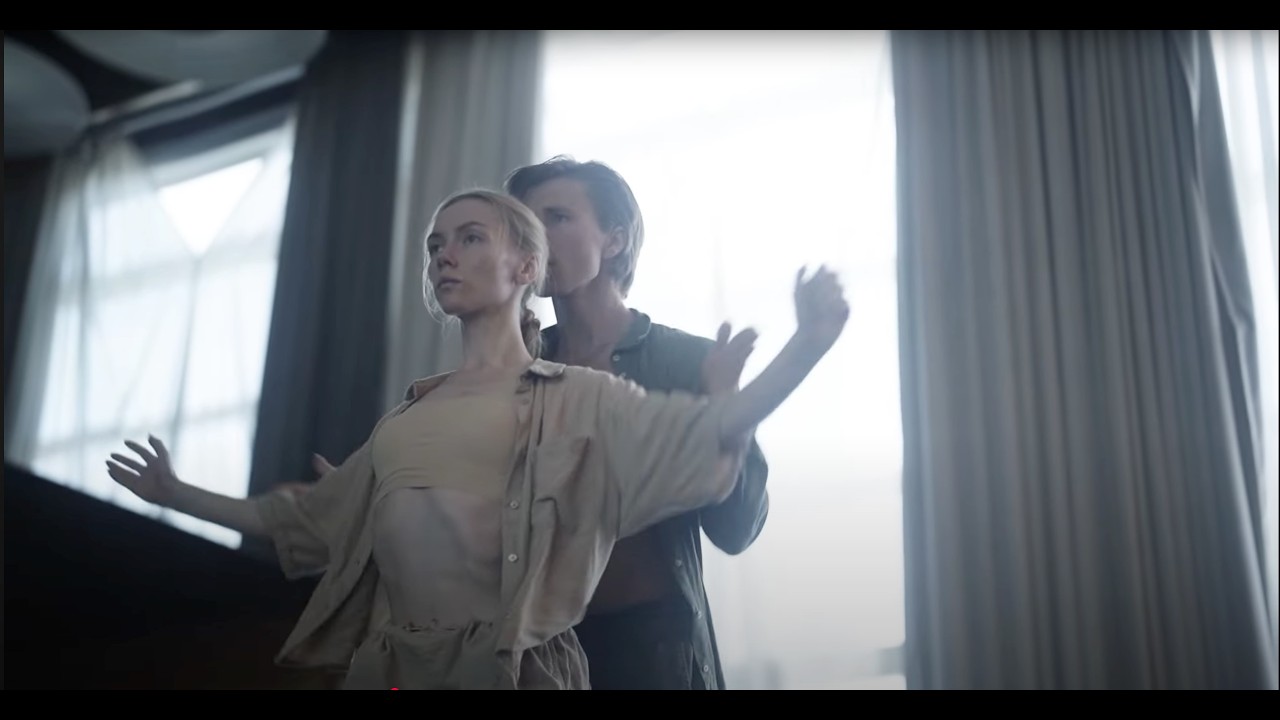
Ram Dass Khalsa described the composition as punctuated with "icy strings and flowing guitars." Shannon Hayden's cello and violin work provides the texture of cold, sharp loss, while the acoustic guitar suggests flow and movement. The combination creates a sonic landscape where jagged grief and gentle release coexist—much like the experience of mourning itself, which can swing rapidly between acute pain and moments of quieter surrender.

The repetition of the refrain "To the sea / To the sea / My life is overflowing to the sea" (0:45–0:52) operates less like a resolution than like a ritual incantation. Repetition in grief is not about arriving at new understanding; it is about anchoring the voice in a repeated gesture, a way of speaking that becomes mantra-like. Each return to the phrase is both the same and slightly different, depending on which moment of the song cycle we inhabit.

What is the spiritual framework underlying the song?

While "Niagara" expresses rupture with conventional spirituality—the breakdown of prayer, the argument with God—it does not abandon spiritual language. The phrase "now he's flying home free" and the persistent metaphor of the sea as a destination suggest a non-linear understanding of death. In many spiritual traditions, the ocean represents the infinite, the undifferentiated, the return to source. By asking Niagara to carry his troubles to the sea, the singer is, perhaps unconsciously, asking for dissolution of the separate self that holds the pain.

This is not the spirituality of transcendence or rapid healing. It is a spirituality of surrender that emerges only after honesty about rage and overwhelm. The song does not claim that the child is in a better place and therefore all is well. Instead, it suggests that one practice available to the bereaved is to become a conduit, to let one's life become a waterway through which sorrow can flow toward something larger than individual ego.

Where to go from here

To sit with "Niagara" is to practice a different relationship to loss. If you have experienced devastating grief, the song does not offer false reassurance. Instead, it validates the experience of being pulled under, of struggling to maintain family safety, of arguing with God. It also offers a container: the image of water moving toward the sea. This is not something to solve but something to allow. The practice might be to notice, without judgment, where your own grief wants to flow, and to ask what it might mean to stop holding it so rigidly. Listen to the song more than once. Notice which lyrics catch you. Notice how the music's coldness and warmth working together mirrors the contradictions you hold.

["grief-loss", "spiritual-anger", "mourning", "folk-music", "death-acceptance", "water-metaphor", "surrender", "consciousness"]

Comments

Loading the conversation…

Transcript

[0:02] [Music]

[0:14] niagara

[0:18] you took my baby

[0:20] from me

[0:24] and now he's flying home

[0:27] free

[0:28] niagara

[0:30] [Music]

[0:32] i hear you churning down below

[0:38] and now my life will

[0:43] overflow to

[0:45] the sea

[0:47] to the sea

[0:51] my life is

[0:52] overflowing to the sea

[0:57] to

[0:57] the sea

[1:00] to the sea

[1:03] won't you take all my troubles to the

[1:07] sea

[1:10] [Music]

[1:22] niagara

[1:23] [Music]

[1:26] you got me arguing with god

[1:32] and i can't remember the last we talked

[1:36] niagara

[1:40] trying to live here honestly

[1:46] but now i'm slipping out to see

[1:52] to the sea

[1:55] my life is slipping down to the sea

[2:01] to

[2:02] the sea

[2:04] to the sea

[2:08] you take all my troubles to the sea

[2:15] there's nothing to do

[2:17] but walk through the

[2:22] [Music]

[2:34] trying to save my

[2:47] took my baby from

[3:01] i hear you turning down below

[3:07] and now my life will overflow

[3:12] to the sea

[3:15] to the sea

[3:19] my life is overflowing to the sea

[3:25] to

[3:26] the sea

[3:28] to the sea

[3:31] won't you take all my troubles to the

[3:35] sea

[3:37] go to

[3:38] the sea

[3:41] to the sea

[3:44] won't you take all my troubles

[3:49] [Music]

[3:57] niagara

[3:59] [Music]

[4:09] you

Ram Dass Khalsa
ArtistRam Dass Khalsa

About Ram Dass Ram Dass Khalsa, known professionally as Ram Dass, is a producer, multi-instrumentalist, songwriter, and touring musician whose work moves acros

View profileWebsite

Got Questions?

Frequently Asked Questions

The phrase suggests a spiritual belief that death is not an ending but a return or homecoming. While the song expresses profound grief, this line hints at a framework in which the child has moved to another state of being rather than simply ceased to exist.
Water in the song represents the need for grief to flow rather than be dammed up. The Niagara Falls becomes a mirror for overwhelming emotion, while the sea represents a destination where sorrow can be released or dissolved into something larger than the individual self.
This line expresses the spiritual crisis that often follows devastating loss—the breakdown of faith, prayer, and communication with the divine. It names the implicit anger and bewilderment: why would God allow such a tragedy? The song holds both spiritual belief and doubt simultaneously.
This suggests that grief requires passage, not avoidance. Walking through pain, rather than around it, becomes the only authentic practice available to the bereaved, even when it feels impossible and even as one questions God and struggles to protect those still living.
The song offers neither quick healing nor false acceptance. Instead, it enacts a practice of surrender—allowing grief to flow toward release without claiming that the loss becomes okay. It is a song about continuing to live while carrying an un-resolved wound.
Shannon Hayden's icy strings and violin, combined with flowing acoustic guitar, create a sonic landscape where sharp loss and gentle release coexist. The repetitive refrains function like ritual incantations, anchoring the voice in a repeated gesture rather than arriving at resolution.

Continue Reading

More from Ram

View All
Art and Beauty as Resistance During Times of War
Inspire

Art and Beauty as Resistance During Times of War

When violence and chaos dominate the world, artists create meaning and hope through beauty. Ram Dass explores how creativity becomes a spiri…

1 min read
The Heart and the Matter: Dance, Music, and Refugee Healing
Inspire

The Heart and the Matter: Dance, Music, and Refugee Healing

A collaboration uniting Ram Dass, Sukhmani, and Grecco Buratto with Ukrainian ballet dancers to support refugee artists through music and mo…

1 min read
Minimal Vocalization as Spiritual Practice: Power in Simplicity
Inspire

Minimal Vocalization as Spiritual Practice: Power in Simplicity

A brief live vocal interlude demonstrates how devotional sound—stripped to its essence—can invoke presence and transformation through pure r…

1 min read
Govinda Jaya: How Sacred Sound Awakens the Heart
Inspire

Govinda Jaya: How Sacred Sound Awakens the Heart

Radhika Das channels the liberating power of mantra through a luminous kirtan performance at Medicine Festival, invoking divine names to pur…

1 min read

Keep exploring

Continue your journey

More wisdom and gatherings from across the BrightStar directory.

More Articles

Browse the full library of teachings, interviews, and guides.

Back to all articles →

Teachers & Artists

Explore the lineages, musicians, and guides of the conscious world.

Explore artists →

Find an Event

Kirtan, retreats, sound baths, breathwork, festivals — happening soon.

Browse events →