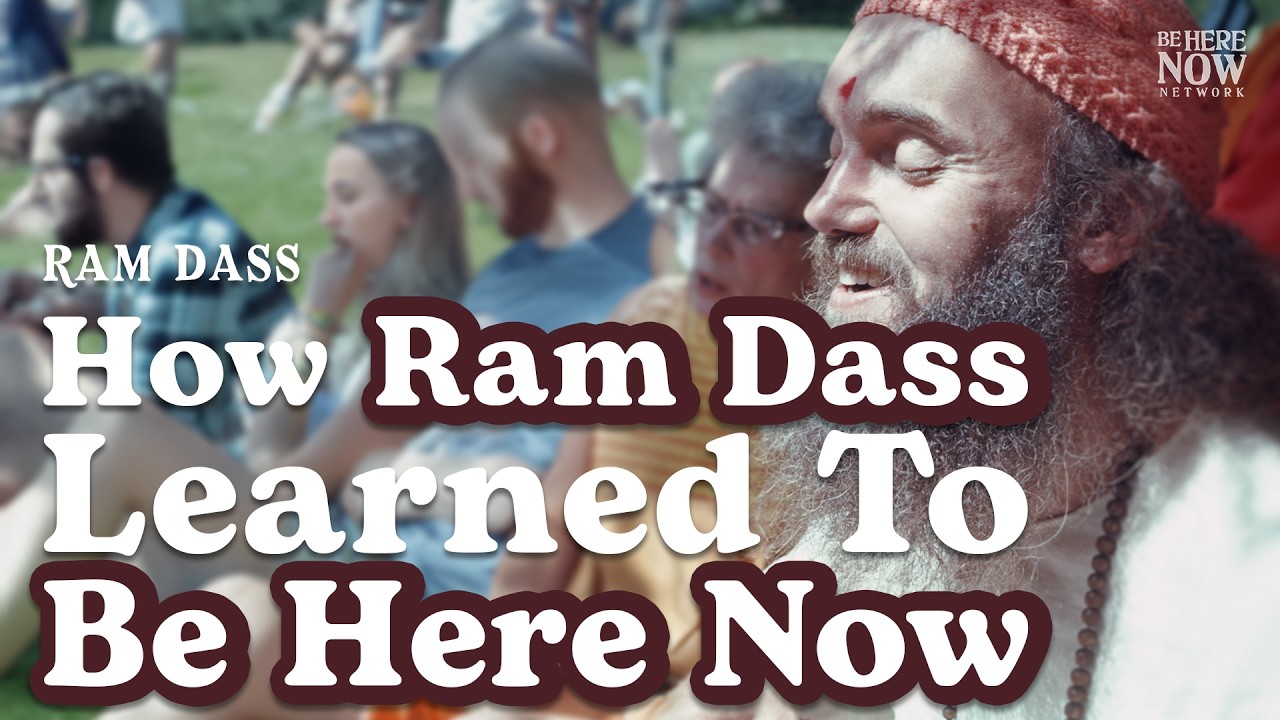
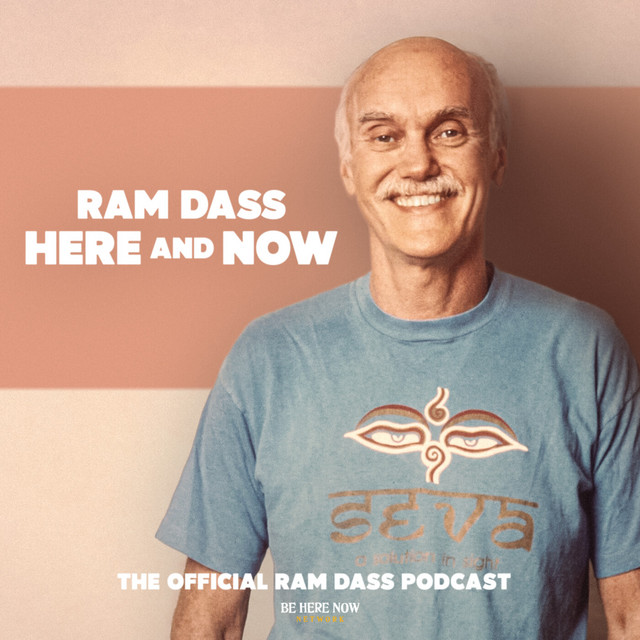
In this 1975 Florida talk, Ram Dass discusses the spiritual paradox of being drawn simultaneously toward God (formless merger, enlightenment) and toward humanity (service, suffering awareness). He argues that through mature spiritual practice, one reaches a moment of real choice: to dissolve into the formless or to consciously return to form as an instrument of dharma. True service arises not from guilt or desire to fix others, but from recognizing that your presence itself—your statement as an awake being—enlightens those ready to receive it. The core tension involves balancing the fascination with spiritual wisdom against the temptation to forget humanity in that pursuit.
What is the spiritual paradox of God versus humanity?
Ram Dass identifies a fundamental tension in spiritual life that most sincere practitioners eventually confront: the pull toward God (infinite consciousness, formlessness, ultimate freedom) can eclipse the pull toward humanity (engagement with suffering, service, relational presence). This is not a flaw in spiritual practice, but a natural consequence of deepening meditation and awakening. As one tastes the peace, bliss, and liberation available in states of absorption or union with the divine, the relative world—with all its pain, chaos, and incompleteness—can begin to feel like a distraction or even a trap. The spiritual practitioner may unconsciously use enlightenment as an escape route from the messy reality of human existence.
The paradox deepens because both pulls are legitimate. God represents the ultimate goal of most contemplative traditions: moksha, nirvana, liberation, the dissolution of the small self into infinite consciousness. Humanity represents the here-and-now reality of earth, relationship, embodied existence, and the suffering of beings. Neither can be truly abandoned without creating a spiritual imbalance. Ram Dass suggests that the mature spiritual path requires honoring both pulls simultaneously—what he calls "keeping one eye on God and one eye on the world."
What is the moment of choice in spiritual awakening?
According to Ram Dass, deep meditation and spiritual practice lead practitioners to a critical threshold: a point where the distinction between form and formlessness becomes experientially clear, and where a genuine choice becomes available. At this moment, one can perceive two paths. The first is to fully merge back into God—to release the body-mind entirely and rest permanently in formlessness. This is the traditional renunciate path, the ultimate goal in many texts. The second is to remain aware of formlessness while simultaneously choosing to return into form, to animate the body as a conscious instrument in the world.
This is not metaphorical or intellectual. Ram Dass describes it as a real moment where volition operates at the deepest level. The being who has tasted formlessness must then decide: do I release the form permanently, or do I consciously play in the formless while maintaining a vehicle (body, personality, life) through which to serve? The decision to return is not a capitulation or a failure to achieve enlightenment. Rather, it is an enlightened choice made from a place of freedom, not compulsion.
Why would anyone choose to return into form?
The deepest answer Ram Dass offers is rooted in the recognition of cosmic perfection combined with conscious compassion. Through the eyes of an awakened being, the universe—including all suffering, injustice, and apparent imperfection—is seen as already complete, already perfect, already a flawless divine dance. This is not a denial of suffering or a callous bypass of pain. Rather, it is the recognition that even suffering serves a function in the cosmic order. To quote the essential teaching: "You see the perfection of the universe, but you see it includes all the suffering."
Given this vision, why return to form? Because there is a function to be served. Ram Dass articulates this with startling clarity: "You are a statement that will enlighten those who are ready to be enlightened. That is your only function. It's the only reason you're on Earth." The being who has merged with God and then consciously returns understands that their very presence—their awakened consciousness, their awareness, their undivided attention—is itself enlightening. The person does not need to be a famous teacher or healer. They simply need to be present. That presence is a teaching, a transmission, a gift to the cosmos.
This reframes the entire notion of purpose and service. One returns to form not to fix things (implying they are broken) or to rescue others (implying they are helpless), but to play a role in a perfection that is already unfolding. This removes the burden and the egoic grandiosity from service while simultaneously elevating it to its highest function.
What is the true source of spiritual service?
Ram Dass draws a crucial distinction between service that arises from ego, guilt, or the desire to control outcomes, and service that arises from the awakened heart. True service, in his teaching, emerges from the desire for freedom—freedom for oneself and freedom for others. This is not about helping in the conventional sense, with all its hidden agendas (the need to be seen as good, the desire to rescue, the wish to fix others' problems). Rather, it is about recognizing that all beings want to be free, awake, and relieved of unnecessary suffering, and that this freedom is available now.
From this recognition, action flows naturally. The awakened being acts not because they believe they *should* help, but because they recognize that helping others awaken is helping themselves awaken. There is no split between self and other. Service becomes play, not burden. It is an expression of joy and freedom, not obligation.
This has profound implications for how we understand the spiritual life. It means that service is not something you add to your practice if you are sufficiently enlightened. Rather, recognizing the unity of all beings and the universal desire for freedom *is* enlightenment beginning to flower. And the most powerful service is simply your presence as an awake being in the world.
How can we balance the fascination with God against forgetting humanity?
Ram Dass identifies a real danger on the spiritual path, one he speaks about with candor: "You get so fascinated with God, with enlightenment, with the wisdom of the ages. And in your zeal to do that, it's very easy to forget. To forget humanity." This is not a failure of practice, but a subtle pitfall built into the nature of meditation and spiritual development. The more blissful, clear, and profound the inner experience, the more attractive it becomes relative to the apparent chaos and pain of the external world. A practitioner can unconsciously drift into what might be called spiritual bypassing—using the path as an escape rather than as an integration.
The antidote is not to abandon spiritual practice or to feel guilty about the pull toward God. Rather, it is to consciously integrate both pulls at every stage. This might look like: regularly returning from meditation to notice the beings around you and their reality. It might mean asking yourself, "In my pursuit of enlightenment, what have I stopped seeing?" It might mean maintaining relationships, staying engaged in the world, and allowing your practice to deepen your capacity to love rather than your capacity to withdraw.
The solution is not balance in a static sense, but in a dynamic sense—a constant oscillation between going deep (into silence, into God, into the infinite) and coming back (into presence, into relationship, into the finite and particular). This oscillation itself becomes the spiritual path.
What does it mean to be an instrument of the Dharma?
In Ram Dass's language, to be an instrument of the Dharma (or cosmic law, spiritual truth) is to be a conscious vessel through which awakening can be transmitted. It does not require you to become a teacher in the conventional sense, nor does it require you to solve anyone else's problems. It simply means that you show up as awake as you can be, and in that showing up, you become transparent to something larger than your individual personality.
When you are fully present, when your attention is undivided, when you are not lost in your own story or agenda, your presence itself becomes a mirror in which others can see themselves more clearly. This is transmission. This is dharma. The person does not have to do anything special; they simply have to be. "You are a statement that will enlighten those who are ready to be enlightened." This statement carries its own weight: not everyone will be ready, and that is not your responsibility. Your only function is to be clear and present.
This teaching has radical implications. It means that the mother who is fully present with her child is serving the dharma. The doctor who brings complete attention and compassion to each patient is serving the dharma. The person who sits in silence in a garden is serving the dharma if they are truly present. The function is not in the action, but in the quality of consciousness animating the action.
Where to go from here
Ram Dass's teaching on the balance between God and humanity invites several directions for deepening your own practice and integration. First, begin to notice the pull of each direction in your own life. When do you feel drawn inward toward silence, wisdom, and transcendence? When do you feel called outward toward relationship, engagement, and service? Neither is wrong; the integration is the work.
Second, examine your relationship to spiritual practice. Is it an escape, or is it a deepening of your capacity to be present in all of life? Are you using meditation to disconnect from the world, or to connect more fully with it? Honest self-inquiry here is essential.
Third, consider the teaching on presence and transmission. How could you show up more fully in your daily life, not as a project or self-improvement effort, but as a simple offering of your attention? What would happen if you trusted that your presence itself is enough, that you do not have to fix, rescue, or teach anyone?
Finally, return regularly to the vision of cosmic perfection that includes all suffering. Not to bypass pain or pretend injustice does not matter, but to touch the deeper truth that even suffering serves the unfolding of consciousness. From that place, authentic service becomes possible—not from guilt or desperation, but from joy and freedom.