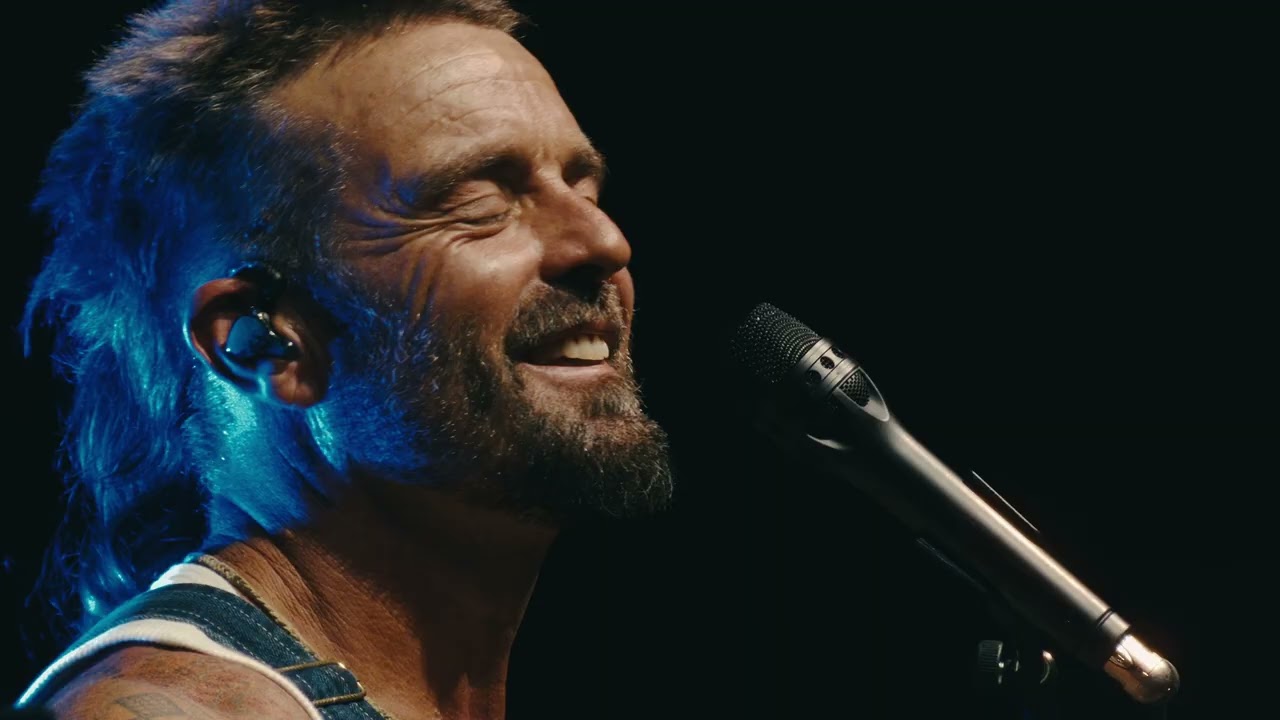
Xavier Rudd's "Follow the Sun" is a live folk meditation that weaves together simple but powerful practices: setting intentions, breathing consciously, cherishing the present moment, and listening to what your heart says beneath the weight of modern society. The song frames daily renewal through natural metaphors—following the sun's direction, watching birds, observing the moon's cycles—while returning repeatedly to the question "What does your heart say?" as an antidote to external pressure and confusion.
What Does It Mean to "Follow the Sun"?
The opening refrain of Rudd's song is deceptively simple: "Follow follow the sun / which way the wind blows / when this day is done." On its surface, this is a lyric about movement and direction. But Rudd is not literally advising listeners to chase the sun across the sky. Instead, he is articulating a philosophy of alignment—moving with natural cycles rather than against them, and recognizing that each day has its own rhythm and endpoint.
The sun, in contemplative traditions across cultures, symbolizes both illumination and renewal. In this song, following the sun becomes a metaphor for trusting life's larger patterns and rhythms. When Rudd repeats "tomorrow's a new day for everyone," he is reinforcing the idea that time itself offers a reset button each morning. Rather than carrying yesterday's burdens indefinitely, the listener is invited to acknowledge that fresh possibility arrives with daylight.
How Does Breath and Intention-Setting Work in the Song?
Early in the piece, Rudd introduces the practice: "Breathe in the air / set your intentions / dream with care." These three commands form a small but complete ritual. Breathing is the most immediate anchor to the present moment; it happens now, and only now. Setting intentions—clarifying what you want to cultivate or accomplish—transforms vague longing into directed energy. Dreaming with care adds gentleness; the caution against reckless hope or unrealistic expectations.
The placement of this instruction at the song's opening is significant. Rudd is not asking listeners to follow the sun first and figure out their direction later. Rather, breath and intention come before action. This order mirrors practices found in meditation and yogic traditions, where conscious respiration and mental clarity precede outward movement. The song is essentially a prescription: start with your body (breath), clarify your mind (intention), and then move with the natural world's guidance.
What Role Does Presence and Cherishing Play?
Another key refrain appears: "Cherish this moment / cherish this breath / tomorrow's a new day for everyone." The emphasis on cherishing—a word that means to hold dear, to value tenderly—shifts the listener away from productivity or goal-chasing toward appreciation. This is not about maximizing output or achievement. Instead, Rudd is inviting the listener to find the value in what is already here: this breath, this moment.
In contemplative language, this is sometimes called "non-striving" or "being-ness." While intention-setting appears earlier in the song, it does not contradict this call to cherish the present. The two work together: you set a direction (intention), but you also recognize that the fullness of life happens in the specific instant you are living right now, not in some future outcome. Each breath is complete in itself, worthy of attention and gratitude.
How Does the Song Address Life's Weight and Societal Pressure?
Rudd shifts tone partway through, acknowledging the emotional reality many listeners face: "How you feeling when your moon and your sun / when you feel life coming down on you like a heavy way / when you feel this crazy Society add to the Stress." Here, the song stops offering only gentle guidance and names the actual experience of burden—the weight of external pressure, the disorientation of chaotic social systems, the accumulation of stress.
This moment is crucial. Rather than pretending that breathing and intention-setting solve everything, Rudd validates that the practices he is suggesting exist specifically because life often does feel crushing. The song does not bypass difficulty; it acknowledges it. The invitation to "take a scroll to the nearest forest / remember our place" is then a practical suggestion: step away from the digital/social sphere (implied by "scroll," the gesture of scrolling through devices), move to nature, and recalibrate your sense of scale and belonging.
What Does "Remember Our Place" Mean?
The line "take a scroll to the nearest forest / remember our place / any moons have risen and Fallen / long now before you came" operates on multiple levels. First, it is a grounding practice: literally go to a forest or natural space, which many psychological studies show reduces stress and restores clarity. Second, it is a reminder of temporal perspective. The moon has risen and set countless times; it will continue long after you are gone. Your individual worries, while real and valid, exist within a much larger temporal arc.
This is not nihilistic—the song is not saying your concerns don't matter. Rather, it is saying that placing your struggles within the context of deep time (the moon's ancient cycles) can restore proportion and perspective. You are part of something vast and continuous. That recognition can be both humbling and liberating.
What Is the Significance of "What Does Your Heart Say?"
The most repeated question in the song is "What does your heart say?" Rudd poses this five times in rapid succession, then adds "What does your heart say people?" each time emphasizing the inner authority of the listener's own wisdom. This is a direct appeal to intuition—that knowing which exists beneath thought, anxiety, and social conditioning.
In many spiritual traditions, the heart is not merely an emotional organ but a center of knowing. To ask "what does your heart say?" is to ask: if you quieted the noise of society, your anxious thoughts, and external demands, what would you actually choose? What feels true to you? The repetition of this question (at approximately 150-158 seconds in the recording) is not rhetorical; it is an invocation, a practice of returning again and again to inner wisdom as the compass.
How Do Natural Metaphors (Birds, Wind, Moon) Guide the Song?
Throughout the piece, Rudd invokes animals and natural phenomena: "direction of the birds / direction of Love" and "which way the wind blows." Birds are a classic metaphor for freedom and unobstructed movement through space. The wind is invisible yet powerful; it shapes everything it touches. The moon, as mentioned earlier, represents deep time and cyclical renewal.
These are not decorative images. They are instructions. Watch how birds move—freely, responsively, without overthinking. Feel the direction of wind—an invisible but real force. Observe the moon's phases—constancy within change. Each natural symbol offers a different teaching about how to move through life without rigid control, while still maintaining some orientation and intention.
Where to Go From Here
Xavier Rudd's "Follow the Sun" is fundamentally a song about discernment and self-trust in a world that often pulls you away from your own center. The practices embedded in the lyrics—conscious breathing, setting intentions, cherishing presence, stepping into nature, and repeatedly asking yourself what your heart knows—are not mystical or esoteric. They are concrete, repeatable, and accessible.
If you have felt the weight Rudd names—the heaviness of societal pressure, the disorientation of modern life—the song offers not a solution that bypasses the difficulty, but a method for staying connected to your own wisdom while you navigate it. The next time you feel lost or burdened, try following the sun's example: notice which way the wind blows, breathe, set a simple intention, cherish the breath you are taking right now, and ask yourself quietly: what does my heart say?