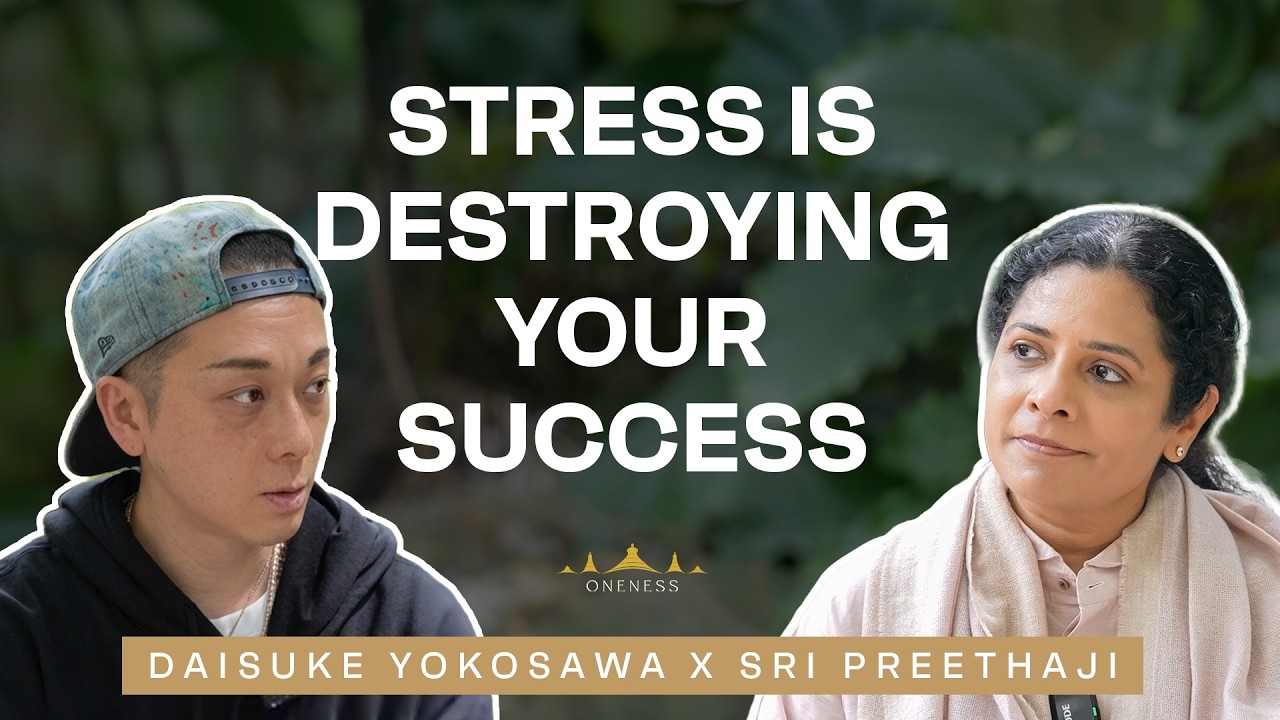
What Is Oneness Consciousness and How Does It Change Daily Life?
When we operate from a state of oneness consciousness, the ordinary moments of life—those that once felt burdensome or anxiety-inducing—begin to shimmer with a quality of wonder and peace. This shift is not about becoming passive or detached. Rather, it represents a fundamental reorganization of how we perceive and relate to the moments that make up our days. A mother's holiday gathering, the routine interactions with family, small inconveniences that once triggered frustration: these become doorways to presence and gratitude when filtered through the lens of oneness.
The Oneness Movement, taught by Sri Preethaji and Sri Krishnaji, points to a recognition that separation between self and other, between "my moment" and "their moment," is the root of suffering. When this sense of separation dissolves, even briefly, the entire texture of experience changes. What was once seen as an imposition—preparing a meal, managing the household during a holiday, responding to a child's needs—becomes an expression of love and interconnection. This is not achieved through positive thinking alone, but through a genuine shift in perception.
How Does Oneness Transform Stress Into Wonder?
Stress typically arises when there is a conflict between what we want and what is happening. We want a peaceful holiday, but relatives are chaotic. We want quiet, but the house is full of noise. We want to rest, but there are endless tasks. In each case, there is resistance—a pushing against reality as it is. This resistance creates contraction, anxiety, and the sense that something is wrong.
When consciousness shifts toward oneness, that fundamental resistance softens. Not because the circumstances change—the house may still be chaotic, the tasks may still be many—but because the perceiver has changed. Instead of experiencing the moment as something separate from oneself that must be controlled or escaped, there is a recognition that life itself is moving through all of it: through the noise, the busyness, the imperfection. This recognition opens a space of wonder. The child's voice is still loud, but it is no longer an enemy; it is life itself expressing through a small being. The messiness is still present, but it is not a threat to an imagined ideal self; it is simply what is unfolding.
This transformation does not require effort or willpower. It happens as a consequence of the consciousness shift itself. When separation dissolves, the natural response of the mind and heart is relaxation and appreciation. The mother in the story described in this teaching found that situations which once created stress became occasions for joy—not through reframing alone, but through a genuine alteration in her sense of self and world.
What Is the Role of Family Life in Spiritual Awakening?
Family life is often treated in spiritual teachings as an obstacle to inner peace—too many demands, too many triggers, too much entanglement. But the Oneness perspective invites a different understanding. The people closest to us, the daily interactions and cycles of intimacy and friction, are the very ground where oneness consciousness can be tested and deepened. A holiday gathering with family is not a distraction from spiritual life; it is spiritual life itself presenting as relationship.
When a mother approaches her family interactions from a place of oneness, something remarkable happens: she no longer experiences her children's needs or her partner's presence as separate from her own wellbeing. There is no depletion, because there is no fundamental giver and taker. There is only the flow of life meeting life. This does not mean becoming a martyr or losing boundaries. Rather, it means acting from a place of wholeness rather than from a place of lack or obligation.
The small moments—a meal shared, a conversation, a child's laughter, a quiet morning before everyone wakes—these become the curriculum of awakening. They are not obstacles to spiritual life; they are the substance of it.
How Can Oneness Transform Holiday Experiences?
Holidays traditionally concentrate both joy and stress. There is the expectation of perfection, the pressure to create special moments, the collision of different personalities and needs in close quarters. Many people approach holidays with a mix of anticipation and dread, hoping for connection but bracing for conflict.
The teaching offered here suggests that a shift toward oneness consciousness fundamentally alters the holiday experience, not by making external circumstances perfect, but by changing the internal relationship to whatever arises. A mother who recognizes her children's restlessness, her partner's frustration, her own fatigue—all as expressions of the same universal energy—does not experience these as personal failures or betrayals. They are simply what is moving through form. This recognition creates spaciousness.
In that spaciousness, genuine connection becomes possible. Not forced connection—not a performance of togetherness—but a natural meeting when the walls between self and other grow thin. The small moments that once got lost in the rush to achieve some imagined perfect holiday suddenly become vivid and real: a child's face, a conversation, a moment of quiet. These are no longer distractions from the "real" holiday experience; they are the only experience there is.
What Does It Mean to Find Peace in the Midst of Ongoing Demands?
One potential misunderstanding about oneness consciousness is that it requires all external circumstances to become peaceful. But the testimony offered here points to something different: peace arising not when the circumstances change, but when the perceiver changes. The demands of family life continue. The holiday still requires preparation. Children still cry, adults still get tired, unexpected challenges still arise.
What shifts is the resistance to this reality. When a mother stops fighting against the fact that family life is complex and demanding, and instead meets that complexity with awareness and openness, the quality of her presence changes. She may be busy, but she is not internally fragmented. She may be managing many tasks, but she is not split between what is happening and what she wishes were happening. This unified presence is what creates peace—and it is compatible with ongoing activity and engagement.
This is a crucial distinction for those in active life roles—parents, caregivers, people with significant responsibilities. They do not need to withdraw from those roles to find peace. The peace is available right here, in the midst of the demands, once the separation between self and life dissolves.
Where to go from here
The insights offered by the Oneness Movement invite a practical experiment: notice, in the smallest moments today, the difference between experiencing something as happening to you and experiencing it as life expressing through you. When you are tired and a child needs something, is there a sense of separation—them versus you, their need versus your exhaustion? Or is there a recognition of shared aliveness? This distinction is subtle, but it is everything. The shift toward oneness is not a distant goal; it is available in the next moment, and the next, waiting to be recognized. The holiday gathering, the ordinary Tuesday, the small joy: all of these are invitations to wake up to the wholeness that is already present.