Why Comparison Becomes a Trap
Comparison operates as a hidden saboteur because it redirects your focus away from your own journey. When you measure your progress against someone else's visible success, you're no longer asking "Am I living according to my values?" but rather "Am I enough compared to them?" This second question has no satisfying answer, because there will always be someone ahead in some metric.
The comparison trap deepens when you're unclear about what actually matters to you. Without a clear sense of purpose, external benchmarks become your only reference points. You adopt goals that aren't yours—a career path because a peer succeeded in it, a lifestyle because it looks good on social media, a financial target because it seems impressive. None of these are rooted in self-knowledge, so even achieving them leaves you hollow.
What Does Purpose Clarity Actually Mean?
Purpose clarity is not about finding some grand cosmic mission. It's about answering a more practical question: What do I genuinely value, and how do I want to direct my energy and attention? When you know your purpose, you have a personal compass. You can evaluate opportunities, goals, and relationships against that compass instead of against what other people are doing.
Purpose clarity also reveals your true capabilities—not the inflated version you might project on social media, and not the diminished version you might internalize when comparing yourself to the most successful people in your field. When you're honest about what you're genuinely skilled at and what you actually care about, your goals become calibrated. They stretch you without demoralizing you.
The Role of Inner Healing in Goal-Setting
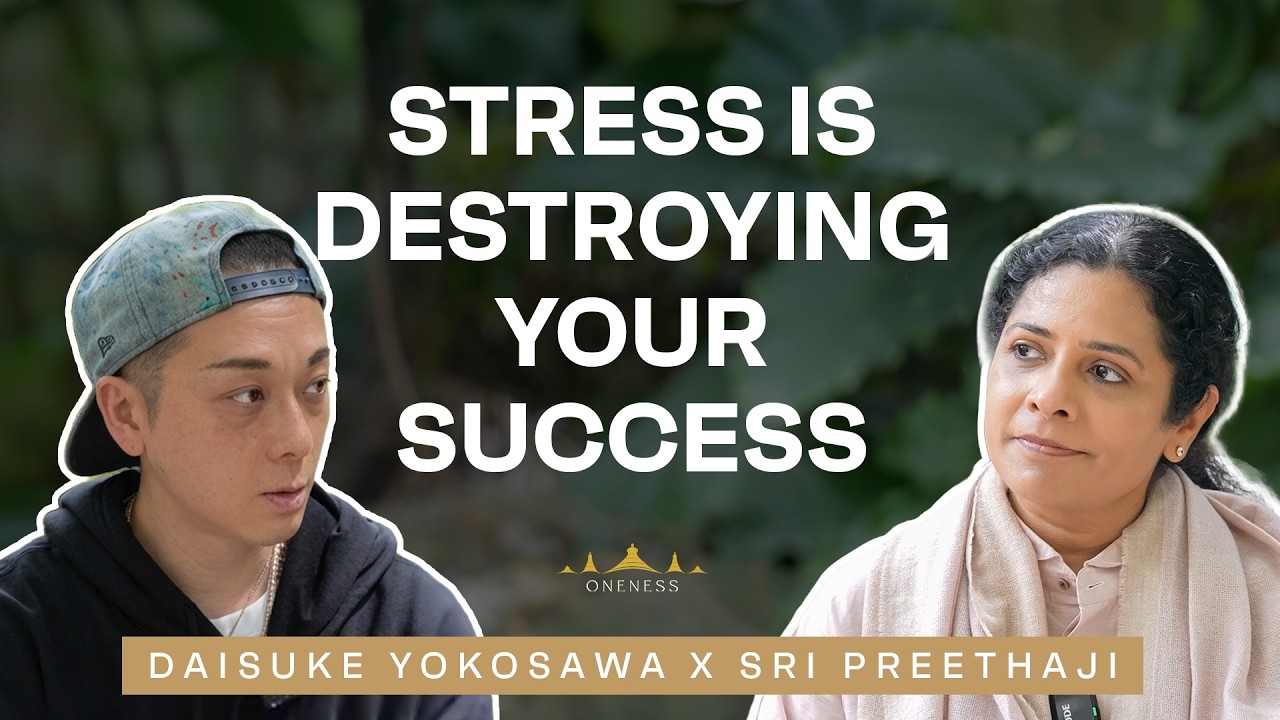
The teaching points to a key insight: expectations based on love and true capabilities can only emerge if you're healed from within. What does this mean? Many people carry internalized wounds—feelings of inadequacy, shame, fear of failure—that unconsciously drive their goal-setting. You might set ambitious targets not from genuine desire, but from a need to prove your worth or escape shame. Those goals are fragile, because they're not serving your flourishing; they're serving your wound.
Inner healing means addressing these deeper patterns. When you work through the beliefs that you're not enough, the fears that your capabilities don't matter, or the shame that surrounds failure, your relationship to goal-setting transforms. You can then set expectations that reflect what you actually want to contribute and experience, not what you need to prove.
How Purpose Breaks the Comparison Cycle
Once you've clarified your purpose and healed the underlying wounds that fuel comparison, a subtle but powerful shift occurs. You stop asking "How do I measure up?" and start asking "Am I aligned with my own direction?" These are completely different questions, and they lead to different lives.
Purpose-driven goal-setting is inherently personal. Your purpose may involve serving others, creating, building, healing, or learning—but the specific shape of that purpose is yours alone. When you're anchored in that unique direction, comparing yourself to someone else's path feels as strange as comparing a river to a mountain. You're different things moving in different ways.
The freedom that emerges is significant. You can celebrate others' success without feeling diminished. You can learn from their approaches without needing to replicate their entire path. And you can pursue your own goals with the energy that comes from genuine alignment, not from the anxious effort of keeping up.
Setting Expectations Based on Love, Not Fear
The phrase "expectations based on love and true capabilities" deserves attention. Expectations grounded in love ask: What do I want to give? What do I want to learn? How do I want to show up for the people and work I care about? These are fundamentally different from fear-based expectations, which ask: What do I need to achieve to be worthy? What do I need to do to avoid failure or shame?
Love-based expectations are sustainable because they connect you to something larger than yourself—the actual value you're generating, the actual growth you're experiencing, the actual impact you're having. Fear-based expectations, by contrast, are exhausting. You're always performing, always measuring, always anxious about falling short of an external standard.
When you understand your true capabilities—neither inflated nor diminished—you can set expectations that are both honoring and realistic. You're not pretending to be someone you're not, and you're not limiting yourself from fear. You're meeting yourself where you actually are and building from there.
Embracing Your Unique Journey
The teaching emphasizes embracing your unique journey. This is not a platitude; it's a practical instruction. Your journey is unique not because you're special in some abstract sense, but because your combination of values, capabilities, wounds, and gifts is genuinely different from anyone else's. No one else has your exact starting point, your exact constellation of strengths, or your exact purpose.
When you stop trying to fit your journey into someone else's template, you free enormous amounts of mental and emotional energy. You can invest that energy in learning the skills that actually matter to your purpose, building relationships that feed your life, and taking steps that align with your own direction.
This doesn't mean isolation or lack of community. It means you're in community with others from a place of genuine connection and shared values, not from a place of competition or anxiety. You can collaborate, learn, and celebrate without the undercurrent of comparison that poisons so many relationships and communities.
Where to Go From Here
Begin by getting quiet enough to answer one honest question: What do I actually care about? Not what you think you should care about, and not what would look impressive—what genuinely matters to you? Purpose doesn't need to be your life's ultimate answer. It can be your direction for the next year, the next chapter. Clarity starts with honest self-reflection.
Second, notice where comparison shows up in your life. Which people trigger the impulse to measure yourself against them? What metrics do you unconsciously adopt as your own? Awareness of the trap is the first step to stepping out of it. Third, if healing is needed—if there are shame or inadequacy patterns underlying your goal-setting—seek support. Therapy, contemplative practice, trusted mentors, or wise friends can all help you work through these patterns so that your goals emerge from genuine desire and alignment, not from wounds.
]]>