Ekam, a teaching from the Oneness Movement, reframes ordinary experience—breath, moments, awareness—as direct pathways to the infinite. Rather than treating spirituality as a separate domain, Ekam integrates the sacred into every instant of life, transforming routine perception into continuous prayer and divine encounter.
What Does Ekam Mean?
Ekam is a Sanskrit term meaning "one" or "unity," and in this context it refers to the non-dual understanding that everything is ultimately one infinite consciousness. The Oneness Movement presents Ekam not as a philosophical abstraction but as a lived experience accessible through the ordinary texture of daily life. The teaching suggests that separation between the sacred and mundane is an illusion created by habitual perception—and that awakening to Ekam means recognizing the divine nature inherent in every moment.
How Can Every Breath Become a Prayer?
The phrase "every breath becomes a prayer" points to a shift in consciousness rather than a technique. In conventional understanding, prayer is something we do—words we speak or intentions we direct toward the divine. Ekam inverts this: when awareness deepens, breathing itself becomes prayer because the distinction between the one praying and the divine dissolves. Each inhalation and exhalation becomes an expression of unity, an acknowledgment of the life force moving through the body. This doesn't require changing how you breathe; rather, it requires changing the quality of attention brought to breathing. The Oneness Movement teaches that when you become fully present to the simple act of breath—without judgment, narrative, or distraction—you naturally align with the infinite consciousness that sustains all life. Breath then functions as a continuous reminder of your non-separate nature from existence itself.
What Makes Every Moment a Gateway to the Divine?
In ordinary consciousness, we filter experience through memory, expectation, and identity. We perceive moments as isolated units—this moment is separate from the last, and different from the next. Ekam teaches that this fragmentation is optional; moments become gateways when we bring complete presence to them. A gateway, by definition, is a threshold where two realms meet. When you are fully aware in a moment—without rehearsing the past or anticipating the future—the boundary between your individual self and the infinite dissolves. The Oneness Movement emphasizes that this isn't mystical or distant; it's available in the simplest experiences: eating, walking, listening, resting. The quality of presence transforms the gateway's function. A moment filled with distracted thought remains isolated; a moment of true presence opens directly into the infinite dimension of consciousness.
How Does Experience Become a Journey Into the Infinite?
The teaching frames life itself as spiritual practice. Rather than seeing meditation or prayer as separate activities that lead toward spirituality, Ekam suggests that all experience—work, relationships, challenges, joy—can serve as the journey itself. This requires a fundamental reorientation: instead of seeking the infinite somewhere else (another realm, a future state, a distant enlightenment), the Oneness Movement teaches that the infinite is here now, woven into the fabric of ordinary experience. When you shift from trying to escape or transcend experience to fully inhabiting it, life becomes the path. Difficulties become teachers. Relationships become mirrors of divine connection. Even confusion or suffering can deepen awareness if met with full presence rather than resistance. The journey into the infinite, from this perspective, isn't about reaching a destination; it's about recognizing that every step, every breath, every conscious moment is already infinite consciousness knowing itself.
What Is the Oneness Movement's Core Teaching?
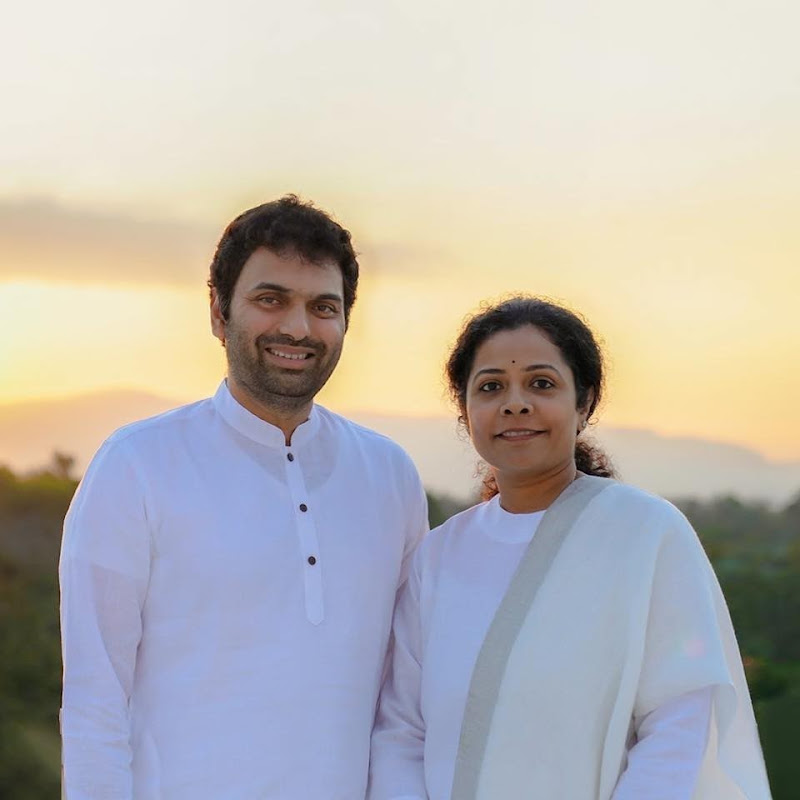
The Oneness Movement, founded by Sri Preethaji and Sri Krishnaji (the speakers of this teaching), emphasizes direct experience of non-duality—the realization that separation is illusory and that all of existence is one undivided consciousness. Unlike traditions that position enlightenment as a remote goal, the Oneness Movement teaches that awakening is accessible now, through simple shifts in awareness. The movement emphasizes grace, transmission, and the natural unfolding of consciousness when conditions support it. Their teachings include practices like Oneness Blessing (a transmission of divine grace), meditation, and the cultivation of presence. Ekam specifically represents their vision of how spiritual awakening integrates seamlessly into ordinary life, transforming the mundane into the sacred through the simple practice of presence.
Why Does Presence Matter in Spiritual Practice?
Presence is central to Ekam because consciousness itself is the gateway. Absence of presence—mind lost in thought, awareness contracted into ego-identity—creates the experience of separation. When attention collapses into internal narratives, you lose access to the infinite dimension that is always here. Presence doesn't require effort in the conventional sense; rather, it requires release—dropping the story, the effort, the constant self-commentary. The Oneness Movement teaches that as presence deepens, the infinite naturally becomes apparent, not as something you acquire but as something you stop obscuring. Presence is the condition under which the divine nature of experience reveals itself. This is why "every moment" and "every breath" become gateways only when met with genuine awareness.
How Can Ordinary Life Serve as Spiritual Awakening?
Ekam dissolves the boundary between sacred and mundane by teaching that divinity is not separate from or hidden within ordinary experience—it IS ordinary experience, properly perceived. When you eat with full awareness, not lost in thought about taste or nutrition, the sensory act becomes communion. When you listen to another person with genuine presence instead of waiting to respond, you encounter the divine in their being. When you work with complete attention rather than resentment, work becomes meditation. The Oneness Movement's insight is that all the conditions for awakening are already present in life. You don't need to escape to a monastery or wait for a special experience; you simply need to wake up to what's already here. This radical democratization of spirituality—the teaching that awakening is available through every breath, every moment—is central to Ekam's appeal.
What Is the Role of Prayer in Ekam?
Prayer in the Ekam framework is not petitionary or even intentional in the ordinary sense. It is the natural expression that arises when the sense of separation dissolves. When you are fully present, gratitude flows naturally. When you recognize the divine in all beings, compassion is inevitable. Prayer becomes the authentic response of a consciousness that has awakened to its unity with existence. From this view, the most powerful prayer is not words spoken to a distant deity but the quality of presence brought to each moment—a presence that says, "I am here, fully alive, in recognition of the infinite consciousness I am." This transforms prayer from something you practice into something you are.
Where to Go From Here
If Ekam's teaching resonates, the entry point is simple: choose one moment today—a single breath, a meal, a conversation—and bring complete, non-judgmental awareness to it. Don't try to have a spiritual experience; simply be fully present. Notice what shifts when attention is no longer fragmented by thought. Explore the Oneness Movement's teachings and consider their transmissions (such as Oneness Blessing), which they teach accelerate the activation of inner grace. Read more about non-dual spirituality and the integration of awakening into daily life. Most importantly, recognize that the infinite is not distant—it is here in your next breath, waiting only for your full presence to be known.