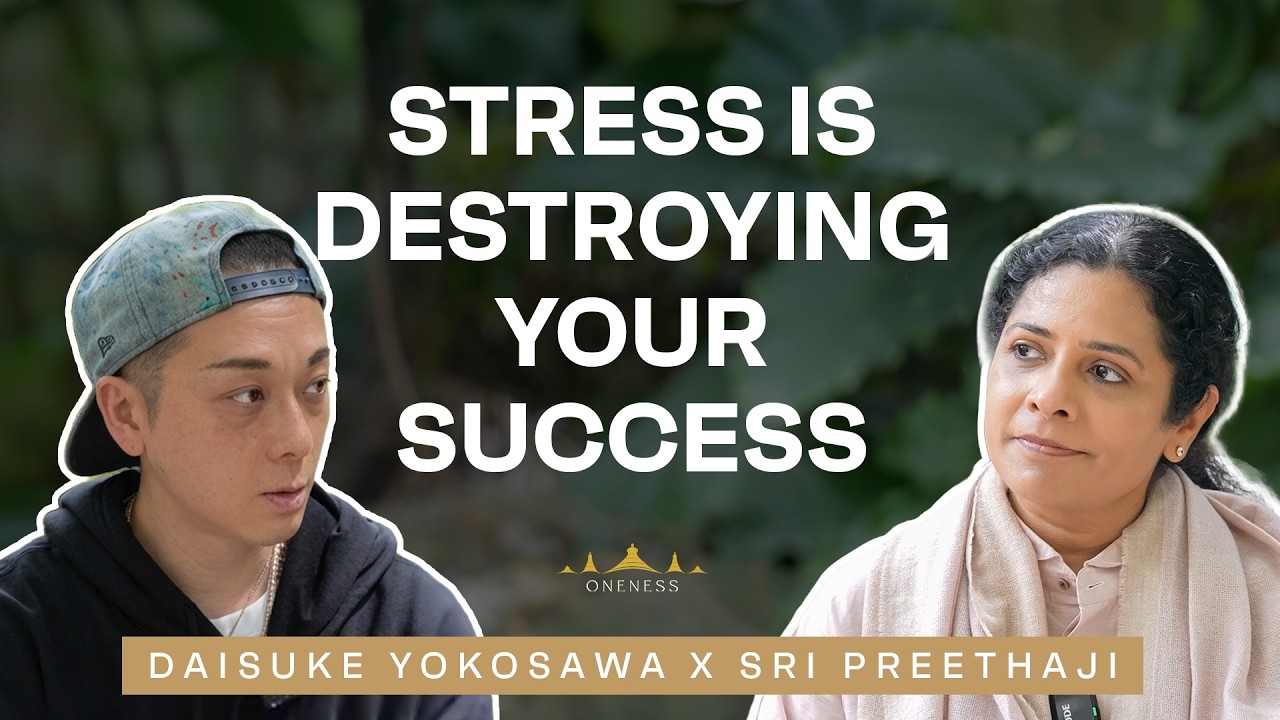
The Oneness Movement's exploration of Deeksha—a sacred initiation or blessing—demonstrates how silence and ego dissolution can dissolve fear and create a direct experience of divine protection. This practice, shared in the context of the Oneness Abundance festival, reveals that when mental resistance and defensive patterns cease, consciousness naturally perceives itself as held within a larger protective intelligence.
Deeksha, in the Oneness Movement framework, is a sacred transmission or initiation designed to shift consciousness directly. Unlike intellectual teaching or visualization practice, Deeksha operates through energetic transmission—a non-verbal initiation that bypasses the thinking mind and works at the level of direct experience. The Oneness Movement, founded by Sri Preethaji and Sri Krishnaji, uses Deeksha as a primary tool for awakening individuals to their innate unity with existence and the divine intelligence that sustains all life.
The practice involves a trained facilitator transmitting a frequency or blessing to a receptive consciousness. This is not prayer or request, but rather a direct opening to what already exists within the individual—a remembrance of one's essential nature and connection to the whole. In the context of the Oneness Abundance festival, Deeksha is offered as an accelerated pathway to dissolve the psychological barriers that ordinarily obscure this recognition.
Fear, in most psychological and spiritual frameworks, arises from separation consciousness—the felt sense that one is isolated, vulnerable, and unprotected within a potentially hostile world. This separation is maintained by constant mental activity, defensive thinking, and the ego's habitual vigilance. When Deeksha creates what is described as "sacred silence," it is not merely the absence of sound, but rather the settling of mental resistance and thought patterns that ordinarily reinforce the illusion of separateness.
In this silence, the rational mind—which generates most fearful scenarios and defensive strategies—naturally quiets. Without the constant internal commentary of threat assessment and self-protection, a different dimension of awareness becomes available. What emerges in this gap is not a new thought or belief, but a direct perception: the sense of being held, protected, and supported by an intelligence that is not separate from one's own consciousness. Fears that seemed urgent and real in the noise of the thinking mind are revealed as constructs, and they dissolve not through effort or analysis, but through a shift in the ground of awareness itself.
Divine protection, as understood in the Oneness Movement, is not a distant God's intervention or supernatural shielding. Rather, it is the recognition that existence itself—the intelligence that animates all life—is inherently protective. When the individual consciousness aligns with this larger intelligence rather than opposing it through fear and ego resistance, life naturally flows with support and ease.
This protection manifests not as the absence of challenges or obstacles, but as a fundamental trust that the individual is part of a coherent whole. When this recognition stabilizes, the nervous system shifts from defensive vigilance to genuine safety. The body's stress response downregulates, and the mind's catastrophizing tendency quiets. This is not psychological denial or positive thinking—it is a fundamental reorganization of consciousness that perceives reality as fundamentally benign rather than fundamentally threatening.
In the context of the Oneness Abundance festival, this divine protection is described as "profound," suggesting that the shift is deep and touches dimensions of being that ordinarily remain untouched by surface reassurance or therapeutic techniques. The protection is not believed in; it is directly experienced.
The festival title references three Sanskrit terms that elaborate different dimensions of spiritual unfolding:
- Riddhi refers to prosperity, abundance, and the natural flow of resources when consciousness is aligned with the whole. This is not material accumulation alone, but the sufficiency and grace that emerge when one lives in harmony with cosmic intelligence rather than against it.
- Siddhi traditionally refers to spiritual powers or perfections that arise naturally as a byproduct of enlightenment. In the Oneness framework, these are capacities—clarity, intuition, compassion, healing presence—that become available when the ego's defensive contraction loosens.
- Buddhi is higher intelligence or wisdom—the capacity to perceive reality directly rather than through the filters of conditioned thought. This is the discriminative awareness that distinguishes the eternal from the temporal, the true from the false.
Together, these three represent a complete flowering of consciousness: material and spiritual abundance (Riddhi), natural capacities and gifts (Siddhi), and clear perception of what is actually true (Buddhi). The Oneness Movement's teaching is that all three emerge naturally when the fundamental fear-based contraction of consciousness dissolves through practices like Deeksha.
The "perfect tranquility" described in relation to the Deeksha experience is not apathy or numbness, but rather what might be called "active peace"—a state where the nervous system is genuinely relaxed, the heart is open, and the mind is alert but not reactive. This is the natural state when fear is absent.
Most humans live in a chronic low-level state of fight-or-flight, where even in moments of apparent calm, the nervous system maintains readiness for threat. Perfect tranquility, by contrast, represents a fundamental trust that is so complete that defenses become unnecessary. This state is "profound" because it touches something ancient in human consciousness—a remembrance of safety that predates the individual ego's construction of threat and protection.
In spiritual psychology, this tranquility is often described as the natural ground state of consciousness before trauma, conditioning, and egoic identity fragmentize awareness. Deeksha, in this understanding, provides a direct pathway back to that ground—not by becoming a different person or adopting new beliefs, but by allowing what never actually left to be perceived again.
For those resonating with this exploration of Deeksha and divine protection, several pathways deepen the work:
First, one might seek a trained Oneness Deeksha facilitator to receive the transmission directly. The Oneness Movement has established training programs worldwide, and receiving Deeksha in person is the primary methodology for catalyzing the shift described here.
Second, developing a meditation or contemplative practice helps stabilize the silence that Deeksha initiates. Regular meditation creates the inner conditions for fear to dissolve more completely and for the perception of divine protection to deepen and integrate.
Third, studying the teachings of Sri Preethaji and Sri Krishnaji provides a conceptual framework that supports the direct experience. Understanding what is happening during the shift from fear to trust helps anchor the shift more permanently in one's worldview and behavior.
Finally, one might explore how the three dimensions of Riddhi, Siddhi, and Buddhi are already present in subtle form in one's own life, even now. This recognition itself begins to activate these principles, creating the conditions for more abundant, capable, and wise living.