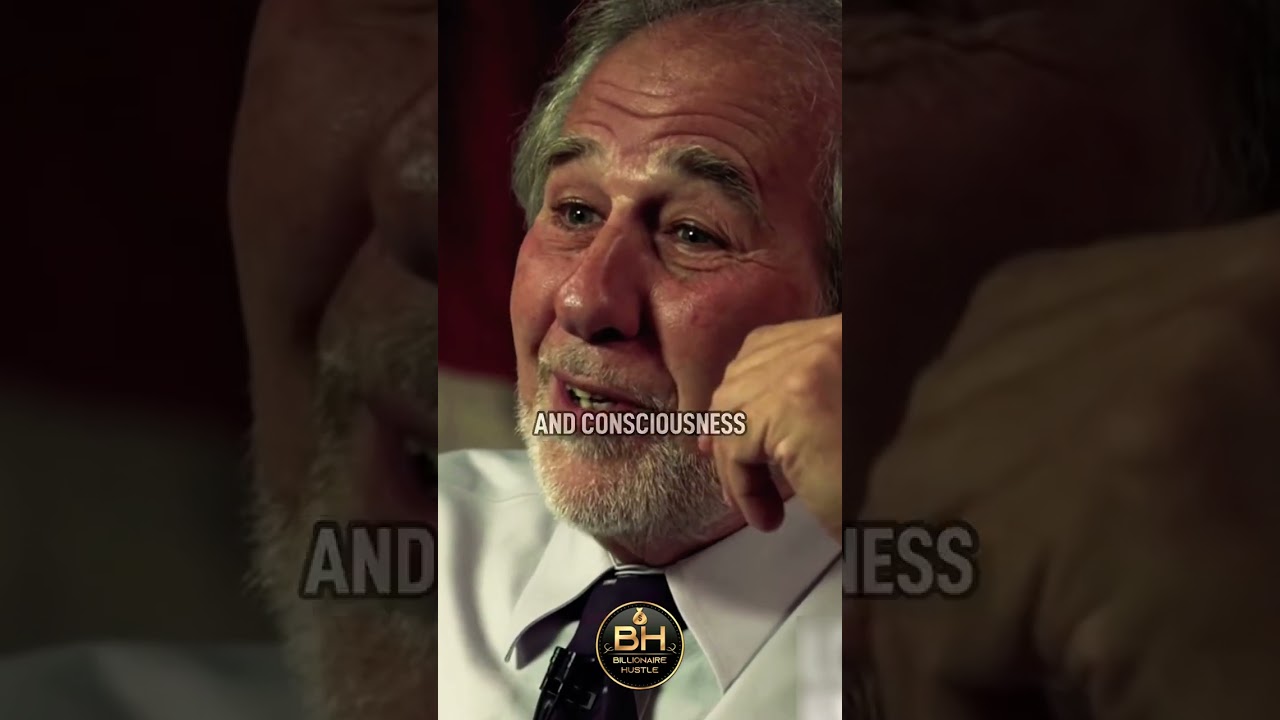
According to cellular biologist Bruce Lipton, approximately 95% of our adult behavior comes from subconscious programming downloaded during the first seven years of life, when the brain operates in a theta (hypnotic) state. During this period, children absorb the beliefs, behaviors, and rules of their family and community through observation rather than active learning. After age seven, new programs can only be installed through two methods: hypnosis or repetition. This explains why poor families tend to produce poor adults and wealthy families produce wealthy ones — not through genetics, but through inherited unconscious behavioral patterns.
How the First Seven Years Create Lifelong Programs
Lipton explains that the brain of a child under seven years old operates at a much lower vibrational frequency than adult consciousness. When you place electroencephalograph (EEG) wires on a child's head to measure brain activity, you'll see they're in what neuroscience calls the theta state. This theta frequency is characterized by imagination and hypnotic receptivity — it's why a child playing with mud pies genuinely experiences them as food, or a child riding a broom sees an actual horse. Theta is not just imagination; it is also hypnosis. Nature deliberately puts the developing brain in this hypnotic state for a reason: to download the vast number of rules and programs required to function as a member of a family and community.
During these first seven years, children don't learn through active thinking or reasoning. Instead, they observe their parents, siblings, and community and download everything they see. There are hundreds of thousands of rules to absorb — rules about how to eat, how to speak, how to behave, what's possible and what isn't. A child has no conscious filter; the subconscious mind is simply recording and integrating everything around them into their operating system. This is the programming period.
Why Rich Families Stay Rich and Poor Families Stay Poor
Lipton uses the example from Robert Kiyosaki's book Rich Dad, Poor Dad to illustrate how these programs create predictable life outcomes. A child born into a poor family hears and absorbs messages like "life is a struggle," "things are hard," "who do you think you are?", and "you can't make it." These beliefs become embedded in the subconscious mind as programs. Meanwhile, a child born into a wealthy family absorbs entirely different unconscious programming about money, opportunity, and possibility.
The critical insight is that these patterns persist not because of conscious belief or deliberate thinking, but because they operate below consciousness. A wealthy person might not be particularly intelligent, but they make "the right moves unconsciously." They inherited a program that supports financial success. Conversely, poor people inherit programs that sabotage wealth-building efforts. When someone from a poor background tries to become rich through conscious willpower alone, they're working against a subconscious program that says "you can't make it." This internal conflict creates struggle — which is why people work so hard at something yet never see results.
The 95% Subconscious versus 5% Conscious Divide
Lipton emphasizes that only about 5% of our daily life is lived using conscious mind — the part that is creative, that can learn from self-help books, podcasts, or lectures. The remaining 95% of our behavior, decisions, and responses flow automatically from the subconscious programs we downloaded before age seven. We experience this as "living our life," but we don't see it because it's called subconscious — literally "below conscious." This is why reading a single self-help book or listening to a motivational speech rarely creates lasting change. These inputs reach the conscious mind, which may gain awareness and understanding, but the subconscious continues running its old programs, creating contradiction and internal sabotage.
The Jesuits understood this principle 400 years ago and famously said, "Give me a child until it's 7 and I will show you the man." They weren't speaking poetically; they were stating a fact about developmental programming. Because 95% of your life after age seven will be whatever program was installed during those first seven years, your adult destiny is largely shaped before you can even choose it.
Identifying Subconscious Programs Through Struggle
So how do you recognize what programs are running in your subconscious? Lipton offers a simple diagnostic tool: look at your life and notice where you're struggling. The things you like that come easily into your life are there because you have a subconscious program that supports them. But anything you struggle with, work hard at, or put enormous effort into without results — that's a sign you have a program that actively works against that goal. You're trying to override the program through sheer conscious willpower, which is why it feels so difficult. You don't need extensive psychology or therapy to know this; you just need to observe your own life honestly.
This reframing is liberating because it removes the shame or self-blame. You're not lazy, stupid, or lacking willpower. You're running a program that doesn't support that destination. The solution isn't to try harder with your conscious mind; it's to change the program.
How to Reprogram the Subconscious After Age Seven
Once childhood has passed, Lipton identifies two fundamental ways to install new programs into the subconscious: hypnosis and repetition.
Hypnosis is the method used during the first seven years. After that window, hypnosis can still be used, though it's less natural to the developing mind. However, repetition becomes the primary tool for adults.
Repetition works because the subconscious learns through habit-building. If you want to learn to drive a car, you don't gain that ability by reading a manual once. You have to practice repeatedly, getting in the seat, turning the key, and driving until the movement becomes automatic. If you want to learn the alphabet, you repeat A-Z over and over until you can do it without thinking. Once the program is installed through repetition, you don't have to consciously recall it; it becomes automatic.
This is the principle behind affirmations and gratitude practices — and why they fail if done casually. Simply putting a sticky note on the refrigerator that says "I am happy" is a suggestion, not a repetition, and suggestions don't reprogram the subconscious. But if you repeat "I am happy" daily, genuinely speaking it into your subconscious mind, there will come a point at which the subconscious accepts that belief and begins running it as the default program. Then you don't have to keep saying it; it becomes automatic. Your life will shift to match the program without conscious effort.
The Practice of "Fake It Till You Make It"
Lipton endorses the phrase "fake it till you make it" as an accurate description of how subconscious reprogramming works. If you're not naturally a happy person but you want to be, you don't wait to feel happy first. You repeat, over and over, "I am happy" until your subconscious downloads that program. Someone might say, "But you don't look happy," and the response is accurate: that's because you're talking to your subconscious, not reporting your current state. Through consistent repetition, the subconscious will eventually integrate the belief, and then happiness will emerge as automatic behavior, not forced effort.
The secret, Lipton emphasizes, is that repetition must be done religiously — meaning you must do something repeatedly, consistently, to make it work. Daily affirmations, gratitude journals, and intentional practice all work through this mechanism. The key is that they're actual repetitions, not one-time suggestions.
The Matrix as Documentary, Not Fiction
Lipton's most provocative statement frames the movie The Matrix not as science fiction but as documentary. In the film, humans are trapped in a simulation, unaware of the true nature of reality. Lipton suggests this is exactly what's happening with subconscious programming. We inherit beliefs, behaviors, and programs from our families and communities without questioning them, and then we live out those programs as if they were objective reality — all while believing we're making free choices. Most of our life is lived inside an inherited simulation. The conscious mind believes it's in control, but 95% of the time, an automated program is running the show.
Where to go from here
Understanding that 95% of your life comes from programs you didn't consciously choose is the first step. The next step is honest self-observation. Look at your life without judgment and identify where you're struggling — those struggles are your map to your limiting programs. Once you know the program, you can work to reprogram it through consistent repetition. This isn't about positive thinking or willpower; it's about installing new code into the system that actually runs your behavior. The news is both humbling and empowering: your current life is the output of your current programs, which means changing your life is possible through the disciplined, repetitive installation of new beliefs and behaviors into your subconscious mind.