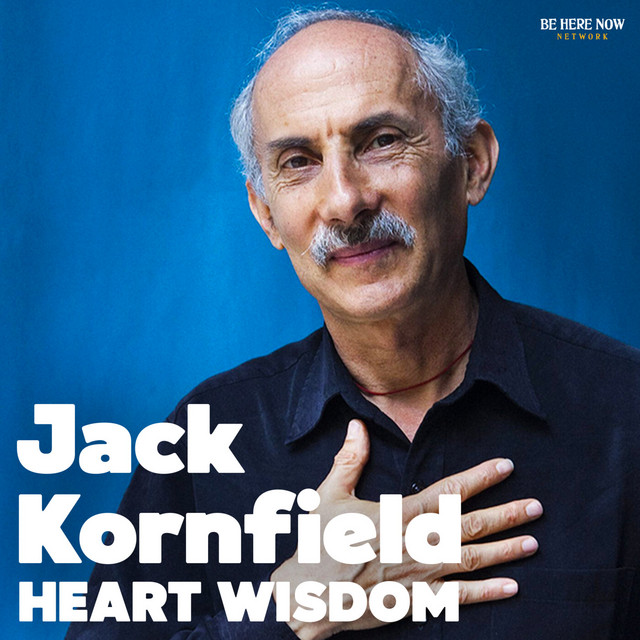
In a brief but potent reading, Jack Kornfield shares Alison Luterman's poem "Praise the Broken Promise of America," using the occasion to remind listeners that contemplative practice and compassion are not escapes from political reality but essential tools for wise action. Rather than despair at national contradictions or retreat into complacency, Kornfield frames spiritual practice as preparation for meaningful engagement—a way to stay grounded and clear when facing systemic injustice and democratic dysfunction. The core insight: you are here for a beautiful purpose. What better use of a human life than to show up with heart in times of confusion?
What does it mean to praise a broken promise?
Alison Luterman's poem, as read by Kornfield, takes an unconventional stance toward America's founding ideals. Rather than dismiss those ideals as naive or cynically condemn the nation for failing to live up to them, the poem—and Kornfield's framing—suggests that acknowledging the gap between promise and reality is itself an act of praise. This is not nostalgia or patriotic sentimentality. Instead, it is clear-eyed recognition: America made grand promises about equality, freedom, and justice. Those promises remain unfulfilled. The poem's gesture is to honor the aspiration itself while refusing to ignore the failure.
Kornfield's reading occurs in a context of political turbulence. The description references "Standing Up For Compassion: A Wise Rudder in Turbulent Politics," suggesting that the episode is part of a larger exploration of how spiritual practitioners should engage with political reality. The broken promise is not merely historical; it is alive in current conditions—in inequality, injustice, and polarization. Praising the promise means holding both the vision of what America could be and the truth of what it has been and is.
Why does spiritual practice matter in political times?
Kornfield's closing statement captures the heart of his message: "It's a time to get quiet and remember that you're here for a beautiful purpose, oh Bodhisattvas. What better thing to do with your life?" This is a direct challenge to any spiritual practitioner tempted to use meditation or contemplative practice as a retreat from the world's problems.
The invocation of "Bodhisattvas"—beings dedicated to awakening for the benefit of all—is deliberate. In Mahayana Buddhism, the Bodhisattva path is not about personal enlightenment alone but about returning to the world to serve. Kornfield is reminding his listeners that their practice is meant to serve a larger purpose: clarity, compassion, and wise action in the face of injustice.
When turbulence arises—political division, institutional failure, broken promises—the default responses tend toward two extremes: either cynical disengagement ("the system is hopeless, why try?") or reactive outrage ("I must act now, right now, from my emotion"). Spiritual practice offers a third way. By getting quiet, by remembering your purpose, you create the inner conditions for clear seeing and compassionate response. This is not passivity. It is the foundation for action that is not driven by hatred, fear, or ego.
How does compassion function as a rudder in political disagreement?
The full episode title, "Standing Up For Compassion: A Wise Rudder in Turbulent Politics," suggests that compassion is not a soft virtue to be abandoned when stakes are high. Rather, it is a navigational tool—a rudder that keeps you on course when winds buffet the boat.
In turbulent political times, compassion serves several functions:
- It preserves your own humanity. When you practice compassion even toward those you disagree with, you do not dehumanize them or yourself. This matters because hatred, even "righteous" hatred, damages the hater as much as the hated.
- It clarifies who you are and what you stand for. Compassion is not agreement. You can oppose injustice fiercely and still see the human being on the other side. This clarity prevents you from becoming what you oppose.
- It keeps dialogue possible. In a polarized landscape, the ability to speak with those across divides—and to listen—is increasingly rare and increasingly necessary. Compassion makes listening possible.
- It aligns action with deeper values. If you fight for justice from a place of hatred, you may win battles but lose the war for the kind of world you actually want to create. Compassionate action, grounded in love rather than fear, builds the world you seek.
This is not naive idealism. Kornfield and the broader Be Here Now Network teaching lineage (which includes Ram Dass, Sharon Salzberg, and others) have long emphasized that spiritual practice in the world requires both inner work and outer engagement. You cannot meditate away injustice, nor can you fight injustice sustainably from a place of inner chaos.
What is the relationship between individual purpose and collective responsibility?
Kornfield's question—"What better thing to do with your life?"—shifts focus from abstract national politics to personal agency and purpose. This is not selfish. Rather, it is an acknowledgment that the only life you can actually live is your own, and the only promises you can begin to fulfill are the ones you make in your own sphere of influence.
The broken promises of America are not broken by the nation as an abstract entity. They are broken or kept in each transaction, each relationship, each decision made by a person with agency. When Kornfield reminds you that you are here for a beautiful purpose, he is inviting you to ask: How will I use my life? Will I add to the compassion and integrity in the world, or subtract from it? Will I turn away from suffering, or turn toward it?
This is the link between spiritual practice and political engagement. The nation's promises are fulfilled or broken one person at a time. The culture of compassion, justice, and honesty is built or eroded one conversation, one choice, one act of courage at a time. Your individual practice—your meditation, your commitment to truthfulness, your willingness to listen and learn—is not separate from the healing of the body politic. It is the foundation of it.
Where to go from here
If this reading resonates, several paths forward are available. First, spend time with Alison Luterman's full poem "Praise the Broken Promise of America." Let its words sit with you. Notice what arises—grief, anger, hope, resignation—and do not rush to resolve it.
Second, listen to the full episode "Standing Up For Compassion: A Wise Rudder in Turbulent Politics" for Kornfield's extended exploration of how to engage politically without losing your center or your humanity.
Third, examine your own relationship to America's founding ideals and current reality. What promises do you hold the nation to? What promises are you willing to make and keep in your own life? Where does your agency lie?
Finally, consider how your spiritual practice—whether meditation, prayer, or contemplative study—can become a resource not for escape but for clarity, compassion, and wise action. The Bodhisattva path is not a luxury for quieter times. It is precisely in turbulent times that a grounded, compassionate presence becomes most valuable.