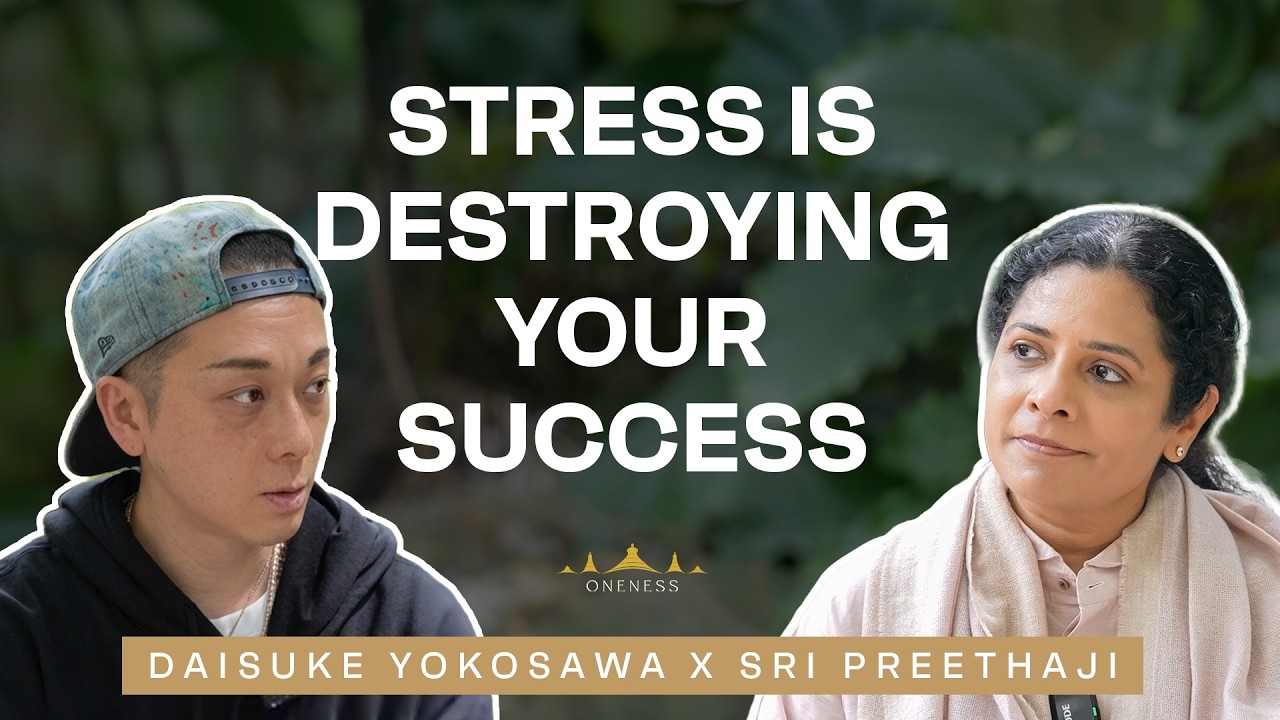
Fixed attitudes and rigid perceptions are prison cells we build ourselves, stopping growth and learning before it starts. According to Sri Preethaji and Sri Krishnaji of the Oneness Movement, the mechanism of clinging to judgments—what we think we know about people, situations, or outcomes—cuts us off from direct experience and keeps us recycling the same limited patterns. When we release fixed attitudes, life transforms from a struggle to control outcomes into an awakening adventure where learning and growth can actually happen.
What Does It Mean to Cling to a Fixed Attitude?
An attitude is a fixed way of viewing something—a conclusion we've drawn and decided is final. We attach to beliefs about what things mean, who people are, what we deserve, what's possible. Once we've decided, we stop investigating. The mind collects evidence to confirm what it already believes and filters out everything that contradicts it. This is not neutral perception; it's selection and reinforcement of a predetermined frame.
The Oneness teaching points to a subtle but crucial distinction: the difference between having a viewpoint and being imprisoned by one. A viewpoint is flexible, subject to revision with new information. A fixed attitude is locked, defended, recycled. When we cling to an attitude about someone—"they're selfish," "I'm not creative," "life is unfair"—we are choosing not to see what actually is. We're seeing only what matches our conclusion.
This happens at every level. You might have an attitude that a particular person is unreliable, so when they show up on time, you interpret it as an exception rather than evidence that your attitude is incomplete. You might have an attitude that you're not good with money, so when you make a smart financial decision, you chalk it up to luck. The attitude acts as a filter that protects itself by rejecting contradictory data.
How Do Fixed Attitudes Stop Learning and Growth?
Learning requires openness to being wrong. Growth requires the willingness to discover that what you thought was true is incomplete or false. When you cling to a fixed attitude, you've already concluded the investigation is over. There's nothing left to learn because you've already decided what's true.
This creates a psychological stasis. You repeat the same patterns because your attitude has already decided what's possible within those patterns. If you have an attitude that "people can't be trusted," you unconsciously seek out situations that confirm this, interpret ambiguous behavior as evidence of untrustworthiness, and when someone does prove trustworthy, you find reasons to doubt it anyway. Your attitude has become a self-fulfilling prophecy.
The Oneness perspective suggests that this isn't just a personality quirk or thinking habit—it's a fundamental confinement of consciousness itself. When consciousness becomes fixed in an attitude, it becomes rigid. Rigidity is the opposite of learning. Learning is the movement of consciousness toward fuller understanding, which can only happen when you're willing to have your current understanding challenged or overturned.
Every fixed attitude is a small death of possibility. It closes doors before you even know what rooms are on the other side.
What Happens When We Release Our Fixed Perceptions?
When you stop clinging to a fixed attitude, something immediate shifts. You start seeing what's actually there instead of what your conclusion says should be there. A person who previously seemed selfish might reveal themselves as someone struggling with their own pain. A situation you labeled as "failure" might be visible as "redirection" or "learning." Your own capacity might exceed what your fixed attitude allowed you to attempt.
This isn't positive thinking or self-help optimism. It's the simple, radical act of looking without your conclusion already in place. When you look without that filter, you see more. You learn more because you're not defending against information that contradicts your attitude.
The Oneness Movement teaches that releasing fixed attitudes opens the space for genuine awakening. Awakening means seeing what is, not what you've decided is. As long as you're clinging to your fixed perceptions, you're asleep to the actual reality in front of you. You're dreaming your attitudes instead of meeting what's alive and present.
What Is the Difference Between Trying to Control Outcomes and Engaging Life as an Adventure?
Fixed attitudes are often rooted in the attempt to control outcomes. If you decide "people are unreliable," you're trying to protect yourself by controlling what you expect and how you engage. If you decide "I'm not creative," you're controlling the risk by deciding in advance that you won't try and fail. Fixed attitudes are a control strategy—a way to make the world predictable so you won't be hurt or disappointed.
But this control comes at a massive cost: you sacrifice discovery, spontaneity, and real learning. Life becomes a loop of confirming what you already believe instead of a living process of meeting what's actually happening.
The alternative the Oneness teachers point toward is treating life as an awakening adventure. An adventure is characterized by not knowing what comes next. You don't control the outcome; you engage with whatever arises and learn from it. This requires releasing the fixed attitudes that promise safety through predictability.
In an adventure mindset, failure becomes information instead of proof of your fixed belief about yourself. Other people become mysteries to discover instead of categories you've already sorted them into. Situations become opportunities to see what you don't yet understand instead of confirmations of what you already know.
This doesn't mean being reckless or without discernment. It means the difference between saying "I've already decided what this means" and asking "What is this actually showing me?" The first is control; the second is genuine engagement.
How Can You Recognize When You're Operating From a Fixed Attitude?
Fixed attitudes have a recognizable texture. They feel solid, certain, defended. When someone challenges a fixed attitude, you feel resistant. You find yourself explaining why you're right, listing evidence that supports your view, or dismissing the person who disagrees with you.
Another marker: predictability. If you're stuck in a fixed attitude, your life in that area becomes repetitive. The same conflicts show up in different relationships. The same obstacles appear in different projects. The same doubts arise in different contexts. This repetition is the signature of a fixed attitude—consciousness circling the same groove.
Pay attention to where you use the phrase "I'm the kind of person who..." or "People are..." or "Life is..." These are often fixed attitudes masquerading as facts. Notice where you've stopped investigating and started defending a conclusion.
Where to Go From Here
The practical path forward begins with simple awareness. Notice the attitudes you cling to—about yourself, others, and what's possible. Don't judge yourself for having them; they exist as protective mechanisms. But recognize that protection through rigidity comes at the cost of growth.
Start small. Pick one attitude that keeps you stuck in a pattern and practice not defending it. When evidence arises that contradicts it, don't dismiss the evidence. Let your understanding be updated by reality instead of filtering reality through your attitude.
This is the beginning of genuine learning and the opening of life as an adventure. Instead of living in the prison of your conclusions, you become available to the awakening that the Oneness Movement points toward—direct encounter with what actually is, unfiltered by your fixed perceptions.