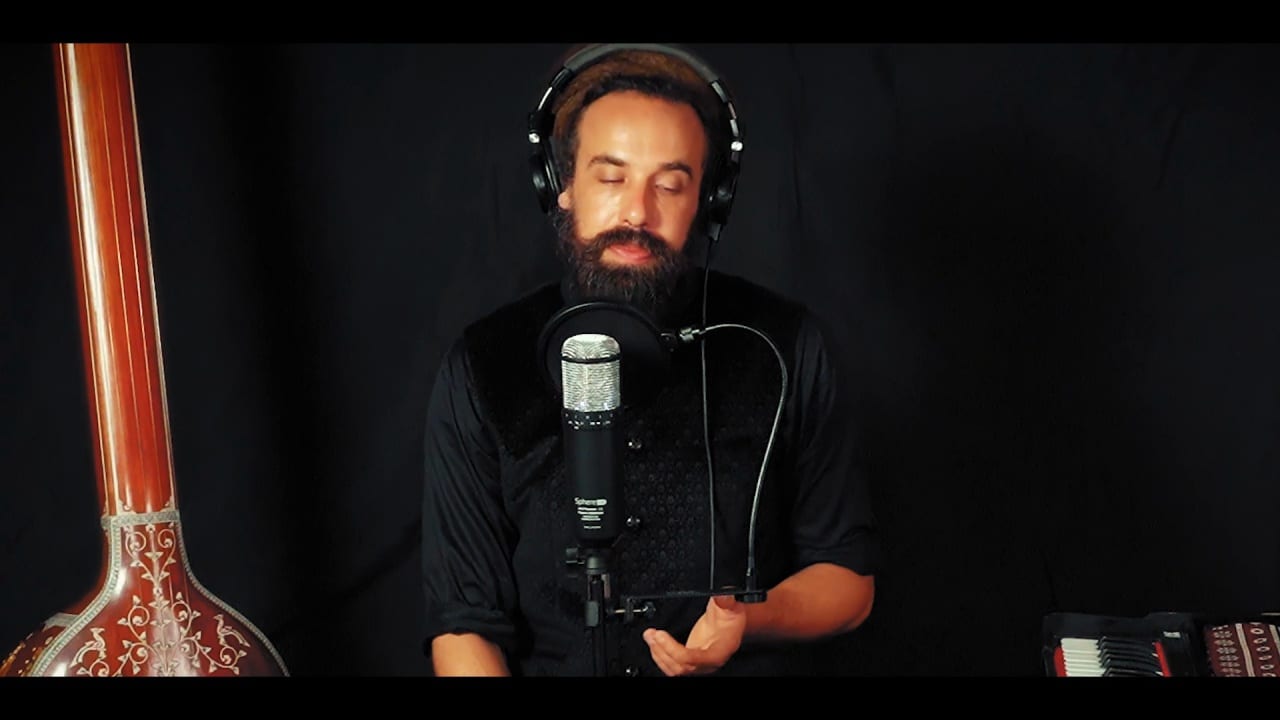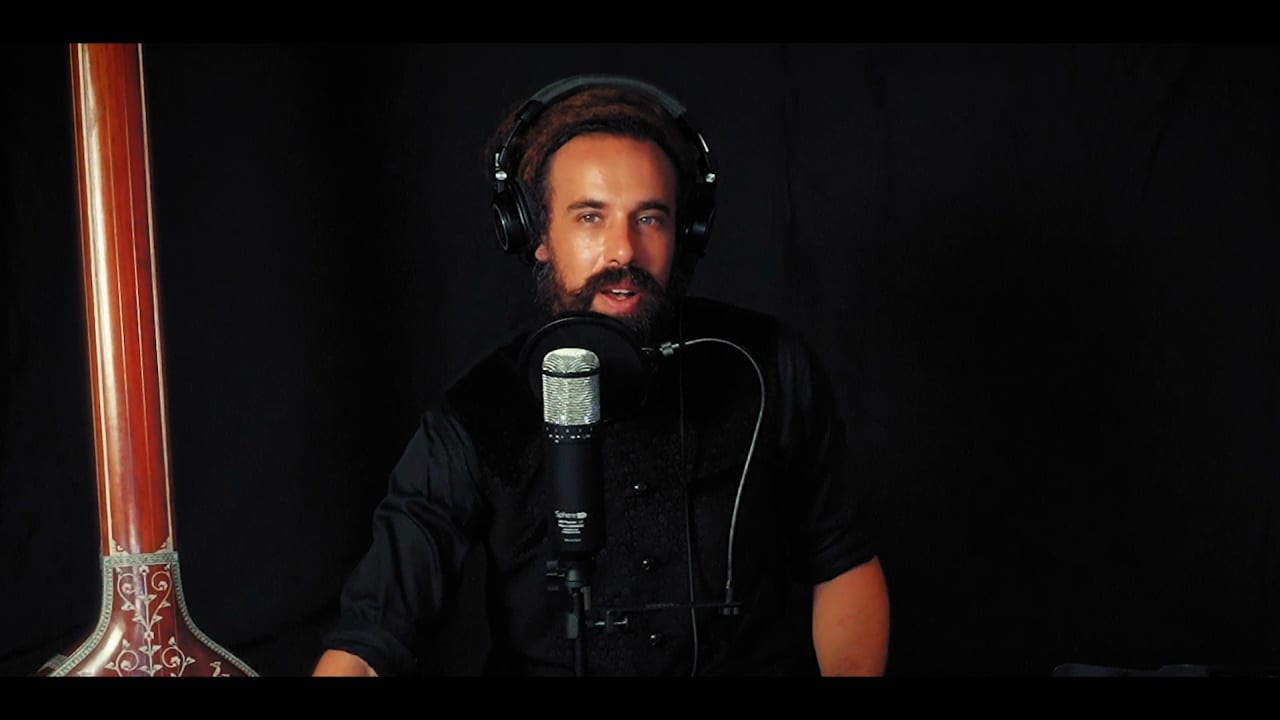
A session with Tahir Qawwal does not begin with explanation. It begins with sound. Students—whether gathered for a weekend retreat in the Catskills or a Thursday evening class in Brooklyn—are asked to close their eyes and hum, then vocalize sustained tones on specific pitches. The instruction is precise but minimal. Qawwal demonstrates once, then lets the group find the resonance themselves. Only after fifteen or twenty minutes of this sonic groundwork does he speak at length.
What follows is not lecture but investigation. Qawwal will introduce a line of Urdu poetry—often Rumi or Bulleh Shah—and chant it repeatedly, encouraging the group to join in call-and-response fashion. The repetition is not decorative. It is mechanical, structural, designed to wear down the discursive mind through cyclical saturation. His voice, trained in the qawwali tradition but stripped of ornamentation in this context, stays centered in the lower register. There is no performance affect. The delivery is workmanlike, almost austere, which can surprise those expecting the ecstatic fervor associated with traditional qawwali performance.
Sessions often stretch past their scheduled endpoints. Qawwal does not rush closure. Silence is given as much space as sound, and students are sometimes left sitting wordlessly for ten or fifteen minutes after the final vocalization. The container is firm but not rigid—questions are allowed, though he tends to redirect intellectual inquiry back toward embodied practice.
Qawwal returns, again and again, to the mechanics of ego dissolution. Not as metaphor, but as technique. He speaks of fana—annihilation—in operational terms: what happens to the sense of self when sound becomes continuous, when the breath is held at specific thresholds, when attention is fused with a single pitch for extended periods. His teaching assumes that mystical states are reproducible through deliberate manipulation of voice, breath, and nervous system.
Another constant is the relationship between asceticism and music. He draws frequently on his years as a teenage dervish in the Himalayas, but not sentimentally. Those years are presented as laboratory conditions—deprivation and solitude as means to isolate variables in the experiment of consciousness. Music, in this frame, is not self-expression but a refined technology inherited from centuries of such experimentation.
He also addresses the commodification of spirituality with a bluntness that can make Western students uncomfortable. Qawwal distinguishes sharply between devotional practice and performance, even as he occupies both roles professionally. In teaching settings, he is uninterested in therapeutic framings or wellness language. The work is not about feeling better. It is about structural transformation of perception.
Who are you when the repetition outlasts your willingness to participate? What remains when ornamentation is removed? Can you tolerate the boredom that precedes surrender? Qawwal does not pose these questions explicitly as koans, but they emerge from the form of the practice itself. Students are pushed to notice the moment they begin performing their own participation—when the sincerity curdles into self-consciousness.
He also asks, implicitly: What are you willing to sacrifice for this? The ascetic thread in his teaching is unapologetic. There is an expectation of rigor, of practice undertaken in conditions that are not always comfortable or affirming.
Qawwal uses humor sparingly, and when it appears, it is dry, often self-deprecating about the absurdity of trying to teach what is fundamentally transmissible only through experience. He quotes poetry and scripture, but does not theologize. References to Sufi cosmology or yogic philosophy are functional—terms of art rather than subjects of exegesis.
Story is present but subordinate. He will recount episodes from his time in the mountains, but as case studies rather than personal memoir. The focus remains technical: what practices he did, what effects they produced, what failed.
This teaching lands for those with prior meditation experience who have hit a plateau in silent practice, or for musicians curious about the intersection of sound and interiority. It attracts people suspicious of the therapeutic spirituality market, those seeking something older and less accommodating.
It bounces off those looking for community-building, emotional catharsis, or validation. Qawwal's classroom is not warm in the pastoral sense. Those needing a teacher who meets them where they are may find him indifferent to that need. His approach assumes students will rise to the demand rather than the teacher softening it.
Qawwal operates at the junction of two traditions: the Chishti Sufi lineage of qawwali and the yogic asceticism of the Himalayan sadhu. He has not, to public knowledge, received formal ijazah (authorization) in a Sufi teaching lineage, nor does he claim to represent a specific yogic sampradaya. His authority derives instead from solitary practice and immersion in qawwali as a performing art. This makes him a synthetic figure—neither purely traditional nor entirely modern, drawing from deep wells but reconstituting them according to his own excavation.