

Nirodha is the meditative project of Madrid-based composer and kirtan facilitator Daniel Espada, and his catalog begins in 2016 with a record of native flute. From there it grows along two threads: wordless music for sleep and stillness, and voice-led mantra. Into the Silence (2017) and a live acoustic set (2018) deepen the first thread. A run of mantra releases from 2019 to 2023 builds the second, and 2023 is the busiest year, with Chants from the Heart, Padre Tiempo and several Sanskrit singles. In 2026 comes Surya, then The Night Sanctuary, released one part at a time from Threshold to Eternal. The streaming catalog tags only four releases as albums and the rest as singles, so this guide treats all 21 as the full body of work. Each section below names a place to begin.
The seventh and latest part of the sleep series arrives in 2026, and its title suggests an ending without a hard stop. The Night Sanctuary is built on native Latin American flute, with long held tones meant to let the mind loosen. Here the series reaches its furthest point, after the descent through earlier chapters. It is the last stop on a path you are best off walking in order. Start with the piece itself, "Eternal," ideally in a dark room, and let it run past the point where you stop noticing it.
"Dreamless" names the goal of the whole series: sleep deep enough that nothing needs to be processed. The flute-led material continues in the same restrained manner, favoring sustained tone over melody, so the music asks nothing of you. This 2026 part sits near the end of the series, where the sequence has settled into its quietest territory. Drop into the title piece, "Dreamless," when you want rest more than reflection. It works as a nightly ritual or as a single track played once the lights are off.
"The Void" is the series' emptiest-sounding title, and in Nirodha's world emptiness is a comfort, since the name itself means cessation. Released in 2026, this part continues the native flute sleep music, with silence as a compositional choice alongside sound. It marks the midpoint's deepening, where the seven-part arc moves from approach toward absorption. Begin with "The Void" itself. If you are new to wordless music, this is a good test of whether the sparse approach suits you: you are meant to feel space, not be entertained.
Part four turns inward. "Inner Chamber" suggests a small, enclosed room, which fits the way Daniel Espada records: alone, mostly at night, with instruments chosen for how quickly they get out of the way. This 2026 chapter sits at the center of the series, the point where the journey from threshold to dreamlessness is fully underway. Play the title piece, "Inner Chamber," at low volume. It rewards closed eyes and slow breathing, and it works well as a bridge between a busy evening and the deeper parts that follow.
"Drifting" captures the moment between waking and sleep, when thoughts lose their edges. As part of the 2026 Night Sanctuary sequence, it continues the native Latin American flute approach: unhurried, unornamented, and built to be forgotten in the best way. It is the third step in a gradual unwinding, after the arrival of Threshold and the settling of Stillness. Begin with "Drifting" when you are already tired and want gentle momentum toward sleep. It is a natural place for newcomers to enter the series without feeling they have missed the story.
Stillness is the idea Espada keeps returning to, describing it as something you remember rather than something you achieve. This 2026 second part gives that thought a title and a sound: flute tones held long enough that restlessness has nothing to push against. It follows the opening gesture of Threshold and begins the real work of settling. Drop into "Stillness" if you want the series' philosophy in its plainest form. It suits daytime sitting as well as bedtime, and it is a good measure of how patient you are ready to be.
Every sleep series needs a door, and "Threshold" is this one. Released in 2026 as the first part of The Night Sanctuary, it introduces the native Latin American flute voice that carries the whole project. The tone is welcoming rather than dramatic, more an invitation to put things down than a call to attention. It begins the arc that runs through Stillness, Drifting, Inner Chamber, The Void, Dreamless and Eternal. Start here, with the piece called "Threshold," if you plan to hear the series in order. It sets the register for everything after.
Surya, from 2026, pairs nylon-string classical guitar with tanpura, and the result is one of the warmest textures in the catalog. The guitar is not used for flashy fingerwork but to rest on the drone, which gives the ear something steady to hold. The title is the Sanskrit word for the sun, and the music has that quality of low, even light. It sits between the wordless flute sleep music and the sung mantra work, which makes it an easy bridge for newcomers. Start with the title piece, "surya," and let the drone settle in.
Shiva Shankara, from 2023, belongs to the voice-and-mantra thread of the catalog, where Sanskrit names become repeated, steadying sound. As a single it is a small, focused offering, with no larger program around it. In the arc, it is one of several devotional releases from a prolific year, alongside Govinda Hare and Karpoor Gauram. The sparse data on this release calls for a short note rather than a long one. Play the title track, "Shiva shankara," when you want a brief devotional moment, and listen for how the voice leaves room around itself.
This is the centerpiece of Nirodha's voice work. Chants from the Heart, from 2023, sets Sanskrit mantras with harmonium, voice and silence, sung the way they sound in a small room rather than on a stage. The singing is clear and unhurried, and the silences are part of the arrangement. It is devotional without being ecstatic, which makes it a gentle entry for people who have never attended a kirtan. In the arc, it is the fullest statement of the mantra thread. Begin at the opening and let the harmonium establish the room before the voice enters.
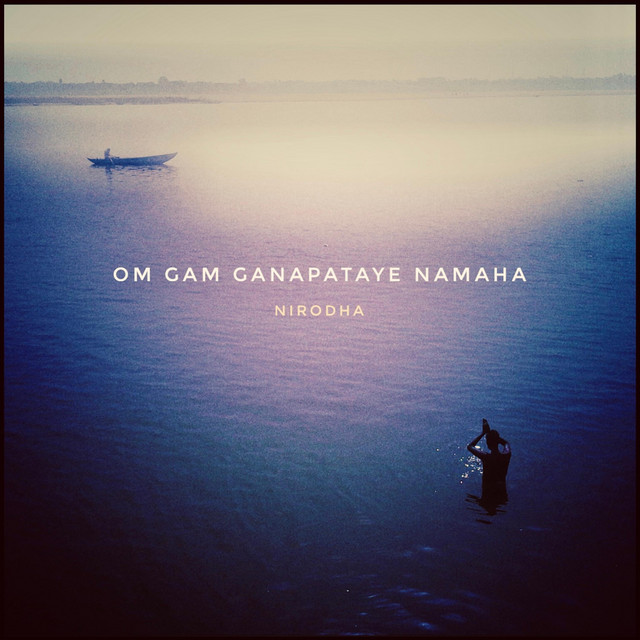
A 2023 single named for a mantra, Om Gam Ganapataye Namaha sits among the sung releases of that year. Like the rest of the voice thread, it treats repetition as the main material, using a simple phrase to quiet the thinking mind rather than to perform. There is little documented beyond the title, so treat it as a short, focused listen rather than a major chapter. In the catalog's arc, it is one of the building blocks around Chants from the Heart. Play the title track, "Om gam ganapataye namaha," and let the repetition do its work.
The subtitle tells you the intention: a prayer for all beings. Released in 2023, Sarve Bhavantu is one of the more outward-facing pieces in the catalog, turning from personal stillness toward a wish for everyone's wellbeing. It belongs to the mantra thread and shares the unhurried, small-room spirit of Chants from the Heart. In the arc, it is a gentle companion to the year's other devotional singles. Start with the title track, "Sarve Bhavantu," at the end of a day, when a quiet wish for others feels natural.

Padre Tiempo, Spanish for "Father Time," is one of only four releases in the catalog tagged as a full album, and it dates from 2023. Its Spanish title reflects Espada's bilingual, Madrid-rooted context, a quality that sets him apart from English-only meditation music. The track list is not documented here, so I won't describe individual moments. In the arc, it stands apart from the Sanskrit singles released the same year, a longer-form work among small offerings. Start at the first track and give it a full sitting rather than sampling.
Govinda Hare, from 2023, is another entry in the sung-mantra thread, taking its title from a name of devotion. Kirtan in general works through call and response, and while this single is documented only by its title, it fits the project's approach of keeping the voice clear and the setting intimate. In the arc, it is among the most kirtan-flavored titles of the year. Because the details are sparse, think of it as a short devotional listen. Play the title track, "Govinda Hare," and notice how repetition shifts from effort to ease.
Karpoor Gauram, a 2023 single, rounds out the year's run of Sanskrit-titled releases. Like its neighbors, it belongs to the voice-and-mantra thread, where the goal is steadiness rather than spectacle. Little more is documented, so this entry stays short. In the larger arc, it shows how consistently Nirodha worked in the devotional vein that year, releasing small pieces one after another rather than waiting for a single large statement. Drop into the title track, "Karpoor Gauram," for a brief, contained listen that pairs well with a quiet morning or an evening wind-down.

Guru Mantra, from 2021, is one of the earliest mantra releases in the catalog, arriving two years before the 2023 burst of devotional singles. It shows the voice thread already in motion, with chant as a tool for stilling the mind. The documented facts are thin, so take it as a short, focused piece rather than a full program. In the arc, it marks the move from instrumental work toward sung practice. Start with the title track, "Guru Mantra," and treat it as an early sketch of the approach that Chants from the Heart later develops.
The title promises comfort, and in Nirodha's catalog that usually means a few sustained tones and plenty of space. A Soothing Embrace dates from 2021 and sits beside Guru Mantra as one of the two releases of that year. The documented details are few, so I'll keep this brief and honest: it is a gentle, healing-minded single. In the arc, it connects the early instrumental work to the later sleep series. Play the title track, "A soothing embrace," when you need something undemanding, such as after a hard day or before sleep.

Om Purnamadah, from 2019, is the earliest Sanskrit-titled release in the catalog, and it points toward the voice-and-mantra thread that would flourish later. It arrives a year after the live acoustic album and shows Espada turning from pure instrumental work toward chant. Few details are documented, so this entry stays short. Its place in the arc is as a seed: a small single that anticipates Guru Mantra and the 2023 releases. Play the title track, "Om purnamadah," as a window onto the project's beginnings in sung practice.

Released in 2018, this live acoustic album is the earliest sign of the intimate, room-sized setting that defines Nirodha's performances, where Espada sits on the floor with minimal amplification. The title echoes his non-dual leaning, the idea that the seeker's task is recognition rather than attainment. No track list is documented here, so I'll avoid describing individual moments. In the arc, it sits between the instrumental albums of 2016 and 2017 and the mantra releases that follow. Start at the first track and imagine the room around it.
Into the Silence, a 2017 album, is the second full-length in the catalog and a clear statement of purpose. The title could serve as the project's motto, since Nirodha means cessation, the stilling of mental noise. It continues the wordless thread begun the year before, favoring instruments that can hold a single tone without asking for attention. The track list isn't documented here, so I won't single out moments. In the arc, it deepens the early instrumental work. Begin at the first track, and listen for how much the music leaves unsaid.
This is where the discography begins: a 2016 album built around native flute, the instrument that would later carry The Night Sanctuary. Its title is plain and a little unpolished, the mark of a first release, and it establishes the wordless, tone-holding approach that runs through everything after. Specific tracks aren't documented here, so I'll stay general. In the arc, it is the origin point, a decade before the sleep series. Start at the first track and hear where the flute voice first took shape.
Devotional: Chants from the heart. Sanskrit mantra, harmonium, voice and silence, sung as in a small room. It is the clearest devotional statement in the catalog.
Contemplative: surya. Nylon-string guitar over tanpura gives a warm, steady drone that rewards quiet attention without demanding any.
Energetic: Honestly, this catalog does not offer much. Nirodha's music is built to be anti-stimulating, and it is not meant for activation or workouts. If you want the closest thing to movement, try the kirtan-titled single Govinda Hare, but expect calm, not drive.
Healing: The Night Sanctuary (Pt. 1: Threshold), or any part of the series. Native Latin American flute and long, patient tones are made for rest and recovery, and A soothing embrace is a gentle alternative for daytime.