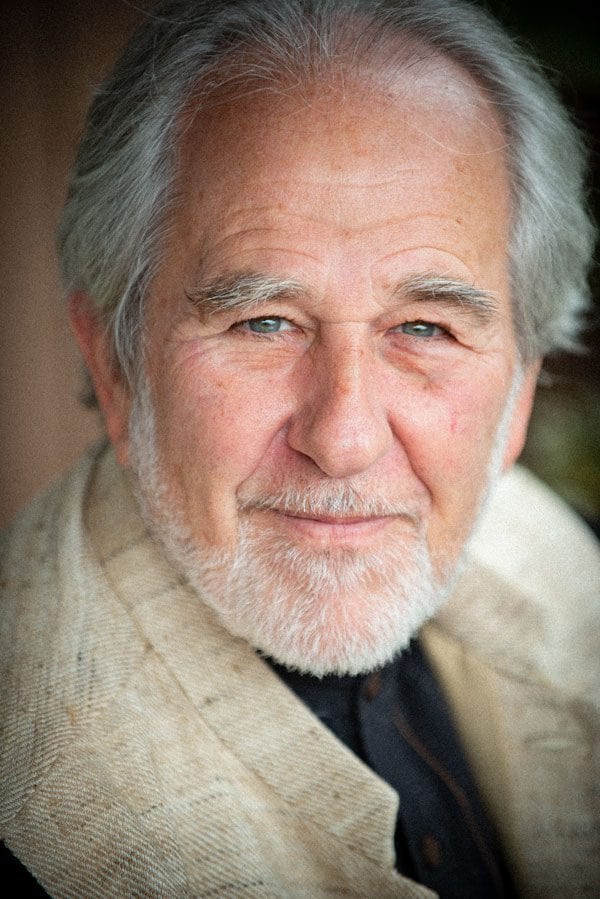

Bruce Lipton occupies an unusual space in contemporary science—trained in the rigors of developmental biology, yet speaking a language that resonates far beyond laboratory walls. He is known primarily as the stem cell biologist who walked away from academic convention to argue that genes are not destiny, that consciousness itself might function as a biological force, and that the emerging field of epigenetics demands a radical rethinking of what it means to be human.
His influence is polarizing. To some, he's a visionary who dared to bridge the divide between hard science and the inner life. To others, he represents the dangers of extrapolating molecular findings into metaphysical territory. What's undeniable is his reach: The Biology of Belief, published in 2005, became a touchstone text for readers seeking scientific validation for mind-body medicine, positive thinking, and holistic health. The book has remained in print for nearly two decades, released in a tenth-anniversary edition and translated widely, finding audiences in wellness communities, alternative medicine circles, and among those disenchanted with purely mechanistic views of biology.
Lipton's pivot from conventional research to cultural provocateur began in the laboratory, studying cloned stem cells. The work was meticulous and controlled: genetically identical cells, theoretically predestined to behave identically, were instead exhibiting radically different outcomes depending solely on the culture environments in which they were placed. If the genes were identical but the behavior diverged based on surroundings, the conclusion seemed inescapable—environment was directing genetic expression in ways that classical genetic determinism couldn't explain.
This observation became the experimental cornerstone of everything that followed. For Lipton, it wasn't just about cellular signaling pathways or biochemical feedback loops. It was evidence that the environment, broadly construed, could rewrite biological destiny. And if that was true at the cellular level, what might it mean at the level of the organism? What if thoughts, emotions, beliefs—the interior environment—could function as signals capable of influencing gene expression?
That question carried him out of academic biology and into a decades-long exploration of epigenetics, consciousness studies, and the place where science meets spirituality.
Lipton's central thesis is deceptively simple: cells respond to their environment, and in human beings, perception itself constitutes environment. He argues that beliefs—conscious and unconscious—act as environmental signals that cascade through the body, influencing which genes are expressed and which remain dormant. Epigenetics, in this framework, becomes not just a biological mechanism but a potential explanation for phenomena long relegated to the margins: placebo effects, psychosomatic illness, spontaneous remission, even the influence of early childhood conditioning on lifelong health.
This interpretive leap is where Lipton parts company with mainstream biology. Academic epigenetics researchers focus on methylation patterns, histone modifications, and non-coding RNA—biochemical processes with evolutionary and medical implications. Lipton takes those same mechanisms and extends them into the realm of consciousness, proposing that mental states can initiate the same biological cascades. It's a bridge too far for many scientists, but for lay audiences hungry for agency in their own health outcomes, it's compelling.
His work resonates because it offers a biological rationale for empowerment. If genes are not fixed blueprints but responsive systems, then change becomes possible. Healing becomes imaginable. The body is no longer a machine running predetermined code but a dynamic system in conversation with its environment—including the psychological environment.
Beyond The Biology of Belief, Lipton has continued to develop his ideas across several books. Spontaneous Evolution, co-authored with Steve Bhaerman, broadens the lens to examine cultural and planetary transformation through an epigenetic framework. The Honeymoon Effect applies his cellular biology metaphors to romantic relationships, exploring how love and connection influence biology at the molecular level.
He is currently working on Beyond Darwin, a forthcoming critique of neo-Darwinian evolutionary theory. The book is expected to argue for a more prominent role for epigenetic inheritance in evolution, challenging the gene-centric view that has dominated biological thought since the modern synthesis.
His reach extends beyond the page. Lipton lectures widely, often appearing at conferences that blend science with spirituality, wellness, and personal development. His presentations are accessible, narrative-driven, and calibrated to audiences seeking meaning rather than peer-reviewed precision. This has made him a sought-after speaker in communities that value holistic thinking, alternative health, and the integration of ancient wisdom with modern science.
Bruce Lipton matters because he gives voice to a persistent cultural hunger: the desire to reconcile scientific authority with personal agency, to find biological grounding for the inner life, and to resist reductionist narratives that portray humans as mere vehicles for genetic replication.
His audience is broad but specific—people navigating chronic illness, those exploring consciousness and spirituality, readers dissatisfied with materialist explanations of mind and body. He reaches wellness practitioners, alternative medicine advocates, and a sizable segment of the public that trusts intuition as much as data.
The critique, of course, is that he overstates the implications of epigenetics, that he conflates metaphor with mechanism, and that his work provides scientific-sounding cover for wishful thinking. Mainstream biologists largely ignore him, or view his popularizations as scientifically irresponsible.
But influence isn't determined by academic approval alone. Lipton has helped shape a cultural conversation about biology, belief, and human potential. Whether his specific claims hold up under scrutiny matters less, in the end, than the questions he's compelled people to ask: Are we more than our genes? Can awareness change biology? What does science owe to the subjective experience of being alive?
Those are not small questions. And Bruce Lipton, for better or worse, has made them impossible to ignore.