
SportsCampFinder

Alle Camps durchsuchen

Find the perfect camp for your athlete

camps

Basketball Camps
Soccer Camps
Baseball Camps
Football Camps
Volleyball Camps
Lacrosse Camps
Multi-Sport Camps
Elite Training
Overnight Camps
Day Camps
Beliebte Reiseziele
BaliSedonaLos AngelesCosta RicaNew YorkSan FranciscoAustinMiamiJoshua TreeTulum
Alle Kategorien anzeigenAlle Reiseziele anzeigen

Alle Funktionen entdecken

Leistungsstarke Tools für Ihre Veranstaltungen

Plattform-Funktionen

Intelligente dynamische Preisgestaltung
Ticket-Kategorien
Sitzplatzreservierung
Warenkorbabbruch-Wiederherstellung
Besucher-Wiedergewinnung
Spenden & Staffelpreise
Affiliate-System
Ticket-Scanner
Rabattcodes
Individuelle Fragen
Ticket-Teilen
Upsells & Extras
Analysen & Berichte
E-Mail-Sequenzen
Warteliste / Benachrichtigen / Erinnern
Menschen & Orte
Camp OrganizersCamp FacilitiesKnowledge BaseInspiration
Alle Funktionen anzeigenÜber uns
PreiseBlog
Language
Saved events
Alle Veranstaltungen durchsuchen

camps

Basketball CampsSoccer CampsBaseball CampsFootball CampsVolleyball CampsLacrosse CampsMulti-Sport CampsElite Training

Beliebte Reiseziele

BaliSedonaLos AngelesCosta RicaNew YorkSan Francisco

Menschen & Orte

Camp OrganizersCamp FacilitiesKnowledge BaseInspiration

Plattform-Funktionen

Intelligente dynamische PreisgestaltungTicket-KategorienSitzplatzreservierungWarenkorbabbruch-WiederherstellungBesucher-WiedergewinnungSpenden & StaffelpreiseAffiliate-SystemTicket-ScannerRabattcodesIndividuelle FragenTicket-TeilenUpsells & ExtrasAnalysen & BerichteE-Mail-SequenzenWarteliste / Benachrichtigen / Erinnern
Alle Funktionen anzeigenÜber uns
PreiseBlog
AnmeldenParents & athletesCamp directors
  • Browse all camps
  • Basketball Camps
  • Soccer Camps
  • Baseball Camps
  • Football Camps
  • Volleyball Camps
  • Lacrosse Camps
  • Multi-Sport Camps
  • Elite Training
  • All sports →
  • Orlando
  • Los Angeles
  • New York Metro
  • Dallas / Fort Worth
  • Chicago
  • Phoenix / Scottsdale
  • Atlanta
  • Denver
  • Seattle
  • Boston
  • Houston
  • Philadelphia
  • San Diego
  • Minneapolis / St. Paul
  • Alle Städte →
  • List your camp
  • Camp director dashboard
  • Pricing
  • Coaches & academies
  • Online registration & payments
  • Waivers & medical forms
  • Check-in app
  • Family messaging
  • Waitlist & notify
  • Camp marketing
  • Reports
  • All features →
  • About SportsCampFinder
  • Camp guides
  • Help Center
  • Contact
  • Careers
  • Press
  • Nutzungsbedingungen
  • Datenschutzrichtlinie

Camps

  • Browse all camps
  • Basketball Camps
  • Soccer Camps
  • Baseball Camps
  • Football Camps
  • Volleyball Camps
  • Lacrosse Camps
  • Multi-Sport Camps
  • Elite Training
  • All sports →

Reiseziele

  • Orlando
  • Los Angeles
  • New York Metro
  • Dallas / Fort Worth
  • Chicago
  • Phoenix / Scottsdale
  • Atlanta
  • Denver
  • Seattle
  • Boston
  • Houston
  • Philadelphia
  • San Diego
  • Minneapolis / St. Paul
  • Alle Städte →

Für Camp directors

  • List your camp
  • Camp director dashboard
  • Pricing
  • Coaches & academies

Funktionen

  • Online registration & payments
  • Waivers & medical forms
  • Check-in app
  • Family messaging
  • Waitlist & notify
  • Camp marketing
  • Reports
  • All features →

Unternehmen

  • About SportsCampFinder
  • Camp guides
  • Help Center
  • Contact
  • Careers
  • Press
  • Nutzungsbedingungen
  • Datenschutzrichtlinie
SportsCampFinder
© 2026 SportsCampFinder. Alle Rechte vorbehalten.
Retreats

How Empaths Can HoldSpace Without Losing Themselves

1440 Multiversity
1440 Multiversity
Jan 22, 2018
7 Min. Lesezeit
Ansehen · 6

The empath walks into a room and feels everything—the tension beneath a friend's smile, the ambient anxiety of strangers, the weight of collective grief hanging in the air. For many who carry this sensitivity, the world has become an overwhelming place. They've learned to construct peace within their own homes, but step outside and the accumulated heaviness of human experience threatens to pull them under. What if, though, the very thing that makes an empath vulnerable could become their greatest gift?

That reframing lies at the heart of Matt Kahn's teaching on empathic sensitivity. Rather than viewing the empath's permeability as a flaw to be fixed, Kahn suggests something radical: the emotions and energies empaths pick up may not belong to them at all. They're experiencing them, yes—but the sensation of ownership may be a misunderstanding that keeps the empath trapped in a cycle of exhaustion and misalignment.

Lesen · 6 Abschnitte

Is What I Feel Actually Mine?

This question sits at the core of Kahn's fundamental teaching for sensitive souls. Many spiritual traditions have long encouraged empaths to shield themselves, to build walls, to develop immunity to others' emotional states. But Kahn's approach inverts that logic: the path forward isn't protection through separation, but clarity through acceptance. "We're trying to fix and resolve what we think is ours," Kahn explains, "and part of what actually allows healing to occur is accepting that it's my experience but it might not be mine entirely." When an empath stops assuming everything they feel belongs to them, a new possibility emerges. What if that heaviness is someone else's burden, temporarily held in the empath's energy field? What if the empath's role isn't to carry it, but to help transmute it?

This distinction marks a shift from victim to healer. Empaths aren't accidentally absorbing damage—they're being called to a particular work. "All of us are healers being initiated," Kahn says. "All of us are empaths whether we know it or not. Whether we know what to do with our empathic abilities, we're all healers, we're all angels in training in this earth realm." The sensitivity that feels like a curse is actually the infrastructure of a gift waiting to be developed.

The Breath as the Bridge Between Worlds

If the problem isn't that empaths feel too much, but that they don't yet know how to feel without losing themselves, then what's the solution? Kahn offers something deceptively simple: change your breath.

The mechanism works through a kind of energetic mirroring that happens beneath conscious awareness. When another person is in emotional turmoil—hyperventilating, panicked, flooded—the empath's nervous system reflexively attempts to match that state. The logic is survival: "To stay safe from any potential attack," Kahn explains, "we start breathing shallowly with people who are in emotional stress." The shallow breath is an unconscious attempt to harmonize, to merge with the other person's frequency, to neutralize the perceived threat through synchronization. But that merger is exactly what leaves the empath depleted.

The antidote is counterintuitive. Instead of matching the world's agitation, the empath can slow their breath below the frequency of the chaos around them. "If we can breathe slower than other people," Kahn says, "we're going to actually have an experience different from other people." A slower breath creates a different nervous system state—one that isn't entangled with the surrounding disturbance. When the empath maintains a calm, deep breath in the presence of someone in turmoil, they accomplish two things simultaneously: they stay rooted in their own experience without needing to merge with the other person's, and they hold a stable field of light for that person to access. They become a tuning fork vibrating at a frequency of calm rather than a sponge absorbing chaos.

Holding Space Without Being Held Hostage

This is the hidden training ground for the empath's evolution. Many empaths say the same thing: "I know how to be at peace in my home. I don't know how to be at peace in this crazy world." Kahn's answer reframes the challenge as an opportunity for mastery. "If we learn to breathe slower than the world," he says, "we learn to hold space for the world. We shine a light that transforms the world simply by being willing to be one with our breath."

The practice isn't mystical or complicated. When you encounter someone in emotional stress, you consciously choose to maintain a slower breath. When you see heaviness in the world around you, you deepen your own breathing rhythm instead of matching the tempo of collective anxiety. Over time, this becomes less an exercise and more a way of being—a constant, quiet declaration: I am here, I am calm, I can feel you, and I will not become you. This is what holding space actually means. Not abandoning your own center in order to enter someone else's crisis, but maintaining your own center so clearly that it becomes a sanctuary others can rest in.

The Conscious Response to What We Can't Control

In the context of a 2018 Facebook Live conversation, an audience member asked Kahn about larger forces that might be affecting human energy—government policies, environmental toxins, frequencies being altered. It's a question many sensitive people carry: if the whole world is being poisoned or manipulated, how can the individual empath possibly protect themselves?

Kahn's answer returns to radical personal responsibility. "The government, like every other reality, is a reflection of our belief about it," he says. This isn't to deny that external challenges exist—"none of these things don't exist"—but to recognize that the empath's relationship to these things is entirely within their control. "We can't control the government. We can't control chemtrails. But we can control how well we take care of ourselves. We can't control how deeply we love ourselves and we can't control how often we slow our breath."

When the empath sees injustice or unconsciousness reflected in the outer world, the conscious response isn't to absorb it or to rage against it ineffectually. Instead, the empath can transform what they observe into a motivation for their own evolution: if there's cruelty in the world, they love themselves and their family more deeply. If they see people hyperventilating in panic, they slow their own breath more deliberately. If they perceive inauthenticity or unkindness, they nourish their own integrity and compassion. The outer world becomes a flashcard, a teaching tool, rather than a threat. The empath's power lies not in controlling what happens outside, but in choosing their conscious response within.

Learning to Be an Angel in Training

Kahn frames the entire human journey—particularly for sensitive souls—as a curriculum. "Life is the training planet for evolving angels," he teaches. This isn't abstract theology; it's a perspective that reorganizes how the empath understands their role. Most spiritual seekers wait to be rescued by angels. But Kahn suggests the inverse: we are here to undergo the exact curriculum we need in order to become the guides and angels for future generations.

The empath's sensitivity, then, isn't a burden to transcend but an initiation into a larger service. Every moment of learning to hold space without losing yourself is practice for the work you'll eventually offer others. Every time you slow your breath instead of panicking, you're developing the steadiness that will anchor someone else in their crisis. Every instance of loving yourself more deeply instead of absorbing the world's pain is training in how to be a light.

Where to go from here

The practice is simple but requires consistent attention: notice when you're matching someone else's emotional frequency, and consciously slow your breath. Track the moments when you feel other people's heaviness as if it were your own—these are opportunities to ask, "Does this belong to me?" Consider what conscious response the outer world is calling for from you. If you see unconsciousness, deepen your own consciousness. If you see people overwhelmed, become more grounded. If you see inauthenticity, invest in your own integrity. Begin to understand your empathic sensitivity not as a vulnerability but as the infrastructure of your initiation into becoming a light for others. The world doesn't need more empaths who are drowning in its heaviness. It needs empaths who have learned to swim in the currents without losing themselves—and to show others how to do the same.
Comments

Loading the conversation…

Transcript

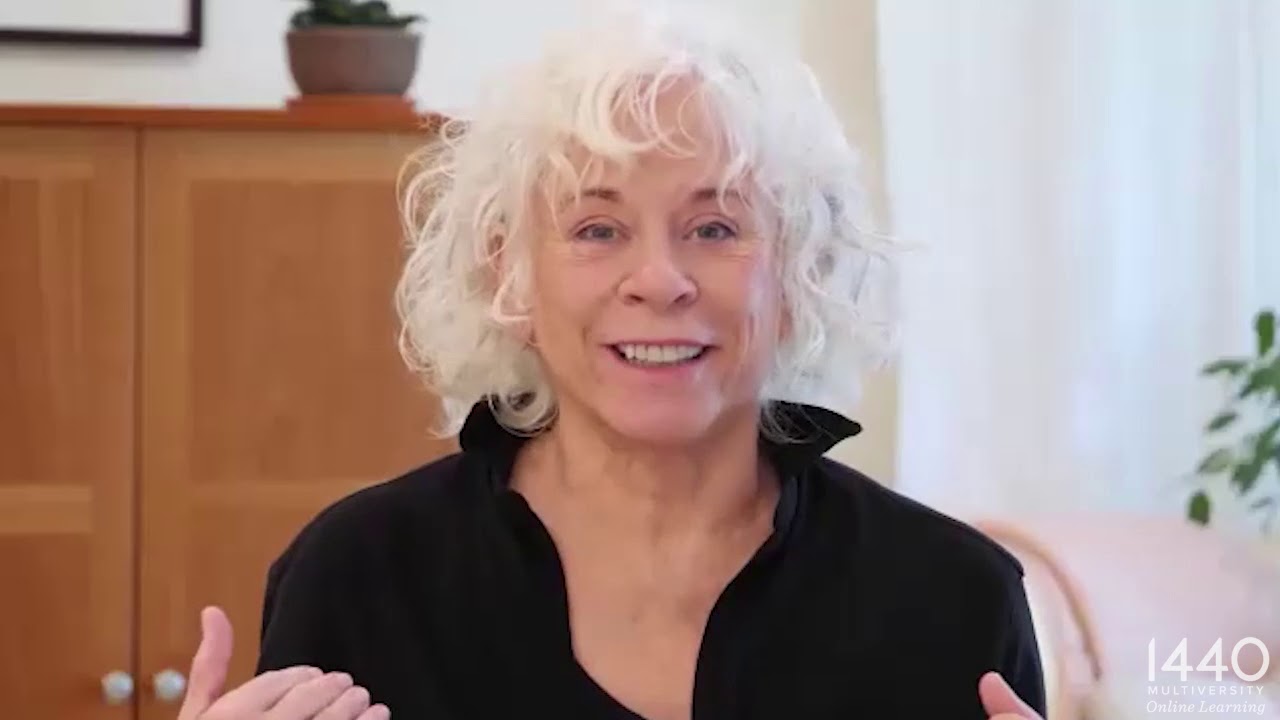
[0:01] hi everyone I'm Noel Stearns and I am

[0:06] coming to you live from 1440

[0:09] Multiversity I'm here with the Matt Kahn

[0:12] who is a spiritual teacher and author

[0:15] and empathic healer so thanks for being

[0:18] with us today Matt thanks for having me

[0:21] hello everybody hello Facebook life yeah

[0:25] that's so exciting we are so honored we

[0:27] got Matt Kahn first time on Facebook

[0:29] live we did it everyone so Matt I wanted

[0:33] to ask you mainly about empaths today

[0:36] and there's so much going on in the

[0:38] world and it can be really heavy and for

[0:41] people who feel like maybe they absorb

[0:44] other people's energies or things around

[0:46] them and it can just be hard even to

[0:47] just step out of your house do you have

[0:49] any tips for people who identify with

[0:52] being an empath absolutely so for a lot

[0:55] of us who identify with being

[0:56] energetically sensitive Souls I my life

[0:59] have always known myself as a nun

[1:00] definitely sensitive soul or an empath

[1:02] because I would feel the emotions of

[1:04] other people and not know that I was

[1:06] picking up on their feelings so I think

[1:08] the core teaching that I was in fact I

[1:10] was just offering it before we went to

[1:11] lunch in session was questioning whether

[1:16] the things we feel are actually ours

[1:18] like what if it's our experience but

[1:20] what if it doesn't belong to us and part

[1:22] of the fundamental flaw in the old

[1:24] spiritual paradigm is that we're trying

[1:26] to fix and resolve what we think is ours

[1:28] and part of what actually allows healing

[1:30] to occur is accepting that it's my

[1:32] experience but it might not be mine

[1:34] entirely and so if we open up to what if

[1:38] what I feel is in mine we understand as

[1:40] empaths that what I'm feeling is perhaps

[1:42] other people's experiences and the only

[1:45] reason that I'm feeling other people's

[1:46] experiences is because my energy field

[1:48] is helping

[1:49] oh that's beautiful that's different

[1:52] from a lot of what do I what I've heard

[1:54] before so so you can whether you're

[1:57] picking up energy that's yours or

[1:59] someone else's but you are kind of

[2:02] chosen in a way to help transmute the

[2:04] energy and yes okay in fact all of us

[2:07] are healers being initiated all of us

[2:09] are empaths whether we know we're empath

[2:11] so we don't know what to do with our

[2:12] empathic abilities we're all healers

[2:15] were all angels and training in this

[2:16] earth realm and so we're really just

[2:18] learning how to manage our energy we're

[2:20] learning how to focus our empathic

[2:23] abilities so that we can feel other

[2:24] people's experiences but not either

[2:26] match it or let it take us away from our

[2:29] experience and again this just happens

[2:31] over a lifetime and of course what I'm

[2:32] offering here at 14:40 is an ability to

[2:35] learn how to master those empathic

[2:37] skills how do I feel other people's

[2:39] feelings and not lose myself as a result

[2:41] not match people's energies not

[2:43] reflected back to them but how do I hold

[2:45] the space of light within myself

[2:52] do you have one tip you can share with

[2:55] others I know one or two if you love

[2:59] something maybe one to sharpen the

[3:03] skills of being able to pick up those

[3:06] energies and then also how to help clear

[3:09] that yes so when we are feeling tired

[3:14] we are feeling as if other people's

[3:17] heaviness is becoming our heaviness it's

[3:18] because what we're doing is we're an

[3:20] attempt to stay safe from other people's

[3:23] attacks our perimeter potential attacks

[3:25] were actually matching and hearing their

[3:26] energy we're actually merging with them

[3:28] so the way we pull ourselves out of

[3:30] entanglement and stay in our own

[3:32] experience is we actually just change

[3:34] and slow our breath

[3:35] hmm so if we can breathe slower than

[3:38] other people we're gonna actually have

[3:40] an experience different from other

[3:41] people because subconsciously what

[3:43] happens is when people are in an

[3:44] emotional turmoil we match their

[3:46] experience we merge with them so to stay

[3:49] safe from any potential attack we start

[3:51] breathing shallowly with people who are

[3:53] in emotional stress so if I can breathe

[3:56] slowly in the presence of someone going

[3:57] through turmoil I am in effect holding

[4:01] space of light for their experience

[4:03] while being able to stay in my own

[4:05] unique experience without needing to

[4:08] match them in order to be in their

[4:11] presence and a lot of them paths you

[4:13] know will say I know how to be at peace

[4:15] in my home I don't know how to be at

[4:17] peace in this crazy world right so if we

[4:19] learn to breathe slower than the world

[4:21] we learn to hold space for the world we

[4:24] shine a light that transforms the world

[4:26] simply by being willing to be one with

[4:29] our breath and of course when we're one

[4:30] with our breath one step closer to

[4:32] loving ourselves that's so good

[4:36] oh and hi Savannah she's a sign that how

[4:40] to keep our energies good even though

[4:42] the governments are trying to poison us

[4:44] chemtrails vaccinations yeah they're

[4:47] trying to change our frequencies what

[4:49] would you say to that I would say that

[4:52] the government like every other reality

[4:54] is a reflection of our belief about it

[4:58] now none of these things don't exist but

[5:00] what exists is our relationship with

[5:02] these things so for example if I were to

[5:06] see tons of chemtrails my response would

[5:09] be to detoxify my body so when I see an

[5:14] unconsciousness in the planet I take

[5:16] our conscious responsibility of my body

[5:18] if I see people angry and

[5:20] hyperventilating I'm gonna stop and

[5:21] breathe more often if I start to see a

[5:23] lot of insincerity or cruelty in the

[5:27] world I'm gonna love myself and my

[5:29] family more so I think the response is

[5:31] the outer world is our flashcard and it

[5:33] motivates us to do the opposite

[5:35] conscious response in response to the

[5:38] things we can't control we can't control

[5:39] the government we can't control

[5:41] chemtrails but we can control how well

[5:43] we take care of ourselves we can't

[5:45] control how deeply we love ourselves and

[5:47] we can't control how often we slow our

[5:49] breath so these and that feels super

[5:53] empowering I would say I agree yeah and

[5:55] anything last question it is there

[5:58] anything that has come up for you today

[6:01] that you would want to share with our

[6:03] viewers all right today's session it's

[6:07] so funny cuz every time I teach like a

[6:10] when it's done it's all aboard or you

[6:11] know it's all a blur but you know what

[6:13] we were talking about in the sessions

[6:15] that really life is the training planet

[6:19] for evolving angels and that all of us

[6:22] really are here to remember that were

[6:23] angels in training and that this planet

[6:25] is giving us the exact curriculum we

[6:27] need to learn how to shine our light as

[6:29] potential spirit guides in the future so

[6:32] really it's not just that we are here

[6:34] waiting to be rescued by angels but

[6:36] we're going through a path of higher

[6:38] learning to become angels for the future

[6:41] generations of incarnated Souls and for

[6:43] me I find that greatly comforting I was

[6:45] truly an honor to support the evolution

[6:47] of so many angels on this planet yeah

[6:49] well thank you on behalf of everyone for

[6:51] doing that work and yeah you I can feel

[6:55] his energy just radiating here I just

[6:57] have to tell you for those not here and

[7:00] again this is Matt Cahn and he is a

[7:02] faculty member here check a match I got

[7:05] his work it's amazing and I'm just to

[7:07] show you our scenery really quickly run

[7:10] crest right now this is our outdoor yoga

[7:13] deck just a quick view we're coming back

[7:18] round well thank you everyone for

[7:20] joining us today and thank you Matt it's

[7:23] been such a pleasure thank you

[7:25] love you all bye

[7:27] thank you everyone

1440 Multiversity
Artist1440 Multiversity

1440 Multiversity is a 75-acre nonprofit learning retreat in the redwoods of Scotts Valley, California, founded by philanthropists Joanie and Scott Kriens and opened in May 2017. N…

Profil ansehenWebsite
Themen erkunden
EmpathsEnergy-sensitivityBreath-workConsciousnessHealing

Hast du Fragen?

Häufig gestellte Fragen

By consciously slowing their breath to a rhythm different from the person in distress, empaths create a distinct nervous system state that allows them to hold space without merging energetically. A slower breath keeps you rooted in your own experience while maintaining a field of calm that others can access.
Empaths often pick up on others' emotional states and assume that sensation of heaviness belongs to them. Kahn teaches that while empaths experience these feelings, the emotions may originate with other people—the empath's role is to help transmute them, not carry them.
Yes. By learning to breathe slower than the world around them, empaths learn to hold space for the world's chaos without being pulled into it. This stable inner rhythm becomes a light that transforms their environment simply by their willingness to remain centered.
Rather than trying to control external events—governments, environmental toxins, or collective fear—empaths can direct their power toward conscious personal responses: deeper self-care, more deliberate breathing, greater self-love, and integrity. The outer world becomes a flashcard motivating inner evolution.
Kahn teaches that all humans are here to undergo a curriculum that prepares them to become guides and healers for future generations. Empaths' sensitivity isn't a flaw but an initiation into this larger service—each moment of learning to hold space is practice for the light you'll eventually offer others.
The key is recognizing that when people are in emotional turmoil, your nervous system reflexively tries to match their breathing and emotional state for safety. By consciously choosing a slower breath and staying in your own experience, you break the entanglement without abandoning them.

Weiterlesen

More on Retreats

Alle anzeigen
How to Stop Retelling Your Story of Suffering
Inspire

How to Stop Retelling Your Story of Suffering

Gangaji explores how our unnecessary suffering stems from repetitive storytelling—and how meeting a true teacher can reveal the peace alread…

1 min read
Beyond the Story: Freedom Begins With Stillness
Inspire

Beyond the Story: Freedom Begins With Stillness

Gangaji explores how our repeated narratives create unnecessary suffering—and how the choice to stop, listen, and open reveals what's alread…

1 min read
Govinda Jaya: How Sacred Sound Awakens the Heart
Inspire

Govinda Jaya: How Sacred Sound Awakens the Heart

Radhika Das channels the liberating power of mantra through a luminous kirtan performance at Medicine Festival, invoking divine names to pur…

1 min read
Om Namah Shivaya Chant: Ecstatic Trance Meditation
Inspire

Om Namah Shivaya Chant: Ecstatic Trance Meditation

Jai Uttal guides listeners into an ecstatic chant trance with Om Namah Shivaya, the Sanskrit invocation of Shiva consciousness. A 91-second …

1 min read

Weiter erkunden

Setze deinen Weg fort

Mehr Weisheit und Zusammenkünfte aus dem BrightStar-Verzeichnis.

Mehr Artikel

Durchstöbere die ganze Bibliothek an Lehren, Interviews und Leitfäden.

Zu allen Artikeln →

Lehrer & Künstler

Entdecke die Linien, Musiker und Wegbegleiter der bewussten Welt.

Künstler erkunden →

Event finden

Kirtan, Retreats, Klangbäder, Atemarbeit, Festivals — bald in deiner Nähe.

Events ansehen →