
SportsCampFinder

Alle Camps durchsuchen

Find the perfect camp for your athlete

camps

Basketball Camps
Soccer Camps
Baseball Camps
Football Camps
Volleyball Camps
Lacrosse Camps
Multi-Sport Camps
Elite Training
Overnight Camps
Day Camps
Beliebte Reiseziele
BaliSedonaLos AngelesCosta RicaNew YorkSan FranciscoAustinMiamiJoshua TreeTulum
Alle Kategorien anzeigenAlle Reiseziele anzeigen

Alle Funktionen entdecken

Leistungsstarke Tools für Ihre Veranstaltungen

Plattform-Funktionen

Intelligente dynamische Preisgestaltung
Ticket-Kategorien
Sitzplatzreservierung
Warenkorbabbruch-Wiederherstellung
Besucher-Wiedergewinnung
Spenden & Staffelpreise
Affiliate-System
Ticket-Scanner
Rabattcodes
Individuelle Fragen
Ticket-Teilen
Upsells & Extras
Analysen & Berichte
E-Mail-Sequenzen
Warteliste / Benachrichtigen / Erinnern
Menschen & Orte
Camp OrganizersCamp FacilitiesKnowledge BaseInspiration
Alle Funktionen anzeigenÜber uns
PreiseBlog
Language
Saved events
Alle Veranstaltungen durchsuchen

camps

Basketball CampsSoccer CampsBaseball CampsFootball CampsVolleyball CampsLacrosse CampsMulti-Sport CampsElite Training

Beliebte Reiseziele

BaliSedonaLos AngelesCosta RicaNew YorkSan Francisco

Menschen & Orte

Camp OrganizersCamp FacilitiesKnowledge BaseInspiration

Plattform-Funktionen

Intelligente dynamische PreisgestaltungTicket-KategorienSitzplatzreservierungWarenkorbabbruch-WiederherstellungBesucher-WiedergewinnungSpenden & StaffelpreiseAffiliate-SystemTicket-ScannerRabattcodesIndividuelle FragenTicket-TeilenUpsells & ExtrasAnalysen & BerichteE-Mail-SequenzenWarteliste / Benachrichtigen / Erinnern
Alle Funktionen anzeigenÜber uns
PreiseBlog
AnmeldenParents & athletesCamp directors
  • Browse all camps
  • Basketball Camps
  • Soccer Camps
  • Baseball Camps
  • Football Camps
  • Volleyball Camps
  • Lacrosse Camps
  • Multi-Sport Camps
  • Elite Training
  • All sports →
  • Orlando
  • Los Angeles
  • New York Metro
  • Dallas / Fort Worth
  • Chicago
  • Phoenix / Scottsdale
  • Atlanta
  • Denver
  • Seattle
  • Boston
  • Houston
  • Philadelphia
  • San Diego
  • Minneapolis / St. Paul
  • Alle Städte →
  • List your camp
  • Camp director dashboard
  • Pricing
  • Coaches & academies
  • Online registration & payments
  • Waivers & medical forms
  • Check-in app
  • Family messaging
  • Waitlist & notify
  • Camp marketing
  • Reports
  • All features →
  • About SportsCampFinder
  • Camp guides
  • Help Center
  • Contact
  • Careers
  • Press
  • Nutzungsbedingungen
  • Datenschutzrichtlinie

Camps

  • Browse all camps
  • Basketball Camps
  • Soccer Camps
  • Baseball Camps
  • Football Camps
  • Volleyball Camps
  • Lacrosse Camps
  • Multi-Sport Camps
  • Elite Training
  • All sports →

Reiseziele

  • Orlando
  • Los Angeles
  • New York Metro
  • Dallas / Fort Worth
  • Chicago
  • Phoenix / Scottsdale
  • Atlanta
  • Denver
  • Seattle
  • Boston
  • Houston
  • Philadelphia
  • San Diego
  • Minneapolis / St. Paul
  • Alle Städte →

Für Camp directors

  • List your camp
  • Camp director dashboard
  • Pricing
  • Coaches & academies

Funktionen

  • Online registration & payments
  • Waivers & medical forms
  • Check-in app
  • Family messaging
  • Waitlist & notify
  • Camp marketing
  • Reports
  • All features →

Unternehmen

  • About SportsCampFinder
  • Camp guides
  • Help Center
  • Contact
  • Careers
  • Press
  • Nutzungsbedingungen
  • Datenschutzrichtlinie
SportsCampFinder
© 2026 SportsCampFinder. Alle Rechte vorbehalten.
Inspire

Resonance Breathing: 6-Minute Guideto a Slower Mind

Breathe and Flow
Breathe and Flow
Sep 7, 2026
6 Min. Lesezeit

There's a paradox at the heart of modern anxiety: the faster we move, the more trapped we feel. Our breath mirrors this scramble—shallow, rapid, held. What if the way out wasn't acceleration but its opposite? What if slowing down the breath could genuinely quiet the mind, not in theory but in six minutes?

Resonance breathing works on this principle. By anchoring both inhale and exhale to a steady five-second count, the practice creates a physiological rhythm that the nervous system recognizes as safe. It's not meditation in the traditional sense—there's no gaze to hold, no mantra to repeat, no particular philosophy to accept. It's simply breath, counted and sustained, until something shifts. The mind settles. The body releases. The moment arrives where you notice you've been holding tension you didn't know was there.

Lesen · 5 Abschnitte

How Resonance Breathing Shapes the Nervous System

The science behind resonance breathing rests on a simple observation: the vagus nerve, which runs from the brainstem down through the chest and abdomen, responds directly to breathing rhythm. When breath is fast and erratic, the nervous system interprets the signal as threat. Adrenaline stays elevated. Vigilance remains high. But when breath slows and lengthens, a parasympathetic response begins—the body's biological braking system engages.

A five-second inhale followed by a five-second exhale establishes what researchers have called an "optimal frequency" for heart rate variability, the healthy fluctuation between heartbeats that indicates nervous system flexibility. Unlike breathing exercises that ask you to hold or manipulate the exhale, resonance breathing emphasizes balance: equal time in and out. This symmetry teaches the body that it doesn't need to grab for air or control it. The breath becomes almost mechanical, which paradoxically frees the mind from the work of breathing altogether.

What distinguishes this approach from other breath practices is its accessibility. There's no breath-holding, no elaborate counting patterns, no prerequisite flexibility or spiritual background. Someone experiencing acute stress, sitting at a desk or in a waiting room, can begin it immediately. Six minutes is long enough to notice a real shift—the kind that makes you understand why people return to breath practice, not as a nice-to-have but as a tool.

Why Six Minutes Is Enough to Change State

Neuroscience of meditation and breathing has shown that meaningful nervous system change doesn't require hours of practice. Even brief, consistent sessions create measurable shifts in cortisol (the stress hormone), heart rate variability, and reported sense of calm. Six minutes is the threshold where the mind has enough time to decelerate past its initial distraction and settle into the rhythm itself.

The first two minutes typically involve noticing—noticing the breath, noticing that the counting is harder than expected, noticing where tension lives. By minute three or four, the repetition begins to work. The rational mind, which usually dominates conscious experience, starts to recede. There's less storytelling, less planning, less commentary. There's just the in-breath, the count, the pause between, and the out-breath. For people whose minds rarely quiet without pharmaceutical help or hours of dedicated practice, this is significant.

The final minute often brings what practitioners describe as a settling—a sense that something has released even if you can't name what it was. The mind is visibly slower. The body has softened. You notice this difference because it contrasts so sharply with your baseline state. That contrast is where learning happens. The body learns that this state is possible, available, repeatable.

Building the Practice Into Daily Life

Unlike longer meditation practices or yoga sequences that require space, props, and protected time, resonance breathing can be woven into existing routines. A commute, a lunch break, a transition between meetings, a few minutes before sleep—the rhythm fits. Some people return to it at the same time each day; others use it as needed when they notice their mind has accelerated past usefulness.

The beauty of the five-second rhythm is that it doesn't require a timer or app, though these help initially. Over time, the count becomes second nature. An inhale takes as long as it takes to count to five; the exhale, the same. The mind, which normally fixates on problems and projections, now has a simple job: stay with the count. This job is demanding enough to interrupt rumination but simple enough that almost anyone can do it.

For people new to breath work, resonance breathing serves as an entry point. It teaches you that breath is controllable, that the nervous system responds to intention, that six minutes is not a trivial amount of time if those minutes are spent with full attention. From there, practitioners often move toward more elaborate practices—extended exhale breathing, alternate nostril breathing, breath retention—but resonance breathing remains valuable as a daily reset.

The Deeper Pattern: Slowing as a Skill

In a culture that prizes speed and productivity, slowing down is genuinely countercultural. It requires intention. It feels inefficient. Sitting still while simply breathing can activate the discomfort of stillness itself—a restlessness that makes you want to check your phone, adjust your posture, open your eyes and move. This resistance is normal. The practice is to notice the resistance and breathe through it.

As the mind settles and the body releases tension with each cycle, something deeper begins to register: the understanding that doing nothing, literally nothing except breathing with awareness, creates measurable change in how you feel. No effort to achieve, no goal to chase, no right or wrong way to do it. Just steady, symmetrical breathing until the mind quiets itself.

This is why resonance breathing persists across yoga traditions, somatic practices, trauma-informed therapy, and modern performance coaching. It works. It's simple. It's reproducible. And in a world of increasingly complex solutions to problems that are sometimes fundamentally about overstimulation and dysregulation, its simplicity is radical.

Where to go from here

If you're drawn to breath practices, start with six minutes of five-second inhale, five-second exhale breathing and notice what shifts. Sit upright if possible—slouching can subtly restrict breath. Breathe through the nose if you can; if not, mouth breathing works. After six minutes, notice: Is your mind slower? Is your body softer? Do you feel different? These observations are your own data, more valuable than any theory. From there, you might extend the practice to ten minutes, or explore variations like extending the exhale, or simply return to six minutes daily. The rhythm teaches itself; your only job is to show up and count.
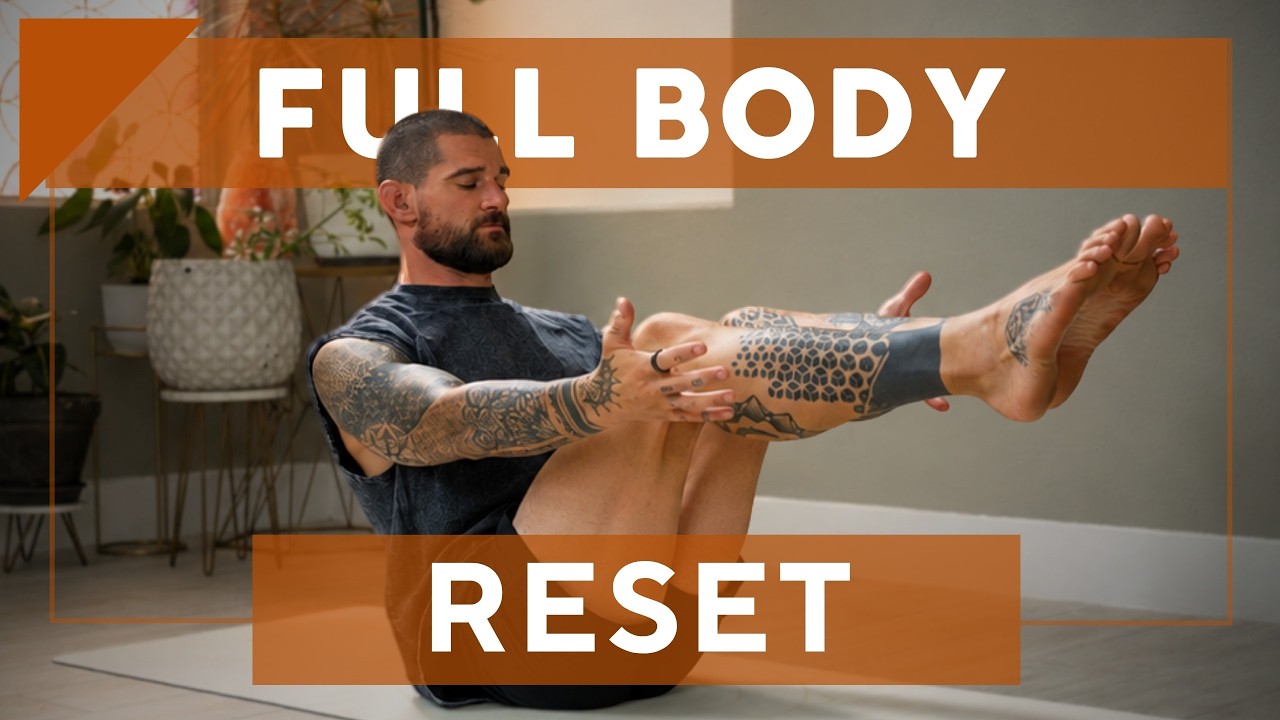
Breathe and Flow
ArtistBreathe and Flow

Watch more from Breathe and Flow on YouTube.

Profil ansehenWebsite
Themen erkunden
Breath-workNervous-systemResonance-breathingAnxiety-reliefMeditation-beginner

Hast du Fragen?

Häufig gestellte Fragen

Resonance breathing is a practice where you inhale and exhale for equal counts—typically five seconds each—to activate the parasympathetic nervous system (the body's calming response). The steady rhythm signals safety to your vagus nerve, lowering cortisol and encouraging a measurable shift toward calm within minutes.
Yes. Slowing the breath directly impacts nervous system regulation through the vagus nerve. Even six minutes of steady, symmetrical breathing can lower heart rate, reduce cortisol, and shift brain activity toward states associated with relaxation and clarity—effects that persist with regular practice.
Resonance breathing emphasizes balance: equal inhale and exhale with no breath-holding or manipulation. This makes it accessible and immediate—no prerequisites, no complex counting patterns, and no need for meditation experience. It's designed to be practical and repeatable in everyday life.
The breath and nervous system are deeply connected. A fast, shallow breath signals threat; the mind responds by staying vigilant and reactive. A slow, deep breath signals safety; the mind downregulates and settles. By controlling breath rhythm, you're directly signaling your nervous system that it's safe to relax.
Yes. Six minutes is the threshold where the mind has time to decelerate past initial distraction and settle into rhythm. Most people notice measurable shifts in mind-quietness and body tension release—not because of belief but because of how the nervous system responds to the pattern.
Resonance breathing is highly portable. You can practice sitting at a desk, on a commute, before sleep, or during a break. It requires no props, no special space, and no particular posture—though sitting upright and breathing through your nose when possible optimizes the effect.
Wandering attention is normal and not a failure. Simply notice the distraction and gently return to counting the breath. The practice is to notice and return, again and again. This repetition is where the skill of attention develops—each time you return is a successful rep.

Weiterlesen

More from Breathe

Alle anzeigen
How Grounding Moves Clear Scattered Energy From Your Body
Inspire

How Grounding Moves Clear Scattered Energy From Your Body

A deliberate practice that moves you from scattered to clear, using breath, mobility, and awareness to organize your whole system.…

1 min read
Inner Refuge of Calm: Finding Stillness Within
Inspire

Inner Refuge of Calm: Finding Stillness Within

A guided meditation practice for discovering an inner refuge of calm beneath life's surface turbulence. Learn how to cultivate presence thro…

1 min read
Snatam Kaur's "Ray Man Eh Bhid Jog Kamao": Sacred Sound and Inner Transformation
Inspire

Snatam Kaur's "Ray Man Eh Bhid Jog Kamao": Sacred Sound and Inner Transformation

Snatam Kaur's bhajan bridges devotional Sikh kirtan and contemporary meditation music, using sacred mantra to guide listeners toward release…

1 min read
Build Relationships on Purpose, Not Chemistry
Inspire

Build Relationships on Purpose, Not Chemistry

Krishna-centered relationships transform from transactions into pilgrimages. Discover how shared spiritual purpose creates lasting love.…

1 min read

Weiter erkunden

Setze deinen Weg fort

Mehr Weisheit und Zusammenkünfte aus dem BrightStar-Verzeichnis.

Mehr Artikel

Durchstöbere die ganze Bibliothek an Lehren, Interviews und Leitfäden.

Zu allen Artikeln →

Lehrer & Künstler

Entdecke die Linien, Musiker und Wegbegleiter der bewussten Welt.

Künstler erkunden →

Event finden

Kirtan, Retreats, Klangbäder, Atemarbeit, Festivals — bald in deiner Nähe.

Events ansehen →