SportsCampFinder

Alle Camps durchsuchen

Find the perfect camp for your athlete

camps

Basketball Camps
Soccer Camps
Baseball Camps
Football Camps
Volleyball Camps
Lacrosse Camps
Multi-Sport Camps
Elite Training
Overnight Camps
Day Camps
Beliebte Reiseziele
BaliSedonaLos AngelesCosta RicaNew YorkSan FranciscoAustinMiamiJoshua TreeTulum
Alle Kategorien anzeigenAlle Reiseziele anzeigen

Alle Funktionen entdecken

Leistungsstarke Tools für Ihre Veranstaltungen

Plattform-Funktionen

Intelligente dynamische Preisgestaltung
Ticket-Kategorien
Sitzplatzreservierung
Warenkorbabbruch-Wiederherstellung
Besucher-Wiedergewinnung
Spenden & Staffelpreise
Affiliate-System
Ticket-Scanner
Rabattcodes
Individuelle Fragen
Ticket-Teilen
Upsells & Extras
Analysen & Berichte
E-Mail-Sequenzen
Warteliste / Benachrichtigen / Erinnern
Menschen & Orte
Camp OrganizersCamp FacilitiesKnowledge BaseInspiration
Alle Funktionen anzeigenÜber uns
PreiseBlog
Language
Saved events
Alle Veranstaltungen durchsuchen

camps

Basketball CampsSoccer CampsBaseball CampsFootball CampsVolleyball CampsLacrosse CampsMulti-Sport CampsElite Training

Beliebte Reiseziele

BaliSedonaLos AngelesCosta RicaNew YorkSan Francisco

Menschen & Orte

Camp OrganizersCamp FacilitiesKnowledge BaseInspiration

Plattform-Funktionen

Intelligente dynamische PreisgestaltungTicket-KategorienSitzplatzreservierungWarenkorbabbruch-WiederherstellungBesucher-WiedergewinnungSpenden & StaffelpreiseAffiliate-SystemTicket-ScannerRabattcodesIndividuelle FragenTicket-TeilenUpsells & ExtrasAnalysen & BerichteE-Mail-SequenzenWarteliste / Benachrichtigen / Erinnern
Alle Funktionen anzeigenÜber uns
PreiseBlog
AnmeldenParents & athletesCamp directors
  • Browse all camps
  • Basketball Camps
  • Soccer Camps
  • Baseball Camps
  • Football Camps
  • Volleyball Camps
  • Lacrosse Camps
  • Multi-Sport Camps
  • Elite Training
  • All sports →
  • Orlando
  • Los Angeles
  • New York Metro
  • Dallas / Fort Worth
  • Chicago
  • Phoenix / Scottsdale
  • Atlanta
  • Denver
  • Seattle
  • Boston
  • Houston
  • Philadelphia
  • San Diego
  • Minneapolis / St. Paul
  • Alle Städte →
  • List your camp
  • Camp director dashboard
  • Pricing
  • Coaches & academies
  • Online registration & payments
  • Waivers & medical forms
  • Check-in app
  • Family messaging
  • Waitlist & notify
  • Camp marketing
  • Reports
  • All features →
  • About SportsCampFinder
  • Camp guides
  • Help Center
  • Contact
  • Careers
  • Press
  • Nutzungsbedingungen
  • Datenschutzrichtlinie

Camps

  • Browse all camps
  • Basketball Camps
  • Soccer Camps
  • Baseball Camps
  • Football Camps
  • Volleyball Camps
  • Lacrosse Camps
  • Multi-Sport Camps
  • Elite Training
  • All sports →

Reiseziele

  • Orlando
  • Los Angeles
  • New York Metro
  • Dallas / Fort Worth
  • Chicago
  • Phoenix / Scottsdale
  • Atlanta
  • Denver
  • Seattle
  • Boston
  • Houston
  • Philadelphia
  • San Diego
  • Minneapolis / St. Paul
  • Alle Städte →

Für Camp directors

  • List your camp
  • Camp director dashboard
  • Pricing
  • Coaches & academies

Funktionen

  • Online registration & payments
  • Waivers & medical forms
  • Check-in app
  • Family messaging
  • Waitlist & notify
  • Camp marketing
  • Reports
  • All features →

Unternehmen

  • About SportsCampFinder
  • Camp guides
  • Help Center
  • Contact
  • Careers
  • Press
  • Nutzungsbedingungen
  • Datenschutzrichtlinie
SportsCampFinder
© 2026 SportsCampFinder. Alle Rechte vorbehalten.
Inspiration

Letting Go as a Public Health Practice

Be Here Now Network
Be Here Now Network
Aug 8, 2025
7 Min. Lesezeit

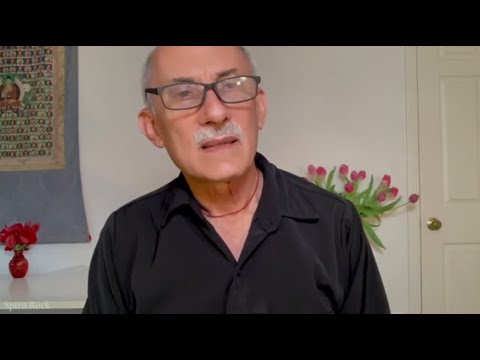
Jack Kornfield presents letting go not as an abstract spiritual concept but as a practical public health measure essential for mental wellbeing and freedom from suffering. Drawing on decades of Buddhist monastic training and Western meditation teaching, he illustrates how the simple practice of releasing—repeatedly letting go of thoughts, attachments, and the urge to understand or control—can become a foundational tool for addressing collective psychological distress. This talk reframes a core Buddhist principle as a concrete, teachable skill available to anyone, regardless of religious background.

Lesen · 6 Abschnitte

What Does "Letting Go" Actually Mean?

Kornfield begins not with philosophy but with direct practice. "Just let go, let go, let go," he explains, describing his own meditation experience: "I did nothing but this in my practice for years. Every time I tried to understand or figure things out, I'd say, 'Let go, let go,' until that desire would fade away." This is not the mystical floating sensation sometimes romanticized in spiritual circles. Rather, it is a mechanical, moment-to-moment releasing of mental contractions—the habitual grasping that accompanies ordinary consciousness.

The practice becomes almost comical in its simplicity. Kornfield offers an image: "Just be an earthworm who knows only two words, 'Let go, let go…'" This reduction to elemental action strips away the need for elaborate theology or deep understanding. The earthworm does not contemplate what letting go means; it simply loosens its grip on what it holds. The metaphor suggests that the capacity for release is not reserved for philosophers or advanced practitioners but is available to anyone with basic awareness.

Letting go, in this context, refers to the gradual softening of the mind's compulsive need to cling, defend, and control. Each time a thought arises—a worry, an interpretation, a demand—the practitioner notices the impulse to hold it and instead practices release. Over time, this repeated action transforms the nervous system's baseline orientation toward experience.

Why Is Letting Go a Public Health Issue?

Framing letting go as a public health measure is deliberately unconventional. Public health typically concerns disease prevention, vaccination, clean water, and epidemiology—the machinery of collective wellbeing. Kornfield's inclusion of a Buddhist practice in this framework signals a recognition that mental suffering, anxiety, and the compulsive clinging that drives reactive behavior are widespread harms affecting millions.

The COVID-era and post-pandemic landscape have exposed a crisis not primarily of infectious disease but of psychological overwhelm. People are chronically contracted around fears, narratives, and outcomes they cannot control. The compulsive need to understand, predict, and manage produces exhaustion and despair. Letting go, taught at scale as a public skill, addresses this underlying condition.

By calling it a public health measure, Kornfield positions the practice not as a luxury for spiritual seekers but as foundational medicine—as necessary as sleep or nutrition. When collective anxiety tightens around political division, economic uncertainty, or health crises, a population that knows how to let go has a resilience that those caught in perpetual grasping cannot access.

How Does This Practice Work in Ordinary Life?

The elegance of Kornfield's approach lies in its portability. Letting go requires no altar, incense, or special clothing. It can happen while washing dishes, sitting in traffic, or lying awake at night. The structure is always the same: notice the contraction, the grasping, the attempt to understand or fix; then release it.

This is distinct from dissociation or avoidance. Letting go does not mean pretending problems do not exist or becoming numb to experience. Rather, it means releasing the habitual mental struggle around those problems—the loop of rumination, blame, and desperate strategizing that often amplifies suffering without solving its cause.

Kornfield describes his own years of sitting meditation practice dedicated almost entirely to this one instruction: let go. This is not lack of progress toward something more advanced; it is the practice itself. As the years accumulated, the nervous system learned. The desire to grasp, to figure things out, to defend the self would arise, and there would be a moment of recognition—a moment of space—in which release became possible. That space, repeated ten thousand times, becomes the foundation of a different way of being.

What Happens When You Let Go Repeatedly?

The talk does not offer rapid transformation narratives. Instead, it suggests gradual rewiring. When the instruction "let go, let go" is repeated with genuine intention, something shifts in how the mind relates to its own contents. Thoughts still arise; emotions still move through the body. But the compulsive identity with them loosens.

Kornfield's use of the earthworm image is instructive here. The earthworm does not aspire to be something other than it is. It simply loosens and releases. Over time, this becomes its nature. Similarly, with repeated practice, the ability to release becomes less effortful. It becomes a reflex, a baseline way the mind and body can organize themselves.

This has measurable effects on wellbeing. The person who has developed the capacity to let go experiences less rumination, less defensive reactivity, less of the identity-based suffering that comes from over-identification with thoughts and emotional states. They do not become passive or uncaring; rather, they act from a place of clarity rather than contraction, which tends to make those actions more effective and compassionate.

How Is This Different from Other Wellness Practices?

Meditation, therapy, and mindfulness have become mainstream enough that their absence of a specific spiritual vocabulary makes them culturally acceptable. Kornfield's reframing of letting go as public health draws on this legitimacy while remaining honest about its origins in Buddhist psychology. The practice is not merely symptom management—reducing anxiety through breathing exercises—but a fundamental shift in how the mind operates.

Where therapy might explore why you grasp or what you are defending against, this practice simply teaches the mechanics of release. It is not uninterested in understanding; it is just teaching that understanding often comes after the contraction has loosened, not before. The mind that is clenched around a problem cannot see clearly. The mind that has released its demand for immediate resolution can sometimes see what was obscured.

Where to Go From Here

For those wanting to experiment with this practice, the entry point is remarkably low. Sit or stand, notice what you are holding—a thought, an emotion, a narrative about yourself or the world—and gently say "let go." Not with force, but with gentle intention. Let the holding dissolve. When contraction returns (which it will, immediately), repeat. This is not failure; this is the practice.

Kornfield's decades of teaching in the West have honed his ability to translate monastic practice into something available to householders—people with jobs, families, and ordinary complications. His books and online courses (available through Jack Kornfield's website and the Spirit Rock Center, which he co-founded) offer deeper exploration for those interested in sustained engagement. The Insight Meditation Society in Barre, Massachusetts, and Spirit Rock Meditation Center in California also offer retreats where this practice can be explored with community support and expert guidance.

The framing of letting go as public health is both a challenge and an invitation. It asks: What if a generation grew up learning not just to acquire and achieve, but to release and soften? What if the cultural default shifted from "figure it out and fix it" to "let go and see what becomes possible"? The video suggests that this shift is not a luxury—it is a necessity for collective flourishing.


Comments

Loading the conversation…

Be Here Now Network
ArtistBe Here Now Network

Be Here Now Network is the creator of Heart Wisdom with Jack Kornfield, a podcast exploring consciousness, spirituality, and personal transformation. With 313 episodes, they have c…

Profil ansehenWebsite
Themen erkunden
Letting-goBuddhist-practiceMental-healthMeditationPublic-health

Hast du Fragen?

Häufig gestellte Fragen

In this context, letting go means repeatedly releasing the mind's habitual grasping, clinging, and need to control. Rather than a one-time achievement, it is a moment-to-moment practice of noticing contraction and softening the grip—applied every time thoughts, emotions, or the urge to understand arise. Kornfield describes practicing this single instruction for years as the core of his meditation.
Kornfield frames letting go as public health because collective anxiety, rumination, and compulsive need to control are widespread harms affecting mental wellbeing at scale. A population educated in the capacity to release and soften would have greater resilience in the face of uncertainty, division, and crises that cannot be solved through effort alone.
Yes. Letting go can happen anywhere—while washing dishes, in traffic, or before sleep. The practice is simple: notice the contraction or grasping, notice the impulse to hold or figure things out, and gently release it. It requires no special equipment or setting, only repeated intention and patience.
No. Letting go refers to releasing mental contraction and the desperate struggle around problems, not to stopping action or caring. People who develop the capacity to let go often act more effectively because they act from clarity rather than defensive reactivity, and they tend to be more compassionate.
Kornfield describes practicing letting go for years as the foundation of his training. The benefits are gradual: the nervous system slowly learns to recognize the impulse to grasp and finds it easier to release. Over time, this becomes less effortful and more like a reflex, reducing rumination and reactive behavior.
The earthworm knows only to loosen and release—it does not aspire to something other than it is or contemplate its actions. Kornfield uses this image to suggest that the capacity for release is simple and available to anyone, not reserved for philosophers or advanced practitioners. It is a return to elemental action without elaborate theology.

Weiterlesen

More from Be

Alle anzeigen
Dying as Spiritual Awakening: Lessons from a 1976 Retreat Talk
Inspire

Dying as Spiritual Awakening: Lessons from a 1976 Retreat Talk

A 1976 retreat talk, now released as Here and Now Ep. 314, uses stories of Maharaj-ji, a dying student, and Varanasi to reframe death as an …

1 min read
When Science Meets the Unmeasurable: Paradigm Collapse and Spiritual Inquiry
Inspire

When Science Meets the Unmeasurable: Paradigm Collapse and Spiritual Inquiry

Ram Dass recounts his encounter with a Nobel laureate physicist who accepted every story about his guru—until one crossed the line. The gap …

1 min read
Guided Meditation on Loving Awareness and Mindful Stillness
Inspire

Guided Meditation on Loving Awareness and Mindful Stillness

A 25-minute guided meditation teaching mindfulness of breath, body sensations, emotions, and thoughts through loving awareness and spacious …

1 min read
The Three Basic Truths: Impermanence, Suffering, and No-Self
Inspire

The Three Basic Truths: Impermanence, Suffering, and No-Self

Explore Buddhism's foundational teachings on impermanence, suffering, and no-self as gateways to liberation and freedom from identification.…

1 min read

Weiter erkunden

Setze deinen Weg fort

Mehr Weisheit und Zusammenkünfte aus dem BrightStar-Verzeichnis.

Mehr Artikel

Durchstöbere die ganze Bibliothek an Lehren, Interviews und Leitfäden.

Zu allen Artikeln →

Lehrer & Künstler

Entdecke die Linien, Musiker und Wegbegleiter der bewussten Welt.

Künstler erkunden →

Event finden

Kirtan, Retreats, Klangbäder, Atemarbeit, Festivals — bald in deiner Nähe.

Events ansehen →