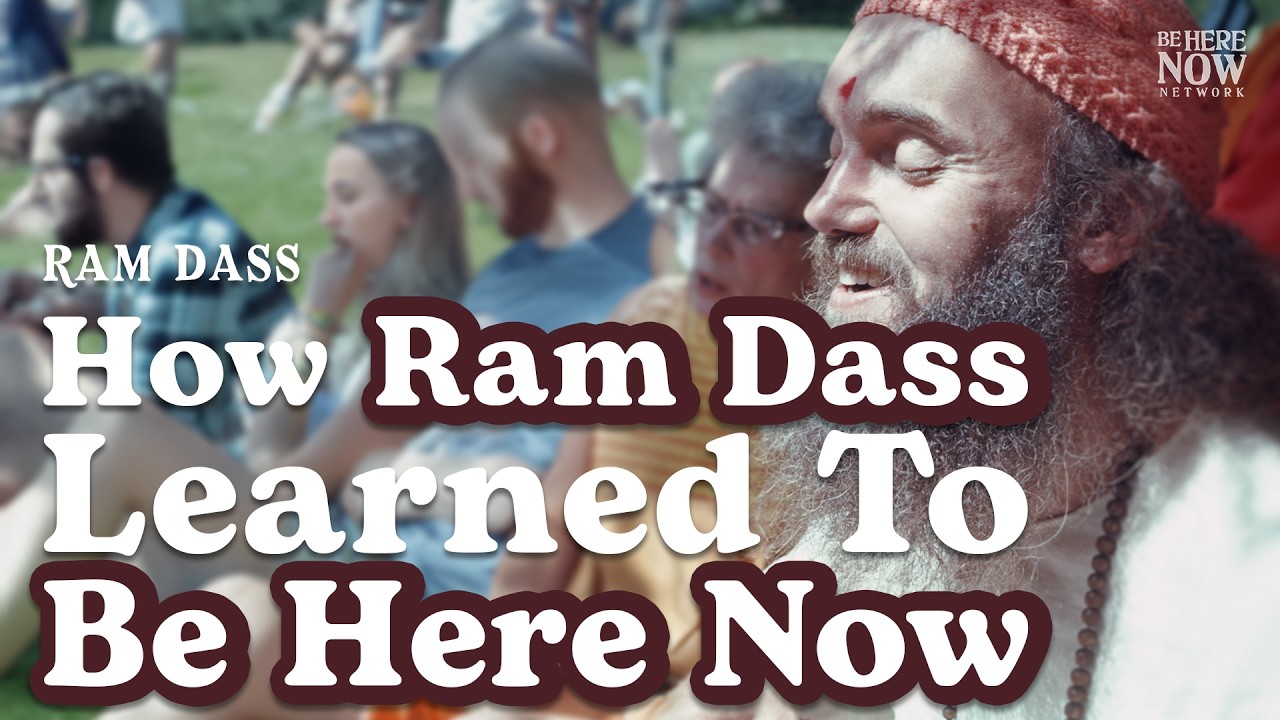
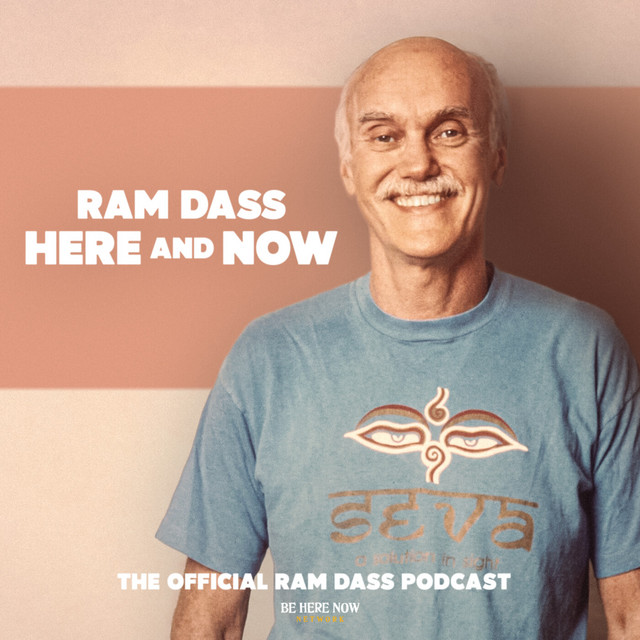
This 1992 retreat talk explores how your accumulated karma—the circumstances, relationships, and patterns you encounter—directly shapes your dharma, your spiritual practice and purpose. Rather than seeking an abstract ideal spiritual path, Ram Dass teaches that what you have in your life right now is the raw material for awakening. By working with the actual stuff of daily existence as a method, you transform change, aging, and difficulty from obstacles into doorways to liberation. Fear of change arises from over-identification with things that are inherently impermanent; wisdom lies in seeing this truth clearly and using it as the foundation of practice.
The central teaching of this talk rests on a precise principle: your karma defines your dharma. Karma here is not punishment or reward handed down by an external judge. Rather, karma refers to the actual conditions you find yourself in—your relationships, your work, your body, your circumstances, the historical moment you live in. Dharma is often translated as duty or path, but more precisely it means the unique spiritual work that calls to you from within your particular life situation.
Most spiritual seekers approach practice with a fantasy: they imagine an ideal, transcendent path separate from the messy reality of daily life. They imagine sitting in meditation caves, wearing robes, living in a monastery. But Ram Dass points to the poets Kabir and Rumi as examples of teachers who discovered that the marketplace, the household, the ordinary encounters of existence are the actual location of awakening. The spiritual path is not somewhere else. It is here, in what you have.
This reframing is radical. It means you don't need different circumstances to begin your practice. You don't need to wait until retirement, until you're healthier, until you find the right teacher or community. Your job, your family, your struggles, your body—these are not interruptions to your spiritual path. They are your spiritual path. The art is to learn to work with each thing in your life as a method. When you stop resisting what is and instead begin to use it as material for awakening, your karma becomes dharma—your circumstances become your practice.
Ram Dass acknowledges that during the period of this talk (1992), the world seemed to be in constant upheaval—ecological crises, political turmoil, rapid social shifts. The phrase "may you live in interesting times" is often cited as a curse, but Ram Dass inverts this perspective. Interesting times, times of change, are actually an enormous gift to the spiritual practitioner because they expose the nature of attachment and fear.
The core insight he offers is this: when we experience fear in relation to change, it is not the change itself that causes the fear. The fear arises from our identification with that which is changing. We cling to things—our bodies, our relationships, our political or social stability, our sense of self—as though they were permanent. But everything in the manifest world is constantly changing. When we push against change, we are pushing against the fundamental nature of existence itself.
Instead of seeing change as a problem to be solved or resisted, the spiritual path involves a shift in identification. You learn to notice: what in me is watching this change occur? What is the awareness that observes the impermanent? By shifting your sense of self from the changing contents to the unchanging awareness that witnesses change, you begin to find freedom. This is not intellectual knowledge but lived understanding, earned through practice with the actual changes occurring in your life right now.
Ram Dass emphasizes that living in "interesting times" becomes a blessing when you work with it consciously. The practice is to look at what is changing—in your body, in the world, in relationships—and to observe how your resistance to that change, your pushing against it, creates the suffering you experience. The art is not to prevent change or to achieve permanence (an impossible task) but to fundamentally alter your relationship with change itself.
One of the most direct applications of working with karma as dharma is in facing aging and death. Ram Dass brings these themes explicitly into the talk, noting that his work with dying people is actually work on himself. This is not sentimental or abstract. It is a precise teaching about how to use the inevitable changes of the body as a vehicle for awakening.
As we age, the body changes dramatically. Energy shifts, abilities diminish, pain may arise, appearance transforms. Most people experience these changes with grief, denial, or struggle. But from the perspective of karma as dharma, aging is not something that happens to you—it is the curriculum of your spiritual education during this phase of life. The body becomes a teacher.
When Ram Dass says that his work with people who are dying is work on himself, he is pointing to the fact that their process mirrors his own. He sees in their confrontation with impermanence a reflection of his own mortality. He is not helping them from a position of spiritual superiority. Rather, each interaction with a dying person is an opportunity for his own awakening. Each act becomes part of the awakening.
This is a crucial inversion of the typical helper-helped dynamic. The person who is dying is not an object of charity. They are a teacher presenting the practitioner with an opportunity to work directly with the deepest questions: What am I? What is lasting? What matters? What happens at the edge of the known? By showing up authentically to these conversations, by not turning away from death, Ram Dass uses his karma (his circumstances as a teacher, his aging body, his encounters with dying people) as his dharma (his path to liberation).
The practical implication of this teaching is profound: you are not waiting to become a spiritual person. You are already engaged in the work of awakening through the ordinary events of your life. A difficult conversation with a family member, a work deadline, physical pain, a loss, a moment of joy, a failure—all of these are not obstacles to practice. They are the practice itself, if you know how to work with them.
The shift required is one of attention and intention. When something arises in your daily life—conflict, frustration, joy, change—you learn to pause and ask: How can I use this for awakening? What is this situation teaching me about attachment, about identity, about the nature of mind? This is not a bypassing technique that pretends difficulty doesn't matter. Rather, it is a way of meeting difficulty with full presence and using its energy as fuel for insight.
Ram Dass draws on the principle that everything is ultimately impersonal—it is not happening to your separate self, but is part of the larger dance of existence. When you can hold that perspective even while engaging fully in your life, a freedom emerges. You stop being controlled by circumstances and instead become a conscious participant in them. Your karma—what you have been given to work with—becomes your dharma—the unique path of your liberation.
In a world facing ecological crisis, political polarization, and rapid change, this teaching offers an alternative to despair. Rather than seeing these conditions as purely negative, Ram Dass suggests that the intensity of current times creates conditions for awakening. When circumstances are challenging, when comfort is stripped away, when change is undeniable, the opportunity for spiritual growth is greatest.
This does not mean ignoring suffering or failing to address injustice. It means that while you engage in the work of being a responsible human being, you are simultaneously using those very circumstances as a path of awakening. You can work for change in the world while recognizing that the ultimate liberation comes from transforming your relationship with what is, not from the outcomes of your efforts.
The integration Ram Dass offers is this: you don't choose between spiritual practice and engaged living. They are the same thing, if you bring awareness and intention to how you work with what you have. Your karma becomes your dharma not through withdrawal from the world but through conscious engagement with it, moment by moment.
To explore this teaching more deeply, notice in the next week how you relate to change in your own life. Where do you resist? Where do you cling to permanence? Rather than trying to change these patterns, simply observe them with curiosity. What identification underlies the resistance? Can you notice the awareness that observes the change, separate from the changing circumstance? This simple noticing is the beginning of practice.
If you work with aging, mortality, or dying (your own or others'), consider how Ram Dass frames this not as morbid but as the most direct spiritual work available. The questions that arise at the edge of life—What is lasting? What is real? What matters?—are not distractions from your path. They are the path itself. Bring presence and honesty to these encounters, and they will teach you.
Finally, reflect on the teaching that your dharma is hidden in your karma. What circumstances, relationships, or challenges have you been resisting or wishing away? What if they are not mistakes or obstacles but invitations to practice? What would shift if you approached your actual life—not an ideal version of it—as the curriculum of your awakening?