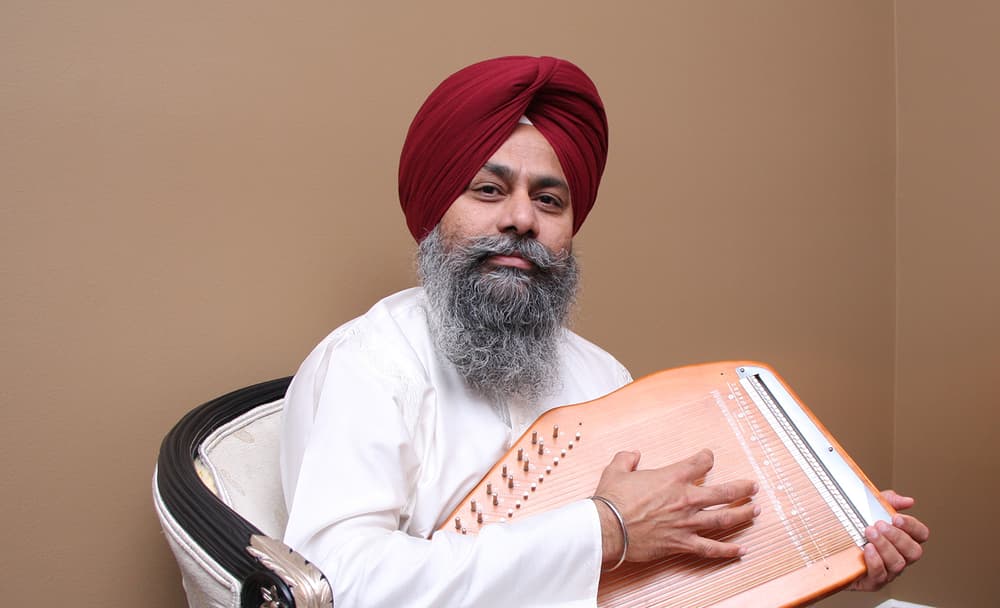
Professor Paramjeet Singh presents a devotional kirtan performance of "Gur Poora Jin Simareeaa" in Raag Ahir Bhairav, a classical Indian musical framework traditionally associated with morning contemplation and spiritual longing. This piece, performed in November 2021 for Guru Nanak Dev's Gurpoorab (birthday celebration), combines traditional Sikh devotional poetry with the refined melodic and rhythmic structures of classical Hindustani music. The performance explores how devotional singing in specific raags can deepen meditation on the Guru's teachings and create a bridge between formal spiritual practice and the emotional/intuitive dimensions of faith.
What Is Raag Ahir Bhairav?
Raag Ahir Bhairav is one of the foundational raags in Hindustani classical music, known for its meditative and contemplative quality. Traditionally performed in the early morning, this raag evokes a sense of reverence and spiritual seeking. The raag's specific arrangement of ascending and descending notes, along with its characteristic emphasis on certain intervals, creates an atmosphere of introspection and devotional longing—making it a natural fit for Sikh kirtan (devotional singing).
The choice of Raag Ahir Bhairav for this performance signals an intention toward depth rather than entertainment. Classical raags are not merely musical containers; they encode emotional and temporal associations that listeners—particularly those trained in Indian musical traditions—unconsciously recognize. When a performer chooses Ahir Bhairav, they are invoking centuries of musical and spiritual precedent that primes the listener's mind toward reverence and awakening.
Who Was Guru Nanak Dev and Why Celebrate Gurpoorab?
Guru Nanak Dev (1469–1539) was the founder of Sikhism and the first of the ten Sikh Gurus. His teachings emphasized direct experience of the Divine, equality among all people regardless of caste or gender, and the importance of naam simran (remembrance of God's name). Guru Nanak's spiritual innovation lay in making mystical experience accessible to householders—people living ordinary lives—rather than confining it to monks or renunciates.
Gurpoorab, celebrated on the anniversary of the Guru's birth (in the Sikh calendar, typically in November), is an occasion for the Sikh community and sympathetic listeners to revisit the Guru's teachings and reanimate their spiritual practice. Kirtan performances like Professor Paramjeet Singh's serve not merely as entertainment but as a form of collective spiritual practice, allowing the assembled community to move closer to the Guru's wisdom through the medium of music and voice.
The Meaning and Context of "Gur Poora Jin Simareeaa"
"Gur Poora Jin Simareeaa" translates approximately to "The Guru is complete, those who remember/meditate upon [the Guru]..." This line points to a core Sikh teaching: the Guru is understood not as a person dispensing knowledge, but as a spiritual principle—the Divine voice speaking through the Guru's words and presence. To "remember" the Guru (simran) means to keep one's awareness aligned with that principle, moment to moment.
The text invites listeners into an active relationship with the Guru's teaching, not a passive reception of doctrine. In Sikh philosophy, the Guru Granth Sahib (the compiled scripture, understood as the final Guru) and the Guru's living presence in one's heart are inseparable. Kirtan that focuses on these themes becomes a practice of remembrance—a way of tuning one's consciousness to the frequency of the Guru's teaching.
How Does Classical Music Serve Spiritual Practice?
The use of classical Indian music frameworks for devotional practice reflects a sophisticated understanding of how human consciousness responds to sound, rhythm, and melody. Unlike Western classical music, which tends to emphasize harmonic complexity and dramatic emotional peaks, Hindustani classical music works through sustained tones, microtonal variations, and the slow unfolding of a raag's potential. This approach mirrors contemplative practice itself: the mind settles, repeats, deepens, and gradually reveals layers of meaning.
When Professor Paramjeet Singh performs "Gur Poora Jin Simareeaa" in Raag Ahir Bhairav, the specific melodic contours and rhythmic cycles (taal) create a container within which both the performer and listener can explore the devotional content. The classical framework prevents the performance from dissolving into mere emotional catharsis; instead, it channels emotion toward clarity and sustained awareness.
The Role of Professor Paramjeet Singh in Sikh Kirtan
Professor Paramjeet Singh brings both scholarly knowledge and devotional depth to kirtan performance. His background allows him to honor both the precision of classical music and the sincerity of spiritual practice. This dual mastery—of musical technique and devotional intention—is rare and valuable. Without technical skill, the raag becomes unrecognizable; without devotional intention, the technique becomes empty virtuosity.
His choice to perform this piece on Guru Nanak Gurpoorab reflects a commitment to making the Guru's teaching alive and accessible through the contemporary practice of kirtan. Such performances serve multiple functions: they preserve a living musical-spiritual tradition, they create occasions for collective practice, and they demonstrate that ancient teachings remain relevant and vital.
What Makes Gurpoorab Celebrations Significant Today?
In a secular age, Gurpoorab celebrations and kirtan performances serve as anchors for spiritual community and continuity. They are occasions to pause, to remember, and to renew one's commitment to the values the Guru embodied: honest living, service to others, and remembrance of the Divine. For many Sikhs and spiritual seekers, these celebrations are not mere historical commemorations but living practices that keep the Guru's presence vital in one's own heart and in the community's collective consciousness.
A performance like Professor Paramjeet Singh's contributes to this living tradition by demonstrating that kirtan is not a museum piece but an evolving practice that responds to contemporary needs while honoring ancestral forms.
Where to go from here
If this exploration of Sikh devotional practice through classical music interests you, consider exploring more recordings and performances of Gurbani kirtan (kirtan based on Guru Granth Sahib verse). Listen for how different raags shape the emotional and contemplative contours of the same spiritual themes. If you have access to a Sikh Gurdwara (place of worship), attend a Kirtan Sammelan or regular kirtan session to experience the collective power of this practice. For deeper study, read translations and interpretations of the Guru Granth Sahib, which forms the scriptural foundation for all Sikh kirtan. Professor Paramjeet Singh's work is one entry point into a centuries-old tradition of making spiritual wisdom audible and alive through music.


