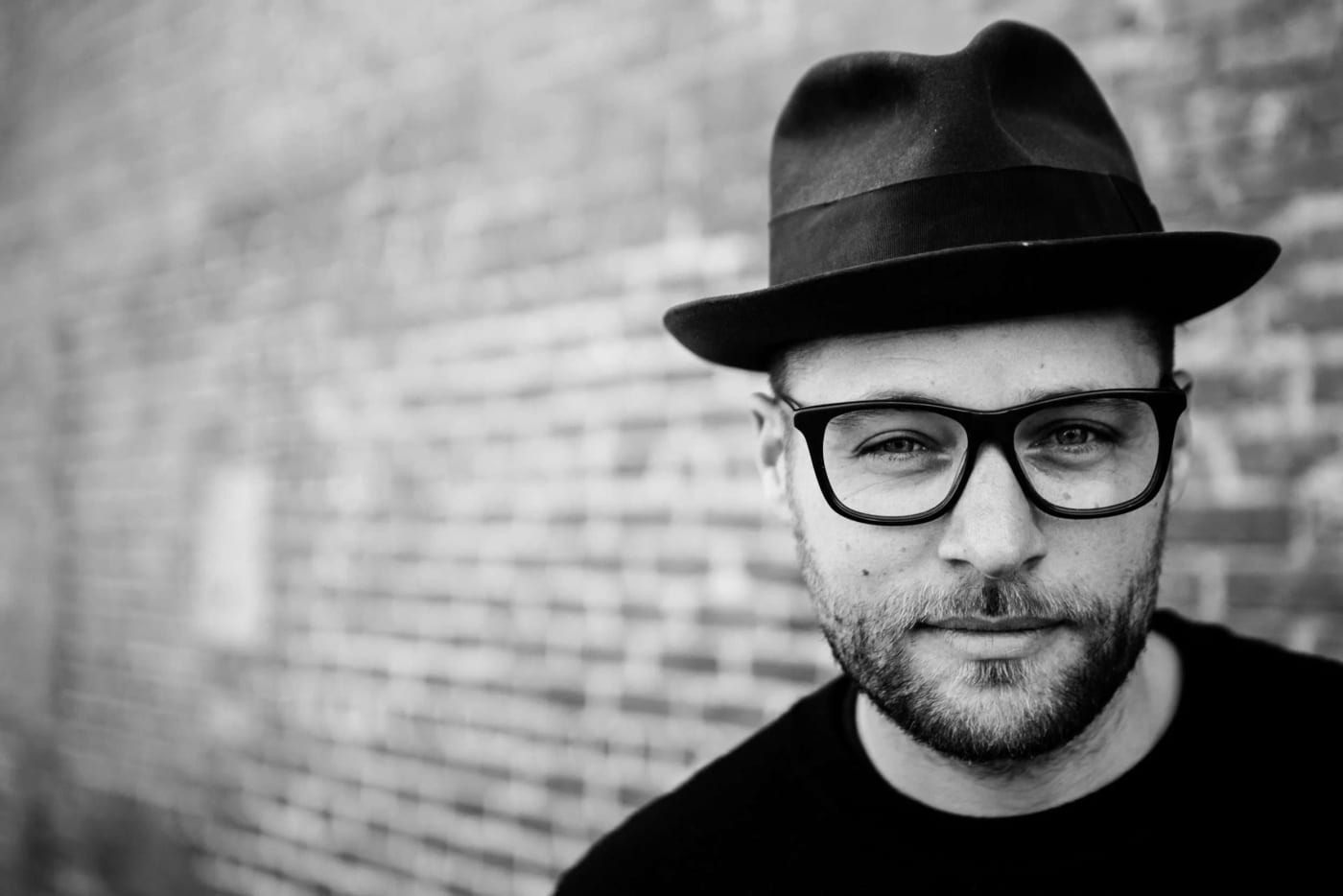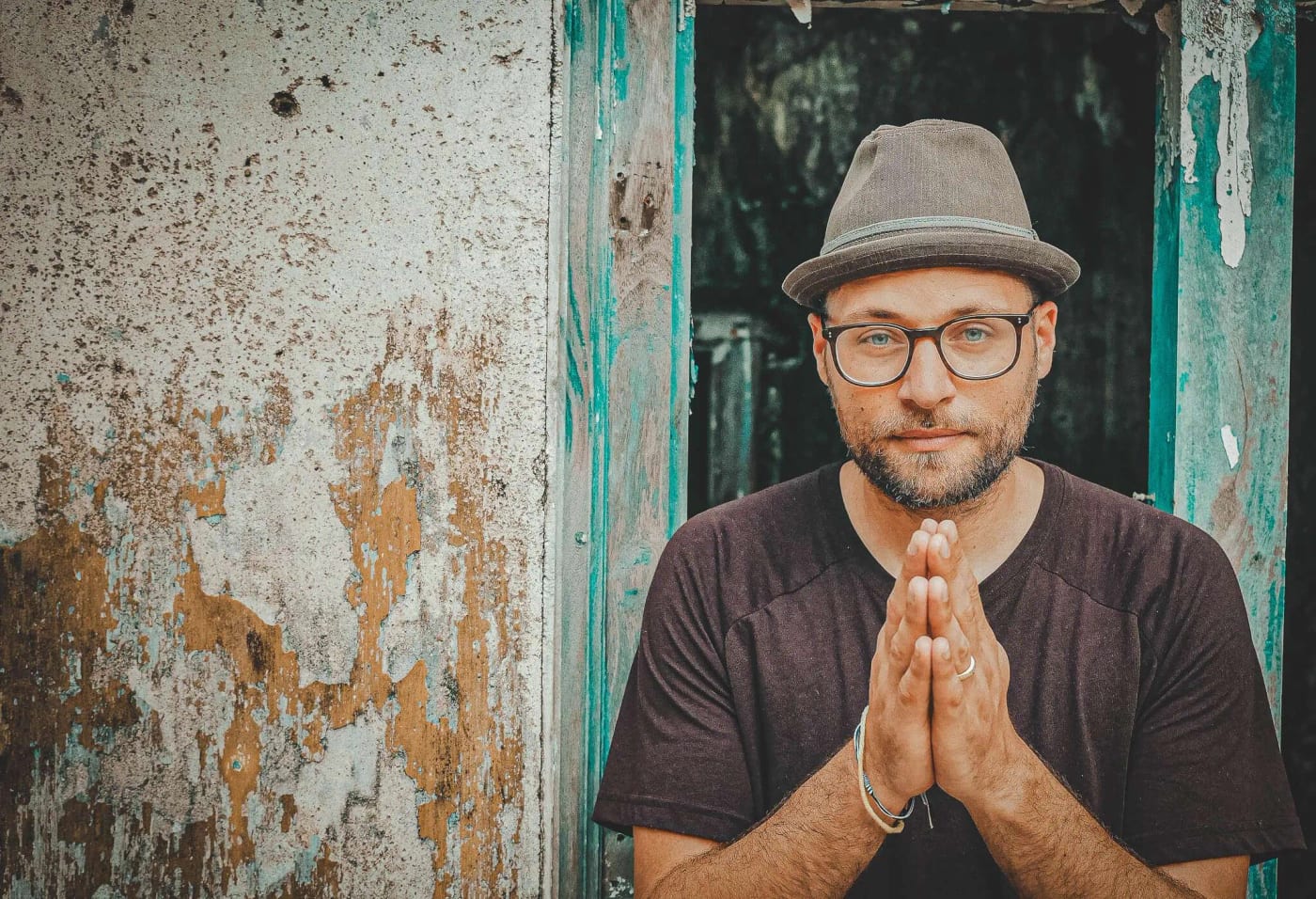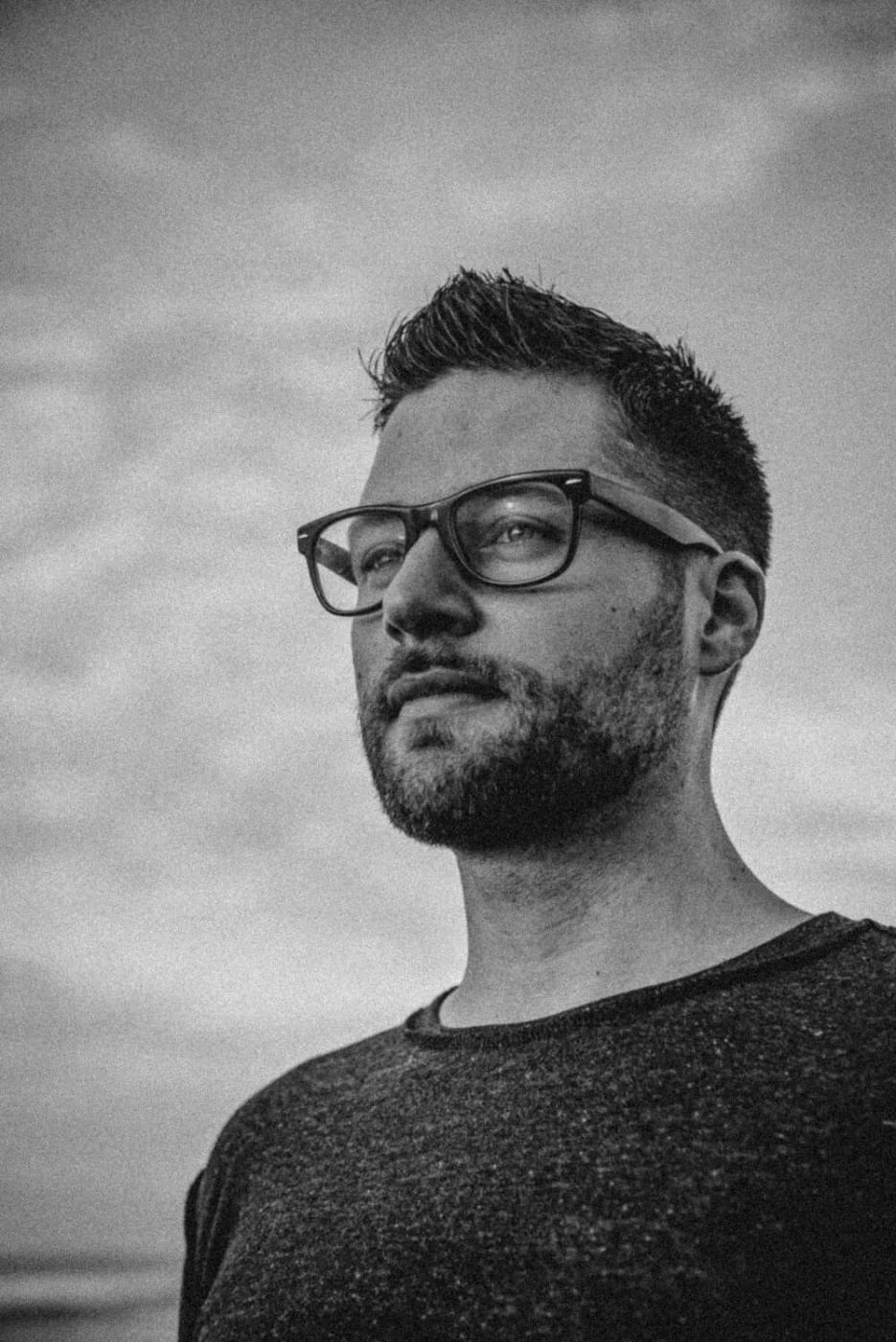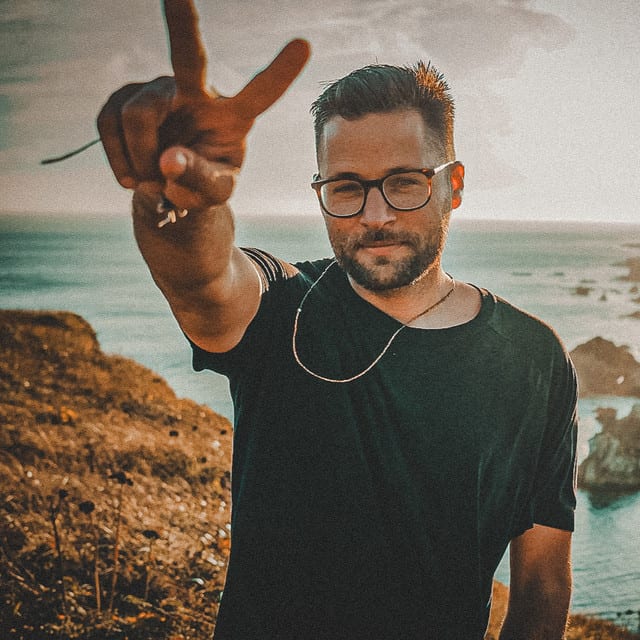

MC YOGI's music is built mostly from electronic materials: synthesizers, drum machines, downtempo beats, and in the early work, hip hop breakbeats. His voice is clear, conversational, and unsentimental. It sits closer to speech-song than to the melismatic ornamentation common in traditional kirtan, and he trusts the mantra more than his own virtuosity.
Pacing is deliberately slow. These are not radio songs or dance-floor tracks. The rhythm serves the mantra rather than the other way around. A single Sanskrit phrase cycles through slight variations, and when the production is clean and spacious, the repetition turns hypnotic instead of monotonous. The emphasis falls on clarity and negative space over density.
His catalog shows two broad textures. Elephant Power (2008) layers hip hop breaks and electronic synths beneath Sanskrit chanting and catchy hooks. Sound Patterns strips the hip hop away and leaves downtempo electronic music, mantras, personal prayers, and ambient soundscapes, with minimal drums or percussion and room around every sound.
By his bio's account, MC YOGI created a genre he calls yoga-inspired hip hop. Over time his music has moved among hip hop, mantra, and electronic sound. His catalog includes singles built around mantras to Ganesh, Hanuman, Shiva, Lakshmi, Durga, and Buddha, so the devotional palette is broad, drawing on Hindu and Buddhist material.
The lineage behind the music is braided rather than singular. His verified sources describe study in Ashtanga Vinyasa with Larry Schultz and Sri K. Pattabhi Jois in Mysore, years with the Vedanta Society of the Ramakrishna order, and an Advaita Vedanta opening after a 2010 pilgrimage to Arunachala. He also spent significant time in the Krishna devotional community, which put kirtan and sacred chanting at the center of his musical practice. Dorothy Divack is named among his teachers, and he regards Shri Neem Karoli Baba as his Guru. The bio describes him as a devoted student of Buddhist, Hindu, and Christian traditions, and the music reflects that range rather than a single allegiance.
What sets him apart is structural integration. Many artists in this space either drop hip hop's production language or use it as decoration. On Elephant Power, classic breakbeats and hooks were the scaffolding that held up the mantra and philosophy. Hip hop was never window dressing.
That fusion came from lived experience. He grew up in the San Francisco Bay Area painting graffiti, and he found yoga at seventeen through his father. He did not renounce the first world for the second. The later turn toward restraint is a signature of its own: Sound Patterns drops exuberance for space and repetition, and the mantra stays in front.
Krishna Das and Jai Uttal, both Grammy-nominated kirtan artists, appear on Elephant Power and brought acoustic guitar, harmonium, and raag-based melodic sensibility to the electronic frameworks. Their presence gave a hip hop-rooted project immediate standing in the kirtan world.
Matisyahu and Trevor Hall guested on Only Love Is Real, which debuted at #12 on Billboard Heatseekers. Their reggae and folk-influenced songwriting pushed the sound toward live instrumentation and song structure. East Forest, an ambient electronic artist, co-created Ritual Mystical (2016), which reached #1 on the Electronic charts in August 2016 and moved the sound into darker, more psychedelic territory. John Pattern is featured on Sound Patterns.
Behind the records, Robin Livingston has co-produced since 2008 and is a member of the Bhakti Brothers. DJ Drez, an underground LA hip hop DJ and Wanderlust musical director, has performed regularly with him since 2015. His wife, Amanda Giacomini, an artist and yoga teacher, has been a co-vocalist and partner since 2001.
There are two good doors in. Elephant Power shows where the sound began: breakbeats, hooks, mythology, and guest kirtan voices. Sound Patterns (2023) shows where it is now: downtempo, minimal, and focused on mantras and personal prayers without hip hop elements. If early electronic production feels dated to you, start with the latter.
Expect Sanskrit lyrics and repetitive melodic structures designed for meditation rather than novelty. What may surprise you is how little he raps in the way the label suggests. The later work is spare and patient, and it asks for sustained listening. The instrumental companions, such as Sound Patterns (Instrumentals), remove the voice entirely for practitioners who prefer to chant their own mantras or sit in quiet.
It is not for everyone. If you want high-energy dance music, complex rhyme schemes, or secular spirituality, this will disappoint. He works within and alongside hip hop rather than pushing its technical frontiers, and the devotional content is explicit and central.
The conscious-music landscape is crowded with kirtan, yoga-adjacent pop, and ambient devotional electronica. MC YOGI sits at an unusual junction of these. Krishna Das and Jai Uttal anchor him to the kirtan tradition, Matisyahu and Trevor Hall link him to reggae and folk-spiritual songwriting, and East Forest ties him to psychedelic, ambient electronic ground.
Within that field, his restraint is the distinguishing mark. He is closer to a downtempo producer who happens to chant than to a kirtan wallah who adds beats, and closer still to a graffiti-raised hip hop head who learned that repetition and space can carry as much weight as a verse. The result is a body of work that rewards patience and holds together across fifteen years of changing sounds.