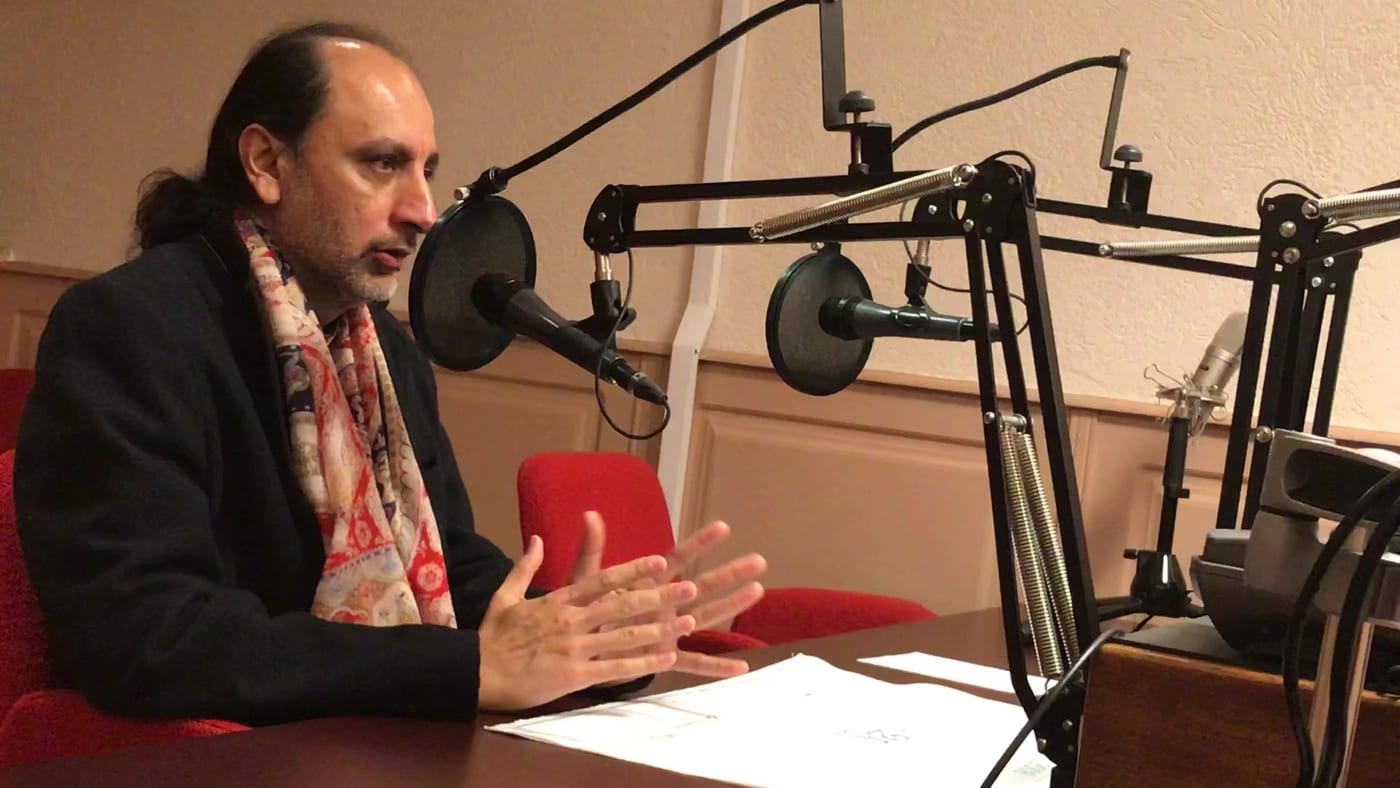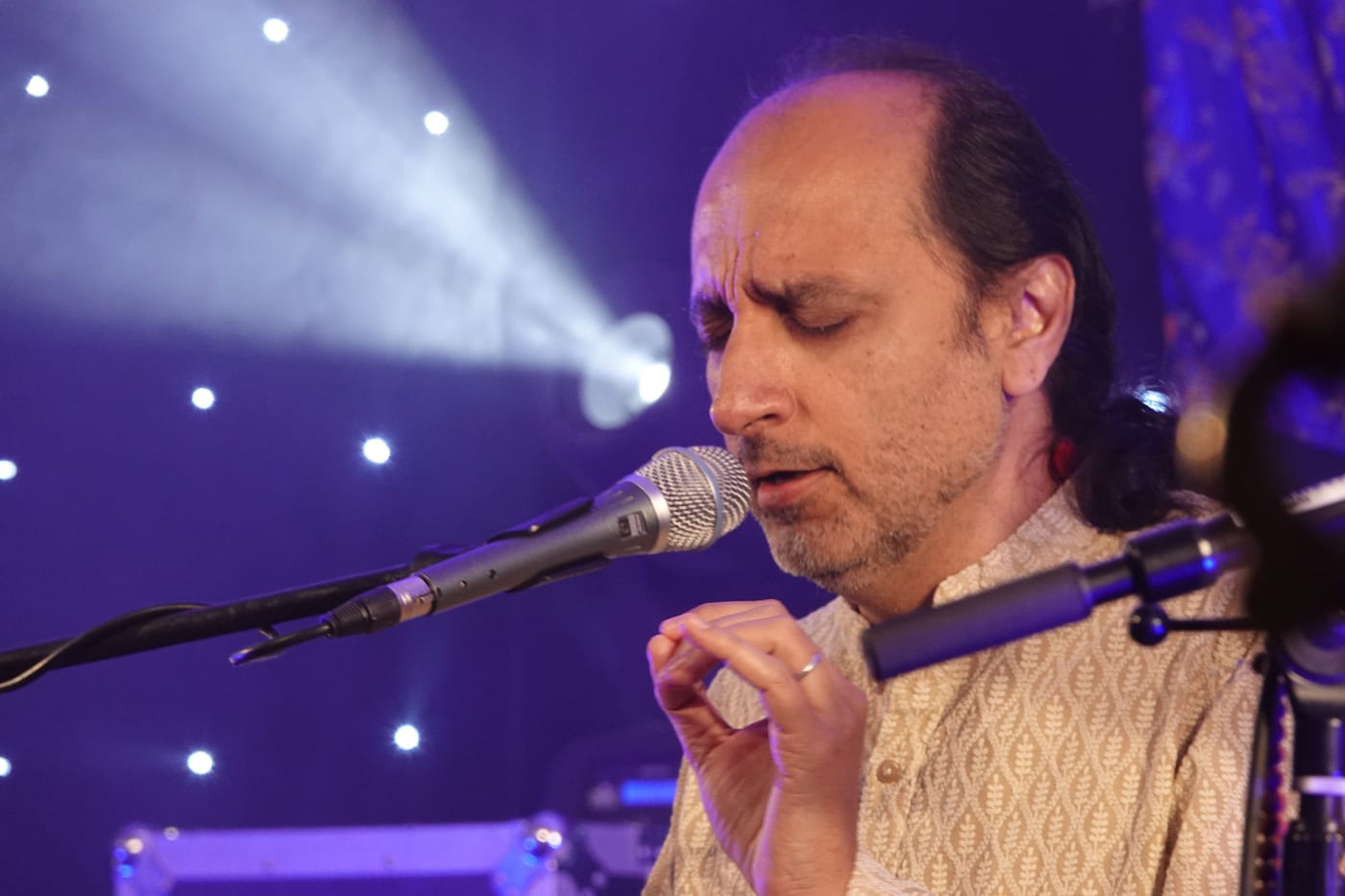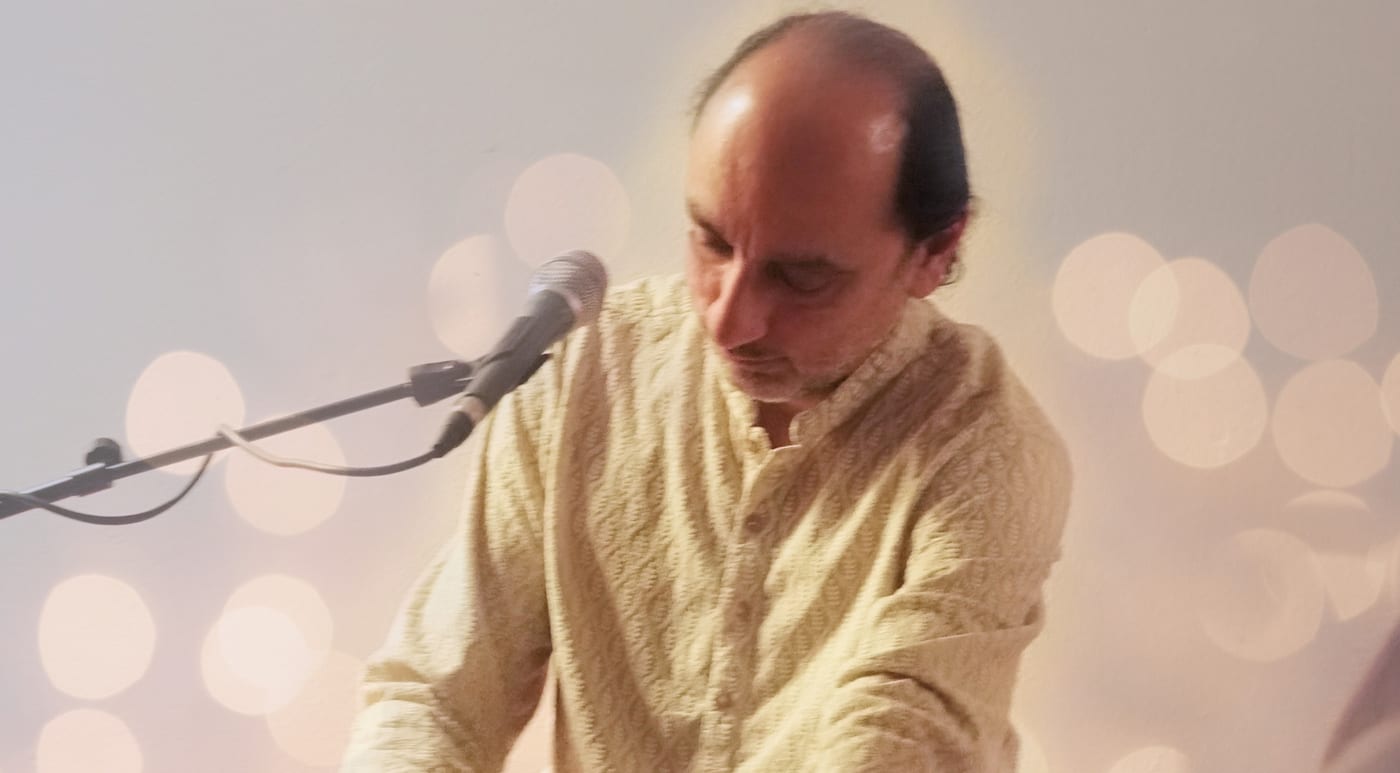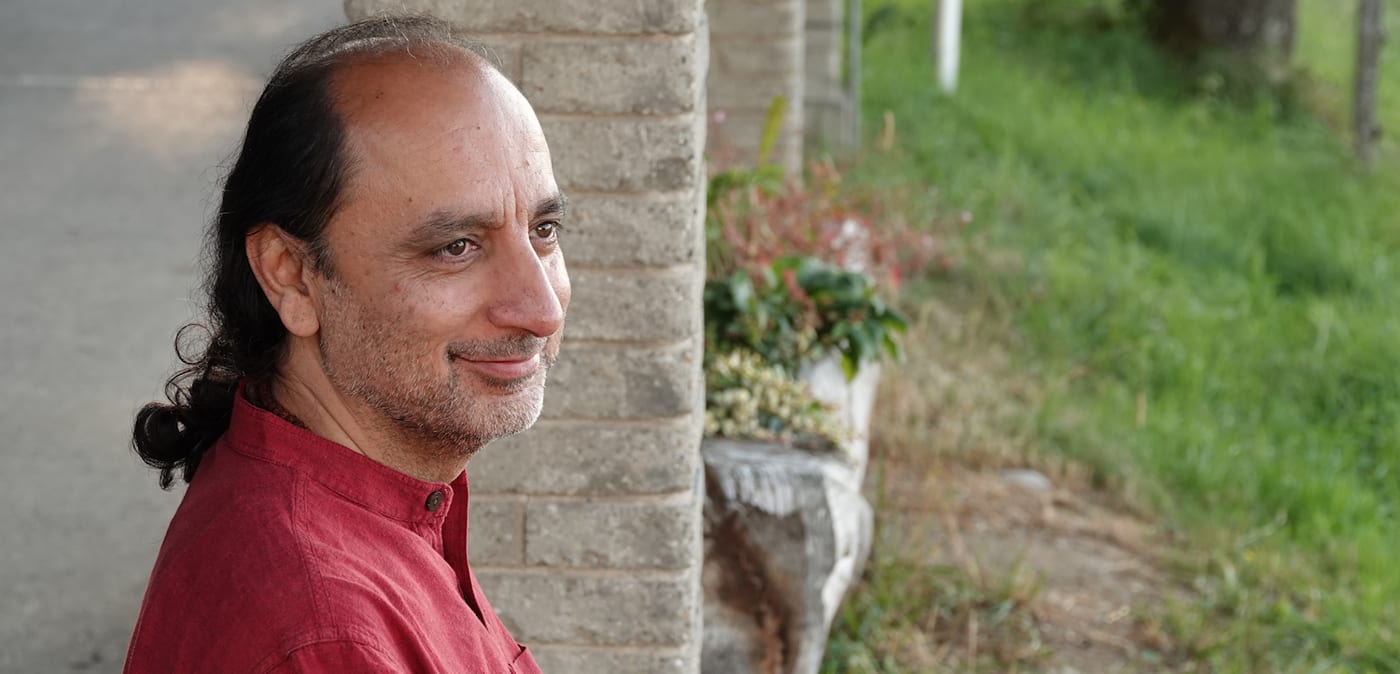

Manish Vyas builds his music from very few things: his own voice, the harmonium, and the tabla. He is a singer, composer and multi-instrumentalist from Gujarat, and he is the voice and tabla player behind much of his catalogue. The harmonium supplies a sustained harmonic floor, the tabla supplies rhythm, and the voice carries Sanskrit mantras, Sufi devotional text or raga-shaped melody over both. The arrangements tend toward restraint. There is space between phrases, and the voice is plain rather than showy. It does not chase operatic volume or long virtuosic runs. It serves the text and the raga.
Pacing varies by collection. Some recordings stay in slow, sustained tones suited to listening or practice. Reviewers also describe a range that reaches dance-floor beats at one end and relaxation at the other, with Indian pop, folk and poetry in between. The anchor stays the same throughout: Indian tradition. The texture is closer to a few instruments sounding clearly than to a dense, layered mix. The harmonium's reedy drone sits under the voice, and the tabla's pitched strokes keep time without crowding it.
Vyas has learned and played Indian music since childhood. He later focused on sacred and devotional music: mantras, kirtan and other expressions from the ancient Indian tradition. His work sits within Vedic and Hindu devotional practice, and Sufi devotional song is part of it too. Sufi Splendor and Salaam e Sufi show that. His central concern is the intrinsic power of sound, known as naad yoga.
On lineage, the sources are specific about one thing and silent on another. He describes spending about twenty years following his Master before being recognized as ready to teach and share what was passed to him. He calls himself a "humble postman" delivering that transmission. The Master is never named, so I will not name one. What can be said is that he presents his role as carrying teachings forward rather than inventing them.
Vyas's distinguishing trait is how he combines a trained musician's rigor with a devotional purpose. The tabla and harmonium work is rhythmically and melodically precise, and he applies it to mantra, raga and Sufi text as a practice of sound. Prem Joshua of Germany praises his rhythm and melody, and Spuren Magazine in Switzerland notes his voice and mantras.
The breadth of his catalogue also matters. Vedic Invocations, Yoga of Chanting, Sattva, Shivoham, Healing Ragas Collection, Salaam e Sufi and Sufi Splendor each take a different angle on Indian sacred sound: Vedic hymn, chant for practice, raga for wellness, Sufi song. His 2026 album is Devas and Devis. He is also a teacher, conductor, podcaster, publisher, blogger, film-maker and producer, and he presents Indian culture more broadly. He took part in the documentary True World of Mantra, which explores the science of authentic sound.
No co-musicians or producers are named in the material available, so I will not invent any. What the record does show is a close circle of voices around the work. Prem Joshua and Spuren Magazine are appreciative listeners rather than named collaborators. The documentary is a collaborative project in a different medium. The strongest relationship on record is the one with his Master. The sound itself is a small ensemble centered on Vyas, with voice, harmonium and tabla at its core.
Start with whichever collection matches your reason for listening:
- Vedic Invocations for Sanskrit chant grounded in textual tradition.
- Yoga of Chanting for music designed to accompany practice.
- Healing Ragas Collection for raga applied to calm and wellness.
- Sufi Splendor or Salaam e Sufi for Sufi devotional song.
What may surprise you is how little there is. If you expect the build-and-release of high-energy kirtan, with call-and-response swelling toward ecstasy, you may find him more inward by comparison. The mixes favor clarity over polish, and some recordings may feel austere on a first pass. His music rewards patience and repeat listening, and it assumes Sanskrit, Vedic and Sufi material as legitimate subjects rather than exotic color. That said, the dance-floor end of his range means not every track is spare.
If you prefer to meet him live, he teaches and performs worldwide: concerts, workshops, private and online lessons, and yoga-festival appearances. His retreats combine mantra, kirtan, pranayama, meditation, light yoga and stories from India. Past locations include Switzerland, France, Holland, Spain, the UK and the Sivananda Yoga Ashram in the Bahamas. A retreat or workshop is listed for May 14, 2027 at Sindhi Community House in London. His website, manishvyas.com, is the place to confirm details.
The conscious-music world has plenty of kirtan built for group participation and plenty of meditation music that borrows Indian sounds without the grammar behind them. Vyas stands apart from both. Compared with the communal, momentum-driven end of kirtan, he leans toward listening, silence and craft. Compared with generic relaxation music, he keeps raga, mantra and naad yoga as the stated foundation. His closest neighbors are other devotional singers working in bhajan and kirtan, but his tabla-and-harmonium training and his cross-tradition reach into Sufi song give him a distinct profile.
His Spotify audience, a little over 39,000 followers, suggests a devoted community rather than mass-market reach. That seems consistent with music that asks for attention instead of offering background atmosphere. For listeners who want sound treated as a discipline, with a teacher's humility and a musician's exactness, it is a body of work worth sitting with.