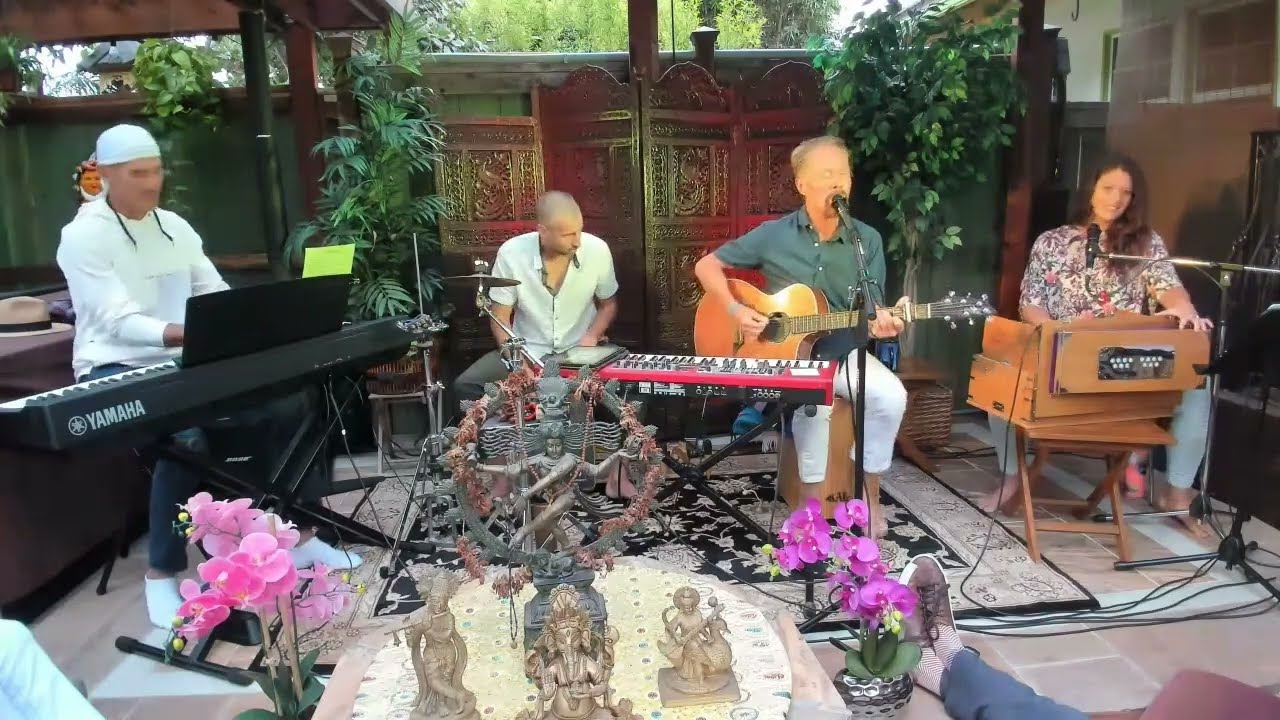
Somewhere in the opening moments of a kirtan session—whether in a yoga studio in Portland, a temple in Mumbai, or a living room anywhere in between—a singer often begins with the same invocation: Jaya Ganesh. The call goes out, the voices of practitioners join in response, and something shifts. The space opens. The practice begins. This is the power of a mantra that has worked its way into the heart of devotional music practice across the modern world, remaining as vital to contemporary spiritual seekers as it was to temple-goers centuries ago.
At its root, Jaya Ganesh is a Sanskrit invocation meaning "Victory to Ganesha" or "Hail to Ganesha." In the context of mantra practice, it functions as both a prayer and a vibrational tool. The mantra does not require the listener to believe in Ganesha as a literal deity, though many practitioners do; rather, it invites engagement with what Ganesha represents in Hindu and yogic philosophy: the remover of obstacles, the clearer of the path, the guardian who stands at every threshold.
Kirtan—the practice of call-and-response chanting of Sanskrit mantras—draws Jaya Ganesh into daily spiritual life. Unlike silent meditation, kirtan is relational and communal. The singer or group leader begins, holding a melody; the participants respond, creating a vocal dialogue that builds in momentum and depth. Jaya Ganesh, as a short and direct phrase, works perfectly within this structure. It is easy to learn, easy to repeat, and becomes easier to feel the longer it is sung.
Ganesha occupies a unique place in the Hindu pantheon. Unlike gods associated with specific domains or cosmic functions, Ganesha is the remover of obstacles—the deity invoked before all other rituals, prayers, and undertakings. Traditional Hindu practice begins with Ganesha. To proceed without his blessing is considered inauspicious.
Iconographically, Ganesha is recognized by his elephant head, though the tradition offers multiple origin stories for this form. Some accounts describe a deity created with an elephant's head by Parvati to guard her threshold; others speak of transformation and blessing encoded in the form itself. The elephant—at once powerful and gentle, strong and sensitive—carries symbolic weight: it represents both the strength to overcome obstacles and the wisdom to navigate complexity with grace.
In yogic philosophy, particularly within tantra, Ganesha holds an even more foundational position. He is associated with the muladhara chakra, the root energy center at the base of the spine from which all spiritual ascent begins. He is also linked to the primordial sound Om—the original vibration from which all mantras and creation itself are said to emerge. This placement makes him not merely a deity of convenience, but a guardian of the threshold between the material and the spiritual, between the individual self and the universal consciousness.
When Jaya Ganesh is sung in a kirtan session, the mantra functions on multiple levels simultaneously. On the surface level, it is a greeting, a nod of respect, an invocation: "I acknowledge the remover of obstacles and ask for his presence in this practice." Beneath that, the repetition of the syllables—JA-YA GA-NESH—creates a rhythmic pattern that settles the nervous system and focuses the mind. The melody, typically simple and memorable, acts as a container for attention, holding consciousness in the present moment.
The sustained repetition of a mantra has been shown to calm the amygdala, the brain's threat-detection center, and activate areas associated with self-referential processing and sense of safety. Spiritually, practitioners report that the vibration of the mantra—felt in the body and the subtle energy system—creates a genuine sense of clearing and opening. Whether one interprets this as psychological, energetic, or divine remains secondary to the lived experience: the path feels clearer after Jaya Ganesh is sung.
Traditionally, Jaya Ganesh serves as the opening chant of a kirtan session for precisely this reason. It removes the blockages—both internal (doubt, resistance, scattered attention) and external (the noise and busyness of the world outside the practice space)—that might otherwise prevent deeper work. Once Ganesha has cleared the way, other mantras can take root more fully.
In mantra practice, every syllable carries meaning, and every level of meaning matters. Jaya, from the Sanskrit root meaning "victory" or "triumph," suggests both the external conquest of obstacles and the internal victory of consciousness over limitation. It is not passive acceptance; it is active overcoming.
Ganesh carries within it multiple meanings: "Lord of the Ganas" (the celestial beings who serve Shiva), "the intelligent one," and "the remover." Each meaning layers onto the others, creating a richness of interpretation that allows the mantra to work on multiple levels of understanding simultaneously. The person just beginning their practice might experience Jaya Ganesh as a simple invocation to divine help. The experienced practitioner might recognize it as an affirmation of their own capacity to move through obstacles with wisdom and grace. Both are valid; both are held within the mantra.
The resurgence of kirtan as a spiritual practice in the West over the past several decades has drawn many practitioners back to foundational mantras like Jaya Ganesh. While kirtan has deep roots in South Asian devotional traditions stretching back centuries, its presence in contemporary spiritual life—in yoga studios, temples, concert venues, and living rooms worldwide—represents a genuine transmission of practice across cultures.
Modern kirtan musicians and teachers have preserved the essential function of Jaya Ganesh while adapting the musical and social contexts of its delivery. Recordings, live performances, and online classes have made the chant accessible to seekers who might never enter a traditional Hindu temple. Yet the mantra's power remains unchanged: it opens, it clears, it invites the removal of obstacles. Each rendering, each setting, each voice that joins the call honors the same ancient wisdom.
There is something profound about beginning again, always, with Ganesha. The remover of obstacles. The guardian of the threshold. The acknowledgment that the path is never entirely clear, and that clarity is something we must invoke, sing for, pray for. Each time Jaya Ganesh is sung, it is a fresh beginning. Each time, the obstacles—real or perceived—are recognized and released. Each time, the gateway opens. This is why the mantra has endured, and why it continues to work its way into the hearts of practitioners who have never heard Sanskrit spoken in a temple, who may have no framework for understanding Hindu cosmology, and yet who feel, immediately and unmistakably, the clearing that comes when the voices rise together in invocation.
If Jaya Ganesh resonates with you, consider exploring other foundational mantras in kirtan and yoga practice. Om Namah Shivaya, a mantra honoring Shiva as the principle of transformation and consciousness, works as a companion to Ganesha's obstacle-clearing. So Hum, which translates to "I am that," reflects the nondual consciousness underlying all existence. The Gayatri Mantra invokes the illuminating power of the sun and the light of wisdom. Each offers a different doorway into practice; together, they form a comprehensive spiritual toolkit.
Mantras work best when sung or repeated over time, allowing the vibration to settle into the nervous system and create lasting shifts in how you relate to difficulty, possibility, and the sacred dimension of ordinary experience. Begin where Ganesha invites you to begin—with the removal of the obstacle that stands between you and deeper practice.