SportsCampFinder

Parcourir tous les Camps

Find the perfect camp for your athlete

camps

Basketball Camps
Soccer Camps
Baseball Camps
Football Camps
Volleyball Camps
Lacrosse Camps
Multi-Sport Camps
Elite Training
Overnight Camps
Day Camps
Destinations populaires
BaliSedonaLos AngelesCosta RicaNew YorkSan FranciscoAustinMiamiJoshua TreeTulum
Voir toutes les catégoriesVoir toutes les destinations

Explorer toutes les fonctionnalités

Des outils puissants pour développer tes événements

Fonctionnalités de la plateforme

Tarification dynamique intelligente
Catégories de billets
Places assignées
Récupération des paniers abandonnés
Récupération des visiteurs
Dons & Prix variables
Système d'affiliation
Scanner de billets
Codes promo
Questions personnalisées
Partage de billets
Ventes additionnelles & Options
Analyses & Rapports
Séquences d'emails
Liste d'attente / Notifier / Rappeler
Personnes & Lieux
Camp OrganizersCamp FacilitiesKnowledge BaseInspiration
Voir toutes les fonctionnalitésÀ propos
TarifsBlog
Language
Saved events
Parcourir tous les événements

camps

Basketball CampsSoccer CampsBaseball CampsFootball CampsVolleyball CampsLacrosse CampsMulti-Sport CampsElite Training

Destinations populaires

BaliSedonaLos AngelesCosta RicaNew YorkSan Francisco

Personnes & Lieux

Camp OrganizersCamp FacilitiesKnowledge BaseInspiration

Fonctionnalités de la plateforme

Tarification dynamique intelligenteCatégories de billetsPlaces assignéesRécupération des paniers abandonnésRécupération des visiteursDons & Prix variablesSystème d'affiliationScanner de billetsCodes promoQuestions personnaliséesPartage de billetsVentes additionnelles & OptionsAnalyses & RapportsSéquences d'emailsListe d'attente / Notifier / Rappeler
Voir toutes les fonctionnalitésÀ propos
TarifsBlog
ConnexionParents & athletesCamp directors
  • Browse all camps
  • Basketball Camps
  • Soccer Camps
  • Baseball Camps
  • Football Camps
  • Volleyball Camps
  • Lacrosse Camps
  • Multi-Sport Camps
  • Elite Training
  • All sports →
  • Orlando
  • Los Angeles
  • New York Metro
  • Dallas / Fort Worth
  • Chicago
  • Phoenix / Scottsdale
  • Atlanta
  • Denver
  • Seattle
  • Boston
  • Houston
  • Philadelphia
  • San Diego
  • Minneapolis / St. Paul
  • Toutes les villes →
  • List your camp
  • Camp director dashboard
  • Pricing
  • Coaches & academies
  • Online registration & payments
  • Waivers & medical forms
  • Check-in app
  • Family messaging
  • Waitlist & notify
  • Camp marketing
  • Reports
  • All features →
  • About SportsCampFinder
  • Camp guides
  • Help Center
  • Contact
  • Careers
  • Press
  • Conditions d'utilisation
  • Politique de confidentialité

Camps

  • Browse all camps
  • Basketball Camps
  • Soccer Camps
  • Baseball Camps
  • Football Camps
  • Volleyball Camps
  • Lacrosse Camps
  • Multi-Sport Camps
  • Elite Training
  • All sports →

Destinations

  • Orlando
  • Los Angeles
  • New York Metro
  • Dallas / Fort Worth
  • Chicago
  • Phoenix / Scottsdale
  • Atlanta
  • Denver
  • Seattle
  • Boston
  • Houston
  • Philadelphia
  • San Diego
  • Minneapolis / St. Paul
  • Toutes les villes →

Pour Camp directors

  • List your camp
  • Camp director dashboard
  • Pricing
  • Coaches & academies

Fonctionnalités

  • Online registration & payments
  • Waivers & medical forms
  • Check-in app
  • Family messaging
  • Waitlist & notify
  • Camp marketing
  • Reports
  • All features →

Entreprise

  • About SportsCampFinder
  • Camp guides
  • Help Center
  • Contact
  • Careers
  • Press
  • Conditions d'utilisation
  • Politique de confidentialité
SportsCampFinder
© 2026 SportsCampFinder. Tous droits réservés.
Inspire

Teaching Non-Duality: Finding YourVoice Beyond Imitation

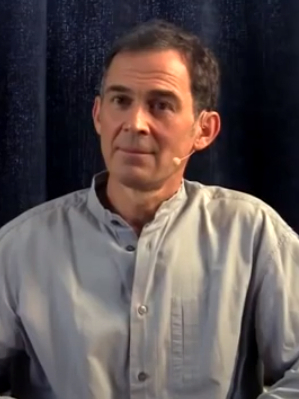
Rupert Spira
Rupert Spira
Sep 25, 2026
4 min de lecture
À regarder · 5

The question haunts anyone serious about transmitting non-dual understanding: How do you teach what cannot be taught without simply regurgitating the words of those who came before? Rupert Spira offers a disarmingly simple answer—and it hinges on something most spiritual traditions undervalue: the student's unique problem.

Most aspirants encounter non-dual teaching in one of two ways. They either receive hand-me-down doctrine, repeated with reverent fidelity across centuries, or they encounter a living teacher whose language somehow lands differently because it responds to their actual confusion. The difference is not subtle. One approach treats teaching as transmission of sealed truth; the other treats it as a living conversation that must evolve to remain alive.

Lecture · 4 sections

How Students Shape a Teacher's Language

The mechanism Spira identifies is straightforward yet often overlooked: development of authentic teaching language comes through responding to others' questions. This is not a secondary skill. It is the primary engine of the teaching itself. When someone brings a question you have never asked yourself—a corner of the forest where you never felt lost—you are forced to find new pathways, new language, new conceptual scaffolding to meet them where they actually stand. Your own experience becomes insufficient. You must think.

This is the opposite of transmission culture, where a teaching guard holds tight to the exact formulation passed down, as if deviation equals dilution. Spira notes the paradox: many traditions regard this stasis as proof of authenticity—"a seal of authenticity," he says—when in fact it risks turning teaching into dogma. The same ideas, the same practices, dispensed generation after generation like inheritance you do not dare alter. That is not preservation. That is calcification.

Why Rote Teaching Becomes Dead Religion

There is a recognizable pathology in spiritual lineages where form outlives function. The practice becomes ritual; the insight becomes creed. Language hardens into scripture. What began as a direct pointing to one's own nature becomes a conceptual maze you must navigate to prove belonging. "It prevents it becoming a dead religion," Spira says of responsive teaching—the kind that evolves because it has to, because new questions demand new answers.

The distinction he draws is crucial: the understanding does not evolve, but the teaching does. This is not relativism. Non-dual truth—the immediate, non-conceptual recognition of what you are—stands outside time and change. But the teaching of it, the language that points toward that recognition, must adapt to the mind it meets. A metaphor that unlocks one person's wall may mean nothing to another. The teacher who refuses to search for new language has abandoned the work of teaching.

The Creative Act of Meeting Another Mind

What makes this process creative is precisely its unpredictability. You do not know in advance how to formulate an answer for a problem you never had. You are pushed to improvise, to think at the edge of your own understanding. This friction, this mismatch between your experience and another's confusion, is generative. It is what keeps a teaching alive.

The implication for anyone carrying forward non-dual understanding is clear: you develop your own language by responding. Not by memorizing the language of your teachers, not by reverencing their exact words as untouchable, but by allowing their understanding to flow through your own mind as it encounters the particular texture of another person's seeking. You become a conduit, not a recording.

This places both responsibility and permission on the contemporary teacher. You are responsible for meeting your students where they actually live—their particular suffering, their particular blindness. You are permitted, even required, to find new words. And in finding them, you join a lineage not of form-keepers but of living teachers, each one forced by circumstance and care to think for themselves while seeing through the same eye.

Where to go from here

If you are drawn to share non-dual understanding in your own life—whether formally or in conversation—the question is not "How closely can I match my teacher's language?" but rather "What unique clarity can arise when I meet this person's actual confusion?" The first approach produces homage; the second produces teaching. Spira's insight offers both permission and a challenge: evolve the teaching, honor the understanding, and trust that authenticity lives in response, not repetition.

Comments

Loading the conversation…

Transcript

[0:00] One of the ways in my experience, one of

[0:02] the ways you you develop your own

[0:04] language

[0:05] is by responding to other people. When

[0:09] other people

[0:11] come to you with a

[0:12] with a question, and it may not be a

[0:15] question that you asked yourself.

[0:19] And therefore, you may not know

[0:22] that

[0:23] it you may not know immediately how to

[0:26] formulate the answer

[0:28] that will really reach the other person

[0:30] because you their problem, you never had

[0:32] that issue. You had different issues.

[0:34] But their question, you've never asked

[0:36] that question yourself. You've never

[0:39] you've never found yourself lost in that

[0:41] particular part of the wood. It it

[0:43] forces you to develop uh new pathways,

[0:46] new language, new ideas. And that that's

[0:49] very creative. That's the really

[0:51] creative aspect of the teaching. That

[0:53] what That's what prevents the teaching

[0:55] becoming a

[0:56] um

[0:57] a series of concepts and practices like

[1:00] it like it it prevents it becoming a

[1:01] dead religion.

[1:03] Mhm. Where the same ideas, the same

[1:05] practices are just given out generation

[1:08] after generation, and this is considered

[1:09] to be a seal of authenticity. No, it's

[1:12] not a

[1:13] necessarily. It could be, but it's not

[1:15] necessarily a seal of authenticity just

[1:17] to use the same language, the same

[1:19] ideas, the same practices. The teaching

[1:21] evolves.

[1:23] The the understanding doesn't evolve,

[1:26] but the teaching evolves.

[1:30] >> Mhm.

Rupert Spira
ArtistRupert Spira

British non-dual teacher and ceramic artist. His teaching, deeply influenced by Francis Lucille and the lineage of Atmananda Krishna Menon (Direct Path), is unusually clear and pre…

Voir le profilSite web
Explorer les thèmes
Non-dualityTeaching-authenticitySpiritual-evolutionDharmaLanguage-consciousness

Des questions ?

Questions fréquemment posées

By responding directly to students' unique questions—problems they may never have faced themselves. This forces them to forge new language and pathways rather than simply repeating their teacher's formulations, keeping the teaching alive and responsive.
Repetition alone is not a seal of authenticity; it can calcify teaching into dead religion. While the underlying understanding doesn't change, the language and methods should evolve to meet each generation's actual confusion and context.
It forces you to think at the edges of your own understanding, developing new conceptual pathways you would never have discovered in isolation. This creative friction prevents doctrine from becoming hollow ritual.
No. The direct, non-conceptual understanding of what you are is unchanging. What evolves is the teaching—the language, metaphors, and methods used to point toward that recognition for different minds and circumstances.
You miss the generative work of meeting each student's particular struggle. Teaching becomes transmission of concepts rather than transmission of understanding, turning the teaching into inherited doctrine rather than living knowledge.
By recognizing that honoring the understanding means letting it flow freshly through your own mind as you encounter new questions. Authenticity lies in responsive creativity, not in form-preservation.

Continuer la lecture

More from Rupert

Voir tout
Finding Your True Nature Without Leaving Your Life
Inspire

Finding Your True Nature Without Leaving Your Life

Busy life doesn't prevent self-realization. Rupert Spira reveals how five-second pauses between thoughts, emails, and patients can awaken yo…

1 min read
Teaching Non-Duality: Finding Your Own Voice
Inspire

Teaching Non-Duality: Finding Your Own Voice

How to share non-dual understanding authentically without merely copying other teachers. Rupert Spira on letting teaching evolve while keepi…

1 min read
Trusting the Gold: Awakening Your Intrinsic Goodness
Inspire

Trusting the Gold: Awakening Your Intrinsic Goodness

Discover how to awaken from the trance of unworthiness and recognize the loving awareness already living within you, beyond the stories that…

1 min read
Minimal Vocalization as Spiritual Practice: Power in Simplicity
Inspire

Minimal Vocalization as Spiritual Practice: Power in Simplicity

A brief live vocal interlude demonstrates how devotional sound—stripped to its essence—can invoke presence and transformation through pure r…

1 min read

Continue d’explorer

Poursuis ton chemin

Plus de sagesse et de rassemblements dans tout l’annuaire BrightStar.

Plus d’articles

Parcours toute la bibliothèque d’enseignements, d’entretiens et de guides.

Retour à tous les articles →

Enseignants et artistes

Découvre les lignées, les musiciens et les guides du monde conscient.

Explorer les artistes →

Trouver un événement

Kirtan, retraites, bains sonores, breathwork, festivals — bientôt près de chez toi.

Parcourir les événements →