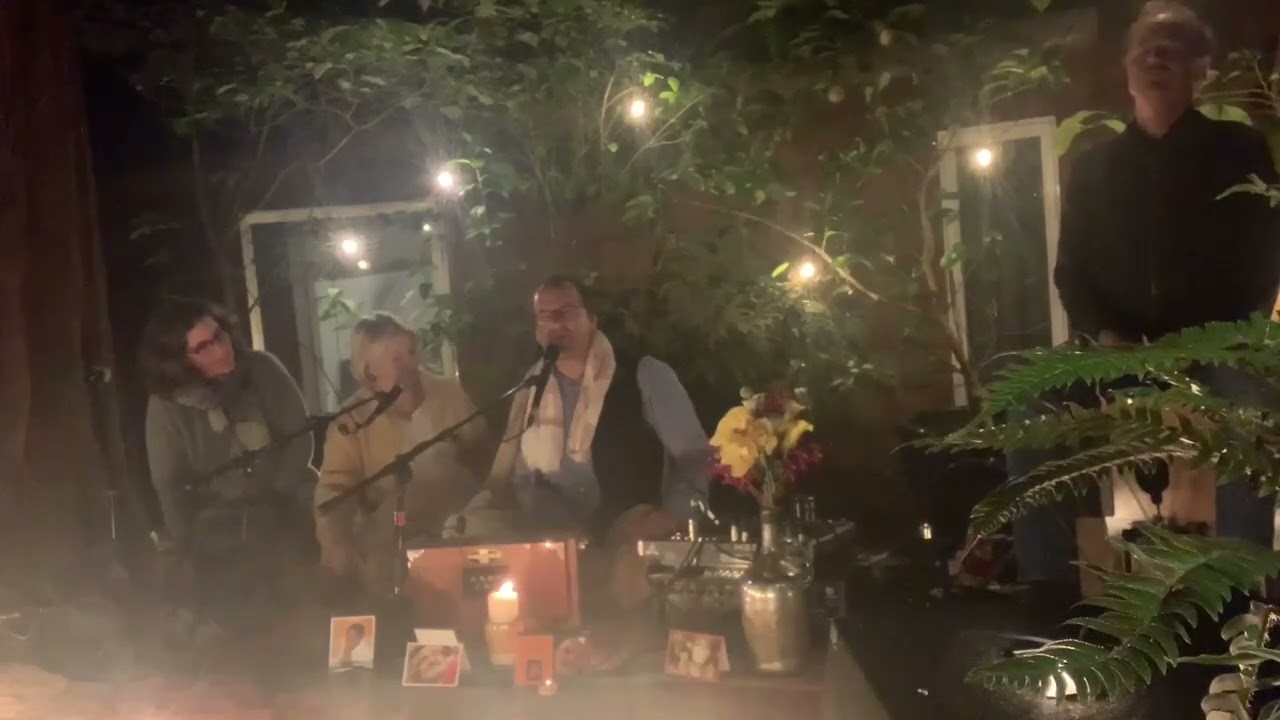
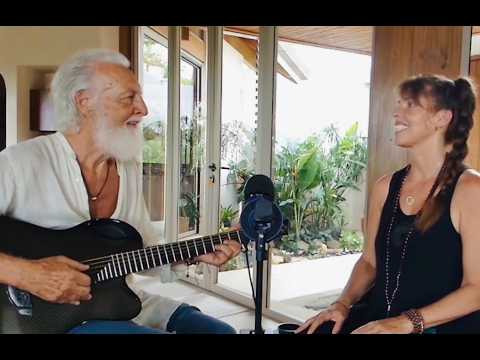
The shortest prayers sometimes carry the longest histories. Om Asatoma—a seven-syllable Sanskrit invocation drawn from the Upanishads—has traveled from ancient philosopher-poets through centuries of oral tradition into the hands of contemporary kirtan artists who sing it not as museum piece but as living practice. Ben Leinbach's 2011 recording of Om Asatoma, from the album Ben Leinbach Presents Sangha, stands as one such moment: three lineage-holders—Leinbach, Deva Premal, and Miten—meeting at the point where ancient prayer and modern devotional music become indistinguishable.
Om Asatoma is an invocation from the Bṛhadāraṇyaka Upanishad, one of the oldest texts in Hindu philosophy. The prayer is an appeal for movement from illusion to truth: asatoma sadgamaya—lead me from the unreal to the real. This is not plea for material benefit or rescue. It is a demand, voiced by the seeker, for dissolution of delusion. The mantra acknowledges that we live in a condition of fundamental confusion and calls for awakening.
In the kirtan tradition—the practice of call-and-response devotional singing—Om Asatoma functions as both anchor and invitation. The mantra is short enough to hold in a single breath yet vast enough to contain philosophy. When sung repeatedly, often over the course of minutes or hours, it becomes a vehicle for the nervous system to settle into resonance with its own deepest knowing. The repetition is not hypnotic distraction; it is clarification.
Ben Leinbach emerged as a singular figure in world music by refusing to separate the sacred from the musical. A master of Indian percussion—particularly the tabla and frame drums—Leinbach became known for his work translating kirtan and devotional music for Western audiences without diluting its spiritual content. His 2011 album Ben Leinbach Presents Sangha was conceived not as a commercial product but as an offering, an invitation into the circle (sangha is Sanskrit for community or assembly) of practice.
The album's framing is crucial. By naming it "Sangha," Leinbach signals that these recordings are not meant to be consumed passively but to activate the listener's own participation in a lineage. Sangha has always meant the gathering of seekers; to present music as sangha is to suggest that pressing play is an act of joining, of belonging to something larger than the individual listener.
Deva Premal and Miten have become perhaps the most recognizable voices of kirtan in the contemporary West. Their decades of recording and touring established kirtan not as niche spiritual music but as a legitimate global musical genre. Premal's voice—trained in Indian classical tradition but shaped by her own spiritual path—carries an authority born from years of daily practice. Miten's presence adds harmonic depth and textural warmth. Together, they lend the weight of established practice to Leinbach's vision for Sangha.
Their collaboration with Leinbach on Om Asatoma represents a convergence of three highly refined sensibilities: Leinbach's percussive vocabulary, Premal's vocal tradition, and Miten's harmonic architecture. Each artist brings not only technical mastery but demonstrated commitment to the living transmission of kirtan—the sense that these songs are tools for transformation, not entertainment.
Om Asatoma's appearance on streaming platforms and YouTube (the recording has attracted over 166,000 views on the Ben Leinbach Topic channel) raises a quiet question: what happens to a practice designed for live, communal singing when it becomes reproducible, consumable audio? The tension is not new—every spiritual technology faces this collision between accessibility and authenticity. But kirtan's particular genius is that it resists commodification. A recording of kirtan is not a substitute for kirtan; it is an invitation to it. A listener encountering Om Asatoma through Leinbach's arrangement is not receiving wisdom downloaded but encountering a doorway. Whether they step through depends entirely on what they do with it.
Om Asatoma invites deeper exploration in several directions. Readers drawn to the mantra itself might investigate the Bṛhadāraṇyaka Upanishad in translation—particularly the passages surrounding this prayer—to understand the philosophical context from which it emerged. For those interested in kirtan as practice rather than listening, many teachers offer in-person or online kirtan gatherings where the call-and-response form activates differently than in recorded formats. The work of Deva Premal and Miten extends across numerous albums and live recordings; Ben Leinbach's other percussion-driven devotional projects further explore the marriage of world percussion and Sanskrit chant. The term sangha itself—community—points toward the deeper principle: these songs are most alive when sung together.