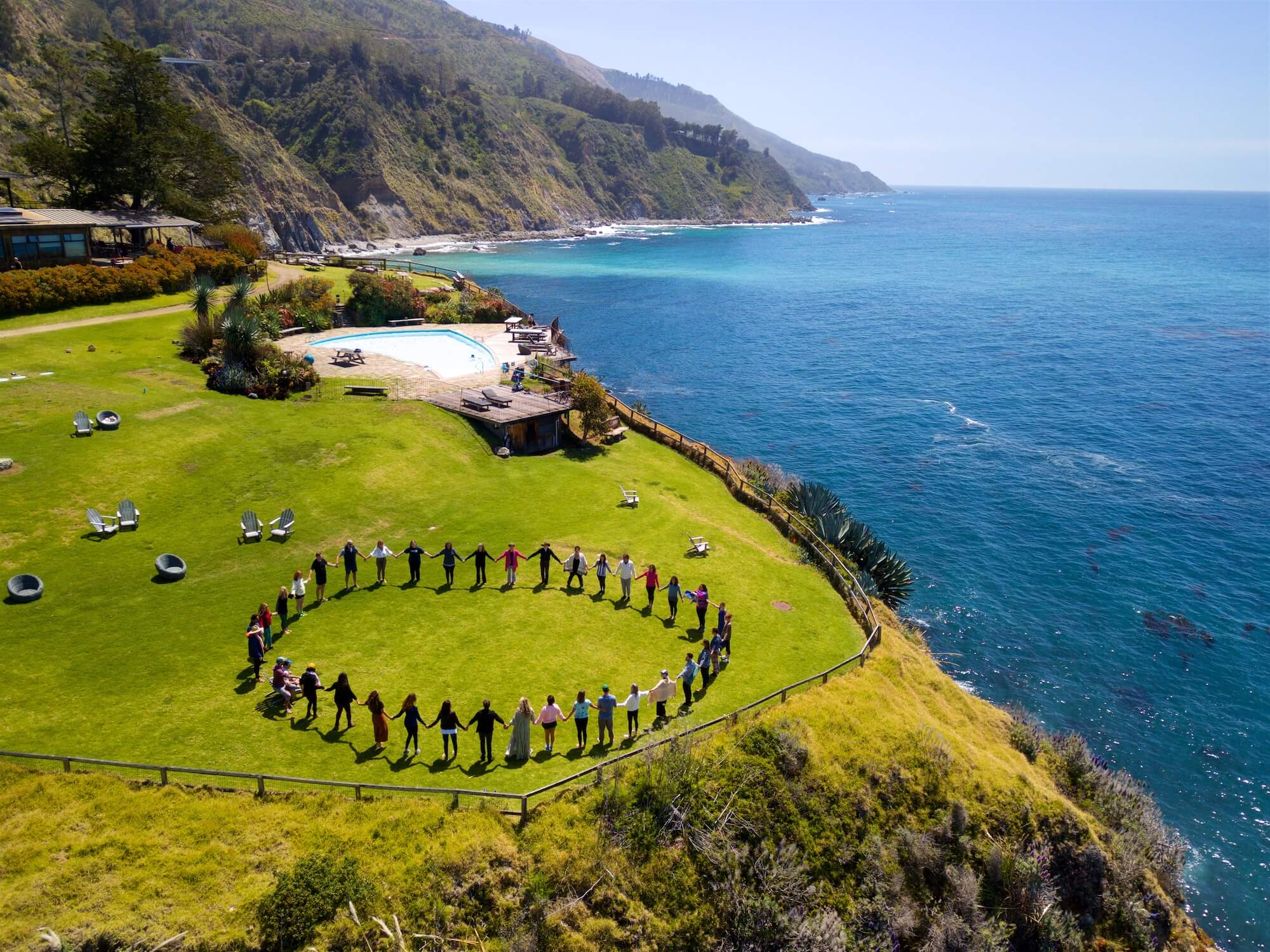
In 1962, a not-for-profit educational retreat center opened on the cliffs of Big Sur with a proposition at its core: that human evolution itself is pressing to reveal a greater life for humankind, and that new institutions must be invented to broker that exploration. Six decades later, Esalen Institute's fingerprints are visible across psychology, education, somatics, and the emerging field of consciousness studies—a legacy built not on theory alone, but on the willingness to experiment with how humans actually change.
Why Create Esalen in the First Place?
The founding vision was deceptively simple: to dramatize and enable an ongoing exploration of human potential at a scale larger than individual self-improvement. From the beginning, Esalen embodied a philosophy that everyday life—work, gardens, the body, community—could be an arena for transcendence and transformation. This wasn't abstract idealism. When the first staff arrived, they asked practical questions: How can we heat the pool with the hot springs water? How can we build our own laundry? How can we harness solar energy? These weren't just sustainability experiments; they were expressions of the same principle that animated the intellectual programs: human beings are capable of radical self-responsibility and creative problem-solving when given the right environment.
The garden expanded into a farm. The solar water heating became a working model. But the real innovation was philosophical—Esalen's signature was "this broad Embrace of our common life as a venue an arena of transcendence and transformation." Ordinary existence, properly understood, could become the material of growth.
How Did Gestalt Therapy Reshape Childhood Learning?
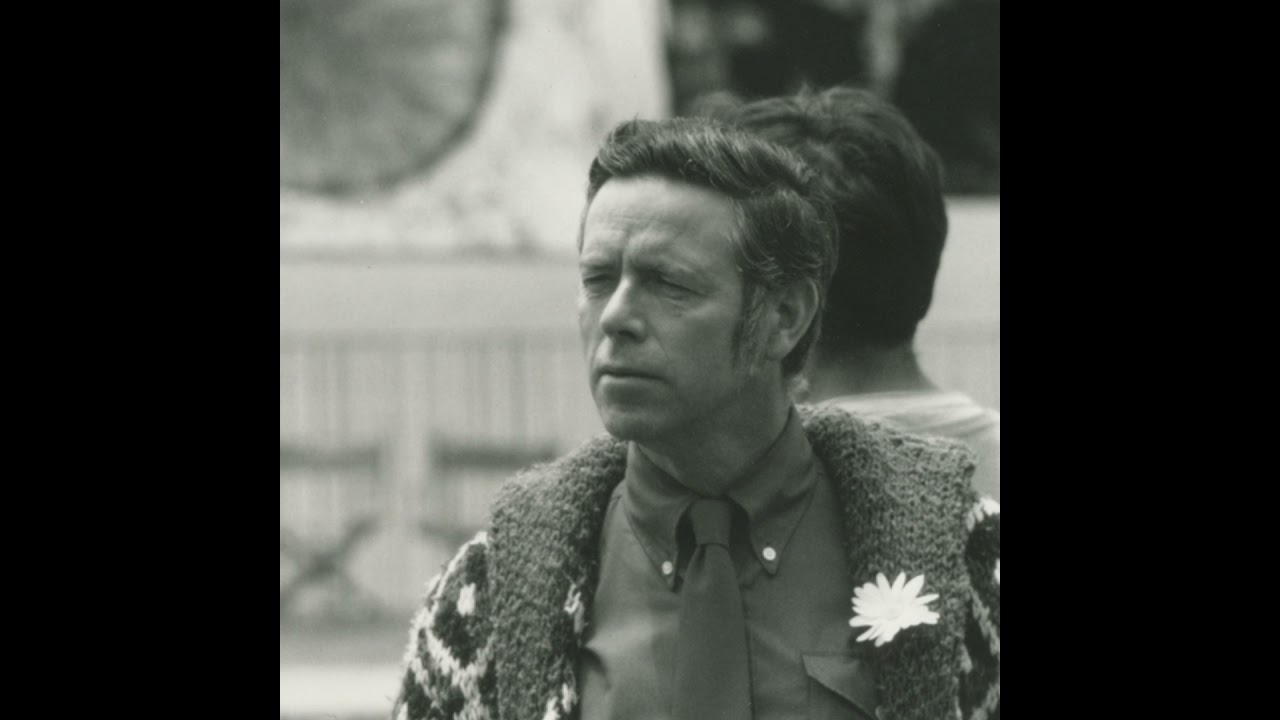
Fritz Perls arrived at Esalen with a method that was, at the time, controversial. Gestalt therapy demanded directness, presence, and an unflinching look at one's own patterns. Perls himself was described as possessed of "a true streak of clinical genius"—and as someone who "wasn't a nice guy." But his intensity worked. His programs were "very liberating," though not for everyone; his X-ray gaze and confrontational style made him a cutting-edge figure in psychological practice, even as it tested the limits of what institutions could legally offer.
The real proof came in education. Janet Letterman, hired to teach at Esalen's Gazebo school, set up an environment based on Gestalt awareness principles. The insight was radical: "There is a great deal of potential in children if we give them an environment through which they can make real contact with each other relationally as well as with the environment." Outdoors became the curriculum. Children climbed trees, played in mud and water, followed their own interests. The result was visceral—kids developed "a lot of self-trust and the ability to be spontaneous and really alive." Their bodies were robust and vital because they were outside, engaged, free to explore. This wasn't therapy; it was education reimagined as the practice of being human in a living world.
What Role Did Psychedelics Play in Consciousness Research?
In the early 1960s, some of Esalen's first workshops explored what was then called "drug induced mysticism." The world was evolving, the thinking went, and "implicit in its very substance is the divine." This was not fringe metaphysics—it was the leading edge of mid-century Western spirituality meeting rigorous inquiry.
Stanislav Grof embodied this synthesis. A classical Freudian psychoanalyst trained in Czechoslovakia, Grof was among the young medical students given LSD to study its effects. Instead of imitating psychosis, as the research intended, he encountered the divine. "He sees God basically and it just flips his world," as the account goes. He became fascinated by LSD research, and when invited to Esalen, he stayed for 14 years.
But psychedelics became illegal. Grof faced a creative problem: How could he help people access altered states of consciousness without substances? His solution was holotropic breathwork—faster, intentional breathing combined with music, designed to bring "material out of the unconscious to Consciousness." It wasn't elegant theory. "Initially people were not very happy when I was talking about the research," Grof recalls. "They said, well, it's great to hear about these fantastic experiences but can't we do something? Do you have a little stash on the side?" He didn't. So he began playing with breath and rhythm on mats, letting people breathe, then talk about their experiences afterward. "I just thought, yeah, well you know this is interesting stuff."
Holotropic breathwork emerged not from a laboratory design but from constraints and improvisation—the classic Esalen formula. A practice born of necessity became a tool used globally for decades.
How Did Esalen Become a Living Laboratory?
What united these seemingly disparate experiments—solar heating, Gestalt education, breath-induced altered states—was a shared operating principle. Esalen invested in what it called "extraordinary programs," bringing in academics and scientists focused on "the topics that we think are the most important in the entire world." But the institute's genius lay in its refusal to segregate theory from practice, research from living.
One participant reflected: "In retrospect I realized how lucky I was to be exposed to these Master Teachers in the way that I was." That luck was built in. Esalen created conditions where rigorous inquiry and direct experience could happen in the same place, often in the same moment. This was neither pure academia nor pure spirituality—it was the uncommon middle ground where ideas could be tested against how human beings actually transform.
What Is Esalen's Legacy Now?
Six decades in, Esalen faces a question every institution must answer: "What do we do in our second six years? How do we keep adapting?" The underlying conviction remains unchanged: "Deep down this world wants to deliver a higher and better Humanity." But the forms must evolve.
The institute's vision now focuses on the frontier it has always occupied: "The future is filled with new states of consciousness and we are involved in that." From psychedelics-assisted research to somatic education to the emerging intersection of neuroscience and contemplative practice, Esalen continues to ask the questions that mainstream institutions have no ready answers for—and to create spaces where humans can discover their own.
The fundamental claim remains as bold as it was in 1962: "Humans are at The Cutting Edge now of The evolutionary Adventure and we are pressing often struggling sometimes celebrating This Joy and power that's latent in US." Esalen's six decades suggest that when you create an environment where self-responsibility, direct experience, and rigorous inquiry can flourish together, human beings reveal capacities that institutions—and they themselves—didn't know were possible.
Where to go from here
Explore Esalen's current programming and visiting opportunities at esalen.org. If you're interested in the history of consciousness research, Stanislav Grof's work on holotropic breathwork remains widely available through his foundation and training programs. For educators curious about Gestalt-based learning, Janet Letterman's model at Gazebo school offers a documented case study in embodied, relational pedagogy. The institute's archive of workshops, retreats, and seminars reflects six decades of experimentation—a living record of what becomes possible when an institution commits to taking human potential seriously.