SportsCampFinder

Browse All Camps

Find the perfect camp for your athlete

camps

Basketball Camps
Soccer Camps
Baseball Camps
Football Camps
Volleyball Camps
Lacrosse Camps
Multi-Sport Camps
Elite Training
Overnight Camps
Day Camps
Popular Destinations
BaliSedonaLos AngelesCosta RicaNew YorkSan FranciscoAustinMiamiJoshua TreeTulum
View All CategoriesView All Destinations

Explore All Features

Powerful tools to grow your events

Platform Features

Smart Dynamic Pricing
Ticket Categories
Assigned Seating
Abandoned Cart Recovery
Visitor Recovery
Donations & Sliding Scale
Affiliate Engine
Ticket Scanner
Coupon Codes
Custom Questions
Ticket Sharing
Upsells & Add-ons
Analytics & Reporting
Email Sequences
Waitlist / Notify / Remind
People & Places
Camp OrganizersCamp FacilitiesKnowledge BaseInspiration
View All FeaturesAbout Us
PricingBlog
Language
Saved events
Browse All Events

camps

Basketball CampsSoccer CampsBaseball CampsFootball CampsVolleyball CampsLacrosse CampsMulti-Sport CampsElite Training

Popular Destinations

BaliSedonaLos AngelesCosta RicaNew YorkSan Francisco

People & Places

Camp OrganizersCamp FacilitiesKnowledge BaseInspiration

Platform Features

Smart Dynamic PricingTicket CategoriesAssigned SeatingAbandoned Cart RecoveryVisitor RecoveryDonations & Sliding ScaleAffiliate EngineTicket ScannerCoupon CodesCustom QuestionsTicket SharingUpsells & Add-onsAnalytics & ReportingEmail SequencesWaitlist / Notify / Remind
View All FeaturesAbout Us
PricingBlog
Log inParents & athletesCamp directors
  • Browse all camps
  • Basketball Camps
  • Soccer Camps
  • Baseball Camps
  • Football Camps
  • Volleyball Camps
  • Lacrosse Camps
  • Multi-Sport Camps
  • Elite Training
  • All sports →
  • Orlando
  • Los Angeles
  • New York Metro
  • Dallas / Fort Worth
  • Chicago
  • Phoenix / Scottsdale
  • Atlanta
  • Denver
  • Seattle
  • Boston
  • Houston
  • Philadelphia
  • San Diego
  • Minneapolis / St. Paul
  • All Cities →
  • List your camp
  • Camp director dashboard
  • Pricing
  • Coaches & academies
  • Online registration & payments
  • Waivers & medical forms
  • Check-in app
  • Family messaging
  • Waitlist & notify
  • Camp marketing
  • Reports
  • All features →
  • About SportsCampFinder
  • Camp guides
  • Help Center
  • Contact
  • Careers
  • Press
  • Terms of Service
  • Privacy Policy

Camps

  • Browse all camps
  • Basketball Camps
  • Soccer Camps
  • Baseball Camps
  • Football Camps
  • Volleyball Camps
  • Lacrosse Camps
  • Multi-Sport Camps
  • Elite Training
  • All sports →

Destinations

  • Orlando
  • Los Angeles
  • New York Metro
  • Dallas / Fort Worth
  • Chicago
  • Phoenix / Scottsdale
  • Atlanta
  • Denver
  • Seattle
  • Boston
  • Houston
  • Philadelphia
  • San Diego
  • Minneapolis / St. Paul
  • All Cities →

For Camp directors

  • List your camp
  • Camp director dashboard
  • Pricing
  • Coaches & academies

Features

  • Online registration & payments
  • Waivers & medical forms
  • Check-in app
  • Family messaging
  • Waitlist & notify
  • Camp marketing
  • Reports
  • All features →

Company

  • About SportsCampFinder
  • Camp guides
  • Help Center
  • Contact
  • Careers
  • Press
  • Terms of Service
  • Privacy Policy
SportsCampFinder
© 2026 SportsCampFinder. All rights reserved.
Inspire

15-Minute Morning Yoga Flow:Wake Up with Strength

Boho Beautiful
Boho Beautiful
Sep 21, 2026
7 min read
Watch · 8

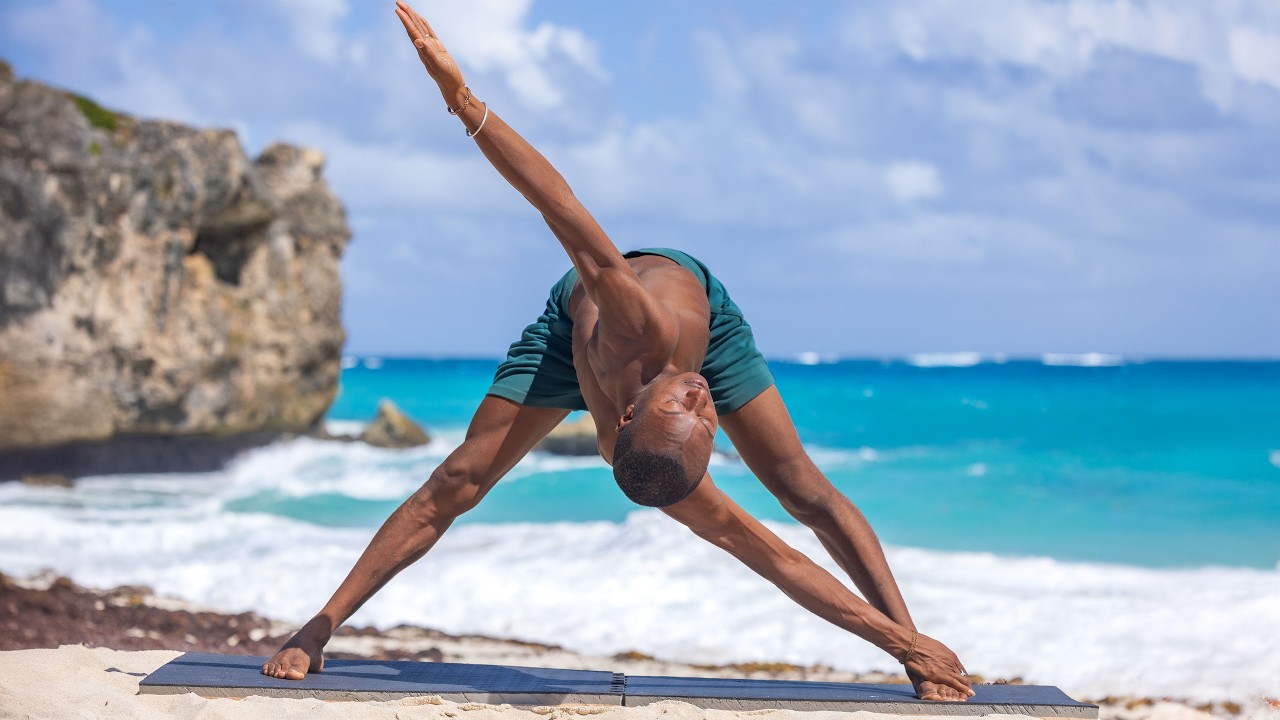
A bright sunny morning on the beach in Mexico becomes the perfect backdrop for a deliberate awakening. This 15-minute morning yoga flow is built on a simple but transformative idea: that the first 15 minutes of your day can reshape how you move through it. The practice weaves together mindful breath work, shoulder openers, core strengthening, and foundational preparation for more advanced inversions like forearm stand—all in a sequence designed to meet you exactly where you are, whether you're a beginner rolling out a mat for the first time or an experienced practitioner refining your craft.

Read · 7 sections

How Morning Yoga Wakes Up the Body

The class opens in child's pose, a grounding position that immediately invites you to settle the breath and signal to your nervous system that this is intentional time. From there, the sequence progresses with threading movements—where the arms weave underneath the torso, creating gentle spinal twists and shoulder releases. These aren't flashy poses; they're the body's way of saying "good morning" to itself. By the time you reach hands and knees, your shoulders have already begun to open and your spine has mobilized through its natural ranges of motion.

The practice then introduces puppy pose, which the instructor describes as a "big opener for the shoulders." Rather than forcing deep stretches early, this pose allows the chest to lower while the hips stay grounded, creating space across the shoulders and upper back. For those with additional flexibility, the variation of placing the chin on the ground deepens the stretch further—a reminder that every version of the pose is valid. This builds the accessibility principle that runs through the entire flow: there is no one "correct" version, only the version that serves your body on this particular morning.

Building Strength Through Dolphin Pose

The heart of the practice centers on dolphin pose, a foundational position that bridges accessible yoga and preparation for inversions like forearm stand (Pincha Mayurasana). By lowering the elbows to the floor while keeping the hips lifted, you create stability through the shoulders and engage the core in a way that ground-based arm balances demand. The sequence moves fluidly between dolphin pose and high plank, creating a wave of strengthening work that activates both the upper body and the stabilizing muscles of the trunk.

What makes this progression effective is its rhythm. Rather than holding static poses for long counts, the flow asks you to move with intention between forms: forward into low plank, back into dolphin, up to high plank, and back again. This dynamic approach builds functional strength and teaches the body how to distribute weight and energy—skills that become essential when you eventually approach forearm stand. The breath anchors each transition, creating a meditation in motion rather than a grinding strength workout.

Balancing Challenge with Accessibility

Side plank variations and three-legged dog pose introduce balance challenges midway through the class. Here, the instructor makes clear that lifting the top leg is an option, not a requirement. This differentiation—between a foundational version and an advanced variation—appears throughout the practice and reflects a philosophy that strength isn't about how far you can go, but about how intelligently you can meet your body's actual capacity on any given day.

The fallen triangle position (also called thread the needle in a reclined position) offers another moment of openness. By lowering the right hip while the left leg stretches overhead, you're simultaneously opening the hip flexors, opening the chest, and discovering stability in an asymmetrical shape. These moments of asymmetry are where real balance and proprioception develop—they're the poses that teach your nervous system, not just your muscles.

Pigeon Pose and Deep Hip Release

Pigeon pose arrives midway and toward the end of the sequence, offering a profound hip opener that complements the shoulder and core work. The first repetition is treated as an exploratory moment: slide the leg back, open the chest, then fold forward slowly, inviting the breath to do the work rather than forcing depth. The instructor explicitly invites you to "notice the sensations you have in your body right now"—a cue to move from mechanical execution toward embodied awareness.

The second pigeon pose comes after an intense sequence of three-legged work, side plank, and high-to-low plank transitions. By this point in the practice, the hips are already warm and the nervous system has been engaged. The fold becomes richer, informed by all the movement that came before it. This is how a well-structured yoga sequence works: each pose prepares you for what comes next, and repetition at different stages of the practice creates different depths of sensation and understanding.

The Final Transition to Rest

In the final minutes, the practice returns to child's pose and offers the option to move into shavasana (final rest). The instructor acknowledges that some practitioners may want to continue resting in child's pose for as long as they need, while others may prefer to lie flat. This honoring of choice—whether active or receptive—reinforces that the practice is designed around listening to yourself rather than performing the "right" way.

As you lie in final rest, the cue comes to "allow the body to settle here." After 15 minutes of intentional movement, breath work, and activation, this settling is earned. The practice has literally woken up your body—engaged your nervous system, warmed your muscles, opened your joints—and now the invitation is to rest inside that awakeness, carrying the sense of aliveness and intention into whatever comes next in your day.

What This Practice Is Really Teaching

On the surface, this is a 15-minute morning yoga flow. But the deeper architecture is teaching you how to move with awareness, how to build strength without force, and how to honor your body's actual capacity in the present moment. Every time you return to this practice—and the best way to understand morning yoga is to treat it as a daily ritual, not a one-time event—your nervous system will recognize the sequence and begin to settle more quickly into that state of aware presence.

The emphasis on forearm stand preparation isn't incidental; it signals that this practice respects your potential. You're not being asked to simply stretch or relax. You're being invited into a sequence that both grounds you in the present and scaffolds toward deeper work. For complete beginners, the foundational poses and accessible variations make the practice genuinely available. For experienced practitioners, the opportunity to play with balance work in dolphin pose and refine the alignment patterns that lead to inversions makes the sequence meaningful.

Starting your day with this kind of movement—intentional, intelligent, and rooted in the actual sensations of your body—creates a different relationship with your day. The instruction to "give yourself these 15 minutes to awaken your body, embrace your strength, and start your day feeling amazing" isn't motivational rhetoric. It's an invitation to reclaim the morning as time that belongs entirely to you, shaped by your breath and your choice to show up on your mat.

Where to go from here

If this morning flow resonates with you, the practice deepens with repetition. The most powerful way forward is to commit to rolling out your mat for these 15 minutes regularly—not as a box to check, but as a way of honoring yourself at the start of each day. As your body becomes familiar with the sequence, you'll notice subtleties you missed on the first attempt: the precise angle your shoulders need to find true dolphin strength, the specific breath pattern that lets you fold deeper in pigeon, the moment when balance feels effortless in three-legged dog. That refinement is where the real transformation lives. You might also explore longer flows that extend this work, or dedicate focused practice to forearm stand with a qualified teacher, building on the shoulder and core foundations this sequence establishes.

["morning-yoga", "full-body-flow", "shoulder-opening", "core-strength", "balance-work", "yoga-practice", "breath-awareness", "yoga-for-beginners"]

Transcript

[0:16] [music]

[0:23] [music]

[0:32] Hello and welcome to this 15inute

[0:35] morning yoga flow. Today we're

[0:37] practicing from the beautiful Playa

[0:39] Pasquarito here in Mexico. It's a bright

[0:43] sunny [music] morning, the perfect

[0:45] setting to wake up the body and begin

[0:47] the day with intention and movement.

[0:52] In this class, we'll focus on opening

[0:55] the shoulders, building [music]

[0:57] strength, and improving balance as we

[0:59] prepare the body or forearm stand or

[1:02] pinchayasana. [music]

[1:04] We'll explore foundational poses like

[1:06] dolphin pose, creating stability through

[1:09] the shoulders and the core. This

[1:12] practice is for everyone. Whether you're

[1:15] just beginning your yoga journey or

[1:17] working towards a strong, confident

[1:19] forearm stand, I invite you to meet

[1:22] yourself exactly where you are today.

[1:26] Always, always listen to your body, move

[1:30] with your breath, and remember that

[1:32] every variation is welcome.

[1:36] Let's begin.

[1:42] >> [music]

[1:51] [music]

[2:05] >> Welcome to [music] this 15-minute low

[2:08] yoga class. Thank you for being here.

[2:10] [music] We're going to start today in

[2:12] child's pose. Relax your hands back.

[2:15] Keep [music] your knees together. Lower

[2:17] the chest into your thighs. And release

[2:19] the head to the mat. Close your eyes and

[2:22] allow the [music] breath to settle.

[2:25] Slowly reach your arms forward and

[2:28] spread your fingers wide.

[2:31] Begin to press the heel of [music] the

[2:33] hands down and forward to press the hips

[2:35] back into the heels.

[2:41] and begin to come [music] up. Slide your

[2:45] right arm underneath your left armpit

[2:47] and to thread the needle [music] and

[2:49] lift your left fingertips off the mat.

[2:54] [music]

[3:00] Slowly come back to center. Let's do the

[3:02] other side. Thread the needle. Left arm

[3:05] [music] goes underneath the right

[3:06] armpit. Reach it far. Stretch your right

[3:09] arm forward. Lift the heel of the hand

[3:11] up. Place [music] your fingertips on the

[3:13] mat and reach forward.

[3:16] [music]

[3:17] And find hands and knees.

[3:22] [music]

[3:24] Reach the right arm up. And let's do

[3:27] thread the needle again. This time the

[3:29] hips are out [music] of the heels. Reach

[3:32] the left arm forward. Fingertips on the

[3:34] ground. [music]

[3:38] Maybe you can even find a gentle twist

[3:41] [music] here.

[3:43] Press the left hand down close to your

[3:45] [music] face. Reach the right arm up and

[3:48] place it back down. Second side. [music]

[3:51] Left arm reaches up. Thread the needle.

[3:54] Head down. Left [music] arm to the top

[3:57] of the mat.

[4:02] [music]

[4:06] Get ready to transition back to [music]

[4:08] center. Place the right hand close to

[4:10] your face. Push the ground away from

[4:12] you. Hands and [music] knees. Nice.

[4:16] Reach both arms forward and press

[4:18] [music] the chest down. Imagine you want

[4:20] to bring the forehead to the mat. This

[4:23] is puppy pose.

[4:27] Big opener for the shoulders. And if

[4:30] you're feeling extra flexible today,

[4:32] place the chin on the ground.

[4:38] [music] Now we're going to press the

[4:40] elbows to the floor. Keep your elbows on

[4:43] the ground and lift the hips up into

[4:46] dolphin pose. Extend the legs. [music]

[4:48] Push the chest back towards the thighs.

[4:50] Now shift the weight forward into a low

[4:53] plank. And then hips go up. [music]

[4:55] Press back. Go forward. Low plank. and

[4:59] [music] dolphin. One more time. Low

[5:02] plank and dolphin pose. Press the chest

[5:06] back to the thighs. Once [music] more,

[5:09] go forward into high plank.

[5:12] Let's transition into a side plank.

[5:15] Right forearm stays on the ground. Left

[5:17] [music] arm lifts.

[5:20] Stack the feet on top of one another.

[5:22] And if you're ready, lift the right leg

[5:25] up. Step that foot in front of you.

[5:29] Lower the hip [music]

[5:30] and push the knee out.

[5:37] Now, as the hip stays on the ground,

[5:39] half circle the [music] left arm back.

[5:41] Sit on both glutes. Grab a hold of your

[5:44] left knee and twist. [music] Left

[5:46] fingertips go back. Gaze to the back of

[5:49] your mat.

[5:52] [music]

[5:54] From here, half circle the right arm to

[5:57] the top of the mat. Right leg straight.

[5:59] Press the floor down with the foot and

[6:02] [music] lift your hips up. Both hands

[6:04] come down to the ground. Take the left

[6:07] knee to the chest and extend [music] the

[6:10] left leg over to the right side. Right

[6:12] arm lifts into fallen triangle.

[6:15] Slowly right hand comes down and lower

[6:18] the hips.

[6:20] Push the ground away from you. Lift the

[6:22] hips. Lift the left leg up and back.

[6:25] Three-legged dog.

[6:29] Now, see if you can lower your elbows

[6:31] down to the ground one [music] at a

[6:34] time. Three-legged dolphin pose.

[6:40] [music] Extend the arms. Lift up again.

[6:43] Three-legged dog. With control, step the

[6:46] left leg forward. Reach your arms up

[6:48] into high plank. Inhale. Open [music]

[6:50] the chest.

[6:54] And exhale. [music] We'll reach the arms

[6:56] back. Interlace the fingers. Reach back

[6:59] with your knuckles. The crown of the

[7:02] head wants to go forward. Lower the

[7:04] right arm down and lift the left arm

[7:06] [music] up into a twist.

[7:10] Take the weight off of the left foot and

[7:12] place that [music] left foot on the

[7:14] inside of your right thigh. Push up with

[7:16] the hips and with the right hand

[7:20] with control. Left [music] hand goes

[7:21] down and bring the left leg into pigeon

[7:24] pose. [music]

[7:27] Slide the right leg back. Inhale. Open

[7:29] up the chest.

[7:32] And as you exhale, slowly bend forward

[7:34] to the top of your mat.

[7:37] Relax the head down fully.

[7:40] Take a moment to breathe here and notice

[7:43] how you feel.

[7:46] Notice the [music] sensations you have

[7:47] in your body right now.

[7:52] >> [music]

[7:54] >> Take one more deep breath in here.

[7:58] [music]

[8:00] And as you exhale, bring your torso back

[8:02] to center. Tuck the back toes and step

[8:06] back into downward-facing dog. Come back

[8:11] down into your forearms. Low plank.

[8:13] Maybe shift your [music] feet back. And

[8:15] as you exhale, dolphin pose. Lift the

[8:18] hips up. Exhale. Hips [music] low. High

[8:21] plank and dolphin.

[8:24] High plank.

[8:27] Dolphin. One more. High plank. Now take

[8:30] the weight over to the left forearm.

[8:32] Lift your right arm [music] up

[8:36] with so much control. Lift the right leg

[8:38] up and step the [music] foot in front of

[8:40] your thigh. Lower the hip to the ground

[8:42] and push the right knee [music] away

[8:44] from you.

[8:48] Press the left hand [music] down. Sit on

[8:51] both glutes. Bend the left knee. Hug

[8:54] your right knee with your left forearm.

[8:56] And twist back.

[8:59] Close your eyes. Deep [music] inhale.

[9:02] And as you exhale, twist deeper.

[9:07] Release. [music] Left hand travels to

[9:09] the top of the mat. Extend the left leg.

[9:12] Hips go up. Right arm goes up. You can

[9:15] keep the right foot on the floor for

[9:17] now.

[9:18] And then lift [music] the hips higher.

[9:20] Shift the weight to both hands. Bend the

[9:23] knee [music] and place the left foot

[9:25] towards the left side of your mat into

[9:28] fallen triangle.

[9:31] Slowly both hands come down. Lower the

[9:33] right hip to the floor and feel the

[9:36] stretch [music] on the left leg.

[9:39] Push up with the hands. Lift the right

[9:41] leg up into three-legged dog.

[9:45] and slowly lower the forearms [music]

[9:48] down to the ground.

[9:52] Press up again into your hands.

[9:54] Three-legged dog.

[9:56] And slowly, when you're ready, step the

[9:58] right foot [music] forward in between

[10:00] the hands. Inhale, arms reach up

[10:03] overhead.

[10:05] Exhale, hands interlace behind your back

[10:08] and fold.

[10:10] Keep the left heel lifted.

[10:13] >> [music]

[10:14] >> Left hand goes down. Right arm goes up.

[10:16] Lower the left heel to the floor. Take

[10:19] the weight [music] off of the right foot

[10:22] and place that foot on the inside of

[10:23] your left thigh.

[10:26] Both hands come down. Transition into

[10:29] [music] your pige pose. Inhale. Open the

[10:34] chest.

[10:35] Exhale. [music] Go forward.

[10:41] Slow and deep release.

[10:50] One more breath here.

[10:54] And when you're ready,

[10:56] start coming up with your torso.

[11:00] Slow.

[11:03] Press the hands down. Tuck the back

[11:05] toes. Three-legged down dog with the

[11:08] right leg up.

[11:12] and place it down on the mat.

[11:15] Come down to the forearms. Lower the

[11:17] knees. Turn your palms up and then place

[11:20] them back down. Dolphin pose. Lift the

[11:24] hips and shift the weight over to your

[11:27] forearms. See if you can maybe push up

[11:30] with your right foot and find a little

[11:34] bit of balance here. [music]

[11:36] You can hop up and down and up and down

[11:41] or play with the legs. Maybe open one

[11:45] forward, [music] one back.

[11:47] And when you're ready, just come down

[11:50] into your child's pose with the arms

[11:53] [music] towards the back of the mat.

[11:56] Relax your head. Relax [music] your

[11:59] shoulders.

[12:00] Relax your neck.

[12:05] Now you can stay here [music] for as

[12:08] long as you like and rest or if you're

[12:11] feeling more comfortable laying [music]

[12:14] down, come into your shavasana position.

[12:18] Relax the legs on the floor. Relax

[12:21] [music] your arms to the sides. Close

[12:24] your eyes.

[12:37] Take a deep breath into the nose. And as

[12:40] you exhale, open the mouth.

[12:43] Slide it out.

[12:50] Allow the body [music] to settle here.

[12:55] For a few seconds, [music]

[12:56] remain in complete silence.

[13:05] [music]

[13:20] >> [music]

[13:28] [music]

[13:36] >> Heat. Heat. [music]

[13:45] [music]

[13:51] [music]

[13:58] [music]

[14:12] >> [music]

[14:28] [music]

[14:38] [music]

[14:44] [music]

[14:51] >> Woo!

[14:57] >> [music]

[15:02] [music]

[15:10] [music]

[15:18] >> Please make this shabasana longer at

[15:21] least 3 minutes.

[15:25] When you're ready, bring your awareness

[15:27] back to your body.

[15:30] Begin to do gentle movements with your

[15:32] toes and your fingers.

[15:39] Maybe stretch. Imagine you just woke up.

[15:43] Hug the knees to the chest and roll over

[15:46] to one side.

[15:51] Slowly lifting up into [music] your

[15:53] seated position.

[15:56] Hands to prayer. Bring your forehead

[15:58] down [music] gently as a sign of being

[16:00] grateful for this time that you decided

[16:03] to take for [music] yourself. Namaste.

[16:15] [music]

[16:19] >> [music]

[16:24] [music]

Boho Beautiful
ArtistBoho Beautiful

Boho Beautiful is a yoga, wellness, and lifestyle brand founded by Juliana Soerio and Nikko Santo that creates accessible digital content bridging movement practice, mindfulness, a…

View profileWebsite

Got Questions?

Frequently Asked Questions

Practicing 15 minutes every morning creates the most transformative results, as your nervous system becomes familiar with the sequence and settles into aware presence more readily each time. Consistency matters more than duration—a daily 15-minute practice will create deeper change than an occasional longer session.
Yes. The sequence is explicitly designed to meet you exactly where you are, with variations offered for every pose. The instructor emphasizes that every variation is welcome and encourages you to listen to your body rather than force depth.
Dolphin pose is a foundational inversion where the elbows are lowered to the floor with hips lifted, creating stability through the shoulders and engaging the core. It's essential preparation for forearm stand and other arm balances, teaching your body how to distribute weight safely.
Starting with intentional movement, breath work, and body awareness signals to your nervous system that you're present and capable. This creates a foundation of calm and strength that carries through the rest of your day, helping you approach challenges with more ease.
This sequence emphasizes shoulder opening, core engagement, and balance work—all foundational elements for forearm stand. Focus on building stability in dolphin pose and understanding how to shift weight forward and back, which are core skills for the inversion.
Morning practice awakens the nervous system and sets a positive intention for the day ahead, while evening practice tends toward relaxation and restoration. This particular flow is designed specifically for morning, when your body benefits from activation and your mind from clarity before daily demands begin.
Repetition is key—as your body becomes familiar with the sequence, subtle refinements and deeper sensations emerge. You might also explore longer flows that extend this foundational work, or seek guided instruction on specific poses like forearm stand to build on these foundations.

Continue Reading

More from Boho

View All
30-Minute Yoga Flow to Release Tension and Reset Your Energy
Inspire

30-Minute Yoga Flow to Release Tension and Reset Your Energy

A full-body yoga practice designed to help you release stress and negative energy, creating space for a fresh start and inner peace.…

1 min read
Upper Body Yoga Flow: Open Your Chest, Shoulders & Neck
Inspire

Upper Body Yoga Flow: Open Your Chest, Shoulders & Neck

A 20-minute guided yoga practice designed to release tension, improve flexibility, and create spaciousness through the shoulders, neck, ches…

1 min read
Snatam Kaur's "Ray Man Eh Bhid Jog Kamao": Sacred Sound and Inner Transformation
Inspire

Snatam Kaur's "Ray Man Eh Bhid Jog Kamao": Sacred Sound and Inner Transformation

Snatam Kaur's bhajan bridges devotional Sikh kirtan and contemporary meditation music, using sacred mantra to guide listeners toward release…

1 min read
Build Relationships on Purpose, Not Chemistry
Inspire

Build Relationships on Purpose, Not Chemistry

Krishna-centered relationships transform from transactions into pilgrimages. Discover how shared spiritual purpose creates lasting love.…

1 min read

Keep exploring

Continue your journey

More wisdom and gatherings from across the BrightStar directory.

More Articles

Browse the full library of teachings, interviews, and guides.

Back to all articles →

Teachers & Artists

Explore the lineages, musicians, and guides of the conscious world.

Explore artists →

Find an Event

Kirtan, retreats, sound baths, breathwork, festivals — happening soon.

Browse events →