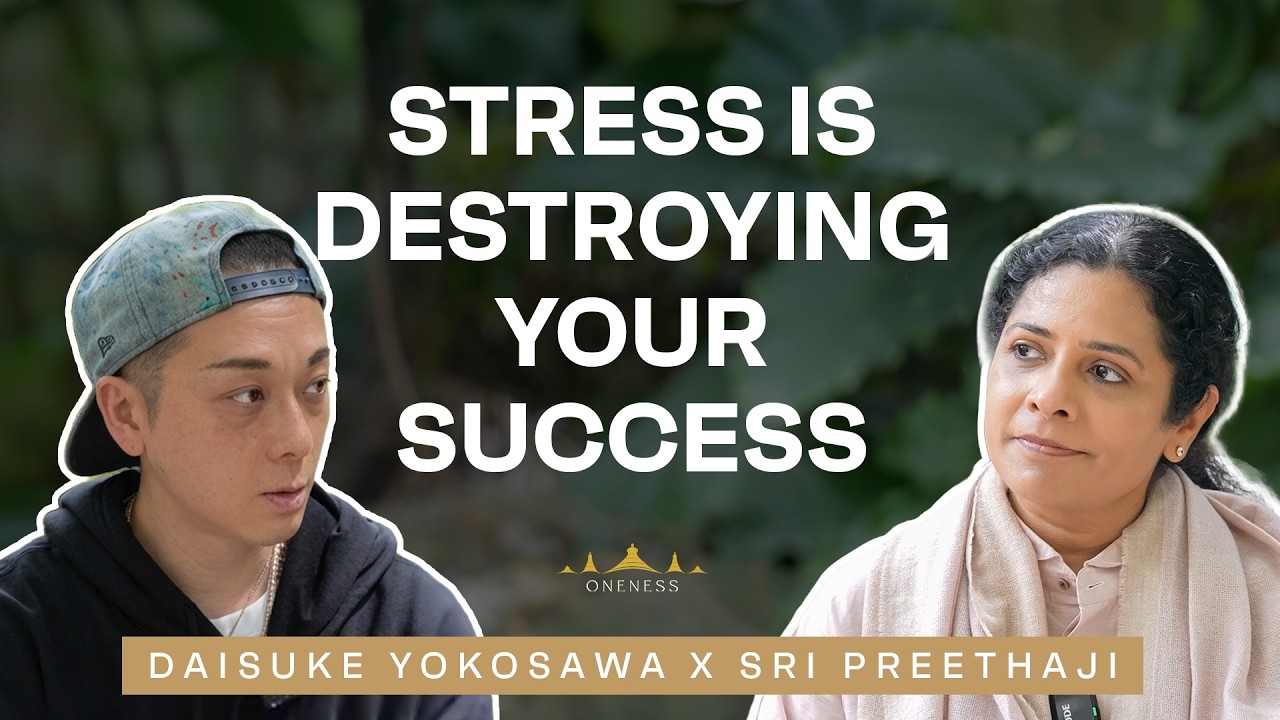
This brief introduction presents Sri Preethaji and Sri Krishnaji, the founding teachers of the Oneness Movement, a contemporary spiritual organization focused on awakening human consciousness and facilitating direct experience of unity. The video appears designed as a foundational overview of who these teachers are and what their movement represents, serving as an entry point for those encountering their work for the first time.
Who Are Sri Preethaji and Sri Krishnaji?
Sri Preethaji and Sri Krishnaji are spiritual teachers and the primary voices of the Oneness Movement, a global organization dedicated to consciousness work and awakening. Operating through platforms like theonenessmovement.org and EKAM (their residential programs and sanctuary), they have built a following around teachings that emphasize direct experience of non-dual consciousness and the interconnection of all beings.
The pair function as complementary teachers within the movement, bringing integrated perspectives to their work with students. Their teachings are rooted in exploring the nature of consciousness, the dissolution of the separate self, and the possibility of living from a state of unified awareness. Unlike traditional guru-disciple models where a single teacher holds primary authority, their partnership suggests a teaching approach that integrates different vantage points or temperaments into a cohesive framework.
What Is the Oneness Movement's Core Focus?
The Oneness Movement centers on the premise that human consciousness can be awakened to perceive the fundamental unity underlying apparent separation. Rather than functioning as a religious organization with dogma or doctrine, the movement emphasizes direct experience—the notion that individuals can personally encounter non-dual awareness and the interconnected nature of reality.
This approach reflects contemporary spirituality's emphasis on experiential knowledge over belief systems. The movement positions itself as committed to facilitating shifts in consciousness that allow individuals to live from greater coherence, presence, and understanding of their fundamental nature. The existence of dedicated facilities like EKAM suggests that the movement combines teaching, retreat programs, and ongoing community for practitioners.
How Do Sri Preethaji and Sri Krishnaji Approach Teaching?
Based on the presence of formal organization, published content, and structured programs, their teaching methodology appears to blend traditional wisdom with contemporary accessibility. They have created infrastructure—websites, video content, residential programs—that extends beyond individual satsang or one-on-one guidance, suggesting an intention to scale their work and reach broader audiences.
The production of introductory videos like this one indicates a pedagogical commitment to meeting seekers where they are, providing clear entry points for those new to their teachings. This approach acknowledges that spiritual work in the modern context requires making teachings accessible without diluting their depth.
What Role Does EKAM Play in Their Work?
EKAM functions as the residential sanctuary and program center for the Oneness Movement's work. The existence of a dedicated physical space for intensive retreats and community suggests that their teaching model values direct transmission, in-person encounter, and immersive experiences alongside digital reach. EKAM likely serves multiple functions: as a training ground for facilitators, a retreat center for intensive programs, and a living experiment in community built around consciousness work.
Such centers have a long lineage in spiritual traditions, functioning as containers for deepened practice and accelerated learning. In the contemporary context, they also serve as models of intentional community and demonstrate what becomes possible when people organize themselves around shared spiritual values.
What Is the Broader Context of the Oneness Movement?
The Oneness Movement represents a significant current within contemporary spirituality: non-dual teachings adapted for modern practitioners. Rather than requiring renunciation or radical lifestyle change, it positions consciousness awakening as available to ordinary individuals living in the world. This democratization of awakening—the view that enlightenment or unity consciousness is not the province of monastics alone—reflects spiritual movements of the last century that brought inner work into lay life.
The movement's use of digital platforms, professional communication, and structured programs reflects how contemporary spiritual organizations navigate between honoring traditional wisdom and engaging modern seekers through familiar channels. They are neither rejecting technology nor relying on it entirely, but integrating it into a broader vision.
Why Is Understanding These Teachers Relevant?
For those encountering the Oneness Movement's teachings, understanding who Sri Preethaji and Sri Krishnaji are provides context for their work. Their positioning as accessible teachers working through both ancient principles and modern infrastructure matters. They represent a lineage of teachers—contemporary but rooted in traditional non-dual philosophy—who believe that direct experience of unity is possible for practitioners today.
Whether someone is investigating their teachings for the first time or considering deeper engagement with programs, knowing the broader context of their work helps clarify what they are offering and what assumptions underlie their approach.
Where to go from here
Those interested in exploring their teachings further can visit theonenessmovement.org for detailed information about their work, philosophy, and available programs. EKAM.org provides specific information about residential retreats and intensive experiences. For digital learners, their video content and recorded teachings offer accessible entry points into their framework. Prospective practitioners might begin with introductory materials before considering whether deeper engagement—such as attending retreats or working with facilitators—aligns with their own spiritual orientation and readiness.