In the late 1990s, when electronic music production was still mostly trapped in the binary between rave intensity and ambient isolation, Amani Friend began quietly building something else: sound designed not for club escape or passive listening, but for the specific work of moving through pain, integrating experience, and touching something sacred in the body. That vision became Liquid Bloom, a world-electronic project that would spend nearly three decades learning how to thread ceremony into the gridlines of modern production—and how to make that work *dance*.
The project's evolution tracks a larger shift in how electronic music engages with healing. Liquid Bloom emerged not from techno tradition but from "organic trance for healing," merging shamanic instrumentation with synthesizer craft to create what the project describes as a "global vessel for ceremony, dance, and inner exploration." That language—*vessel*—is deliberate. Liquid Bloom was never meant to be a stage for virtuosity, but a container. The music serves something beyond itself.
When healing music needs a framework for integration
In recent years, that container has become more architecturally precise. Poranguí and Amani Friend—the core of Liquid Bloom—created the Kuya Sessions explicitly to support "emerging medicine work and psychedelic-assisted therapeutics," according to the project's own description. This was not a metaphorical commitment. The Sessions were built as music for reflection, integration, and personal transformation: sonic scaffolding for people moving through states of consciousness that require support, not stimulation.
"Igniting the Sacred," the original composition created by Liquid Bloom and Poranguí for the Kuya: Sol Sessions, emerged from that framework. It was medicine music—crafted with the specific intention of facilitating transformation. But medicine music by definition lives in intimate spaces: healing circles, personal listening, integration sessions held in someone's living room or with a therapist.
Then came the Desert Dwellers remix, created by Amani Friend and Treavor Walton. This is where the story turns.
The remix as evolution, not compromise
Adding a four-on-the-floor beat to sacred music is a risk. It can flatten it, turn it into background noise for bars, drain its ceremonial charge. But the Desert Dwellers remix does something more careful: it keeps "the heart of the original while adding a steady, danceable groove and warm, earthy textures." The distinction matters. A steady groove is not the same as relentless pace. Danceable is not the same as driving toward ecstasy.
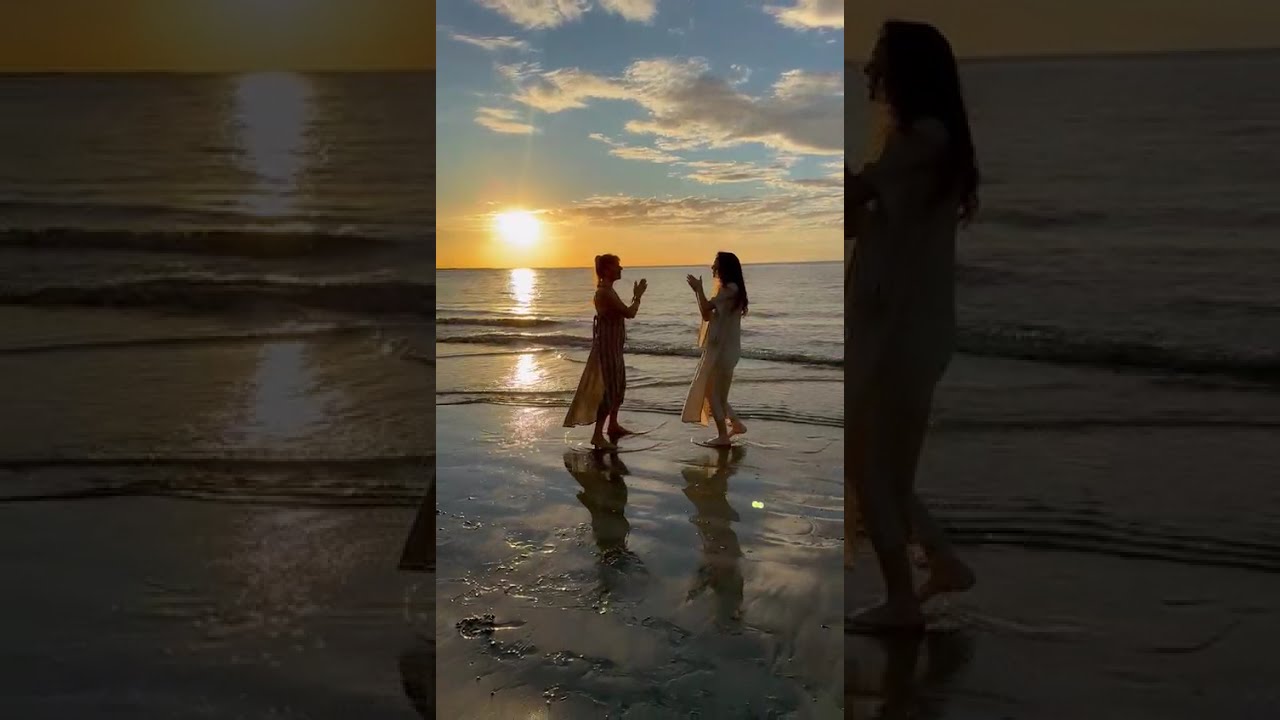
The production choices reflect that precision. Meagan Chandler's vocals float over organic percussion and subtle field recordings—sounds from the earth, not synthesized abstractions. Melodic layers unfold beneath a smooth groove, creating what the project describes as music that "works equally well for conscious dance spaces, sunset sets, or deeper listening sessions." This is not a choice between meditation or movement; it's a framework where both can happen in the same room.
This is how ceremony evolves in a contemporary context. The Kuya Sessions were built for integration—the internal work of weaving psychedelic insight into ordinary life. The remix extends that work outward. It takes music originally composed to support someone sitting with a guide or therapist, and builds it into a structure that works for a group moving together, for a sunset gathering, for the strange and necessary space between solitude and community.
Building medicine for conscious spaces
Liquid Bloom's decades-long trajectory—from organic trance for healing to frameworks supporting psychedelic-assisted therapeutics to remixes that honor both medicine and movement—reflects a larger maturation in conscious music. The field has moved beyond "music for therapy" (often ambient, often beautiful but sometimes static) and "music for dance" (often energetic but sometimes hollow) toward something more sophisticated: sound designed with *specific intention* about what the listener's nervous system should be asked to do.
The Desert Dwellers remix carries the Kuya Sessions' intention—reflection, integration, transformation—into a format that also honors the body's need to move, to release, to find flow. The visual contributions from Damian at Ronin Gang (Argentina), Wayne Visuals (South Africa), Burt Vera Cruz, and DJ Relajado extend that same principle into image: the sacred rendered in color and light, grounded enough to watch while dancing, complex enough to carry meaning.
This is what it looks like when healing music and conscious dance finally speak the same language.
Where to go from here
For those drawn to Liquid Bloom's work, the invitation extends in multiple directions. Listen to "Igniting the Sacred" in silence first, if you haven't—sit with the original and feel how Poranguí and Amani Friend built it as medicine. Then experience the remix in movement, whether in your own body or in a conscious dance space. Notice what shifts. The Kuya Sessions website and Liquid Bloom's bandcamp (liquidbloom.bandcamp.com) offer deeper access to the archive, including other compositions in the Sessions. For those curious about psychedelic-assisted therapy and its relationship to sound, this music offers a listening education: how intention shapes every choice, from field recordings to the precision of the four-on-the-floor beat. You might also explore Desert Dwellers and their own organic house work to understand how the remix team honored the original while finding its dancefloor application.