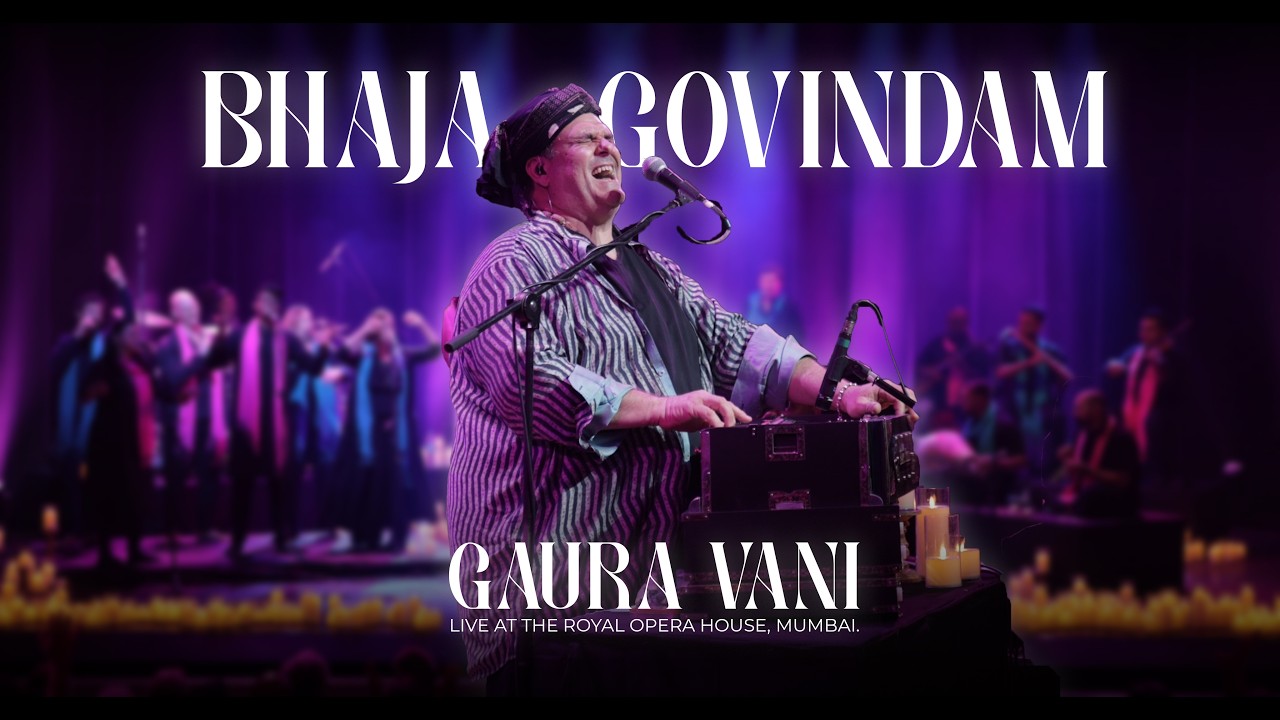
Fifty years after His Divine Grace A.C. Bhaktivedanta Swami Prabhupāda came to Conway Hall in September 1969 to share kīrtana and the teachings of Krishna consciousness, the same 500-seat London auditorium echoed once more with an ancient mantra. During a Janmāṣṭamī kīrtan five decades after that original visit, Gaura Vani joined Radhika Das and friends to offer a recording of Om Namo Bhagavate Vāsudevāya—the twelve-syllable invocation that the sage Nārada Muni granted to the young Dhruva Mahārāja in the bhakti tradition's mythic core. The location mattered. Because in 1969, something unexpected and luminous had occurred at Conway Hall that would establish a thread connecting past to present, Prabhupāda's moment to Gaura Vani's offering, the ancient Dhruva story to the seekers gathered on that night.
What Happened at Conway Hall in 1969?
The story comes from Yamunā Devī, a senior devotee who was present during Prabhupāda's programs at Conway Hall. While she was leading the chanting of the Mahā Mantra, Prabhupāda suddenly began singing loudly into the microphone: Nārada Muni Bhajay Vīṇā Rādhikā-Ramaṇa-Nāme—an invocation celebrating the divine sage Nārada Muni. He gestured for Yamunā to continue her own chanting while he added his voice in a direct address to Nārada himself. The next morning, puzzled by the event, Yamunā asked Prabhupāda what had prompted the sudden invocation. His answer was simple, direct, and extraordinary: "Nārada Muni came to our kīrtana."
In the bhakti tradition, such statements are not metaphorical. They speak of a permeability between the material and spiritual realms—that sincere chanting can draw the presence of enlightened beings, that vibration itself becomes an opening through which grace can enter. Whether one reads this as mystical reality or as the manifestation of an archetypal spiritual presence, the event carried weight. It established that something real—something living—had been activated at Conway Hall through the collective chanting and Prabhupāda's presence. Gaura Vani understands this inheritance fully.
Fifty years later, when Gaura Vani offered the specific mantra that Nārada gave to Dhruva at that same venue, she was not simply repeating an ancient practice. She was completing a circle, bringing the legacy forward, and inviting new seekers into the same opening that had been established decades before.
Dhruva's Search: From Pain to Practice
To understand why this mantra, and why this moment, Gaura Vani opens with the Dhruva story—told not as ancient history but as the perennial arc of human seeking. Dhruva, she explains, had been wounded and rejected by his own father. In that pain, he chose an extraordinary response: he went into the forest with a single, unshakeable determination to find the Supreme Lord face to face. This was not escape or transcendence-seeking; it was the mobilization of his entire being toward a singular purpose. He carried his hurt like a torch into the wilderness.
Under the guidance of Nārada Muni, Dhruva began an intense practice regimen. "Duva had been fasting. He had been doing ashtanga yoga and pranayam," Gaura Vani explains, grounding the mythic in the physiological. But Nārada told him something crucial: "If you want to see the Lord face to face, you must add mantra to your practice." And so Dhruva learned Om Namo Bhagavate Vāsudevāya, which, as the legend holds, "is so old that it has no origin in time."
What follows in Gaura Vani's rendering is the psychology of radical attention. Dhruva "could see it so clearly," she says, meditating on the form of the divine day and night. The hunger for food dissolved. Soon he "had no desire to even eat. He was subsisting on prāṇa, on breath." This is not poetic exaggeration in the bhakti tradition; it is the documented neurological and physiological shift that occurs when consciousness orients entirely toward a single object, when the entire being becomes a tuning fork vibrating at one frequency.
The Vision: When the Search Breaks Open
Then came the turning point—the moment when the interior vision suddenly ceased. As Gaura Vani narrates: "Suddenly what happened? The vision disappeared. It was the only thing that could have broken this little boy's meditation." In that absence, Dhruva opened his eyes. And there, standing directly before him, was not an image or an interior sight, but presence itself.
Gaura Vani describes it with sensory intensity: "Beauty himself. Time the source of love, the source of poetry, of music." Dhruva could not look upon that face. "His face was so beautiful that Duva couldn't look and his face fell to the feet of Vishnu." And in that moment, as Gaura Vani recounts from the oral tradition of the Bhāgavatam, something extraordinary occurred—a detail that transforms the entire narrative. The feet were like black lotuses, and bumblebees, drawn by their fragrance, began to gather: "suddenly all these bumblebees started looking for the fragrant the source of this fragrance and Vishnu's feet became blanketed like a black blanket of bees."
The touch came next. "Vishnu's hand touch him on the head and prayers began to flow from his mouth and tears began to flow from his eyes." In that meeting with the divine, Dhruva spoke words that have echoed through generations of spiritual seekers—words that Gaura Vani delivers with the weight they deserve.
From Broken Glass to Diamond: The Core Teaching
This is the heart of the Dhruva story, and it is why Gaura Vani carries it forward into the present moment. Dhruva said: "I thought it was a precious jewel. This thing, the secret wish, our secret wish, Duva's wish, our quest. I thought it was the most precious jewel. Like first of all, I thought if I could understand who my father was, then I would understand myself. But I realized now I was chasing broken glass."
The realization cuts through centuries of spiritual seeking and lands in the modern consciousness with perfect accuracy. Dhruva had believed that external validation—understanding who his father was—would tell him who he was. He had chased status, recognition, the recovery of lost dignity. He had performed austerities and meditations, all oriented toward achieving something, becoming someone in the eyes of another.
But in the presence of the divine, all such pursuits revealed themselves as fragments, as broken glass—worthless despite their glitter, cutting to those who grasp them. Gaura Vani lets this teaching settle into the room: "How many of us will spend our 20s, our 30s, our 40s, our 50s searching for broken glass?"
The alternative Dhruva discovered was immediate and alive. He said: "I see you and I feel so much love for you and all of your children, every creature in this universe. That is the most precious diamond." Not a distant abstraction, not a transcendent escape from the world, but love itself—concrete, alive, recognizing the sacred within all beings. This is not escapism; it is the discovery that love, not achievement or possession, is the actual substance of existence.
The Mantra as Transformation Tool
The Om Namo Bhagavate Vāsudevāya is not a magical formula to be recited abstractly. In the bhakti tradition, mantra practice is a relational technology—it is the means by which consciousness turns toward its source and aligns itself with reality. The words translate as: "I bow to You, the Lord of All Opulence." This bowing is not abject submission; it is recognition, a conscious turning of attention toward what is already true. Repeated with sincerity and feeling, the mantra does not create the divine presence; it aligns the nervous system, the heart, and the intellect toward recognition of what has always been present.
Gaura Vani's approach in this kīrtana is participatory, not didactic. After telling the Dhruva story, she invites the gathered community into the practice itself. She asks listeners to whisper their secret wish—the thing they are truly seeking beneath all surface desires—into their hands. Then, as the group chants the mantra together, that wish is to be "blessed," transformed from personal craving into "the most beautiful perfect seedling of love." This is the operative principle of the mantra: engaged with sincerity, it can transmute intention itself, turning the seeking toward the divine rather than toward broken glass.
The Circle Completes Itself
What makes this recording and this moment significant is that Gaura Vani, in offering this mantra at Conway Hall five decades after Prabhupāda's visit, is not performing a historical reenactment. She is continuing a living transmission. The story of Dhruva—vulnerable, wounded, seeking—is told not as ancient history but as the perennial human journey. And the teaching, that we are capable of mistaking broken glass for diamonds and wasting decades in that confusion, lands as fresh and urgent as ever.
In the kīrtana space at Conway Hall, the boundaries between past and present, between Prabhupāda and Gaura Vani, between the ancient Dhruva and contemporary seekers, collapse. Prabhupāda's presence, the mysterious appearance of Nārada Muni in 1969, the ancient mantra given to Dhruva, Gaura Vani's offering fifty years later, and the gathering of those who come seeking the diamond rather than broken glass—all become a single sustained note, a circle that has no end and no beginning.
Where to go from here
For those drawn to this mantra and Gaura Vani's approach, the practice is straightforward. Listen to the full recording and allow the melody and rhythm to work on the nervous system. The mantra can be chanted while walking, while sitting in meditation, or simply whispered into your hands, as Gaura Vani suggests. The tradition suggests consistency—a daily return to the practice, even if only for a few minutes, begins to attune consciousness toward the realization Dhruva found. That secret wish you are invited to hold and bless is not fantasy; it is often the truest longing beneath surface desires, the deep hunger for love that shapes all genuine seeking. The mantra is the container for that longing, the tool through which broken glass can be recognized as such, and the precious diamond of love can be discovered as what was always already present.