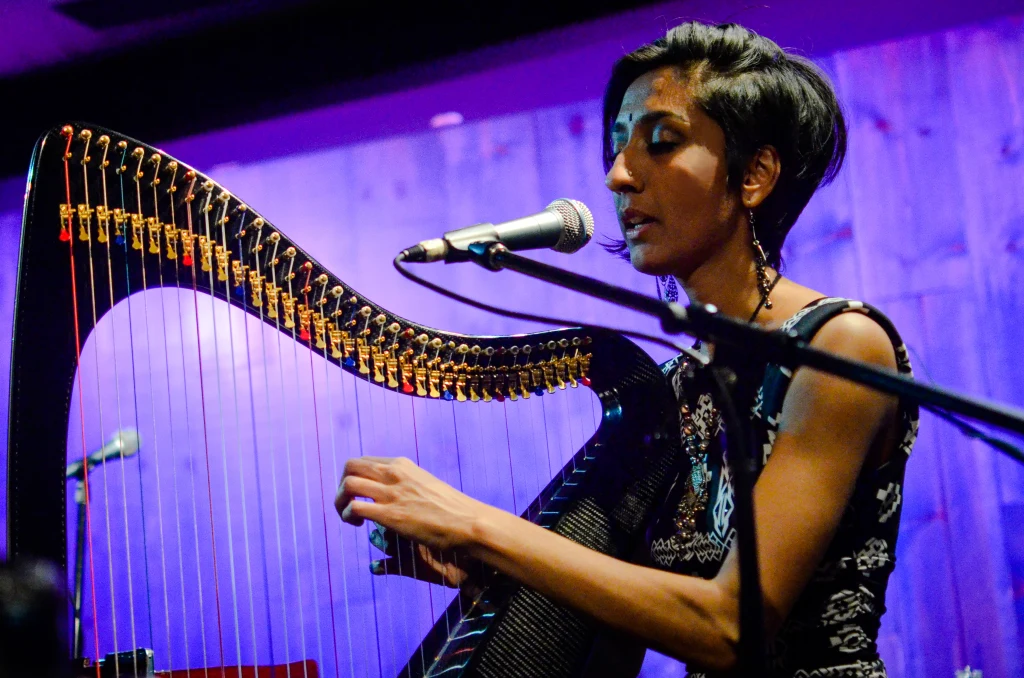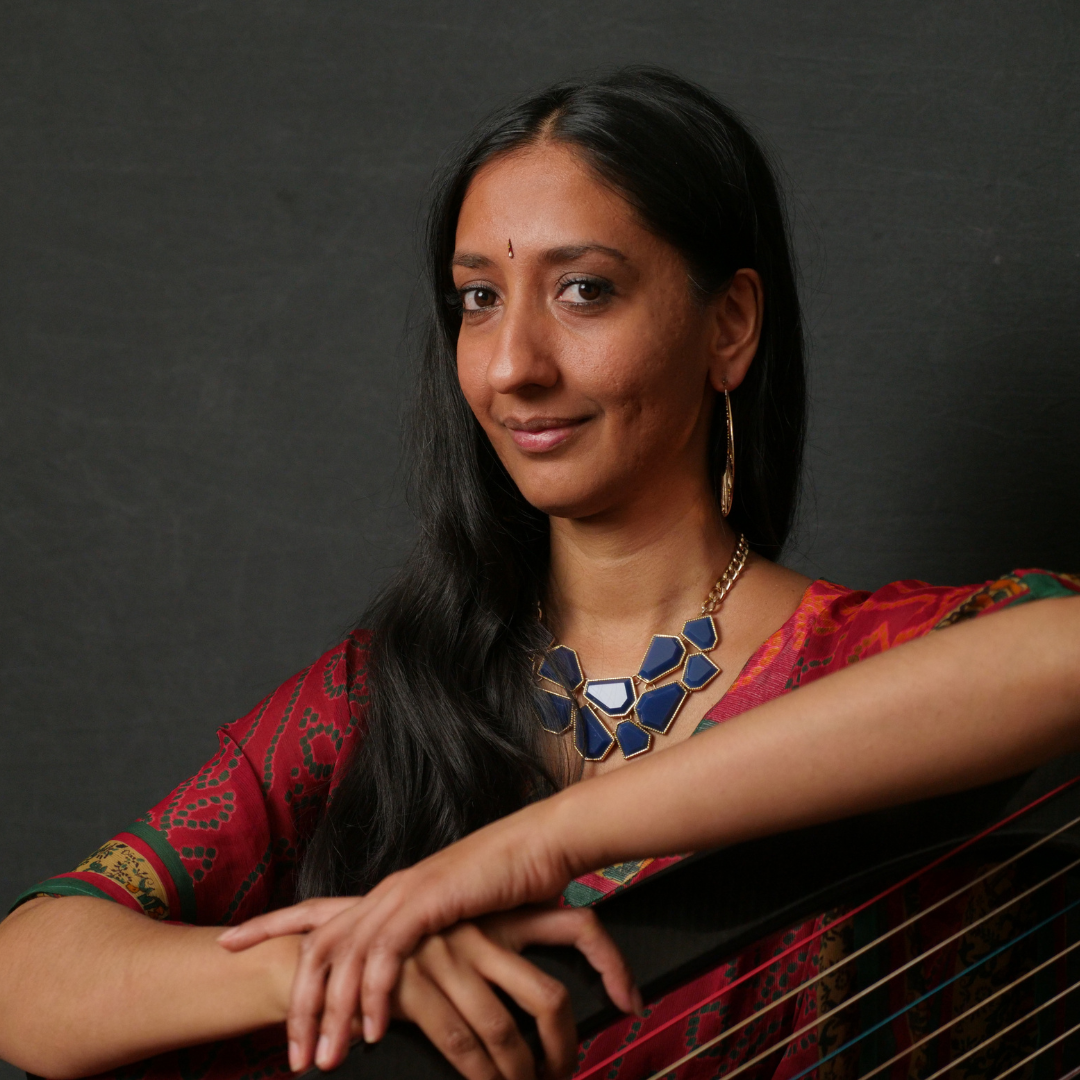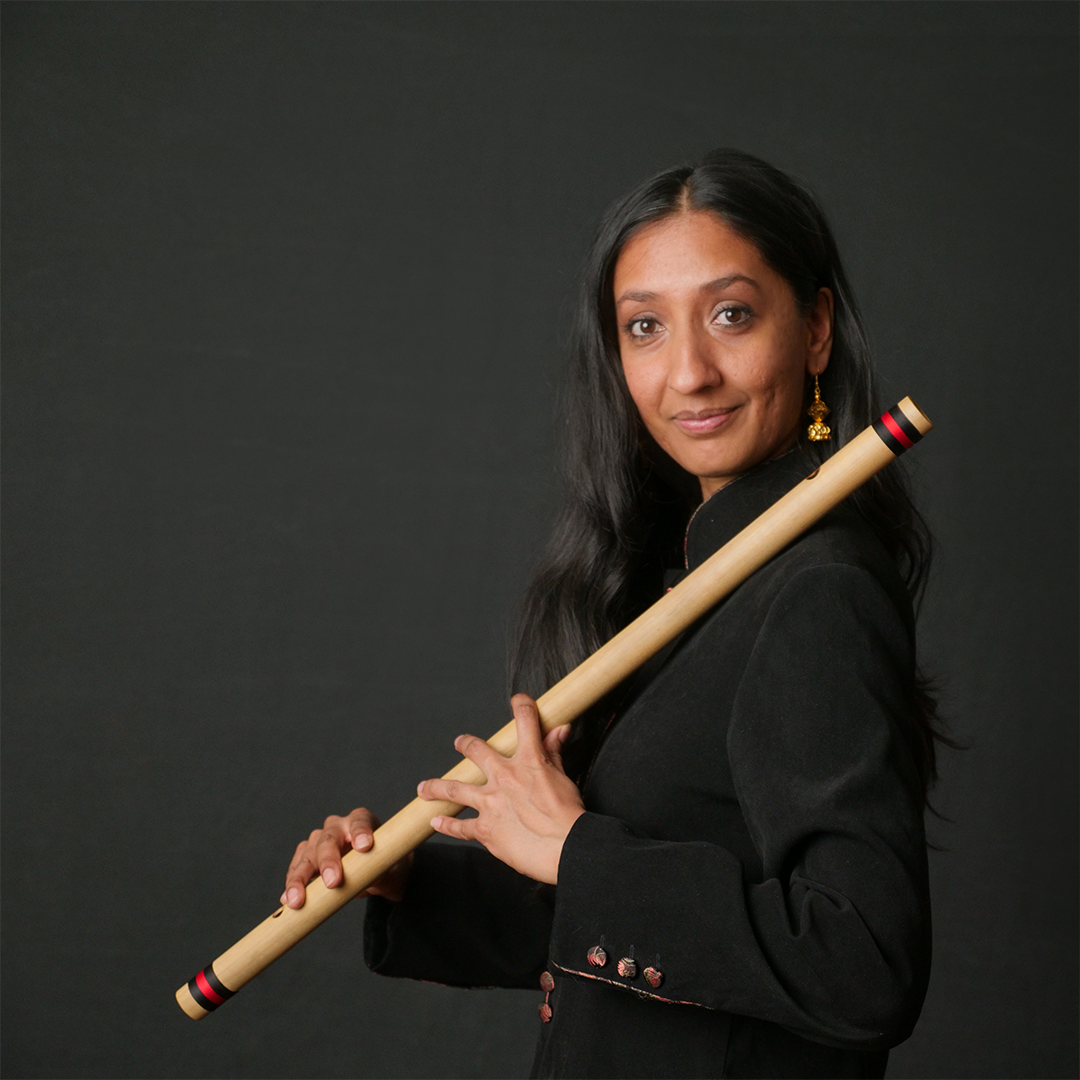

There's a particular kind of sacred music that doesn't announce itself with bells or declarations—it simply invites you to sit down and remember something you'd forgotten. Worldly Theater, Vol. 2, released in July 2022, is one of those offerings. For Sheela Bringi, an artist who has contributed her Indian vocals, bansuri flute, and raga harp to over fifty recordings and earned recognition through projects like the Grammy-nominated Bhakti Without Borders, this two-track release represents a distillation rather than an expansion. It's the sound of someone who has spent decades bridging Indian classical tradition and contemporary devotional music, now choosing to work in miniature—a diptych rather than a gallery wall.
The title itself—Worldly Theater—hints at the conceptual frame. There's a playfulness here, a recognition that the drama of existence unfolds on a stage where the sacred and mundane are always trading costumes. Volume 2 suggests continuation, an ongoing conversation rather than a definitive statement. Bringi's work has always inhabited the space between heritage and innovation, and this release leans into that liminality with confidence.
The album unfolds with the unhurried patience of a raga's alap, though its architecture is more atmospheric than strictly classical. Bringi's instrumentation draws from her deep well of training in North Indian classical music—the bansuri flute's breathy intimacy, the raga harp's cascading resonance, vocals that carry both technical precision and emotional surrender. But these elements aren't arranged in traditional formats. Instead, they float in carefully constructed ambient spaces, where repetition becomes meditation and melody becomes mantra.
The pacing is deliberate, almost ceremonial. There's no rush to resolve, no need to arrive anywhere particular. The mood oscillates between contemplative and celestial, grounded in the body through rhythm and breath while reaching toward something more expansive. Bringi's voice, when it appears, doesn't perform so much as it testifies—each phrase feels like an offering rather than an assertion. The production allows for space and silence, understanding that devotional music often says most when it knows when to pause.
With only two tracks, each piece carries significant weight. These aren't songs in the conventional sense—they're sonic environments, acoustic temples you enter rather than listen to from outside. The extended format allows Bringi to develop ideas fully, to let melodic motifs return and transform, to create the kind of deepening experience that requires time to unfold. The instrumentation breathes, the harmonies shift subtly, and the overall effect is of a living, evolving meditation.
Worldly Theater, Vol. 2 sits at an intersection that Bringi has been mapping throughout her career—where bhakti devotion meets ambient soundscape, where kirtan's communal ecstasy becomes a solitary listening practice, where Indian classical rigor dissolves into contemporary contemplative music. It's part of a lineage that includes the devotional recordings that brought Eastern spiritual music to Western audiences, but it speaks in a more modern dialect.
The album honors the bhakti tradition's emphasis on devotion as a path to the divine, but it doesn't require familiarity with Sanskrit or Hindu cosmology to access its emotional core. This is devotional music that has learned to speak multiple languages at once—rooted in specificity but reaching toward universality. It shares DNA with the new age and world music recordings Bringi has contributed to throughout her career, but here she's working as both architect and inhabitant of the sonic space.
This release will resonate most deeply with listeners who have already learned to sit still. It's for the meditator who wants something more texturally rich than silence but less demanding than structured chant. It's for those moments when you need music that holds space rather than fills it—when you're processing grief, sitting with uncertainty, or simply trying to remember what it feels like to be present.
The album lands hardest for listeners who appreciate the meeting point between technical mastery and spiritual surrender, who can hear the years of training in how Bringi approaches a phrase while also sensing the devotion that makes technique transparent. It's particularly suited for those navigating transitions, seeking steadiness in unstable times, or building contemplative practices that need sonic support.
Worldly Theater, Vol. 2 deserves headphones and evening light—that transitional hour when day becomes night and the mind naturally shifts toward reflection. Create space for it: dim lighting, comfortable seating, no distractions. Let the extended tracks unfold without checking how much time remains. This is music that rewards surrendering your agenda.
Consider it as a ritual frame for meditation or yoga practice, but also trust it as pure listening. Let it be a threshold between your daily theater and whatever lies beneath the performance. Bringi has built a world here—small but complete. Step inside and let it hold you.