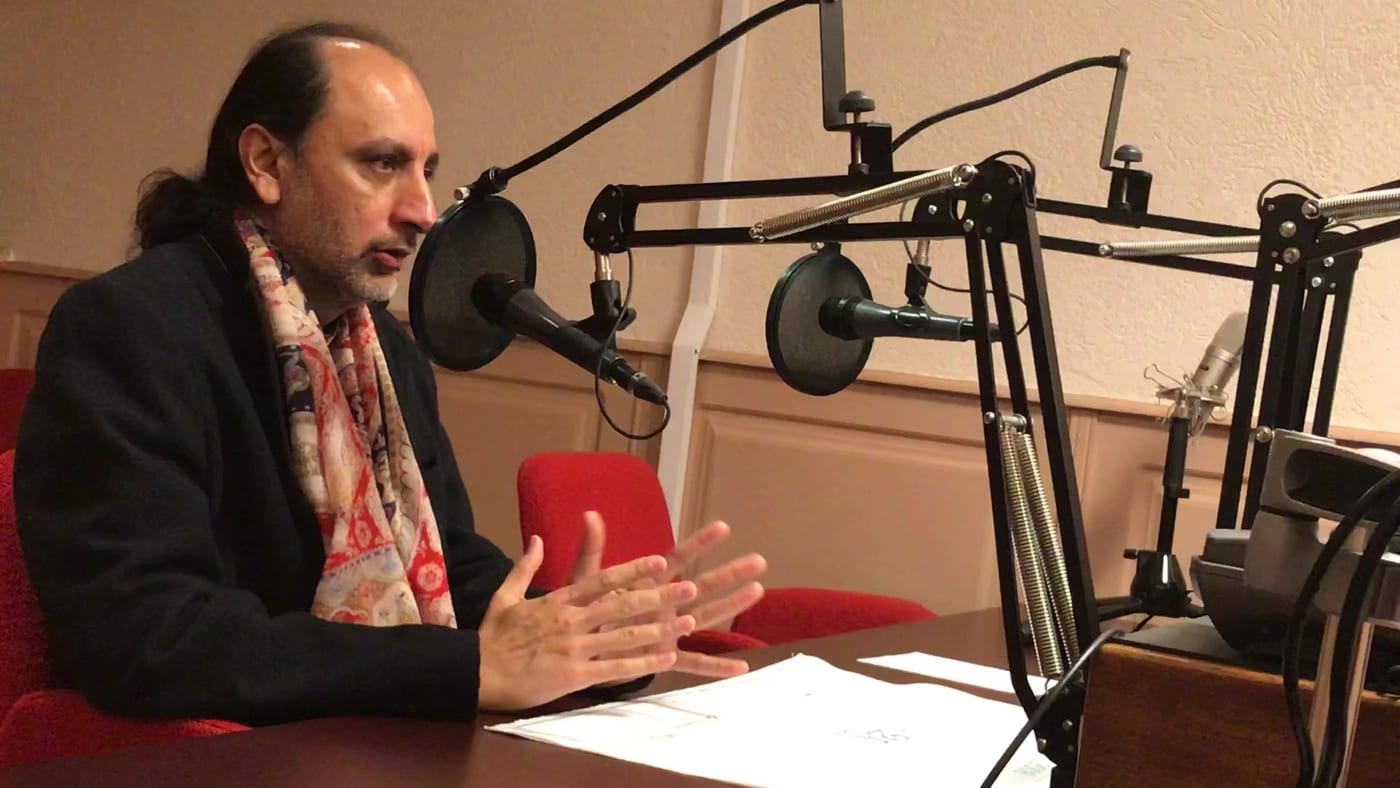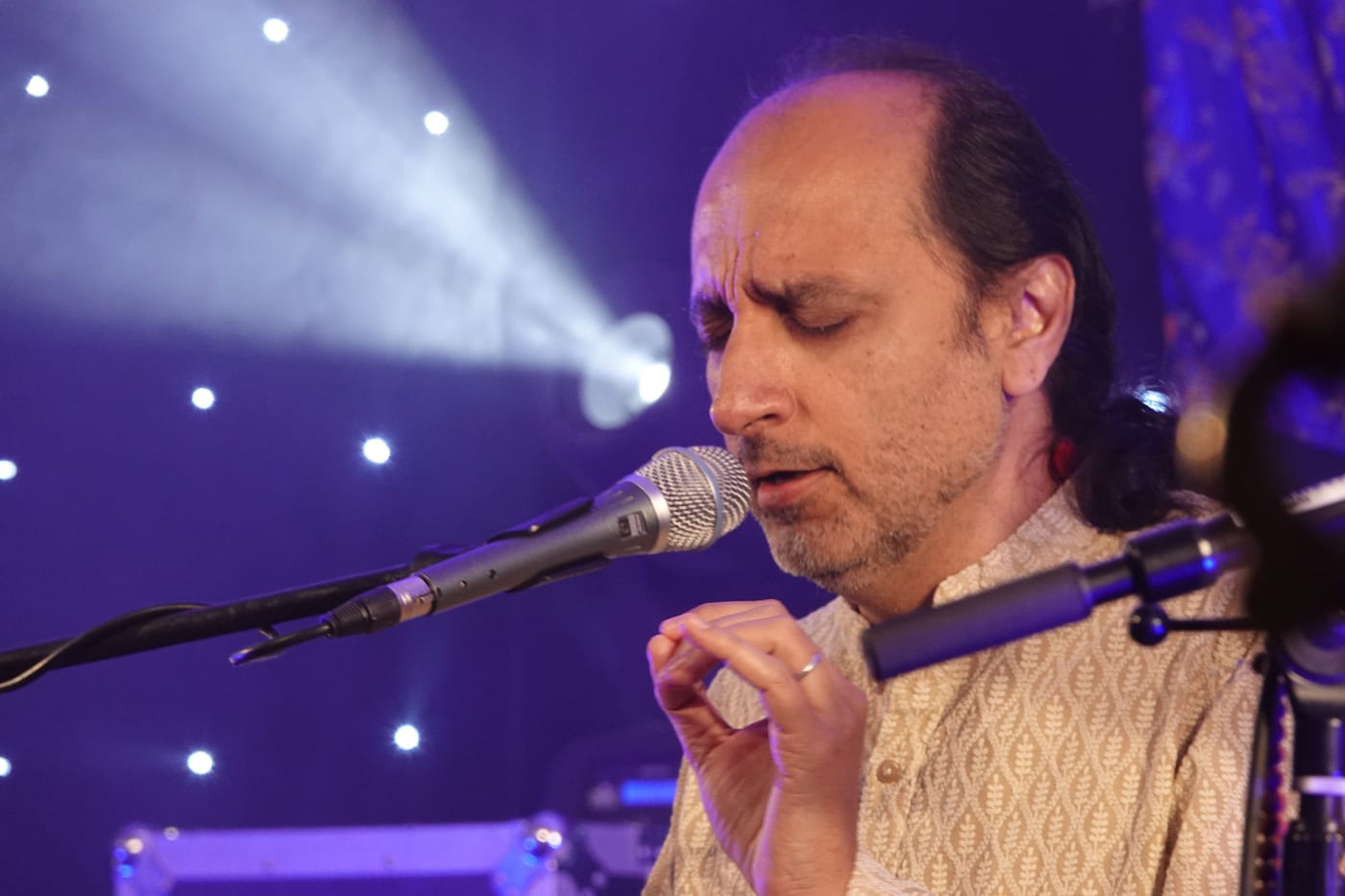

Manish Vyas is a musician, composer, singer and multi-instrumentalist from Gujarat, India, who has played Indian music since childhood and later turned to mantras, kirtan and other sacred expressions, with naad yoga, the power of sound, at the center. A note on sources: his structured discography is empty, with no release dates, cover art or track listings on file. This guide therefore covers the collections his biography names, and it gives no years except the one the bio states (2026). The first release is not documented, so the arc here runs from his named collections to his 2026 album, Devas and Devis. The catalogue moves between Vedic hymn, yogic chanting, raga-based healing and Sufi devotion, and reviewers describe a range from dance-floor beats to relaxation, always rooted in Indian tradition. Throughout, his voice, harmonium and tabla carry the work.
Year not documented. Per the verified FAQs, this collection anchors his practice in Sanskrit hymn and Vedic textual tradition, so expect sustained, reverent tones and a ceremonial feel rather than dance-floor momentum. It suits a listener who wants to begin at the root of the sacred-sound tradition he works within. Its place in his arc is that of a foundation stone: the most direct statement of his devotion to ancient liturgy, against which the Sufi and raga collections read as widenings of scope. Track listings aren't on file, so I can't point to a specific piece. Start with the opening track on Spotify and let it set your expectations for the austere, spacious sound.
Year not documented. This is described as the collection most explicitly designed for practice, to sit alongside pranayama, meditation and light asana. The arrangements are built around voice, harmonium and tabla, with room left for breath and silence. Within his catalogue it is the most practical entry, music as tool rather than performance. It also reflects the retreat format he teaches, which combines mantra, kirtan, breathwork and meditation. No individual track titles are documented, so begin at the first track and use it as you would in a session, with a few minutes of quiet breathing. If it works, you will know within one listen.
Year not documented. Sattva is named in his biography, but the facts on file give no description of its sound, tracks or themes, so this entry is deliberately brief. I won't guess at its mood. What can be said is that it sits among the named collections that show his range across devotional forms. A new listener can treat it as a step beyond the core four once the voice, harmonium and tabla signature feels familiar. No standout track is documented. Open the album on your streaming service and start at track one.
Year not documented. The title points toward Sufi devotion, and it sits alongside Sufi Splendor as part of his engagement with Islamic mystical song, though the facts on file don't describe this album's contents. In his arc, it is evidence that his sacred-sound work reaches beyond a single tradition. Expect his familiar instrumental palette of voice, harmonium and tabla, and approach it with the patience his music rewards. No track listing is documented, so begin at track one and listen start to finish, allowing the first pass to feel spare before the detail emerges.
Year not documented. Shivoham is named in his biography, but nothing further about its tracks, tone or release is on file, so this section stays short rather than inventing detail. The title is the only guide, and I won't read more into it. In the arc of the catalogue it is one more devotional offering among the named collections, best approached after you have found your footing with Vedic Invocations or Yoga of Chanting. No specific track is documented. Start at the beginning and treat the album as a single sustained sitting.
Year not documented. Here he applies raga, the Indian classical melodic framework whose name is said to mean "that which charms" or "that which colors," to wellness and therapeutic listening. Expect slow-unfolding melodic development, tabla used with restraint, and a calm that builds through patience rather than hook. In his arc it is the most classical-leaning collection, showing the technical musicianship that reviewers like Prem Joshua of Germany have praised in his rhythm and melody. It is a good choice for those drawn to naad yoga as healing. With no track list documented, begin with the first track and let a single raga run its full length.
Year not documented. This collection brings Islamic devotional song into his catalogue, which the FAQs read as proof of range within sacred sound. Expect the same voice-harmonium-tabla intimacy, now carrying Sufi text. It marks the widest stretch of his devotional map, and a good listener will hear how little the instrumentation needs to change for the tradition to shift. For someone arriving from Western pop or folk, this may be the warmest door in. No individual track is documented, so start with the opening piece and notice where the rhythm settles in.
Released in 2026, this is his most recent album and the present endpoint of the arc. The facts on file don't describe its sound or list its tracks, so I can only place it: it follows the collections above and shows him still releasing new work as a singer, composer and tabla player. For a new listener, it is a fine way to hear where he is now before working backward through the catalogue. No standout track is documented. Begin at track one, then compare how it feels against Vedic Invocations.
- Devotional: Vedic Invocations, for its Sanskrit hymn grounding.
- Contemplative: Healing Ragas Collection, for raga's slow unfolding.
- Energetic: None of his collections is documented as high-energy, and his work leans toward restraint. Reviewers do note that his range reaches dance-floor beats, but the facts on file don't say which album, so I won't name one. Try Sufi Splendor for the most rhythmic feel suggested by the Sufi form.
- Healing: Yoga of Chanting, for breath-linked practice, with Healing Ragas Collection as the alternate.