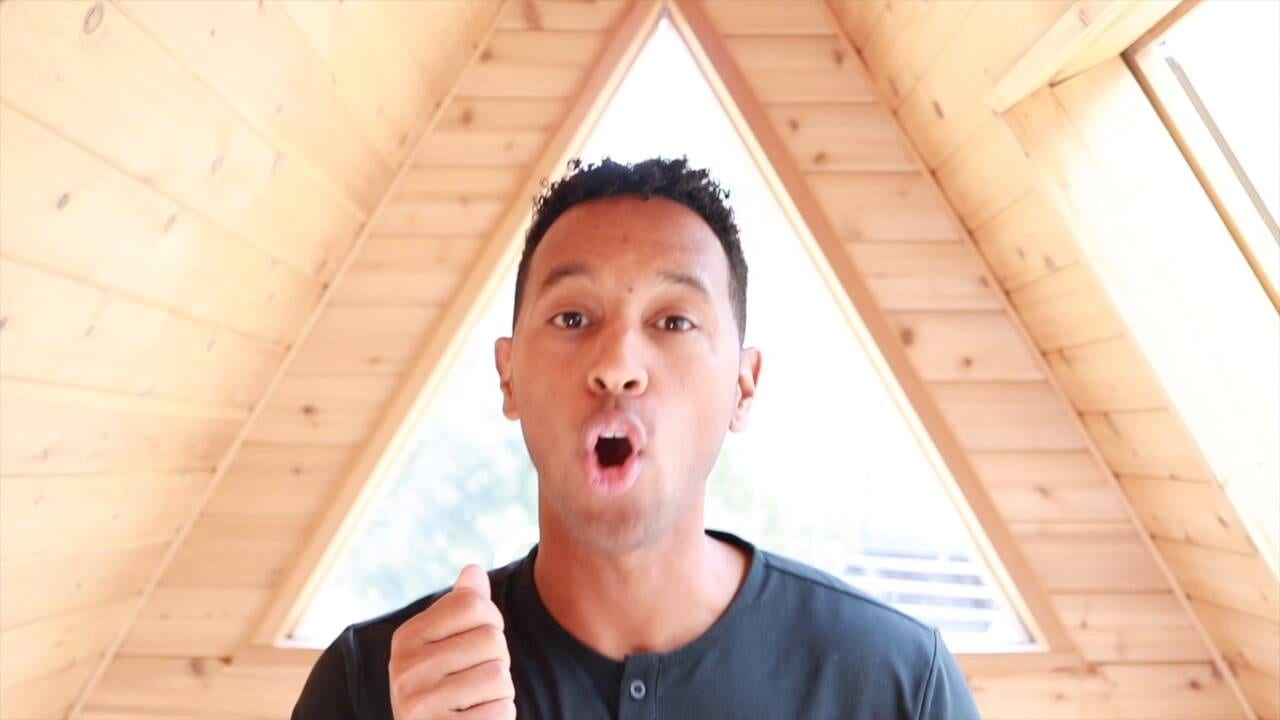

Justin Michael Williams works where music, meditation and equality overlap, and his teaching is hard to separate from that overlap. He is a best-selling author, a Grammy-nominated recording artist and a keynote speaker. His own account of his purpose is plain: he shares what has worked in his own life, and his main goal is changing lives. That plainness shapes how he teaches.
Williams leads guided meditation and shadow work, and he teaches through master classes, an on-demand 40-day program and retreats. His site cites nearly two decades of teaching. What a room with him feels like can only be partly inferred from the record. The structure points to a format that pairs practice with direct address. Guided sitting is followed or interrupted by work on what a person has avoided, rather than being offered as a mood lift. Shadow work sits next to meditation, which suggests sessions meant to unsettle as well as calm.
Music is part of the picture. He calls it his original and true love, and he says he has learned to meld speaking and songs so that the music is something to experience as well as play loud. A talk or retreat with him may therefore include song as a vehicle for the teaching, not a decoration around it. The available record does not say how any given session is sequenced, so that remains a matter for anyone who attends.
Several ideas return across his work. The first is turning pain into power. He grew up with gunshot holes outside his bedroom window, and he has dedicated his life to helping people make that conversion. The second is worth and sufficiency, visible in song titles such as "I Am Enough." The third is transformation as movement through difficulty rather than escape from it, a note struck in titles like Metamorphosis, "The Turning" and "Arise." The fourth is equality. He does not treat justice as a separate subject from inner work. His latest book, How We Ended Racism, written with Shelly Tygielski, looks back from the year 2050, and his first, Stay Woke, brought mindfulness to young people across America and earned a Next Generation Award from the Walden New Thought Awards.
He does not publish a list of set questions, so what follows is drawn from the shape of the work. The shadow work suggests questions about what a person has hidden, denied or refused to feel. The emphasis on pain and power suggests asking what a hard history has given a person to work with, without pretending it was a gift. The equality commitment suggests a wider question: what would a person's practice look like if it had to hold up in a world that is not fair? And the sufficiency theme asks students to sit with whether they believe they are enough before they have achieved anything.
Williams says he does not fit the traditional mold of a transformational luminary, and the delivery reflects that. The record describes language that is direct and avoids spiritual jargon, with no cultivation of guru status. Story is plainly central, given that his own upbringing is a foundation of his credibility. Music supplies a second register, and one built for feeling rather than only instruction. I have no documented basis to characterize his use of humor, silence or scripture, and the sources name none of these as features, so I won't claim them. His recorded work is described as restrained and spacious rather than dancefloor-oriented, which suggests a similar economy in the room, though that is inference.
He speaks to people who don't typically see themselves as part of the motivational, healing or wellness movement. That is the clearest audience: those who have found wellness culture closed, abstract or indifferent to their circumstances. Beginners fit too, since the work is built without assuming prior practice or vocabulary.
Others may struggle. People looking for transcendence over circumstance, or a depoliticized spirituality, will find his insistence on equality uncomfortable. Those who want a guru, a figure of elevated authority, may be put off by a teacher who explicitly refuses that role. Anyone wanting only affirmation will find shadow work demanding. And listeners expecting high-energy electronic music will not find it in his recent albums, which lean toward introspection.
The bio names no lineage, guru or teacher, and none should be assigned to him. What it does establish is his working field: meditation, mindfulness and guided practice, delivered through music, books, master classes and retreats. His writing has been endorsed by Martin Luther King III, Arianna Huffington, Sharon Salzberg and Jon Kabat-Zinn, and he has spoken at Google, Bloomberg and SXSW and shared a stage with Deepak Chopra. Those are endorsements and appearances, not discipleship. He belongs to the broader contemplative-wellness world by practice and audience, yet defines himself partly against its usual image. Upcoming appearances at Kripalu in Stockbridge, Massachusetts (October 8-9, 2026) and Esalen in Big Sur, California (April 9, 2027) place him in established retreat settings.
Williams's strength is the coherence of his position: lived experience, a contemplative method, shadow work, music and a justice orientation all point the same way. The limits are in what can be verified. Much of what reaches the public is his own framing, and the texture of his teaching in the room is largely undocumented. A reader weighing his work should take the stated aims seriously and test them in practice, ideally with a book, an album or a session, rather than relying on description alone.