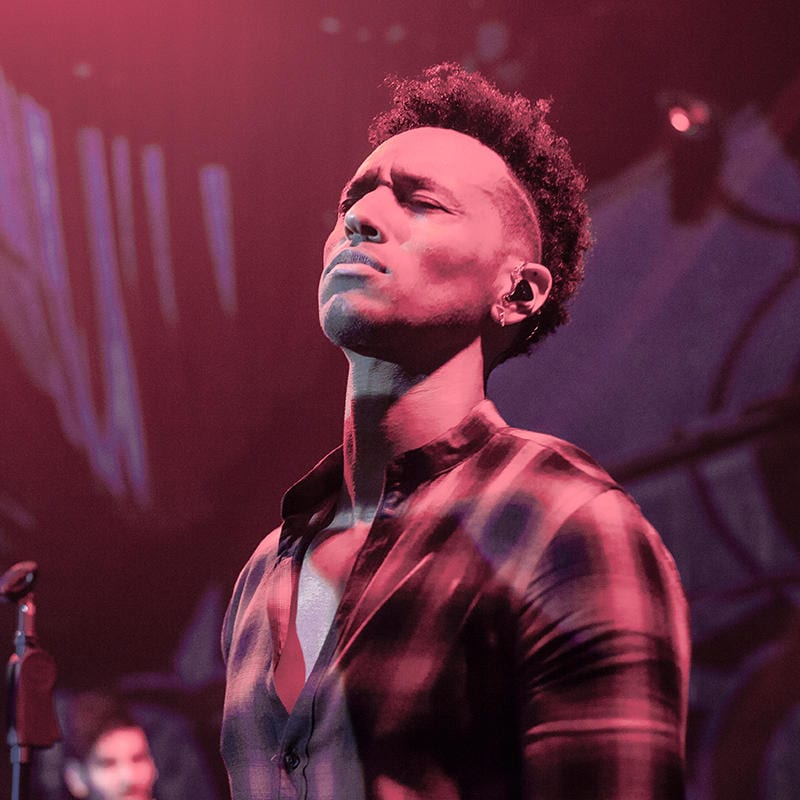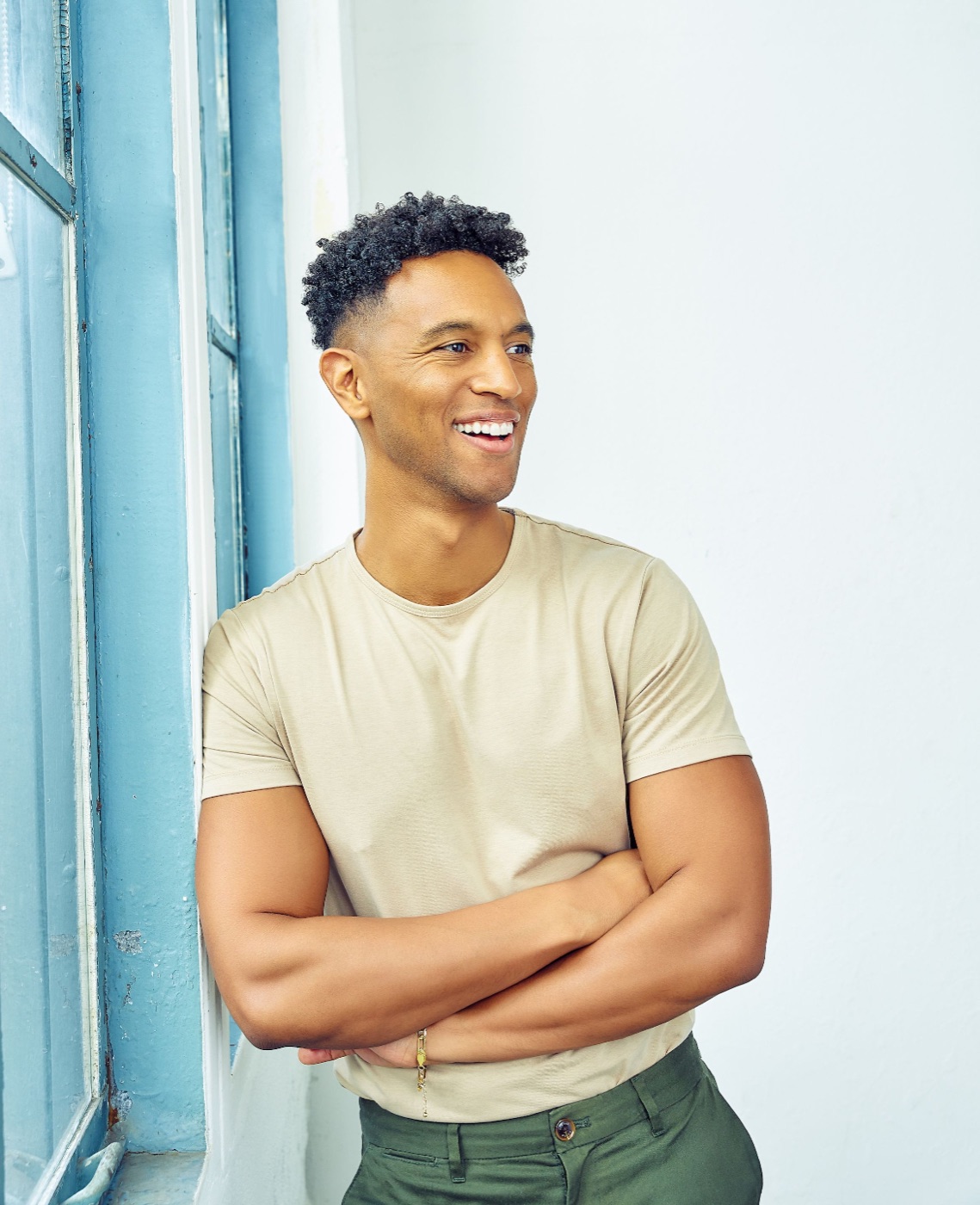

"I Am Enough (Dance Mix)" is a single, one track, released April 22, 2022. It reworks a song Justin Michael Williams first put out as "I Am Enough" in 2020. That matters because the phrase is not incidental to his work. Sufficiency and inherent worth run through his music and teaching, and he addresses a wound common among people who have been told, directly or indirectly, that they are not enough.
Williams is a Grammy-nominated recording artist, best-selling author and keynote speaker. He works at the intersection of music, meditation and equality, and he calls music his original and true love. This release comes in the same year as the album Meditations for the People and the track "My Time (Theme From 'Inside Change')," and it sits between the early album Metamorphosis (2016) and the later full-length SOUL CHILD (2024). A dance-oriented rework of a core affirmation is a different register for him, and it's worth hearing as an experiment in how far that message can travel.
I'll be plain about the limits here. The available record gives no production credits, instrumentation list or collaborators for this mix, so I won't invent them. What can be said is what the title promises and what the surrounding catalog suggests.
"Dance Mix" signals a version built around rhythm and movement. That makes it a notable departure from the rest of his catalog, which his own sources describe as favoring space, restraint and lyrical clarity over density and velocity. In that catalog his voice carries the song rather than dominating it, and the emotional legibility of the words comes first. Listen for whether that holds here: whether the voice stays at the center while the rhythm changes the room around it, and whether the mood reads as celebratory, driving or still contemplative underneath.
There is only one, and it is the whole release.
"I Am Enough (Dance Mix)" lands because of what it asks a body to do. The affirmation in the title is simple, and most affirmation music asks you to sit still and absorb it. A dance treatment invites you to move through the idea instead, repeating it with your feet and breath rather than only your thoughts. For listeners who find seated meditation a hard way in, that is a real offer. It also fits his stated approach of meeting people where they are rather than where tradition says they should be.
For context, the same sufficiency theme sits beside other songs in his catalog, such as "The Turning" (2018), the several versions of "Believe" (2021) and "Come Home" (2024). Hearing the dance mix next to them shows how consistently he returns to threshold moments and to belonging.
Williams does not describe himself within a single spiritual lineage, so this guide doesn't assign one. It would be wrong to file this single under bhakti or kirtan. His work draws on contemplative practice, mindfulness and meditation, and pairs it with shadow work and a social-justice orientation. The closest honest frame is music-as-medicine in a critical-wellness setting: practice that acknowledges real struggle rather than bypassing it.
In that frame, a dance mix is less a contradiction than an extension. Joy and movement are allowed to sit alongside the inner work, and his sources suggest that even his uptempo material is fundamentally contemplative rather than euphoric. Whether this mix keeps that character is the interesting question to bring to it.
This single is for listeners who want the message without the stillness. It suits someone in a stretch of self-doubt who finds that sitting quietly with a thought only makes the thought louder, and who needs to shake it loose physically first. It also suits people who already know his quieter work and want a livelier door back into the same idea. It speaks especially to listeners who don't see themselves in the mainstream motivational or wellness scene, which is the audience he says he works for.
It is probably not the right starting point for someone seeking a meditation soundtrack. For that, his own sources point to Meditations for the People, a ten-track set built for accessibility. Anyone expecting a purely escapist club record should also adjust expectations, since his work resists escapism and keeps the inner life in view.
Take it in two passes.
First, play it somewhere you can move: a kitchen, a living room, a walk. Don't analyze. Let the rhythm do its work and notice whether the phrase starts to feel less like a slogan and more like something you can stand inside.
Second, play it again on headphones, sitting still, ideally in the evening when the day's judgments have had time to pile up. Follow the voice and the words rather than the beat. Notice where the repetition stops sounding like an instruction and starts sounding like a statement of fact.
Then, if the idea is working on you, take it a step further. Pair it with the quieter "I Am Enough" original from 2020, and the contrast between the two will tell you what the dance version adds.