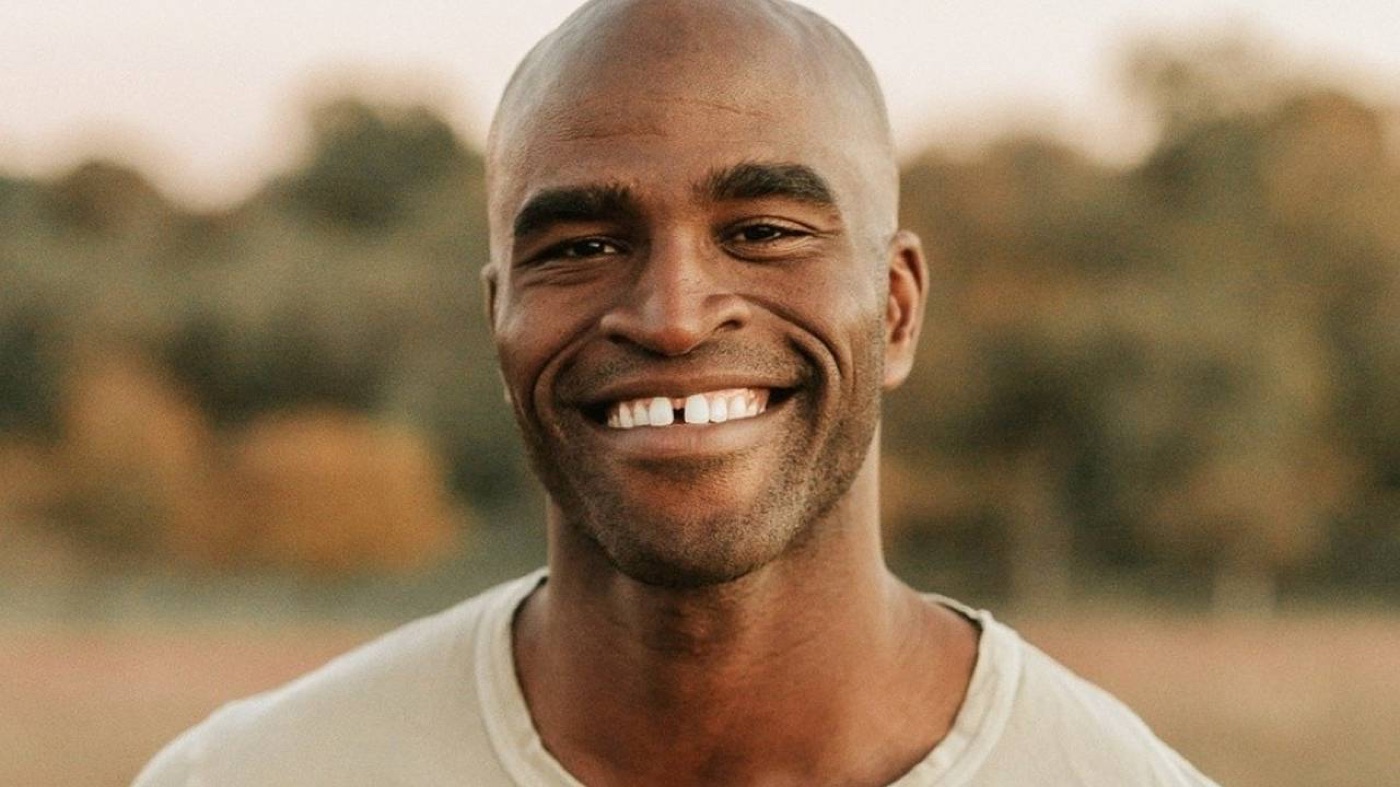

Start with Emotional Evolution, the podcast Joel Cross hosts. It is the clearest statement of his central idea: moving from reaction to response. Everything else he makes, including the journaling, the community and the music, grows from that idea. The podcast is free, available on major platforms, and asks for nothing but listening time. Pick any recent episode and let his voice set the tone. You are not missing prerequisites by skipping around.
The R.I.S.E. Journal. This is his signature creation, a practice of meditative journaling aimed at self-actualization. If the podcast made you curious about applying the idea, this is where it becomes a daily habit. Check asoulcalledjoel.com for how to access it.
The music. Joel's catalog is singles, not albums, so go to Spotify or Apple Music and begin with "Hold You" (December 2018), then "Gray" (November 2018) and "Candlelight" (February 2019). They are built around acoustic guitar and voice. His other 2018 singles, "So Long," "Bruised & Scorned" and "Better Believe," are worth exploring once those three land.
The Beautiful Souls community. This is his online space for daily guidance and live meditation, where people can arrive exactly as they are. It is the closest thing to sitting in a room with him if you can't attend a retreat.
Expect warmth, not spectacle. Joel is a certified meditation teacher and mindfulness coach, and he is also a Grammy-nominated guitarist and songwriter through his work with India Arie on "Just Let It Go," "We Are," "Hour Of Love" and "Worthy." The two sides are meant to work together, and the music is quiet and unhurried to match the teaching.
He names emotional pain, stress and anxiety directly and does not try to transcend them. There is no guru posture. His stated aim is a space without performance or pretense, and that shapes everything he offers. His language leans on coming home: to yourself, your heart, your breath.
"This is meditation music." The music is contemplative, but his catalog isn't marketed as a meditation soundtrack. Treat it as songs made from the same ground as his teaching.
"There must be a lineage to follow." His bio names no teacher or tradition, and he isn't looking for disciples. This is contemporary, psychology-aware mindfulness teaching.
"I'll find a book or a big album to study." There isn't one. His work lives in audio, practice and community.
"I can just listen." The work is built around participation. You get the most from the journal and the live community if you show up and do the practice.
"It will fix me quickly." His own framing is that the practice isn't about becoming someone new. It is slower and gentler than that.
It tends to land hardest when you are noticing your own patterns: snapping at people, replaying conversations, or feeling worn down by stress or anxiety. It also suits a stretch when you want to feel more like yourself, or when you are ready to be honest about what you feel and have no desire for mystical frameworks. If you want high-energy motivation or a rigid behavioral program, it will feel too open-ended.
Day 1: Listen to one Emotional Evolution episode with no distractions. Afterward, write down one moment this week when you reacted instead of responded.
Day 2: Play "Hold You" start to finish, eyes closed. Notice what shifts in your body.
Day 3: Listen to a second podcast episode. Note any phrase that sticks.
Day 4: Visit asoulcalledjoel.com and explore the R.I.S.E. Journal. Begin the journaling practice, even for a few minutes.
Day 5: Listen to "Gray" and journal afterward. Write about whatever came up.
Day 6: Join the Beautiful Souls community and take part in a live meditation or read the daily guidance.
Day 7: Play "Candlelight," then reread your week's notes. Decide what to keep. Maybe it's the podcast, the journal, the community, or some mix. Keep only what you will actually do.